
Writing: 4/5 Characters: 4.5/5 Plot: 5/5
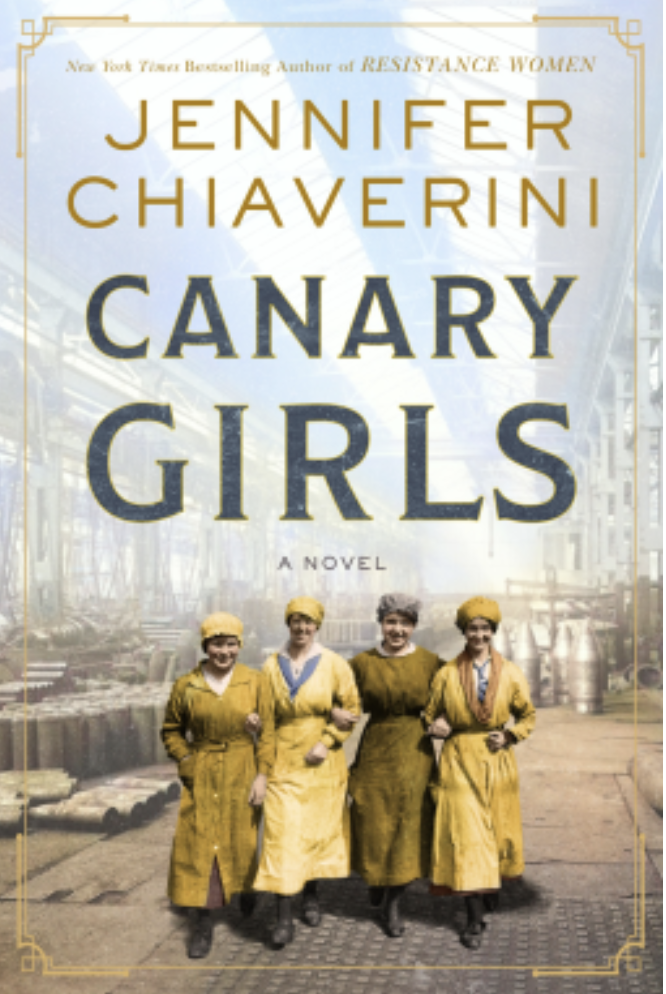
A story about Britain’s World War One “munitionettes” — women who answered the call of duty and worked in round-the-clock shifts to produce the much needed munitions for the war arsenal. The label referred to a specific group of munitionettes who worked with the (very poisonous) trinitrotoluene (TNT) which over a short period of time, turned their skin, bleached their hair (green for brunettes and white for blondes), and brought on plenty of health problems, some fatal. The story follows three women from just before war breaks out until it is over: Lucy, married to a professional footballer (that’s soccer to us) and architect; Helen, daughter of an Oxford professor whose husband runs one of the biggest munitions plants; and April, a girl sent into service at 15, who leaves for a better paying, more meaningful job in munitions once the call for women goes out.
Chiaverini’s last book (Switchboard Soldiers) focused on the female Telephone Operators who managed the switchboards in France during WWI (at a time when every single call was connected manually). She brings the same attention to historical detail to this book managing to cover a panoply of issues from the perspective of multiple women who are driving or affected by them . These include women’s suffrage which was put on hold during the war with promises made for after; women’s football, which took off during the war and was brutally shut down by the men’s league until 1971; the massive propaganda techniques used to make men enlist; the pressure on male footballers to enlist when no such pressure was applied to the more elite leagues (golfers, cricketers, and polo players); the impact on British citizens of German heritage, the many fatal accidents at munitions plants; the hunger resulting from German blockades; the posters for “surplus women” to migrate out of country; and the Swiss Medical Mission prisoner exchange (to name just a few!)
I was in awe of her ability to weave in so much about life for these women in that time period in such a meaningful, genuine, and never heavy handed way. Could not put it down. If you haven’t read Switchboard Soldiers, go back and read that one, too.
Great bibliography!
Thank you to William Morrow and NetGalley for providing an advance copy of this book in exchange for my honest review. The book will be published on August 8th, 2023.
 Books to look forward to ...