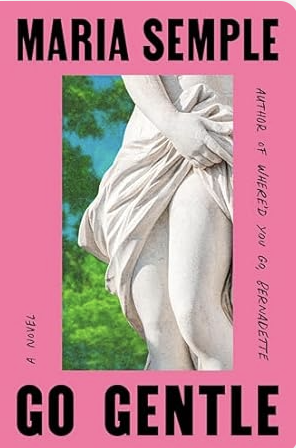
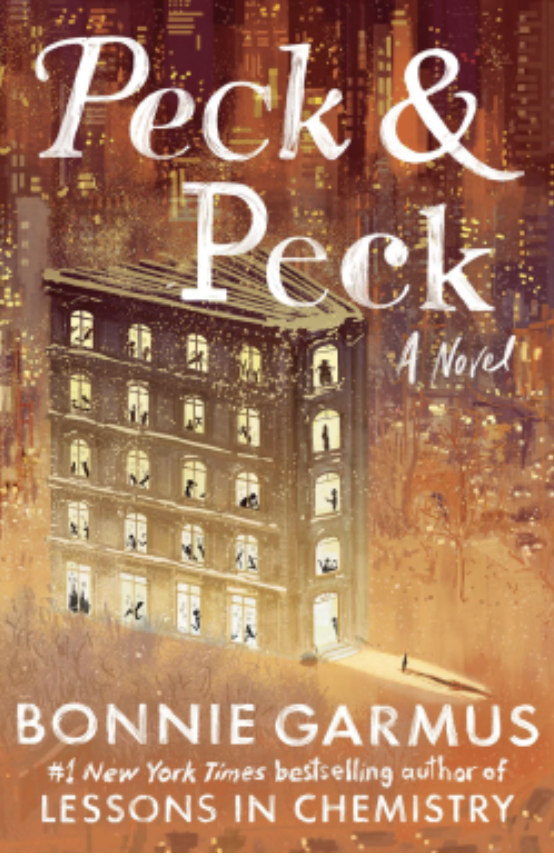
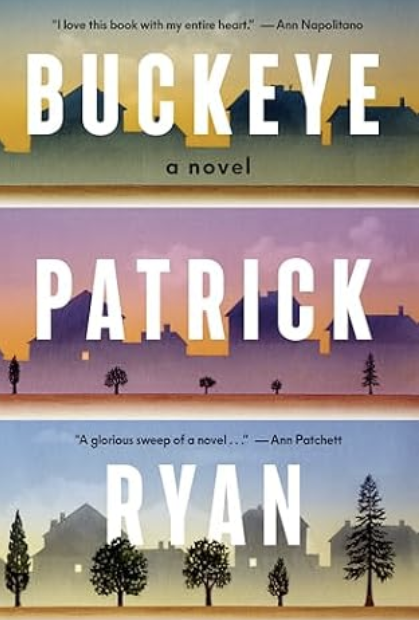
At heart, this is a novel about poetry and how it can change your life — but the poetry theme is tightly inserted into a narrative populated by a madcap scramble of an adventure story replete with good vs evil, multiple layers of deception, the best kind of quirky characters, and lots of personal confusion (and eventual growth :-)) You can read it for the plot, the twisty characters, and / or for the opportunity to do some pretty deep thinking.
Our narrator is Batter — a somewhat timid character who falls hard for Poetry despite experimenting with a wide variety of majors that might have led to more lucrative careers (he does surprisingly well in Accounting). He recognizes that he hasn’t the talent to be a Poet himself, but decides he wants to discover Poets — like Brian Epstein discovered the Beatles. When he heads to the Big Apple after graduation nobody (but himself) is pleased, but through an interesting set of happenstances he lands a (very) low level job at Peck & Peck — the highly illustrious and beyond upscale (also incredibly expensive) Poetry journal. That’s when things start to get interesting.
I’m a character person, and the characters in this book are so very captivating. It took me awhile to warm up to Batter whose timidity and lack of self confidence or direction I found irritating, but I fell in love with his mother immediately. If you’re looking for an Elizabeth Zott type figure, Rainey is it. Rainey is a typeface designer and even if you haven’t a smidgen of interest in the characteristics of typefaces (e.g. common fonts like Arial, Times New Roman, or Palatino or unusual ones such as Impact, Baskerville, Caslon), you might well find her mini contextual lectures on the practical and emotional factors of typeface choice fascinating — I know I did. Dad is the “interesting” kind of historian — one who examines not just what happened in the past, but how the narration shifts with the teller, and how easily we can all be bamboozled. Every one of the editors at Peck & Peck have their own idiosyncratic set of motivations, cringes, hopes, and driving instincts that keep you on your toes if you happen to get bored. And then there is Batter’s “love at first sight” interest… Every character is a real obsessive type — but that’s what makes them interesting (and almost every one of the obsessions is completely obsession-worthy!)
But what about Poetry as a strong theme? I’ve never been a big fan, despite my voracious reading habits. But I perked up when I read one poetry-passionate character toss off the fact that 95% of poetry is boring. Yes! But his thesis is that the very top 1/2% is life changing. This book included excellent pointers to some spectacular poetry and surprisingly I have compiled a set of them and am happily reading, tearing (as in crying, not ripping) up as appropriate.
So — overall fun to read, some very interesting philosophical questions to ponder, a whole lot of tangent topics that were either completely new to me or offered new depths to what I thought I knew already — such as typeface design, slam poetry sessions, and … have you ever heard of heteropaternal superfecundation? Look it up! Reminded me of John Irving books in the way all the weird tangents actually come together in the end to achieve something. A good read.
Quotes:
“Poetry provides answers and despite what my pre-law classes would call an appalling lack of evidence, their answers always seemed right. Or something even more unlikely. Truthful.”
“Awful people succeed because nice people let them. This is the drawback of being nice. Nice people worry that it isn’t nice to take action against awful people because they don’t want to act awful themselves – they don’t want to stoop to that level. But I think nice people have been stooping all along. The worst kind of stooping – because it isn’t stooping, it’s bending over.”
“Poetry is problematic. First, it’s not easy. It forces you to think and sometimes thinking hurts. Also, poetry can make you feel stupid, like you don’t get it. And if you do get it, then it’s only because it just revealed something about yourself that you were hoping to keep hidden.”
“That, in a nutshell, is how the brothers gained new readership: by showing normal, everyday people what poetry was really all about. How it could make them feel; what it could make them think; and why it could change their lives — not just for one night, but for every night thereafter.”
“Dickinson once wrote that hope is a thing with feathers. If that’s true, despair must be a pair of concrete shoes. I know because I wore mine home.”
“The poets I publish have the nerve, the audacity, to face life’s struggles. To wrestle with ugliness, to question prevailing wisdom, to grasp at beauty. And they do it, not by mimicking what’s already been done — not by tilling the same ground, not by planting the same crop, not by sowing the same harvest — but by starting fresh. In a world devoid of poets, do you know what you get? Another knockoff. Another mouthwash.”
“Humans thrive on constant renewal. We require fresh ideas and original thinking to survive, and yet it sometimes feels like the art and necessity of thinking is becoming passe; that the one-size-fits-most, sitcom-rich, knockoff lifestyle is winning. I confess that some days I find the passivity of the human race overwhelming.”
“Since you’re a poetry lover, maybe you’ve heard of this new thing that makes poetry tolerable. It’s called music.”
Thank you to Scribner and NetGalley for providing an advance copy of this book in exchange for my honest review. The book will be published on October 13th, 2027.