Writing: 4.5 / 5 Characters: 5/5 Plot: 4/5
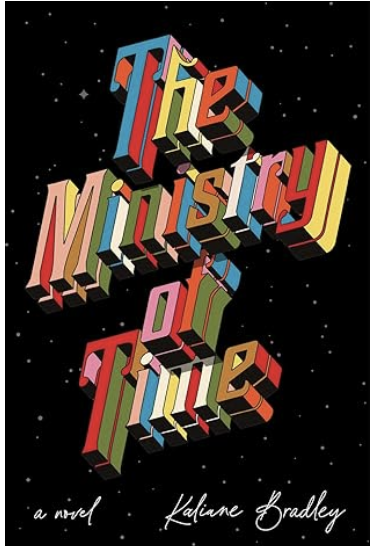
A surprisingly fun ride about the use of time travel to bring historical figures forward in time as part of a (very) complicated plot to ward off a severely climate damaged future. Our narrator (who I now realize is never given a name) is a civil servant who is offered an exciting new job as a “bridge” to one of these “expats from history.” A bridge’s function is to help the refugees from time accommodate to the present.
Our narrator is paired with Graham Gore — a Royal Navy officer and polar explorer from the early 19th century who is brought to the present just before his death as part of the ill fated 1845 Franklin expedition to discover the Northwest Passage. (This is a real historical person and his character and experiences are faithfully drawn from historical records — look him up!). Four other “expats” include the unpleasant Lieutenant Thomas Cardingham from 1645; the lesbian Margaret Kemble from 1665 rescued from the Plague; a woman from Robespierre era Paris (1793); and the closeted homosexual Captain Arthur Reginald-Smythe extracted from the Battle of the Somme in 1916 (he wasn’t going to make it).
The plot is crazy, the characters are well-drawn and time-appropriate. I loved the interactions among all the possible permutations of expats and bridges with what felt like very real reactions and learning curves — most taking to technological advances more easily than the great shifts in social mores and expectations. I found the depth and believability of these interactions and the personal reflections fascinating. Plenty of insight (which I always love) and a great new phrase for me: “ethically sparse” to explain how our narrator felt about certain policies and decisions made by her corporate overlords in the Ministry.
Bradley is an excellent writer — her phrasing and comic overlays are top notch. I found the plot confusing at times — but it feels like this was somewhat intentional as the events were certainly confusing to the people living through them, and we are sharing their experience. Our narrator is part Cambodian, and another bridge is Black. Add to this our historical lesbian and homosexual characters, and there is plenty of opportunity for some pithy and insightful identity issues as well. She even managed to work a theremin (weird musical instrument — look it up) into the plot as well. Impressive!
Some fun Quotes (sorry there are so many but I couldn’t pick):
“I finally had a savings account that looked like it might withstand a life emergency rather than crumple at a dentistry bill.”
“All the emotions I normally watched her puree into professionalism were churning on her face.”
“This was one of my first lessons in how you make the future: moment by moment, you seal the doors of possibility behind you.”
“When Graham got online, as he did not call it, and learned to peck at the keyboard with the elegance and speed of a badly burned amphibian …”
“But my mother never described herself as a refugee. It was a narrative imposition, along with ‘stateless’ and ‘survivor’.”
‘Stop hand-wringing,’ said Simellia, still smiling, though increasingly looking as if the smile was being operated by winches inside her skill. ‘God, Ministry bias training has a lot to answer for,’ she said. ‘I don’t want to drop a piano on your head but believe it or not, I already know I’m Black. You don’t have to roll over and show me your belly about it.’
“It was another dank toothache of a day, barely qualifying in its chromatic dullness for ‘grey‘.”
“Quentin treated me with an impatient familiarity, as if we were both were leaving streaks on one another.”
“We settled back, if ‘settle’ is the right word for the stiff, wary way we offset one another’s weight on the cushions.”
“That night, I slept with unpleasant lightness, my brain balanced on unconsciousness like an insect’s foot on the meniscus of a pond. I didn’t so much wake up as give up on sleep.”
“We separated and spent the fading day bobbing shyly around one another like clots in a lava lamp.”
“I launched into a preplanned speech about class mobility and domestic labor, touching on the minimum wage, the size of an average household, and women in the workforce. I took a full five minutes of talking and by the end I’d moved into the same tremulous liquid register I used to use for pleading with my parents for a curfew extension.”
Thank you to Simon & Schuster and NetGalley for providing an advance copy of this book in exchange for my honest review. The book will be published on May 7th, 2024.

 Books to look forward to ...