The Best Reading of 2021 (for me)

Skip to the category you favor if you don’t want to read them all! Search this site if you’d like to see the more complete review of each — I’m too lazy to put in all of the links.

NON-FICTION:
• Facing the Mountain By Daniel James Brown — The acclaimed author of The Boys in the Boat (which I loved) tackles Japanese Americans in WWII — both those interned in camps following FDRs Executive Order 9066 and those who served in the military’s 442nd Regimental Combat Team — the single Japanese American unit, which also happened the most highly decorated.
• Her Honor by LaDorris Hazzard Cordell — Well-structured and fascinating memoir of Cordell’s experiences as a Judge in Northern California.

LITERARY FICTION:
• Early Morning riser by Katherine Heiny — The biting inner commentary of a second grade Michigan school teacher following an unexpected path through her own life.
• The Human Zoo by Sabina Murray: Filipino-American writer Christina Klein (Ting) travels back to the Philippines — ostensibly to write a book about an episode in Filipino history featuring a headhunter tribe’s role in Coney Island’s “human zoo.”
• The Night Watchman by Louise Erdrich: The novel is based on the experiences of Erdrich’s grandfather, Patrick Gourneau, in his determined fight against the proposed termination of his Turtle Mountain Band of Chippewa named in House Concurrent Resolution 108 passed in August of 1953. Profound, brilliant, amazing, etc. — have been rendered meaningless through overuse. So just think about what they used to mean and apply here.
• The Sentence by Louise Erdrich: A Minneapolis bookstore is haunted by its most annoying (and recently deceased) patron. It’s not just any bookstore — it’s Birchbark Books — the very real bookstore owned by none other but the author herself who makes cameo appearances in the story. It’s a tender, multi-faceted story with characters that are so real, so nuanced, and so vibrant it made me cry to know that I would never actually be able to meet them.
• Horse by Geraldine Brooks: Rich, insightful fictionalized history of slavery, a champion racehorse, and the modern day research tools that bring the story to life.
• Dictionary of Lost Words by Pip Williams: Motherless Esme grows up in the Scriptorium (OED prime editor James Murray’s repurposed garden shed) playing under the table as her father and other lexicographers labor over entries for the decades long effort that will result in the magnificent Oxford English Dictionary.
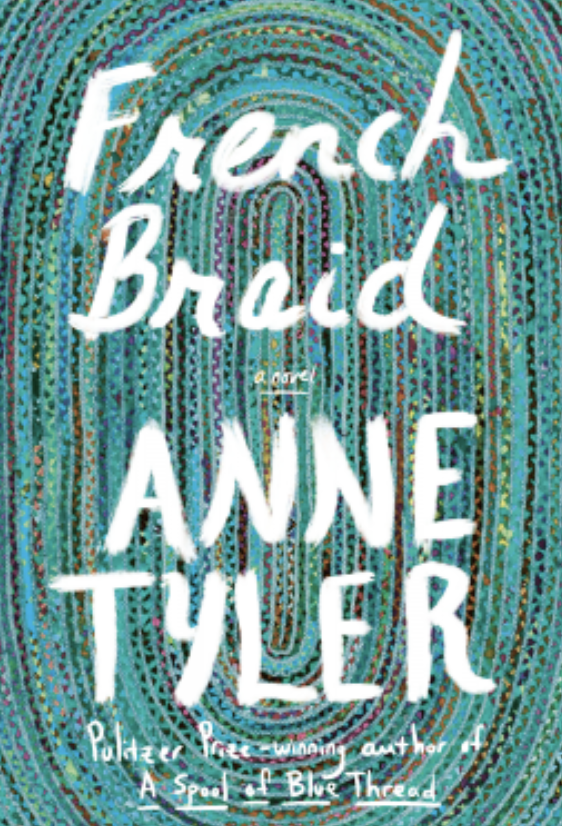
• Vinegar Girl by Anne Tyler: a recast of Shakespeare’s Taming of the Shrew — brilliant, witty, impossible to put down and with a completely different set of messages (we like the “shrew” from the beginning).
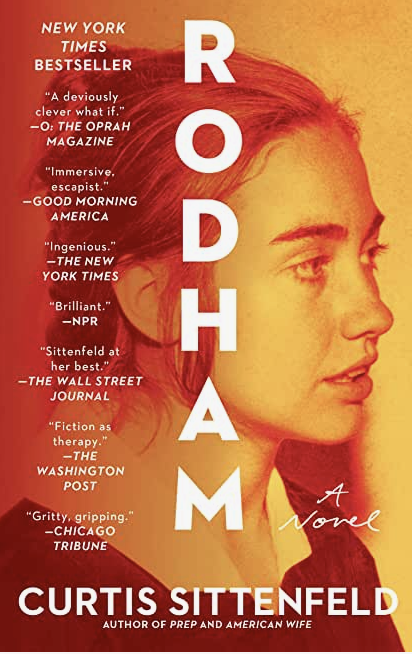
• American Wife by Curtis Sittenfeld — Fiction loosely based on the life of Laura Bush (the names have been changed to protect the innocent!). Very, very, well-written.
• Maud’s Line by Margaret Verble — Beautifully written, eye-opening, 1926 Cherokee life for young girl who wants more out of life.
• Booth by Karen Joy Fowler: A fictionalized history of the Booth family from 1822 to 1865 when its most infamous member — John Wilkes — shot Abraham Lincoln. John Wilkes is kept as an important but minor character throughout until his action at the end tears everything apart. Great breadth of character and story.

FICTION:
• This Time Tomorrow by Emma Straub — Bizarre, upper West Side, limited time travel story with good insight and character depth.
• In the Wild Light by Jeff Zentner — coming of age story, from rural East Tennessee to elite private high school scholarship. Clashing experiences and values.
• Lessons in Chemistry by Bonnie Garmus: Elizabeth Zott — master chemist — trying to do science in a late 50s / early 60s world that treats women as incapable, inferior, and irrelevant. But don’t worry about her — she gets places and keeps us laughing the whole way. Fun!
• Bloomsbury Girls by Natalie Jenner: great story that manages to combine a fascinating bit of history and early feminism with a literary mystery, historically accurate relationships, insightful writing, in-depth characters, and some great historical characters tossed in (Peggy Guggenheim, Daphne DuMaurier, Samuel Beckett to name a few)
• Adult Assembly Required by Abbi Waxman: A light and fun novel that allows us to inhabit a happy, kooky world full of lovable characters with more intellectual curiosity than I typically expect in this genre.
• Apples Never Fall by Liane Morarity: Impossible to put down, this is a twisted, gripping, family drama / mystery that explores the violence and cruelty as well as the compassion, kindness, and personal development of ordinary people.
F&SF:
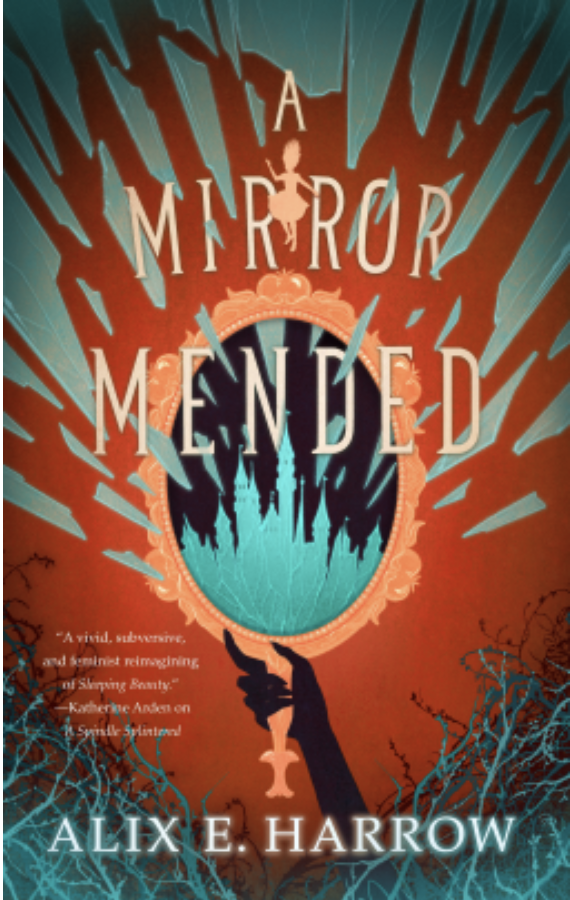
• A Spindle Splintered by Alix E. Harrow: Zinnia Gray of Ohio is the Dying Girl. Afflicted with GRM — a malady that always kills before its victims reach 22 — she has become obsessed with all things Sleeping Beauty (a girl with very similar problems). What follows is a funny and piercingly acute adventure through alternative narratives where an array of women try to alter the “crap” storylines they were given.Clever and funny with plenty of gender benders, surprise twists, and sass.

MEMOIR:
Marry Him by Lori Gottlieb — Hysterically funny and simultaneously insightful memoir on middle age dating
MYSTERY:
• A Sunlit Weapon by Jacqueline Winspear: Historical mystery at its best. Winspear’s Maisie Dobbs (a “psychologist and investigator” well connected with both the war office and the local chapter of Scotland Yard) continues to solve complex crimes while the timeline moves from early WWI (the first volume) through 1942 (WWII) in this 17th installment. The plot of A Sunlit Weapon centers around the women pilots who comprise the Air Transport Auxiliary (ATA).
WOMEN’S FICTION:
• The Heart Principle by Helen Hoang — a deeply reflective novel that masquerades (well!) as a steamy romance.
YOUNG ADULT:
• The Poet X by Elizabeth Acevedo — A novel-in-verse coming-of-age story about an Afro-Latina teenager with an intensely religious immigrant mother and a father who is absent even in his presence.

Horse by Geraldine Brooks

Writing: 5/5 Plot: 4.5/5 Characters: 5/5

A fictionalized history of the great racehorse and leading stud sire Lexington. The story is told through three alternating voices in two time periods (2019 and the 1850s): Theo, the well-mannered and highly principled mixed-race art history student, who discovers an old equestrian painting in a neighbor’s throw away pile; Jess, an Australian zoologist who finds herself articulating skeletons for the Smithsonian; and Jarret, the enslaved person who was with Lexington from birth to death as groom, trainer, and best friend.

It is a rich story full of insight into individuals and loaded with in-depth domain knowledge about a variety of professions and interests across time — the art world, the world of research, museum administration and networks, and of course the complete world of horse racing in the 1850s (which, even though I am not interested in horse racing at all, is completely fascinating).

While the primary characters were fictional, most of the others — artists, art dealers, race horses, trainers, grooms, and owners — were not. Cassius Clay (the first one, not Muhammad Ali) and Martha Jackson make significant appearances in this tale that blended so much history and showed the utter connectedness of individual stories throughout time.

It is a story suspended in racial issues and the nature of tentative friendships across racial divides. From slavery to the modern day micro-aggressions and biases that Theo experiences as an educated man of color in Washington, D.C., Brooks captures the inner thoughts of those involved including the “friendly” whites. The slavery she depicts goes farther than the traditional stories of beatings and rapes and delve into the realms of individual feelings, attitudes, and coping mechanisms. Spanning the Civil War, we see the confusion, the anger, and the value different people put on different aspects of life.

Brooks goes farther in drawing a parallel between the treatment of slaves and the treatment of the horses. Treating humans like animals is appalling, but she points out that even animals should not be treated as they were (see quote below). Jarret saw Lexington as a sentient being with talents, preferences, and fears. It is clear that Lexington would not have achieved what he did without this different kind of relationship. This is beautifully done.

My only annoyance with the book (which I’ll try to explain without spoilers) is the end of Theo’s story. Up to that point, the experiences of black characters could be said to be typical experiences of the time. Theo’s ending was very atypical and — unlike the rest of the book — was intended to shock rather than to teach. For me it didn’t fit and it didn’t add anything to the main themes of the book.

That aside — beautiful writing, meticulously researched, thoughtful treatment of difficult topics — a masterpiece of a book by Pulitzer Prize winning author Geraldine Brooks.

Quotes:

“An empathy grew in him. He began to watch people with the sensitive attention he’d only ever accorded his horses.”

“Theo shifted in his seat. He imagined she would file the exchange away as an example of how easy it was to offend a Black person. He felt irritated and suddenly exhausted.”

“He conceived, in those hard days, a renewed gratitude toward his father, who had endured hardship to rise to a measure of dignity that had extended its protective cloak over Jarret’s childhood. He learned, in those fields, what he had been spared. He felt a new understanding for the folk who bore it, and an admiration for those brave enough to risk everything to run away from such a life.”

“Because it had been his whole life, Jarret had never realized what it meant to be skilled at something that was highly valued. Now, he was merely a pair of hands, the same as any other.”

“The strong and the weak, she thought. Predator, prey. Nature’s way. God’s way. Even the Bible patriarchs had slaves. Who is Jarret to stand against it in this foolish, headstrong way, when even his own father, who is most injured in the business, accepts it? Why should she sit and shiver in the dark on his account.”

“It was impossible not to find in this picture an equivalence between the men and the horse: valued, no doubt, but living by the will of their enslaver, submitting to the whip. Obedience and docility: valued in a horse, values in an enslaved human. Both should move only at the command of their owner. Loyalty, muscle, willingness — qualities for a horse, qualities for the enslaved. And while the horse had two names, the men had only one.”

“His argument mirrored Frederick Douglass’s caustic essay arguing that no true portraits of Africans by White artists existed; that White artists couldn’t see past their own ingrained stereotypes of Blackness.”

“But Jarret thought both his father and Dr. Warfield treated horses like mechanical contraptions: do this, get that. Jarret disagreed, but had never said so. To speak of horses as beings with feelings, even souls — it might seem like foolishness, or even maybe sinful, in the eyes of the angry God of the White church Dr. Warfield attended.”

“Jess loved the interior architecture of living things. Ribs, the protective embrace of them, how they hold delicate organisms in a lifelong hug. Eye sockets: no artisan had ever made a more elegant container for a precious thing.”

Thank you to Penguin Group Viking and NetGalley for providing an advance copy of this book in exchange for my honest review. The book will be published on June 14th, 2022.

It all Comes Down to This by Therese Anne Fowler (Literary Fiction)

Writing: 4/5 Characters: 5/5 Plot: 4/5

Three grief-stricken sisters (Beck, Claire, and Sophie) wondering how to go forward without their mother, one recently released felon trying to move forward after the drastic side-swipe of events leading to his conviction, and one old house (which said dead mother insisted posthumously be sold) on a gorgeous and remote island off the coast of Maine. These are the components of Fowler’s “messy-families dramedy.” Beck — a freelance journalist with a quietly crumbling marriage; Claire — a pediatric cardiologist whose marriage crashed when her secret unrequited love was inadvertently revealed; Sophie — living an instagram life hobnobbing with wealthy art investors while house sitting because she can’t afford rent; and CJ — poster child of the poor little rich boy who wants nothing more than a peaceful place to paint after a harrowing three years in the pen.

Very good writing full of tart observations on life from a variety of perspectives. Good character insight. I found it interesting that I actually liked CJ more than I liked any of the sisters — probably because he was a little less self centered than the others having already gone through his lesson learning phase (prison will do that to you I hear) while they spend much of the book going through theirs. Some great background stories featuring Manhattan, LA, Dubai, and the wealthy world of art collectors. Also, an adorable little boy who kind of stole the show from my perspective.

Very enjoyable read.

Some good quotes:

“I needed to be humbled — I see that now. It’s the antidote for self-pity, which I admit to indulging more than a few times during the Great Undoing, when I allowed myself to think about how well everything was going for everyone else.”

“I never meant to get so caught up in all the artifice. I never thought the lifestyle would come to own me. It was a kind of addiction, I can totally see that now. … No more fueling myself with the facade of adulation from strangers who think I’m more than I am.”

“What unreasonable, illogical bastards feelings were.”

“Besides, a wealthy, liberal man with high intelligence and a sense of ethics like Sophie wanted was probably not going to look at her and see spouse material. Leaving aside her fine-tuned physical appearance, what did she have to offer? Being nimble, being wily, being conniving when that’s what was necessary to do the task at hand — this was not a compelling attribute list for a future Mrs. Liberal Billionaire.”

“Maybe because Mom was the glue. You know? Dad was … he made us like dandelion seeds, scattering us all over the city so that we could see and do everything. But then Mom held us all together, and now we’re adrift because neither of them are here.”

“CJ could not speak for every man, but in his view softer parts were just fine! Softer parts were natural! If God had meant for women to look like praying mantises, he’d have made their ability to bite men’s heads off literal.”

Thank you to St. Martin’s Press and NetGalley for providing an advance copy of this book in exchange for my honest review. The book will be published on June 7th, 2022.

A Sunlit Weapon by Winspear

Writing: 3.5/5 Characters: 4/5 Plot: 5/5

Historical mystery at its best. Winspear’s Maisie Dobbs (a “psychologist and investigator” well connected with both the war office and the local chapter of Scotland Yard) continues to solve complex crimes while the timeline moves from early WWI (the first volume) through 1942 (WWII) in this 17th installment. Unlike many mystery series, these never get repetitive, nor are they replete with filler (as way too many are!). Each story draws from history to lay out a context in which the particular mystery takes place. The series reminds me of Foyle’s War — one of my favorite British television series — which similarly retells history via specific and accurate events.

The plot of A Sunlit Weapon centers around the women pilots who comprise the Air Transport Auxiliary (ATA). One crashes near Bromley for no apparent reason, and when a second goes to the area to investigate, she finds an American soldier — a black American soldier — left tied up in a barn with a second (white) soldier missing in action. At the same time Eleanor Roosevelt is heading to Britain, and there is real fear around trying to keep her safe, given that she likes to talk with everyone — particularly those whom others find uninteresting — the workers and the women.

Major themes of racial prejudice pervade — both with the American soldiers (who strive to maintain color segregation in Britain despite the fact that there is no such practice or policy there) and for Maisie’s adopted daughter, whose darker skin tone leads to bullying in the local school. Good writing, appealing characters whose lives also progress from one volume to the next, and a satisfyingly twisted plot. Full of real history — my favorite: the female ATA pilots were the first governmental employees to achieve pay parity with men.

I love this series — hope she keeps going!

Thank you to Harper and NetGalley for providing an advance copy of this book in exchange for my honest review. The book will be published on March 22, 2022.

Persuasion by Jane Austen (Literary Fiction)

I reread this for a book club and am so glad I did. We’ve all seen the BBC period dramas that have brought all of Austen’s books to life, and they are all wonderfully delightful, but upon rereading I found a lot of depth that simply can’t be put easily into film.

Persuasion — the story of a woman who was once persuaded to reject the man she loved upon the recommendation of a trusted family friend — brings together all of the thoughts, manners, and considerations of a woman in the landed gentry at that time (~1815). While I am no expert in literary history, I wonder if this isn’t one of the first books to emphasize marital happiness and harmony over passionate love or a business like negotiation for status and money. Austen looks at the essential temperaments and morals of her characters and makes those considerations paramount in thoughts of marriage. And like many classics, the lessons are completely apt for today, despite their being couched in an “olde” patter. Plenty of early feminism, too, in the more open consideration of women as full beings in their own right, without application of the stereotypes of the day.

Delightful characters, thorough descriptions of the rules of society, and a real description of what is and isn’t important in considering one’s place in society, one’s duty, and one’s hope for happiness. The style is not modern — there are many long sentences with a great many commas liberally applied — but once I was back in the rhythm of the thing I had no problem.

Some good quotes:

“She felt that she could so much more depend upon the sincerity of those who sometimes looked or said a careless or a hasty thing, than of those whose presence of mind never varied, whose tongue never slipped.”

“Mr. Elliot was rational, discreet, polished, but he was not open. There was never any burst of feeling, any warmth of indignation or delight, at the evil or good of others. This, to Anne, was a decided imperfection. Her early impressions were incurable. She prized the frank, the open-hearted, the eager character beyond all others.”

“She thought it could scarcely escape him to feel that a persuadable temper might sometimes be as much in favour of happiness as a very resolute character.”

“…on more serious reflection, that, like many other great moralists and preachers, she had been eloquent on a point in which her own conduct would bear ill examination.”

“His looks shewing him not pained, but pleased with this allusion to his situation, she was emboldened to go on; and feeling in herself the right seniority of mind, she ventured to recommend a larger allowance of prose in his daily study; and on being requested to particularize, mentioned such works of our best moralists, such collections of the finest letters, such memoirs of characters of worth and suffering, as occurred to her at the moment as calculated to rouse and fortify the mind by the highest precepts, and the strongest examples of moral and religious endurances.”

“We never shall. We never can expect to prove anything upon such a point. It is a difference of opinion which does not admit of proof. We each begin, probably, with a little bias towards our own sex; and upon that bias build every circumstance in favour of it which has occurred within our own circle; many of which circumstances (perhaps those very cases which strike us the most) may be precisely such as cannot be brought forward without betraying a confidence, or in some respect saying what should not be said.”

Dark Night by Paige Shelton (Mystery)

Writing: 3/5 Plot: 4/5 Characters: 4/5

Number three in the Beth Rivers / Benedict, Alaska series from Paige Shelton. This series is slightly different in that while each book has its own set of dead bodies to explore, there is an overarching, longer term mystery centering on our heroine. Beth Rivers is her birth name, but she is better known as Elizabeth Fairchild — a famous author of thrillers. She is in hiding from a man who kidnapped and tortured her for three long days before she managed to break free — and each book gets us closer to understanding who this man is, where he might be, and how she can stay safely hidden until he is apprehended.

This is a cozy — just enough action to keep my interest and not enough tension to keep me awake at night. I like the quirky characters in this remote Alaskan town. I’m guessing there isn’t really a lot of verisimilitude in the story, but it’s fun to read. In addition to our brave and yet terrified heroine, we have a retired special ops, Willie Nelson lookalike running the library, a tough-as-nails woman running a halfway house for female parolees, a new love interest named Tex, and Beth’s newly appeared mother about whom one could write an entire novel.

Don’t worry if you haven’t read the first two — the author spends a little too much time (IMHO) doing a thorough rehash of previous events.

A great beach / plane read.

Thank you to St. Martin’s Books and NetGalley for providing an advance copy of this book in exchange for my honest review. The book will be published tomorrow (Dec. 7, 2021).

Vinegar Girl by Anne Tyler (Literary Fiction)

Writing: 5/5 Characters: 4/5 Plot: 4.5/5

Vinegar Girl is ostensibly a retelling of Shakespeare’s classic Taming of the Shrew, but really it is a recasting of the story — and one which makes you wonder if it isn’t what Shakespeare meant in the first place (couched in terms of the culture of the times).

29-year old Kate Battista is a blunt preschool teacher assistant with little interest in the social niceties. She’s been caring for her father (a man devoted to his research in autoimmunity and supposedly on the verge of a breakthrough) and her younger sister Bunny (the epitome of the eyelash batting, pouting, childish demeanor that’s apparently quite “alluring to adolescent boys”) since her mother’s death fifteen years earlier. When her father hatches a plan to marry her off to his assistant — a brilliant Russian whose visa is about to expire — she is appalled. And yet, at times she is almost drawn to his equally blunt and direct manner and his alien perception of American culture and conventions.

Great dialog, hysterical at times, fascinating social commentary, and impossible to put down (at only 237 pages I gobbled it up in an afternoon). The speech at the end, where Kate defends her husband against her sister’s accusations is worthy of the bard himself. The writing quality is not surprising — Tyler has been nominated for the Pulitzer three times and won once.

Loved this book and really did not expect to (I’m not a fan of rewrites in general).

This Time Tomorrow by Emma Straub (Literary Fiction)

Writing: 4.5/5 Characters: 4/5 Plot: 5/5

On Alice’s 40th birthday, she finds herself working in the admissions office of the private Upper West Side school she attended as a child, single, and facing the death of her only parent — an unconventional single dad who earned his keep with a best selling science fiction novel about time travel. But here is where things take a sharp 90 degree turn: after a drunken blow out of a birthday, she falls asleep in the shed outside her father’s house and wakes up … as her teenage self on her 16th birthday.

This was an impressive book in that we have all the character depth, insight, and good writing of a literary novel with the fantastic philosophical considerations made possible by the opportunity to potentially impact the future with some targeted behavior shifts on this one, important night. I loved her wry tone and engaging reflections, and I greatly enjoyed her descriptions of New York City from the perspective of a native. As a diehard SF fan, I was also pretty impressed with the breadth of time travel stories Alice ponders as she tries to come to terms with her situation. Some impressive thoughts about the nature of grief as well. I both enjoyed reading this book and feel like I gained some understanding from it as well.

Some fun quotes:

“In the real world, and in her own life, Alice had no power, but in the kingdom of Belvedere, she was a Sith Lord, or a Jedi, depending on whether one’s child got in or not.”

“Her pants were so long that they dragged on the ground, creating a seismograph of filth along the raw bottom edge.”

“It was like there were two of her, the teenage Alice and the grown-up Alice, sharing the same tiny patch of human real estate.”

“Everyone was gorgeous and gangly and slightly undercooked, like they’d been taken out of the oven a little bit too early, even kids that she’d never really looked at too closely, like Kenji Morris, who was taking the SAT class a whole year early, like he was Doogie Howser or something.”

“Her vision was clear, but it was coming from two different feeds. Alice was herself, only herself, but she was both herself then and herself now. She was forty and she was sixteen.”

“Like many transplants from small towns around the world, Matt seemed to look at New York City as a set to walk through, not thinking too much about what had come before.”

Thank you to Riverhead Books and NetGalley for providing an advance copy of this book in exchange for my honest review. The book was published on May 17th, 2022.

American Wife by Curtis Sittenfeld (literary fiction)

Writing: 5/5 Characters: 4/5 Plot: 4/5

An extremely well-written novel based on the life of Laura Bush. Alice Lindgren (the names have been changed to emphasize the fictional nature of the story) has been an inveterate reader since childhood (my kind of girl!). The story takes us from a relatively normal childhood to working as a librarian to meeting Charlie Blackwell (George W Bush) to becoming the First Lady and enduring the ensuing celebrity.

Each of the four sections in the book is based on a real life event in Laura’s life (accidentally killing a classmate in a terrible car accident; George drinking heavily and then becoming religious, etc.) but everything else is purely fictional. Sittenfeld’s aim is to explore what it is like to “lead a life in opposition to itself” based on the liberal tendencies of Laura Bush as compared with her ultra conservative leader-of-the-free-world husband. As far as I can tell, this liberality is deduced from Laura’s (non-elaborated) support for gay marriage and a woman’s right to choose (abortion) along with a smattering of donations to liberal style causes (soup kitchens, etc). (Spoiler alert) Sittenfeld went a step further (too far IMHO) by giving the fictional Alice a gay grandmother and an abortion. I guess the author felt Alice needed personal reasons to support those more liberal policy decisions — which is a shame as I like to feel that people can have political opinions that aren’t necessarily based on their own needs and experiences.

I found the story gripping — I had a paperback with small print (difficult for me to read) and I still couldn’t put it down, reading late into the night. Alice is a delightfully introspective character and her internal commentary and ponderings brought her life into full perspective for the readers. At the same time, I really dislike fictionalized history — regardless of the careful name changing and outright statements of FICTION FICTION FICTION, it is hard (impossible) to leave this book without a strong idea of what these people were like, despite the fact that the characterizations were a complete fabrication on the part of the author. While “Alice” comes off as a sympathetic and engaging character, “Charlie” comes off as a complete buffoon. I’m no George Bush fan, but this doesn’t really seem like a full and complete portrayal of a man!

Some sample quotes:
“This is our implicit agreement, that we can suggest or recommend but that we never force, never make ultimatums. It’s why we don’t resent each other.”

“I’ve thought often since Charlie became governor that it isn’t a surprise so many famous people seem mentally unstable. As their celebrity grows and they’re increasingly deferred to and accommodated, they can believe one of two things: either that they’re deserving, in which case they will become unreasonable and insufferable; or that they’re not deserving, in which case they will be wracked with doubt, plagued by a sense of themselves as imposters.”

“I had the fleeting thought then that we are each of us pathetic in one way or another, and the trick is to marry a person whose patheticness you can tolerate”

“He had told me I had a strong sense of myself, but I wondered then if the opposite was true — if what he took for strength was really a bending sort of accomadation to his ways, if what he saw when he looked at me was the reflection of his own will and personality.”

The Disinvited Guest by Carol Goodman (Mystery / Thriller)

Writing: 4/5 Plot: 4/5 Characters: 4/5
Don’t read this book before bedtime!

Reed and Lucy Harper — along with Reed’s sister Liz and her lover Niko, and Lucy’s best friend Ada and husband Crosby, and Mac, the caretaker — all head to a remote island off the coast of Maine in the year 2030 to wait out what appears to be an even more deadly pandemic. The island, now owned by Reed and his sister, was once a quarantine hospital for (mostly Irish) immigrants with Typhus back in the mid 1800s. It is a creepy place, with three generations of deathly illness — the Harper parents died there of Covid in the previous pandemic, and numerous Typhoid patients met their end there the century before.

From the tense start until the surprising finish, the plot twists and turns in a Lord of the Flies meets locked-room Agatha Christie meets part Hitchcock’s Rebecca unfurling. When bad things start happening and the brutality of the island’s history starts bleeding through to the present, Lucy feels her sense of reality slipping.

This is a mystery / thriller with a huge amount of character development. The interpersonal dynamics are nuanced and ever evolving with the threats of unknown origin inserting suspicion and fear where there was once cameraderie and friendship. Very difficult to put down or to get out of your head.

The last thing I wanted to read was a dystopian books about pandemics, so let me reassure you that pandemics really didn’t feature except as an impetus to get them on the island in a quarantine state.

Thank you to William Morrow Paperbacks and NetGalley for providing an advance copy of this book in exchange for my honest review. The book will be published on July 12th, 2022.