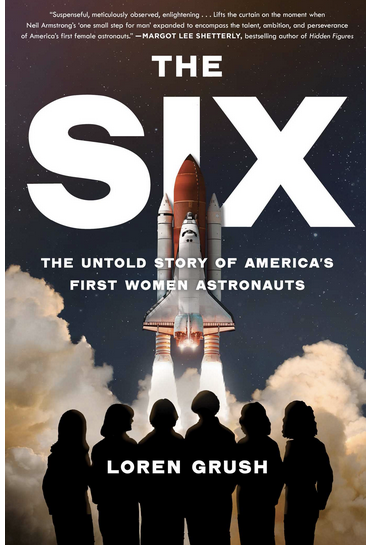
The Six by Loren Grush (Non-fiction)

This is the story of the first six women admitted to NASA’s astronaut corps. Drawn from extensive research, interviews, personal papers, etc, it is a blended story that follows each woman from an initial interest (often as children) through to the 1986 Challenger disaster. The narrative focus moved between what it meant for women to (finally) be allowed into the profession, and what it meant to be an astronaut regardless of gender or race. I much preferred the second theme as the level of detail — the (long) training regimen, the detailed prep for each mission, the nightmarish (for some) experience of requisite PR duty, and the actual experience of being in space and on a mission was completely engaging and well documented without a lot of extraneous agenda or overwrought emotion.


The focus on the barriers the women faced and how they were treated as women was actually well done. NASA made a decision to encourage women and minorities to apply to their historic recruitment of Mission Specialists for the new space shuttle program. The focus was completely on the competency of the women under consideration, who were put to the same tests and held to the same expectations as the men. They passed with flying colors — without the need to make changes to the requirements in any way in order to accommodate women. There were a few stories about pranks, teasing, and a Playboy centerfold or two, but nobody got “offended”and everybody simply focussed on doing a great job. The media was irritatingly focussed on asking about “romance in space,” whether the women “weeped” during training, or attacking the morality of a mother for considering such a career, but the women took these questions in stride, answering calmly and rationally and letting the ridiculous questioners look like the fools (IMHO). I was annoyed by the commentary in the prolog and epilog about the need for achieving representation of women and minorities in the astronaut corps — something I disagree with completely. I’m all for equal opportunity, equal pay, and equal recognition — I see no reason for any profession to have its practitioners exactly mirror the gender and racial makeup of the population at large. Get the best! And certainly none of “the six” were turned away from their space dreams by the lack of women role models. So there!


I particularly enjoyed all the details about the space flights — the (multi-year) training routines, the detailed prep for each mission, and the individual experiences on board — both the awe and the practical details on how difficult every day tasks such as movement, eating, and yes, toileting, becomes when one is weightless. I was also intrigued by the medical experiments designed to understand the impact of weightlessness on our internal fluid systems (think blood and a pumping heart). Not something I had considered before. Overall, a clear, engaging description of what it is like to be an astronaut, with personal focus on the journeys of the first six women to take the plunge.
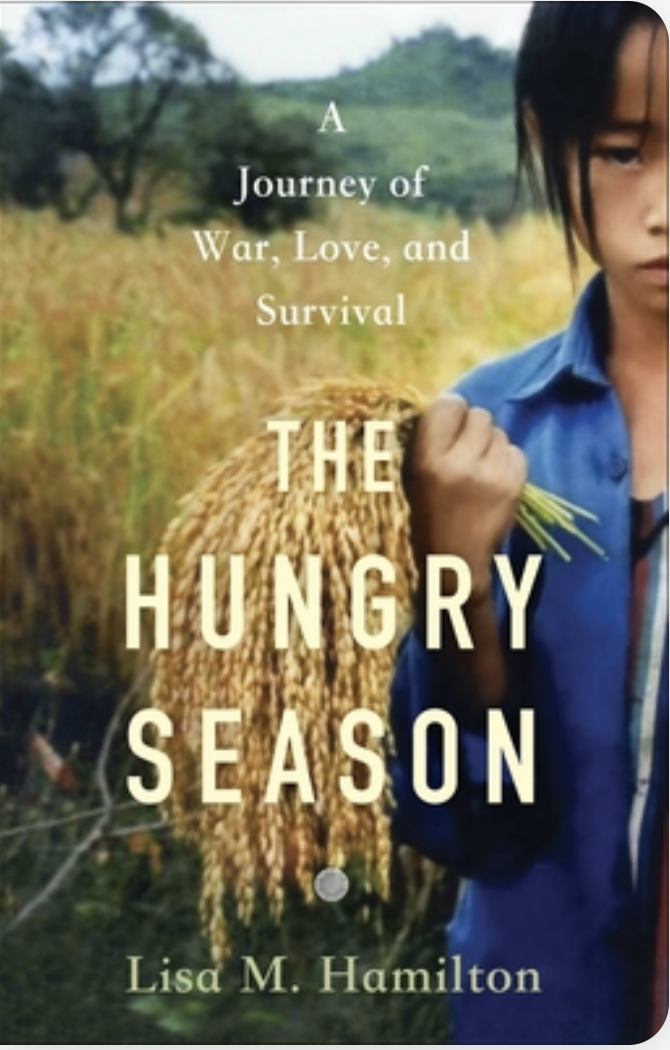
The Hungry Season by Lisa M. Hamilton (Biography)

This is the biography of a Hmong woman — Ai — born in Laos in 1964. It covers her life journey from Laotian hill dweller through years of war to a Thai refugee camp to a (more or less) successful rice farmer in Fresno. Told in a memoir style, Hamilton does a decent job of telling the story the way she hears it from Ai (through an interpreter as Ai cannot read or write in any language, or speak any English). There is no novel-like narrative arc that makes sense of the various pieces, and the reader is left with many questions about basic aspects of her life — like what happened to her eleven children?? But this is what makes it more interesting — this really is Ai’s story the way she thinks about it — not the way Hamilton might have framed it. Therefore there is no agenda, no political commentary, and no call to action. On the one hand, I was left with the question of “What am I supposed to do with this information?” But, on the other hand, I realized I’m not supposed to do anything with it: It’s a recollection of a specific woman’s life as she told it. Specifically, the memoir of an illiterate woman who would not be penning one of her own. It’s rare to be able to encounter that kind of verisimilitu

I learned a lot about the huge impact of the Vietnam War on Laos, quite a bit about the Hmong — their culture, sense of identity and belonging and utter disassociation with the countries they live in — and quite a bit about rice farming. In Ai’s personal story is plenty of matter-of-fact detail about what it is like for a girl to grow up in what I would call a primitive and truly patriarchal society as well as the personal and confusing experience of immigration bureaucracy. I have no idea how similar Ai’s story is to stories from other Hmong refugees, but Ai was driven and the various ways she seized opportunities when others did not was very telling. I was fascinated by the way she viewed the different people in her life. Both alien and intriguing.

I found it surprisingly easy to read, even though it didn’t appear at first to be something that would hold my interest. The style was a bit dry, but utterly authentic.

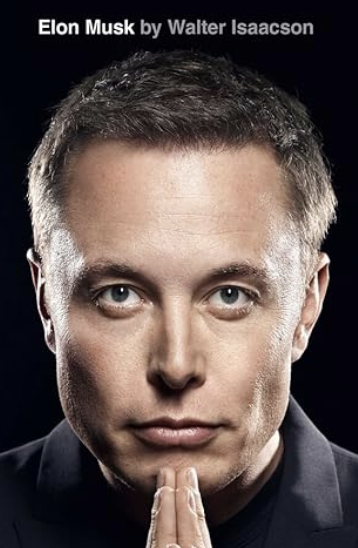
Elon Musk by Walter Isaacson (Biography)

Isaacson does a great job of bringing odd, but clearly brilliant, characters to life. He did it for Steve Jobs, Benjamin Franklin, Leonardo Da Vinci, and now he does it for Elon Musk who makes a great subject for Isaacson’s style of biography — one full of relevant detail along with well-rounded, attributed commentary every step of the way. From childhood to the creation of one industry disrupting business after another (eg Tesla, SpaceX, StarLink) all the way through to the (hostile, messy, and yet full of interesting disclosures) acquisition of Twitter, we get the full story as synthesized from interviews, public records, and the occasional clearly labeled author opinions. The coverage continues through December 2022. What comes through clearly is Musk’s passion, drive, and brilliance, as well as what he is like as a human being. My overall takeaway aligns with this Bill Gates comment: “You can feel whatever you want about Elon’s behavior, but there is no one in our time who has done more to push the bounds of science and innovation than he has.” After reading the book, I am a fan, albeit a fan who has no interest in either befriending (not a likely scenario in any case!) or working for the man

I love that Musk is motivated by pushing humanity forward on the grandest scale: making humans multiplanetary; leveraging renewable energy sources to fight climate change; ensuring that human consciousness survives; and enabling freedom of information through networks and speech platforms. I like that he has the courage to stand by the need for a strict meritocracy in his companies, not subscribing to what he calls the “woke-mind virus.” (I understand that this is a contentious issue but I fall on his side, at least in terms of optimizing for competence when hiring). His “simple” test for the people he hires (or keeps) is that they are “excellent, trustworthy, and driven.” Here excellent means actually excellent as in qualitatively MUCH better than average — not the inflated excellent that is designed to make everyone feel good. Also, his version of driven is intense — he keeps things moving with a “maniacal sense of urgency.” While I’m well beyond the energy levels required to work in such an environment, how exciting would it be to be a part of actually changing the world in such a direct, uncluttered, way? Anyone who has ever worked in a (larger) tech company knows the frustration of trying to get anything done with all of the bureaucracy and frankly mediocre gatekeepers along the way. The issues surrounding Twitter are a completely different kettle of fish. Isaacson says, “He thought of it as a technology company, when in fact it was an advertising medium based on human emotions and relationships.” There is extensive coverage and I’ll let you make up your own mind about it.

The book is full of detailed engineering information (made surprisingly accessible and interesting to readers with varying degrees of background and experience) ranging from the behavior of materials to principles of process design. We’re also treated to Musk’s ongoing verbal annotations at each step as to what he was doing, why he was doing it, how he made it happen, and what he would have done differently (not much, really, but some). I found it all pretty engaging.

So was it a good book? I thought so — it was superbly organized and curated so that topics were introduced at the appropriate time. The book proceeds in date order so you get a real sense as to the number of (giant and complex) balls Musk was keeping in the air at once — each with its own urgencies, engineering issues, political aspects, funding problems, etc. He didn’t take a lot of vacations. Isaacson had access to — and extensively interviewed — almost everyone who had any large part to play in the pages. This included family, friends, colleagues, past employees (both disgruntled and appreciative), reporters, industry luminaries, and, of course, Musk himself. Isaacson’s biographies are never dry reading and his style is blessedly clear and concise (we’re still talking 700+ pages — imagine what the length would have been had it been written by a lover of tangents!).

Well worth reading.

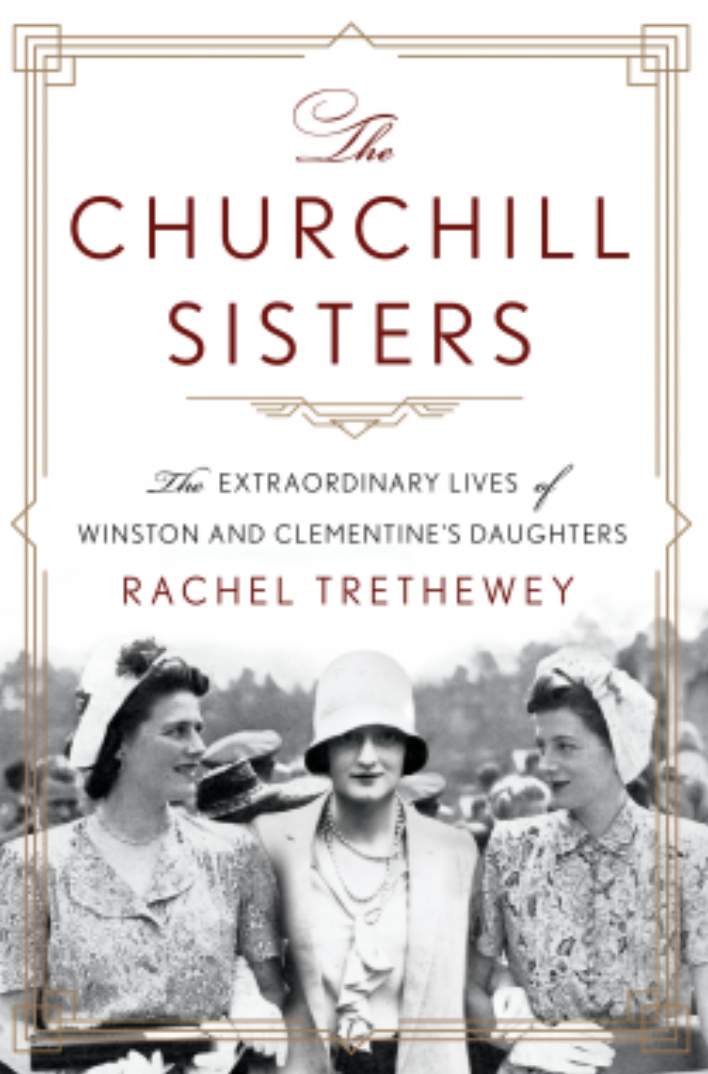
The Churchill Sisters by Dr. Rachel Trethewey (History / Biography)

Writing: 3/5 Coverage: 4/5 Accessibility: 5/5

This is the story of Winston Churchill’s three daughters: Diana, Sarah, and Mary. The author pulls together a pretty decent narrative from personal diaries, articles, and massive amounts of correspondence between family members and friends. Unlike fictionalized history (which I hate), she never pretends to know what a character is thinking or feeling, although she does occasionally opine about things that “must have been difficult” or provides context about what kind of behavior was “normal” for that time and place.

I found this easy and interesting to read. I did have to ask myself what made it interesting. While Sarah was a reasonably well known actress, neither of the other sisters accomplished anything particularly spectacular. It was kind of like watching Downton Abbey — these sisters were able to lead very interesting lives because their father was who he was and we get to live vicariously. And they were interesting lives! They each were able to travel with him (often his wife was unavailable), met many heads of state including FDR and “Uncle” Joe Stalin, and be present for some important pieces of history such as the Yalta conference.

There was plenty of discussion of psychology and the changing role for women in society. Plenty of heartbreak and insight into how the other half lived and plenty of factual tidbits that were surprising, yet not important enough to bring out in more official histories (eg the squalor including bedbugs at the Yalta conference — yuck!)

Worth reading.

Thank you to St. Martin’s Press and NetGalley for providing an advance copy of this book in exchange for my honest review. The book will be published on November 23rd, 2021.

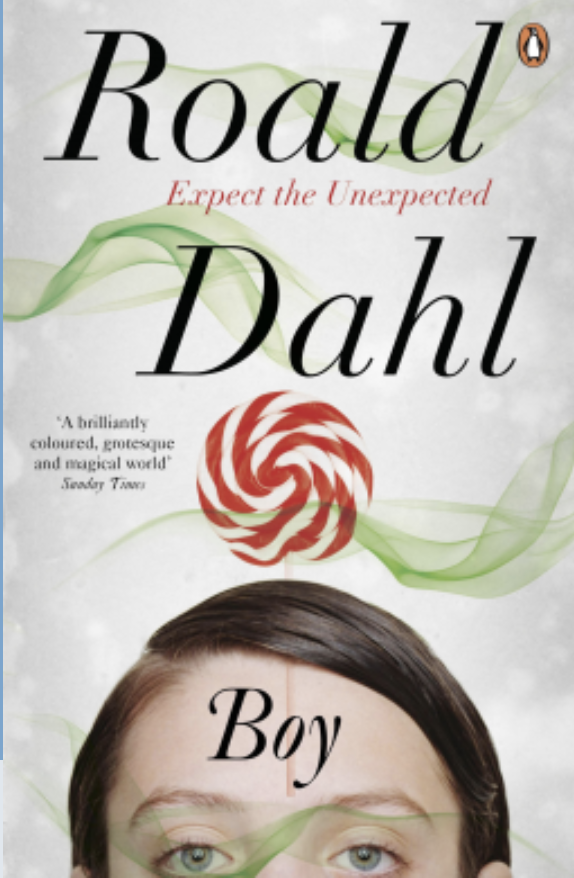
Boy by Roald Dahl (Autobiography sort of…)

Penguin Books is reissuing Roald Dahl’s “not an autobiography” memories of youth. It reads exactly like one of his fantastic children’s books, and in particular it is easy to see the inspiration for my favorite — Charlie and the Chocolate Factory — in many of the stories. It is consistently funny and engaging and fascinating in its ability to demonstrate the development of one of my favorite childhood authors. Since his childhood began in 1916, the descriptions of what life was like (operations without much anesthetic, the typical (and ridiculously cruel IMHO) boarding school experience, and complications of international travel) are plentiful and eye-opening. All in all a very fun (and fast) read.

Looking at some background on Dahl, I’m surprised at all the vitriole — he’s been accused of racism, profanity, and sexual innuendo. The examples given were ridiculous. I despair.

The Undoing Project by Michael Lewis (Non Fiction)

Fascinating book about the birth of the field now known as Behavioral Economics. Part biography, part history, part research summary, this is the story both of the evolution of a friendship and collaboration as well as the melding of two previously disconnected fields: Economics and Psychology.

After their first meeting around 1968, Amos Tversky and Daniel Kahneman were rarely apart. The decades long tight collaboration that resulted produced a stunning number of key insights and seminal papers on the psychology of Judgement and Decision Making. The primary idea: there is systematic bias in the way people make decisions. Their work was responsible for the fall of the concept of the “rational man.”

They studied the cognitive basis for common human errors and elaborated on a set of heuristics (simple rules) and cognitive biases that subconsciously influenced the way people formed judgements or made decisions. Many of the resulting concepts — such as Anchoring, Framing, Hindsight, and the Halo Effect — have become household terms. Their “Prospect Theory,” created in 1979 and developed in 1992, was a “psychologically more accurate” description of how people made decisions, replacing the previously accepted Utility Theory which claimed that people made decisions by rationally calculating the utility (or value) of all potential outcomes. Applications of this work are widespread, ranging across medicine (evidence based medicine), sports, finance, and military uses.

Some of the heuristics:
• Representativeness heuristic: the decision making shortcut that determines probability based on how well the subject is representative of a stereotype.
• Availability heuristic: the mental shortcut that makes decisions based on examples that come immediately to mind.
• Anchoring and adjustment heuristic: the influence of a previously suggested reference point (the anchor) on a person’s assessment of probability.
• Simulation heuristic: the shortcut for determining an event based on how easy it is to imagine – or “the power of unrealized possibilities to contaminate people’s minds.”

Some of the biases
• Recency bias: Decision making based on the relative ease of remembering something that happened recently rather than long ago.
• Vividness bias: bias based on the ease with which an option can be recalled.
• Hindsight bias: the tendency of people to overestimate their ability to have predicted an outcome that they could not have possibly predicted.
• Present bias: The tendency of people to undervalue future with respect to present.

The structure of the book follows the story of the two men. Though the closest of friends and collaborators until the last few years of Tversky’s life, their personalities and background were quite different. While both Israeli, Amos came from an aggressive Zionist family, while Danny and his family escaped from Nazi Europe; Danny was an appeaser, Amos a bully; Amos loved theory while Danny liked practical application of psychology, “Amos was built to fight, Danny was built to survive.” The book includes captivating detail about their backgrounds and interactions, and the process by which the work took flight and captured the interest of researchers and practitioners around the world.

The journalistic style of the story makes the personal bits easy to remember, with the research results a little harder to grasp in its entirety. The narrative jumps around a bit and the down side of watching a theory evolve (and not necessarily in a linear order) is that it can be harder to comprehend the whole. I found reading the Wikipedia articles on Kahneman and Tversky helped supplement my understanding of the actual work.

Some great quotes:
Asked if their work was related to AI, Amos said: “We study natural stupidity instead of Artificial Intelligence.”

In response to evolutionary psychology proponents Amos said, “The mind was more like a coping mechanism than it was a perfectly designed tool.”

On “Creeping determinism,” Amos says: “He who sees the past as surprise-free is bound to have a future full of surprises.”

“Economics was meant to be the study of an aspect of human nature, but it had ceased to pay attention to human nature.”

“Theories for Amos were like mental pockets or briefcases, places to put the ideas you wanted to keep.”

The Art of Power by Jon Meacham

Writing: 5 Coverage: 5

An insightful and well-written biography about one of the Founding Fathers and the author of our Declaration of Independence. Jefferson didn’t fit the traditional view of a “hero.” He was an intellectual with refined tastes and while he played a huge role in the establishment of the new country, he played a small, and often maligned, role in the revolutionary war itself.

His politics focused unwaveringly on liberty — he felt that a personal liberty would create a sense of free inquiry that would help usher in “the reign of reason” and pave the way to a “war-free world of open markets.” He applied this focus on liberty and free inquiry to everything — including religion. We have him to thank in large part for the separation of church and state that formed part of the country’s foundation. While he professed a deep belief in God, he stood firm against the establishment of religion. He hoped that “subjecting religious sensibilities to free inquiry would transform faith from a source of contention into a force for good.”

When he finally became president, he said he would spend his presidential years “pursuing steadily my object of proving that a people, easy in their circumstances as ours are, are capable of conducting themselves under a government founded not in the fears and follies of man, but on reason… This is the object now nearest to my heart.” In his first presidential address — fresh from electoral machinations and utter hatred between his party (the republicans) and the federalists — he brought people together by pointing out that they were experiencing a difference of opinions, not of principle. Wouldn’t it be nice to hear this message a little more often today?

I started the book with a negative view of Jefferson (gleaned from reading the Hamilton and Adams biographies) and left with a far more positive view. While Jefferson was obviously a consummate politician, I didn’t really see the hunger for power that Meacham claimed, although Jefferson was an excellent wielder of power. He was raised to be a leader — on a large plantation if not of the whole country. He clearly would have preferred a life at home, engaging in his curiosities, and spending time with the family that he cherished. In his last years, he was able to indulge in the life of the mind that he craved. He created a university that was to be based on “the illimitable freedom of the human mind.”

It was hard to align this image of a man I grew to admire — one who fought for liberty, scientific enquiry, and religious tolerance, who believed in education for women, and who cared deeply for family and friends — with the man who kept slaves, and fathered children with his wife’s enslaved half-sister. Many have suggested that it was a different time with a different set of norms while others have pointed out that there was a strong abolitionist movement already and that a few of his local contemporaries had already freed their slaves. I liken it to meat eaters today — I can see a vegetarian future where the norm is horror at the thought of killing animals to eat their meat; but although we are exposed to that opinion today, the norm is still to eat meat, even if there is a part of us that thinks there is something “slightly unpleasant” about it. Regardless, I’m not willing to throw away the good that a person has done because they participated in a practice that I find abhorrent today.

Excellent book both for the fair coverage and the Pulitzer-worthy writing. Strongly recommended.

Benjamin Franklin: An American Life by Walter Isaacson

new words (to me):
orotund – full round and imposing
obloquy – strong public criticism or verbal abuse

Another strong biography from Walter Isaacson, written in his trademark lucid style and ordered linearly from birth to death. A bonus chapter provides a survey of commentary about Franklin over the last 200 years as his popularity waxed and waned.

Franklin is best known for his discovery that lightning was of the same stuff as electricity (aka kite flying), the surfeit of quotable quotes from his Poor Richard’s Almanack(sic), and being one of the (by far oldest) Founding Fathers of the United States. What was new for me was how many elements of the American stereotype came directly from him. He was driven by practicality and curiosity, had “an inbred resistance to establishment authority,” and was a champion of middle class values. In the 200 years since his death, his legacy has been bandied about both by those who admire these values and those who label them bourgeois and scorn them. In any case, he was the first and they have largely stuck!

He led through seduction, rather than argument; he “embodied a spirit of Enlightenment tolerance and pragmatic compromise”; and he was an inventor and purveyor of scientific curiosity until the day he died. His inventions were legion and he was writing long treatises on scientific subjects to the very end. One of the things I liked best about him was that at 48, once he had built up a large, franchised, printing business that brought him enough money, he simply retired and devoted his time to science and politics. He also refused to patent his inventions from that point forward, wanting to freely share what he had discovered as he did not need more money.

Pragmatism was a core value for Franklin, even when it came to religion. When he was near death, he was asked whether he believed in Jesus. After expressing surprise that nobody had ever asked him this directly before, he replied that “The system of morals that Jesus provided was the best the world ever saw or is likely to see.” But on the issue of whether Jesus was divine: “I have some doubts as to his divinity; though it is a question I do not dogmatize upon, having never studied it and think it needless to busy myself with it now, when I expect soon an opportunity of knowing the truth with less trouble.”

As a Founding Father, Franklin was by far the best travelled, having spent several years in England and France as well as having travelled throughout the colonies as Postmaster General. He was also far more comfortable with real democracy than many of the delegates as he actually trusted “the people.” Yale scholar Barbara Oberg summed up both his closing speech at the Constitutional Convention of 1787 Congress and his life in general saying the speech was “the culmination of Franklin’s life as a propagandist, persuader and cajoler of people.”

It’s a long, comprehensive, book full of details that I didn’t personally always find interesting, but it was easy enough to skim to those that were. However, I found the overarching themes, conclusions, and some of the stories fascinating.