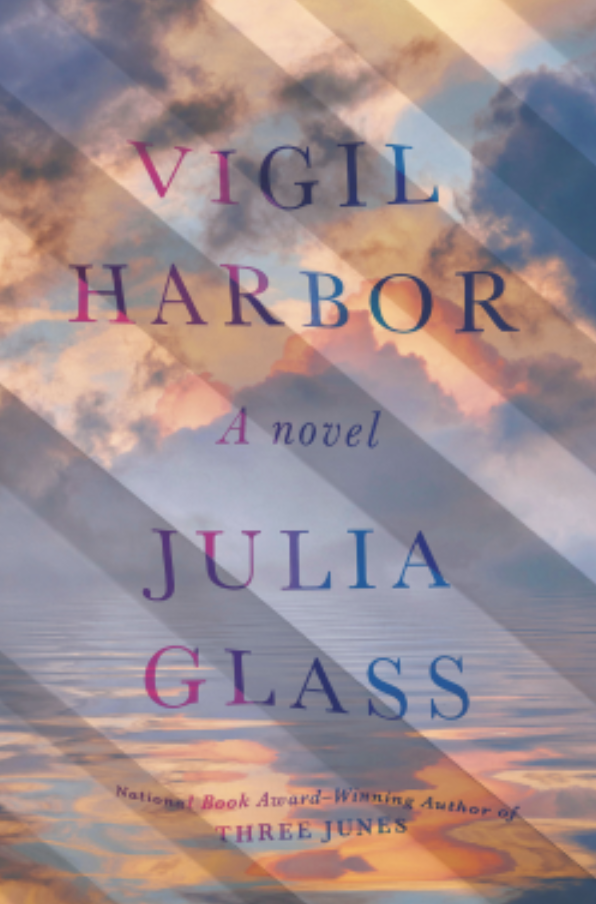
Vigil Harbor by Julia Glass (Literary Fiction)

Writing: 5/5 Plot: 4/5 Characters: 5/5

Vigil Harbor — an historic town on the Atlantic Seaboard — is a kind of safe harbor for many of its residents. It feels protected from the ever increasing calamities of the broader world — rising oceans, increased acts of terrorism, epidemics. When a spate of divorces and a couple of strangers arrive —each with a hidden agenda — suddenly the problems of the world seem to hit a little closer to home.

Only ten years into the future, many of the characters are understandably living in a constant state of fear, anxiety, and despair. In the world (too well) portrayed by the author, Survival Studies has become a college major, climate change has diminished songbirds and summer fruit almost to extinction, coastal towns have been triaged into oblivion, various groups are hunkering down in survivalist bunkers, and eco-terrorism is on the rise with frequent and deadly bombings. One character suggests that humankind is busy “unbuilding the ark.” Other characters are stubbornly optimistic or simply moving on with their lives, adapting to a constantly changing reality as we humans have been doing for millennia.

A set of deeply drawn characters — a despairing biologist who believes he works in “marine hospice”; a retired English high school teacher bent on revenge; an optimistic architect who considers himself “an architect for the future, not the apocalypse”; a college drop out back home after a narrow escape; a brilliant landscaper still terrified of possible deportation after 40 years in the country; and others — all wind around each other while living, reflecting, worrying, and hoping. They are having children and consciously considering what it means to parent in a rapidly deteriorating landscape. They are creating art, appreciating beauty, and finding people and places to love. They are finding ways to define and follow their passions to try to make the world a better place (for some definition of better and some definition of place).

Julia Glass is one of my favorite writers — as in the actual use of words to describe, set a mood, bring to life. Her vocabulary is both large and up-to-date (it’s possible that she made up several of the more modern slang words). She creates these amazing turns of phrase — the words literally turning / tumbling around in the phrase — and so many of her sentences are gorgeous little nuggets that I grew tired of underlining. She does a pretty interesting job of describing nature, pieces of art, and different architectures. I say “interesting” because I typically don’t enjoy descriptions — I don’t visualize from words well — but her descriptions touch on more than just the visual, and I find myself reading slowly, rapt. Her depiction of technology evolution and the resulting shifts in human behavior over the next ten years was seamlessly and utterly believably done.

I valued the personal reflections, discussions, and general interactions between characters — each with sometimes wildly different perceptions of reality — what was happening, what was important, what could be done, who to blame. I appreciated the sometimes subtle differences between generations, culminating in a last few pages describing the thought processes of a young (middle school age) boy whose worldview had obviously been molded by the events of his short life.

Overall, a book that made me think, made me understand other people a little better, and gave me a set of characters that I would enjoy knowing better. I did stick to reading during the day because I am easily anxietified (my word) and wanted to be able to sleep.

Some good quotes:
“The slivers of grief in your flesh dissolve or work their way out. One day they’re gone, even if they leave you with tiny, whisper-thin scars.”

“Celestino is not a man who thinks that thorough knowledge of a person’s history, much less his or her emotional “journey,” equates with greater trust or deeper love.”

“The art she made was the obsession reaching for a language.”

“Did all intelligent, creative people need to be tangled up in thickets of neurosis, their psyches riddled with the stigmata of previous heartache?”

“She was living on less than a shoestring; she was living on a filament of fishing line.”

“I am a living redundancy. I realize: the wife not so much replaced as deleted, just as I might take my green pen … and blithely score through a student’s unnecessary adverb when the verb can stand on its philandering own.”

“Time will tell,” said Margo. “As it alway does, the fucker.”

“Is this the beginning of old age, this irrepressible pull of futility? My own father lapsed into a storm cloud of silence once he retired.”

“But that was one of my worst faults: fretting over past choices when they have been chiseled into history.”

“His step father refers to his generation as Generation F: failure, fuckup, fatalist; take your pick.”

This book will be published on May 3, 2022. Many thanks to the author for giving me an early reader copy
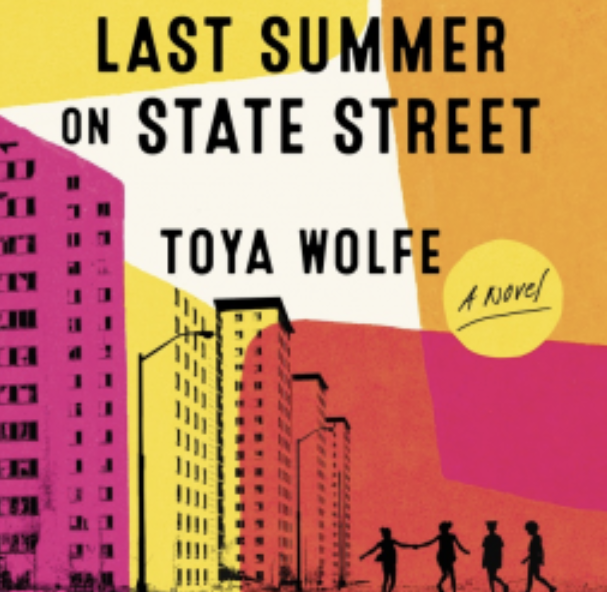
Last Summer on State Street by Toya Wolfe (Fiction — Audio book)

Summer 1999 — the Robert Taylor Homes (aka the Projects) on State Street on the South Side of Chicago. 12-year old Felicia (Fefe) is happy jumping rope on the third floor porch with her three friends: Precious, the daughter of a pastor; Stacia, member of the notorious, gang-affiliated, Buchanan family; and newcomer Tanya, the ultra-timid, obviously neglected daughter of a crackhead on the 10th floor. Everything changes during this fateful summer: The Chicago Housing Authority is demolishing all of the Project buildings on State Street, and theirs is slated to go next; her brother, Meechee, is taken by the police in the middle of the night in a warrantless raid; random gunfire becomes more frequent; and Stacia begins to favor the family business over jumping rope.

Labeled a novel, the story reads like a memoir, and it would be easy to believe that much of the story comes from the author’s personal experience as she was raised in the Robert Taylor Homes in this time period. The writing is excellent (I have no quotes as I listened to it on audio), and the reader is absolutely excellent — perfect pacing, differentiated and consistent voices for the multiple characters, and beautifully timbre in her voice. Told in the first person from Fefe’s perspective, we follow her through that summer and then on through her life for the next twenty years, giving her an opportunity to revisit the turning point that summer was and to get closure on some of the events. It’s a gritty and truthful telling with added introspective commentary as Fefe comes of age in the midst of gangs, police crackdowns, drugs, single mothers on the one hand, and a strong community, loving family, and supportive clergy, teachers, and neighbors on the other. I love the advice she is given, the wide array of people from whom she gets it, and what she does with it. Fefe is a success story — she gets out of the Projects and finds her vocation in helping others — unlike some of the friends she had who do not have some of the same advantages offseting the meanness, cruelty, and unfairness of the environment.

This is a coming-of-age story, not a political treatise. Her conclusion near the very end is that “We are not the originator of our misfortunes — we are all the victims of it.” Her point: people do what they have to do to survive. I would have been a little happier with some ideas on what creates these misfortunes and how everyone — including those who live amidst it — could contribute to making it better.

Thank you to Harper Audio and NetGalley for providing an advance copy of this book in exchange for my honest review. The book will be published on June 14th, 2022.

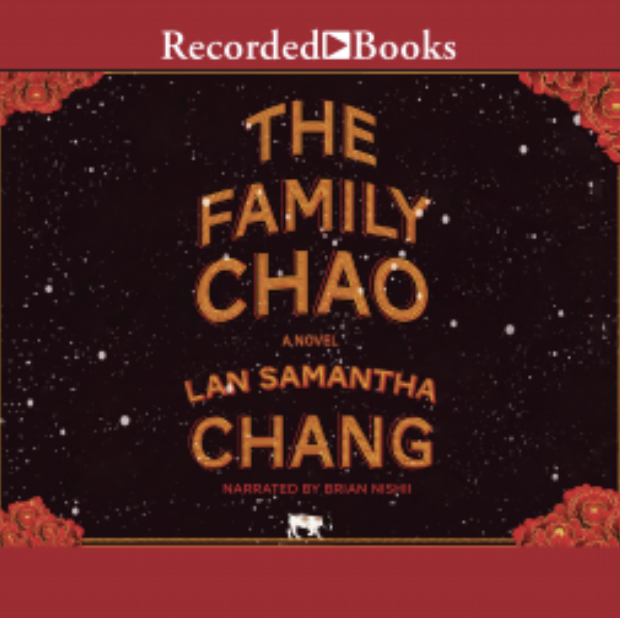
The Family Chao by Lan Samantha Chang (Audio Book – Fiction)

Writing: 4/5 Characters: 5/5 Plot: 4/5

Fine Chao Restaurant in Haven, Wisconsin, serves mouthwatering Chinese food to the local Chinese American community. While the jacket blurb promises us the dead body of the patriarch and all around not-very-nice-guy, this doesn’t appear until roughly half way through the book. In the meantime, we are introduced to his three sons (Dagou, the brash head chef; Ming, a financial success overcome with self-hatred; and James, home from college for Christmas) along with Katherine, a stubborn but no longer wanted fiancee, and an entire community struggling to define itself in an environment that is not exactly hostile, but isn’t exactly welcoming either.

I listened to this on audio so had more trouble taking notes and identifying quotes. The writing is very good — with an excellent vocabulary and the ability to tease out individual personalities and issues for each of the distinct characters (even the dog!). The racially based and often insidious experiences of each character was felt and reacted to differently for a more subtle and (IMHO) realistic portrayal. I found the book deeply interesting, but not nearly as comic as the marketing blurb suggested. I’m honestly confused about why it is billed as a comedy (I have a hard time laughing at other people’s problems unless they themselves are making a joke of it). I also found it less tense than I expected (which is a plus, as who needs more tension in their life?). I was impressed that the book didn’t resolve in anything even approaching a formulaic way — another big plus!

In summary — definitely worth reading, more family drama than mystery, stereotype busting, and full of character depth.

Thank you to RB Media and NetGalley for providing an advance copy of this book in exchange for my honest review. The book was published on February 11th, 2022.

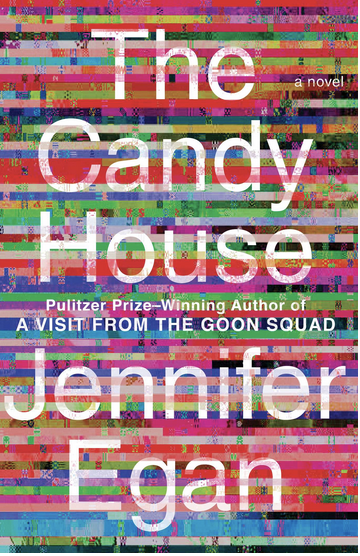
The Candy House by Jennifer Egan (Literary Fiction)

Writing: 5/5 Plot: 5/5 Characters: 5+/5

This is one book where the marketing blurb is spot on, so I’m going to quote from it rather than trying to describe it myself: It is “an electrifying, deeply moving novel about the quest for authenticity and meaning in a world where memories and identities are no longer private.” Own Your Unconscious — a technology that enables recording your own unconscious memories, and the attendant Collective Unconscious arising from the blending of millions of such externalized memories is transforming the world — for better or worse. In a set of tangled vignettes connecting characters who are, in their way, each pursuing the answers to their own existential dilemmas, we follow their reactions, reflections, experiences, and goals in this rapidly changing dynamic.

I loved this book — full of the complexity and layering of life where we are all spinning in and out of our each others’ stories. Egan has fantastic insight into so many wildly different characters — full of depth and quirk with none of the shallow explanations for behavior we (too often IMHO) accept in fiction. Each vignette is written in a slightly different style, depending on the “voice” of the main character — I liked them all but my favorites were those told from the perspective of a troubled (and troubling) child, one from an autistic perspective, and one told in a set of text / emails spreading out to include ever more surprisingly (to them) connected characters. I wish I had drawn out a character map from the beginning because I sometimes lost track of current (and past) relationships. If you read Welcome to the Goon Squad, you will recognize several of the characters.

Plenty to think about — lots of philosophy, psychology, linguistics, and anthropology applied to the social media ++ of shared memories and identities within a well thought out slightly speculative fiction setting. Some interesting multi-generational family dynamics and a particularly thought-provoking examination of the role of fiction in a world which has the actual recording of experience as opposed to those crafted by authors. Egan’s writing — as always — is flawless.

Some good quotes:

“He was known not to curse; his mother, a sixth-grade grammar teacher, had heaped such withering scorn on the repetitive dullness and infantile content of profanity that she’d managed to annul its transgressive power.”

“Gazing up at the lighted windows on one, Bix thought he could practically hear a potency of ideas simmering behind it.”

“I never know what’s going on, and because my attempts to find out lack the tactful goo that typicals smear all over their actions and words to blunt their real purpose, I come across as lurching and off-putting.”

“But whereas in music, a prolonged pause adds power and vividness to the refrain that follows it, pauses in conversation have the opposite effect, of debasing whatever comes next to the point that a perfectly witty riposte will be reduced to the verbal equivalent of a shrunken head, if too long a pause precedes it.”

“… no one escaped the roving, lacerating beam of my judgement. I can access that beam, even now, decades later: a font of outraged impatience with other people’s flaws.”

“In this new world, rascally tricks were no longer enough to produce authentic responses; authenticity required violent unmasking, like worms writhing at the hasty removal of their rock.”

“Social media was dead, everyone agreed; self-representations were inherently narcissistic or propagandic or both, and grossly inauthentic.”

“Here was his father’s parting gift: a galaxy of human lives hurtling toward his curiosity. From a distance they faded into uniformity, but they were moving, each propelled by a singular force that was inexhaustible. The collective. He was feeling the collective without any machinery at all. And its stories, infinite and particular, would be his to tell.”

Thank you to Scribner and NetGalley for providing an advance copy of this book in exchange for my honest review. The book will be published on April 5th, 2022.

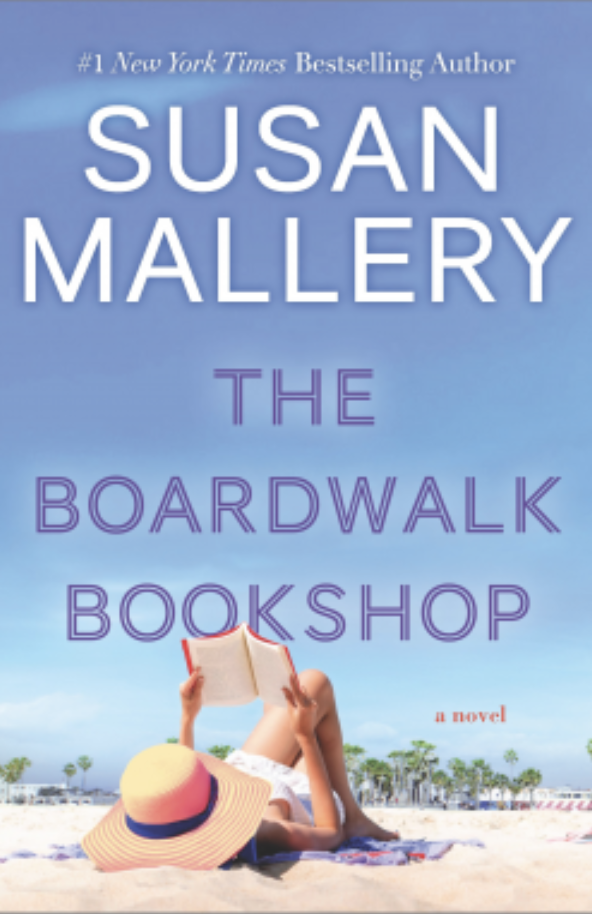
The Boardwalk Bookshop by Susan Mallery (Women’s Fiction)

Three women combine resources to open a combined business in a gorgeous piece of boardwalk real estate. Bree (bookstore) is walled off emotionally in a desperate attempt at self protection; Mikki (gift shop) is three years into a “friendly” divorce but is having trouble moving on; and Ashley (Muffin shop) whose boyfriend is everything she could possibly ask for, except for his tenacious anti-marriage stance.

But while their businesses are flourishing, their personal lives are not. The story comprises family history and relationships, realistic scenarios requiring improved self awareness and difficult decisions, the requisite (and utterly unrealistic but who cares) hunky but deeply sensitive and supportive men, and a special guest appearance by a vibrator named Earl.

Another fun, warm, and self-help worthy offering from Susan Mallery.

Thank you to Mira Books and NetGalley for providing an advance copy of this book in exchange for my honest review. The book will be published on May 31st, 2022.

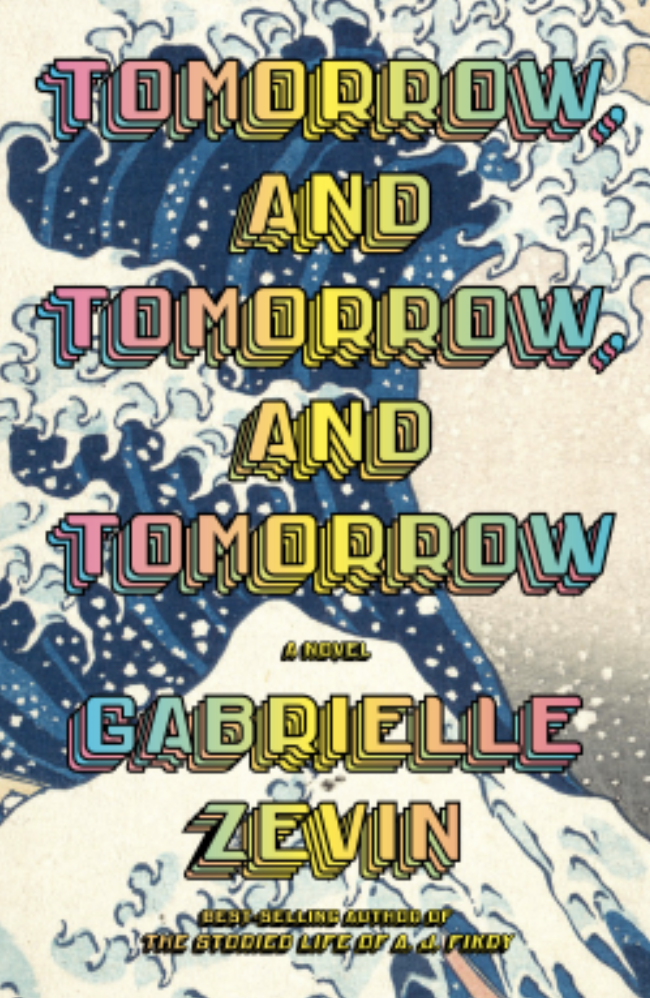
Tomorrow, and Tomorrow, and Tomorrow by Gabrielle Zevin (Fiction)

Writing: 4/5 Plot: 4.5/5 Characters: 5/5

Immersed in the Gaming world, this novel follows two childhood best friends who alternate periods of estrangement and brilliant (and wildly successful) collaborations in game design over a thirty year period. Sam and Sadie meet in a hospital when they are twelve years old — she is visiting her cancer-fighting older sister, he is recovering from a terrible car accident which has crushed his foot. She is the first person he has spoken to in the six weeks since the accident.

In the gaming world, you always have a tomorrow — you never really die — and this contrast between the imaginative worlds they create and play in and the experiences of the real world in which they dwell figures highly. Moral and ethical dilemmas, a good long story with plenty of twists and turns, and (most importantly to me) characters that you like, even when they are actively disliking each other, make this book worth reading. I’m a Zevin fan so there was no surprise in my enjoyment.

I’m not a gamer or someone who is even remotely interested in online or video games, but this did not impact my enjoyment of the book at all. At heart it’s about people and relationships, and I did enjoy the descriptions of the games and the creative process that generated them — even if I have no desire to ever play them! If you are a gamer, I would imagine it would enhance the experience.

Some fun new words (for me):
cicerone — is an old term for a guide who conducts visitors and sightseers to museums, galleries, etc. and explains matters of archaeological, antiquarian, historic or artistic interest.
torschlusspanik — gate shut panic — fear that time is running out and you’ll miss the opportunity

Some fun quotes:

“She had once read in a book about consciousness that over the years, the human brain makes an AI version of your loved ones. The brain collects data, and within your brain, you host a virtual version of that person. Upon the person’s death, your brain still believes the virtual person exists, because, in a sense, the person still does.”

“Ands what is love, in the end? Except the irrational desire to put evolutionary competitiveness aside in order to ease someone else’s journey through life?”

“Sam experienced his body as an antiquated joystick that could reliably move only in cardinal directions.”

“The way to turn an ex-lover into a friend is to never stop loving them, to know that when one phase of a relationship ends it can transform into something else. It is to acknowledge that love is both a constant and a variable at the same time.”

“The conversation was an ouroboros of inaction that they dutifully repeated every couple of months.”

“Sadie felt a swelling of love and of worry for him — what was the difference in the end? It was never worth worrying about someone you didn’t love. And it wasn’t love if you didn’t worry.”

“Sadie was, by nature, a loner, but even she found going to MIT in a female body to be an isolating experience.”

Thank you to Knopf Doubleday and NetGalley for providing an advance copy of this book in exchange for my honest review. The book will be published on July 12th, 2022.

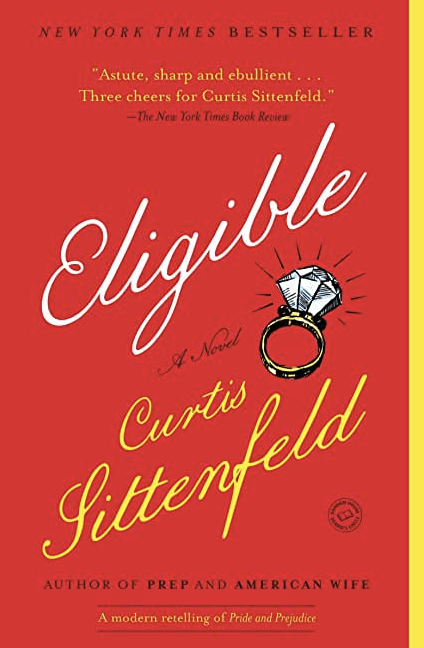
Eligible by Curtis Sittenfeld (Literary Fiction)

Writing: 5/5 Characters: 4.5/5 Plot: 4.5/5

A retelling of Austen’s popular Pride and Prejudice: Sittenfeld did a masterful job at “modernizing” the characters while keeping their essential personalities and issues intact. (As a quick recap, one could summarize P & P as about a family with five daughters that tries to marry them off, although the book is much more interesting than that). Jane, the eldest, at 40 is trying to have a baby via artificial insemination, while Liz (#2) has been dating a married man, having been led on for decades. While Jane and Liz both live in Manhattan, they are home in Cincinnati to help care for their father who is recovering from a heart attack. It is from this setup that they meet newly local doctors Chip Bingley and Fitzwilliam Darcy. What follows is hysterically funny and completely engaging, including Reality TV shows, tech millionaires, Atherton estates, and — wait for it — a trans husband. My absolutely favorite part, though, oddly enough, is Mr. Bennet with his ROFL sardonic one liners.

Sittenfeld is a seriously good writer. While this review may make this sound like a light weight beach read, it really goes much deeper than that — full of the insight, reflection, and social commentary featured in the original. I guess I’m going to have get over my prejudice against modernizations because this was hilarious, fun, and a good piece of literature. Put me in a great mood for the New Year.

Quotes:
“There’s a belief that to take care of someone else, or to let someone else take care of you — that both are inherently unfeminist. I don’t agree. There’s no shame in devoting yourself to another person, as long as he devotes himself to you in return.”

“The truth, however, was that he did not seem egomaniacal to her; he seemed principled and thoughtful, and she felt a vague embarrassment that she worked for a magazine that recommended anti-aging creams to women in their twenties and he helped people who’d experienced brain trauma.”

“At the table, Caroline was on Darcy’s other side and had spent most of the meal curled toward him in conversation like a poisonous weed.”

“Liz felt the loneliness of having confided something true in a person who didn’t care.”

“‘Fred’, the nurse said, though they had never met. ‘How are we today?’ Reading the nurse’s name tag, Mr. Bennet replied with fake enthusiasm, ‘Bernard! We’re mourning the death of manners and the rise of overly familiar discourse. How are you?’”

It occurred to Liz one day, as she waited on hold for an estimate from a yard service, that her parents’ home was like an extremely obese person who could not longer see, touch, or maintain jurisdiction over all of his body; there was simply too much of it, and he — they — had grown weary and inflexible.”

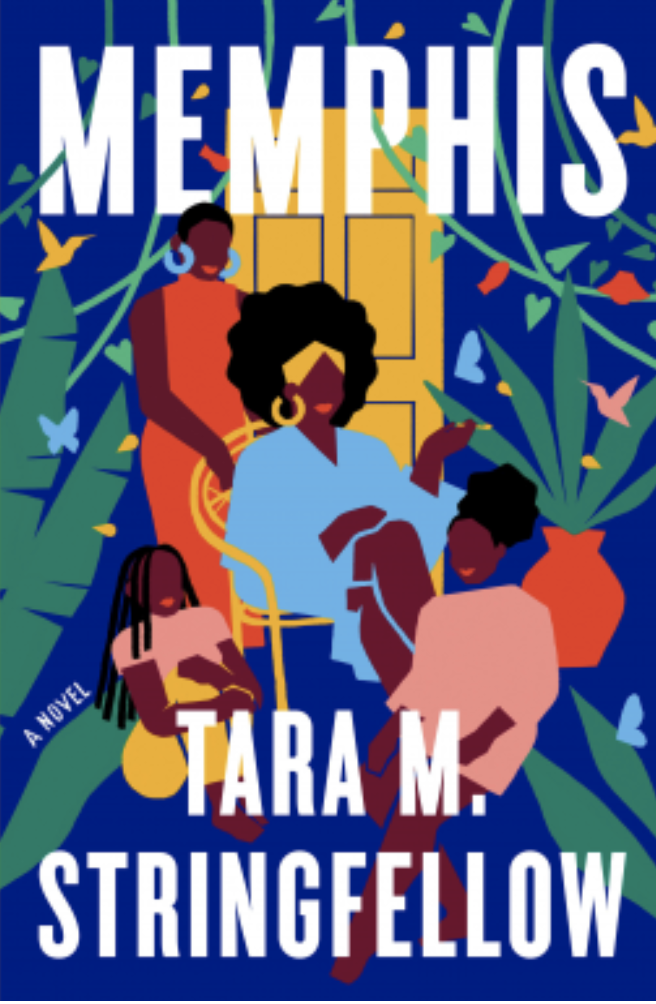
Memphis by Tara Stringfellow (Fiction / Multi-cultural interest)

Writing: 4/5 Plot: 3/5 Characters: 4.5/5

The story covers 70 years in the lives of a family in Memphis ranging from 1937 through 2001. Sisters August and Miriam, their mother Hazel, and Miriam’s daughter Joan are the voices that tell the story with date labeled chapters that jump back and forth across time (which can be confusing — I had to take careful notes). The book is written in a highly emotional style, guaranteed to make you angry at the injustice and hardships these women must suffer through.

I believe this is intended to be a positive novel about the tight knit Black community of women who pull together and give each other strength when needed — and I loved these women characters and would have loved to be a part of the community. But the other side of the coin is that the book is strongly anti-man and pretty anti-white as well. The big sign in August’s hair shop is “NO CHILDREN, NO MEN, & WE EAT WHITE FOLK HERE.” It’s not really a joke.

Through the generations, everything bad possible happens to this family including a child rape, multiple instances of domestic abuse, and lynching. It reinforces negative stereotypes of current Black culture — single mothers and abusive, violent men. The one decent man in the history was lynched, with the strong implication being that he was lynched by his white colleagues (he had made homicide detective — the first Black man in the area to do so). The author took every opportunity to blame whites or men for everything that went wrong, without considering any errors of judgement made by the women. And while she gave each of the violent black men a backstory that might explain their violence, she gave them no path to rehabilitation and completely exonerated the women who may have contributed to their “badness,” whether intentionally or not.

In summary, the story was gripping but I found the writing overly dramatic, manipulative, and full of good messages (be strong, be independent) based on the wrong (IMHO) reasoning. I’m all in favor of women being independent because everyone should be able to take care of themselves — this is not a safe or uniformly just world — but they shouldn’t need to be independent because men are uniformly violent, bad, and untrustworthy.

I know a lot of people love these emotionally heavy-handed books. For me, however, it is too easy to absorb strong, negative, messages without a more nuanced treatment. No, there is no amount of nuance that makes lynching or domestic violence OK, but there are a lot of good men (black and white) out there and lots of good white people, too. Do we really need to fan the flames of racism and sexism (in reverse) by ascribing horrible behavior to every person who appears to be male and / or white? I found the book disturbing — not just for the content (which was disturbing enough!) but for the incendiary way that Black men and all white people (except one nice Jewish store owner!) were painted as irreedemably and unquestionably bad.

Thank you to Random House Publishing and NetGalley for providing an advance copy of this book in exchange for my honest review. The book was published on March 1st, 2022.

Adult Assembly Required by Abbi Waxman (Fiction)

Writing: 4.5/5 Characters: 5/5 Plot: 4/5

A light and fun novel that allows us to inhabit a happy, kooky world full of lovable characters with more intellectual curiosity than I typically expect in this genre.

Laura Costello has abruptly moved cross-country to study physical therapy much to the dismay of her academically-oriented family and charming but domineering ex-fiancee. Within days of her arrival, her apartment house has burned down along with all of her belongings. Luckily for her, as an uncharacteristic downpour converts her to utter bedraggledom, she wanders into Nina Hill’s bookstore (the star of the utterly delightful The Bookish Life of Nina Hill) and things take a sudden turn into the neighborhood of charm, quirk, and delight.

I love Waxman’s writing — it’s simultaneously funny and thoughtful. While none of the story is particularly realistic, it also isn’t stupid — it creates a world I’d like to inhabit even if I don’t ever expect to do so. In addition to the plot (which is engaging), there are lots of interesting descriptions of various fields of study from the perspective of someone who really knows and cares about it. For example, I loved the descriptions of the human body and what it does mechanically during every day activities.

The setting of Larchmont Village (a real LA neighborhood that sounds like a place I’d like to visit) along with a lovely boarding house run by an even lovelier landlady reminds me a bit of Maupin’s Tales of the City books, albeit with a little less focus on sexual experimentation and discovery.

Some fun quotes:
“What had been tobacco and paper was now dog vomit, and Herbert was sitting under the kitchen table regretting his life choices.”

“Anything’s interesting when it’s explained by someone who cares about it.”

“I’ve learned recently that my mind isn’t the safest neighborhood to go into alone.”

“Laura looked at the cat. The cat looked at her. Neither of them said anything, Laura because she didn’t speak cat and the cat because she was mentally composing a letter to her senator.”

“Ferdinand was no longer pregnant, but she was still built along capacious lines.” (bookstore cat)

“Anxiety lives in the unknown future, depression lives in the unforgettable past, and peace lives in the acceptance of the present moment.”

Thank you to Berkley Publishing Group and NetGalley for providing an advance copy of this book in exchange for my honest review. The book will be published on May 17th, 2022.

The Verifiers by Jane Pek (Fiction / Mystery)

Writing: 3.5/5 Characters: 3.5/5 Plot: 3/5

Claudia Lin is the tiny, stereotype-busting, Asian, lesbian, bicyclist hero of this tongue-in-cheek, semi-snarky, story of an amateur detective gone wild. Having landed a job at a dating detective agency, she ignores protocol and starts investigating the mysterious disappearance of an unusual client. And so it goes…

The mystery lives within an interesting premise — online matchmaking systems using AI based bots which move from verifying dating profile claims to nudging clients to becoming one with their claims. Claudia (and obviously the author) is an inveterate reader, and I enjoyed her literary asides and the source of Claudia’s detective know-how — the (fictional) mystery series starring the philosophical Inspector Yuan. Some interesting, novel likes explorations of the life and background of Claudia and her family that dips freely into a somewhat standard immigrant parent backstory. It’s a bit of a genre mishmash that started as a lot of fun with well-drawn characters but ultimately took too long to get to an abrupt and unsatisfying end.

Thank you to Knopf Doubleday Publishing Group and NetGalley for providing an advance copy of this book in exchange for my honest review. The book will be published on February 22nd, 2022.