Austen at Sea by Natalie Jenner — Read by Rupert Graves (Historical Fiction)

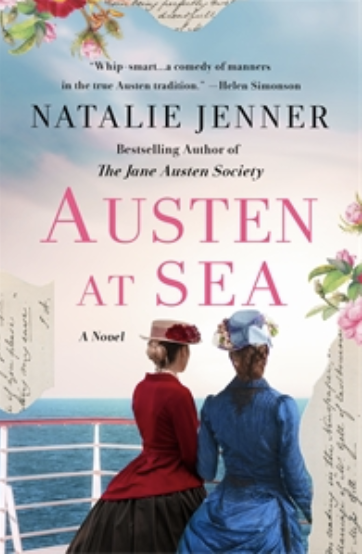
An enthusiastic five stars for this marvelously fulfilling piece of historical fiction. The story manages to be both intellectually rich and emotionally pleasing. My perfect blend! In 1865, two daughters of the long-widowed Massachusetts Supreme Court Justice pen a daring request to the only surviving brother of their favorite author — Jane Austen. Meanwhile, two Philadelphia book collectors have similarly engaged with Admiral Austen about Austen memorabilia and editions. On the side, the Justices of the Massachusetts Supreme Court have elected to read and discuss the entire Austen oeuvre over the very summer break that sees the four correspondents heading off to England. Their discussions are completely engrossing, putting into dialog multiple well crafted opinions and surprising me with their depth. The story itself takes the reader from Boston, across to the sea to Hampshire, and concludes with a courtroom drama spectacular spanning both countries.

On the surface, this could pleasurably be read as an engaging comedy of manners a la Austen herself, with the delightful development of surprising relationships etc. But under the tip of the romantic iceberg lies the depth, thoroughness, and insight of the literary, political, legal, and economic contexts of the time period. Equality, justice, freedom — these are topics on everyone’s tongues during the post-Civil War recovery period, the still relative newness of the United States, and the current battles in both locations for various forms of women’s rights (including, but not limited to, women’s suffrage). These issues are brought out with a number of different techniques. Those discussing Austen’s works have literary discussions about her characters, their roles, purposes, desires, and life lessons. Women’s rights are addressed (and argued) through a fascinating panoply of laws, Acts, and jurisdictions — exemplified by the situations and experiences of the various characters. It’s obvious to us today (I hope!) that women should have rights equal to those of men, but to hear the completely sensical arguments and rebuttals on both sides of the issue during that time period by people who were not inherently “evil,” was deeply interesting.

I both read and listened to this book. I actually preferred the audio in this case. It slowed me down enough to actually listen to different viewpoints and consider them carefully — I usually read too fast and often miss important details. Rupert Graves is the reader — a wonderful actor with a beautiful reading voice. I learned a lot about Austen’s life and her works (despite the fact that I’ve read each multiple times) and enjoyed a wide array of references from that time period — including Louisa May Alcott who appeared in a delightful cameo role. The cast of characters at the start of the book is quite helpful.

Highly recommended.

Thank you to St. Martin’s Press, Macmillan Audio, and NetGalley for providing an advance copy of this book in exchange for my honest review. The book will be published on May 6th, 2025.

The Hidden City by Charles Finch (Historical Mystery)

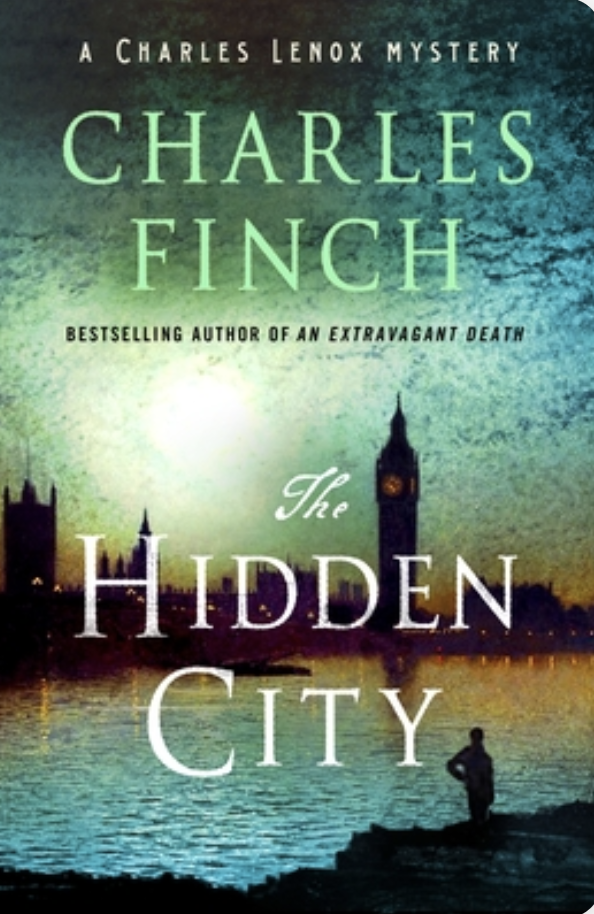
Number 12 in this historical mystery series, but number one for me. Regardless of not knowing the history of the characters I was able to follow the story very well. I would definitely categorize this as a “cozy” as there were no “thrilling” (i.e. terrifying for the reader) scenes to get my anxiety going. Fine by me! Interesting that as a cozy written by a man, there was less filler of the tea parties and gown description types (also fine by me) but plenty of historical detail about the Victorian Age in which the stories are set. This included plenty of social as well as policy / political commentary. I particularly enjoyed the description of various “guilds” (known here as “livery companies”) started in medieval times — all styled as the “Worshipful Company of xxx.” Tickled me. Some good bits on women’s suffrage and the complete injustice of the treatment of London’s “lower classes.” This particular episode felt like more of a novel than a mystery, although there was a mystery obviously (old murders just tied together with a current threat to someone living in the house where one of them occurred). I quite liked the characters and will likely go back to number one and see how things progress!

Thank you to Minotaur Books and NetGalley for providing an advance copy of this book in exchange for my honest review. The book will be published on November 4th, 2025.

The Eights by Joanna Miller (Historical Fiction)

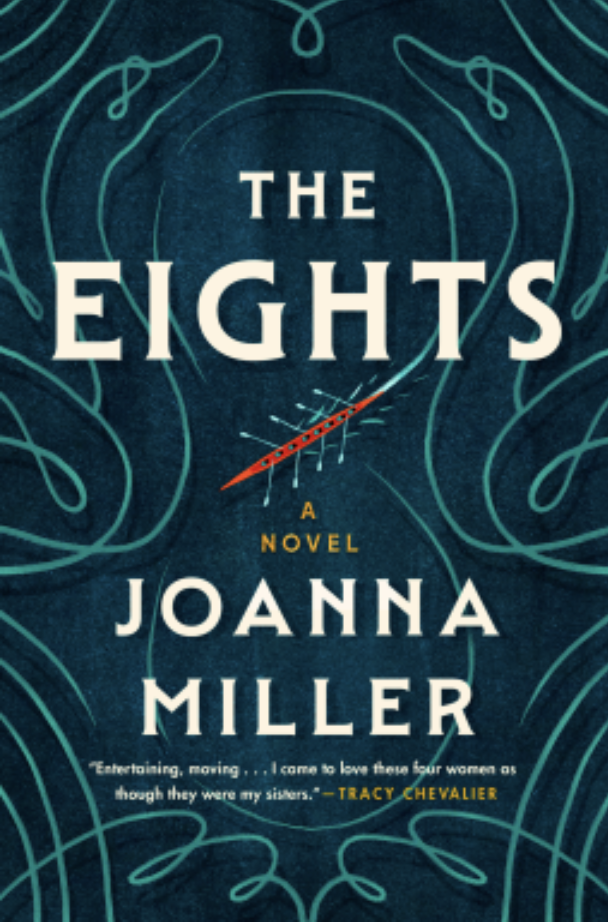
Historical fiction at its best! Four women are part of the historic 1920 matriculation of women to Oxford — the first in over 1,000 years. Roomed together in “corridor eight,” this is the story of their first year, with several flashbacks to flesh out their personal context. Beatrice Sparks — almost 6 feet tall, daughter of a famous (and vigorous!) suffragette, with an appetite for politics; Marianne Gray — the motherless daughter of an English vicar; Dora Greenwood — beautiful and still grieving for the brother and fiancee who died in the war; and Ottoline Wallace-Kerr — wealthy and at odds with her family’s expectations, who keeps herself calm with mathematics. There are some secrets and some surprises — all quite realistic and perfectly embedded in the well-drawn context of the time. And for the girls, a discovery of unexpected, but deeply felt, friendship.

I say this is historical fiction at its best because it finds the right balance between the extremes of dull, historic, facts and overly sensationalized (and manipulatively emotional) story telling with a minimum of historic accuracy. There are no modern sensibilities sneaking in — but plenty of individual reactions and experiences nestled in the very real context of the day. The country had just emerged from WWI, (some) women had just gotten the vote, and now — Oxford was open to women who wanted to pursue a more intellectual path through life. I loved the many small details that peppered the prose: a new mystery author — Agatha Christie — who was set the challenge to write a novel where it was impossible to guess who did it — and succeeded; the introduction of ouija boards; stories of the Bodlein library and how the rare books were protected during the war; the second wave of influenza; the origin of Chequers (home to Britain’s prime ministers); practice trenches in the countryside; suffragette pennies, etc. A pretty interesting Oxford-style debate on whether or not women should be at Oxford at all. I loved the bits of discussions on various studied subjects. The secondary impact of the war on various people after the war was over was equally interesting — more personal, individualized, and detailed. Philosophical and ethical issues pervaded the experiences because how could they not?

I like historical fiction because, when done well, you learn about what history might have meant to the people who lived through it. The author’s note delineates fact from fiction as well as describes inspirations — with a nice bibliography on relevant sources. Also — there is a glossary at the end that I really wish I had known about before I finished! Plenty of period specific slang was used that I had to constantly look up or guess at. Now you know!

Thank you to G. P. Putnam’s Sons and NetGalley for providing an advance copy of this book in exchange for my honest review. The book will be published on April 15th, 2025.

The Boxcar Librarian by Brianna Labuskes (Historical Fiction)

Writing: 4/5 Plot: 5/5 Characters: 5/5

Loved this historical fiction centered in Montana in the early 1900s. Three timelines for three characters that slowly converge: Millie Lang (1936), exiled to Missoula to “fix” the state’s contribution to the depression era American Guide Series, sponsored by the Federal Writers Project of the WPA. Alice Monroe (1924), small town Missoula librarian born to wealth, who works to get more books into more hands via rural visits. Colette Durand (1914), daughter of a Shakespeare loving union organizer for the miners employed by the Anaconda Mining Company.

An excellent cast of supporting characters, lots of action and surprising plot twists, well-researched details of the time period, and plenty of interesting locations (e.g. Glacier National Park, Wild Horse Island in Flathead Lakes, Missoula mining camps) — all vividly brought to life. Lots of literary references, both in terms of very apt quotes and individual books for an assortment of characters and the real impact they had. Really demolished the stereotype of the “lower classes” being uninteresting in learning and mind expansion. She handled themes of vengeance, injustice, and restrictions on and expectations of women adroitly with real reflection on how to know what “doing the right thing” means, and what it might cost. Loved the Boxcar library itself (apparently you can see the Lumberman’s library box car in Fort Missoula — I may take a trip!)

A great read!

Some quotes:

“Everyone had a story, and most people were just trying to get by. They didn’t deserve to become empty vessels to hold other people’s anger and insecurities.“

“So did writers. They saw the extremes in life as appealing – tear courage, fear, and strength, love and hate. They were what made humans human. But Millie didn’t think of herself as a writer. She thought of herself as a journalist. She was there to tell other people’s stories.”

Thank you to William Morrow and NetGalley for providing an advance copy of this book in exchange for my honest review. The book was published on March 4th, 2025.

Typewriter Beach by Meg Waite Clayton (Historical Fiction)

I really warmed up to this book — it started off a little slowly and then became more and more intriguing with every chapter, ending with a lovely last line to cap it all off.

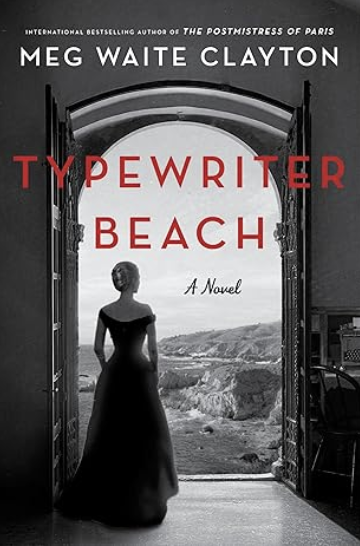
Dual timelines — an isolated set of cottages on the beach at Carmel in 1957. During the darkest times of McCarthy’s blacklists and the slow strangulation of Hollywood, a young starlet on the verge of being the next Grace Kelly is sent to wait in one of these cottages by the studio manager and all around fixer. Told to stay indoors and not be seen, she nevertheless meets her neighbor, the enigmatic Leo — a black listed scriptwriter with a haunted past. In 2018 we follow Gemma, whose beloved grandfather has just died and left her his cottage.

The story slowly unfolds, past to present, and while I often thought I knew what was happening, I was often quite wrong. The writing style is rich with thought provoking commentary and reflections. Hollywood — the deals, the norms, the restrictions, the cheats — is on display with all of the detail that I love — not just a description of events, but a description of the people living through those events and how they are changed, what they do to survive, what decisions they make (and sometimes regret, and often don’t). It’s the full experience and incredibly well-researched. I learned a lot about the different ways people dealt with the blacklist and (of course) the very different ways men and women had to deal with opportunities, threats, and restrictions.

Along with this spectacular depiction of the times and contexts is a lovely and often surprising story of love, family, parenthood, and friendship. I don’t want to give anything away, but there are multiple lovely stories of people finding love and family in a world not inclined to make it easy for them. Plenty of stories of people living in an environment not of their choosing and not in their control — and yet … finding their happiness.

Lots of intriguing details on Carmel and Hollywood — late credits for blacklisted screenwriters, a form of “me too” throughout the ages, morals clauses (for women only). I enjoyed every minute of it.

Thank you to Harper and NetGalley for providing an advance copy of this book in exchange for my honest review. The book was published on July 1st, 2025.

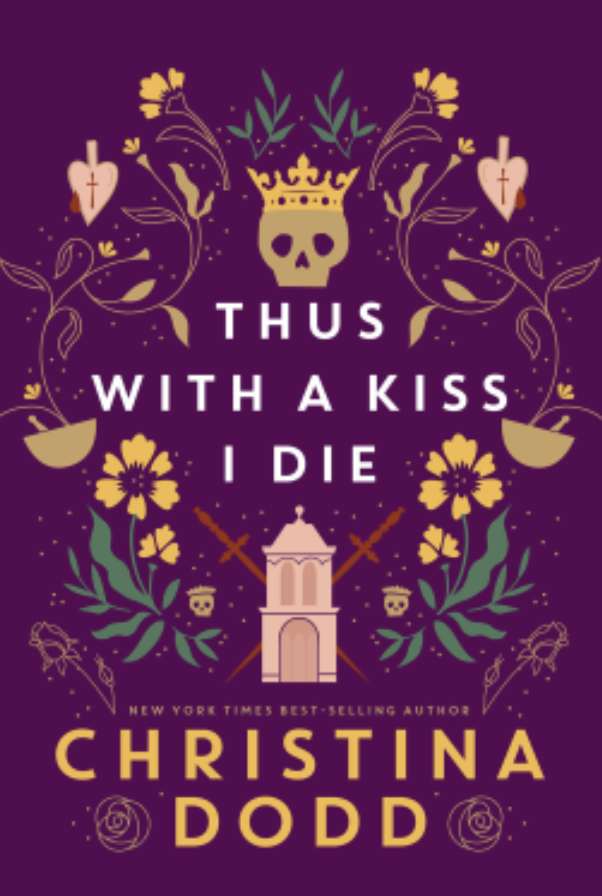
Thus with a Kiss I Die by Christina Dodd (Fiction)

Such a witty, clever, rom-com / adventure story / alternative Shakespearean fan fiction … not sure what to call it but it is thoroughly enjoyable. This is the second book starring Rosaline, the eldest daughter of the very much alive (as explained in book one and reiterated here) Romeo and Juliet. She is a very strong female character — much aware of her expected place in society (the focus on her virtue aka virginity is endlessly irritating), but not terribly affected by it. The Montague home is full of love (and the offspring of love — plenty of children) while Romeo is still one of the best swordsmen in Verona. As the story opens, Rosaline has been tricked into a betrothal with a scarred Prince (don’t let the scarring worry you — he’s a good guy) and while at the castle visiting her betrothed with the whole passel of Montagues, she is treated to a visitation from the Ghost of the murdered King who needs to know the identity of his murderer.

Whip-smart dialog, appealing and saucy characters, a twisted plot, and a pretty decent interleaving of romance, whodunit, and thriller style adventure scenes (featuring parapets!). For those Shakespeare purists who wince at the idea of the mauling of the master, I’ll hasten to say that the Shakespearean characters ring true to their initial depiction, with the only shift being their trickery of death.

Well done and plenty of fun. I look forward to future episodes!

Thank you to A John Scognamiglio Book and NetGalley for providing an advance copy of this book in exchange for my honest review. The book will be published on June 24th, 2025.

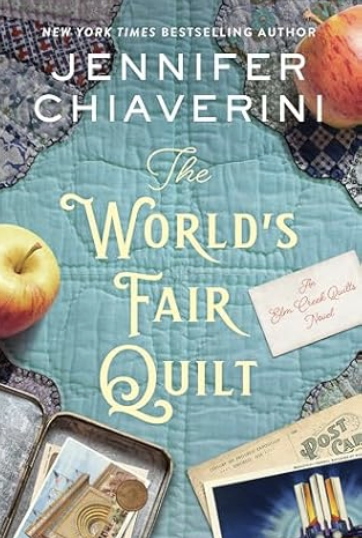
The World’s Fair Quilt by Jennifer Chiaverini (Women’s / Historical Fiction)

Another installment in Chiaverini’s feel good Elm Creek quilts series. While appearing like basic Women’s Fiction (not really my thing), I like this series for two reasons: I like the characters and the way of life they represent, and I love the “every person history” stories of the featured piece of the past.

This book recalled the 1933 nationwide quilting contest sponsored by Sears Roebuck. With a grand prize take of $1,200 in prizes (remember — this was depression era) and the best quilts to be displayed at the Chicago World’s Fair, it garnered over 25,000 entries. In our time, when you can see / experience anything with a tap on the screen, I enjoyed the excitement and wonder the book made me feel along with a couple of expert (but teenaged) quilters entering the contest. Their thoughts (and designs) on the contest’s theme (“A Century of Progress”) was excellent history and told completely within the context of the time period.

I also like the way the characters in these books tackle life — with strength and fortitude, a network of supporters, and a focus on doing the right thing. There is plenty of adversity (this isn’t a fairy tale) but little complaining, little blaming on past events, and little neuroticism. Kind of refreshing 😉

Thank you to William Morrow and NetGalley for providing an advance copy of this book in exchange for my honest review. The book will be published on April 1st, 2025.

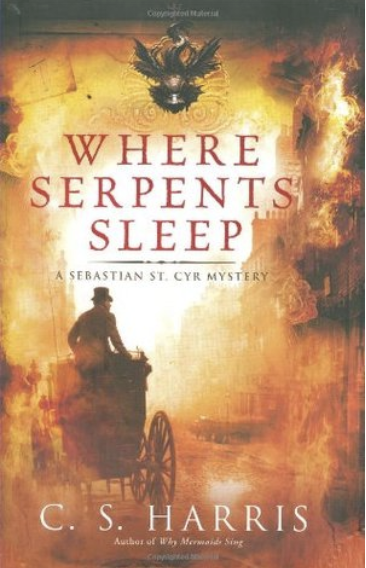
Where Serpents Sleep by C. S. Harris (Historical Mystery — Audio Book)

This is the fourth book in the Sebastian St. Cyr mystery series. I listen to them on audio book because the reader — Davina Porter — is the absolute best, with convincing “voices” for characters of all backgrounds, genders, professions, and place of origin accents. I highly recommend listening to, rather than reading, this series, despite the fact that I am primarily a book reader. The series starts in 1811; this fourth book starts in 1812. The Napoleonic Wars are in full swing and the upstart Americans are giving the British trouble (think “the War of 1812”). This book concerns itself with the killing of eight prostitutes who were sheltering in a Quaker house of refuge.

So why do I love this series so much? The characters — even those who appear in only one book — are fully fleshed out with time and place appropriate personalities. They run the gamut from nobility (both the utterly self obsessed and the more humane) to street urchins, with each novel bringing to light the experiences and behaviors of those in professions we don’t often hear about: for example, the chimney sweep boys or young prostitutes. The historical setting comprises all manner of detail from political power struggles, foreign policy and entanglements, the class system, and quite often the roles allowed or foisted upon women. Some wonderful strong female characters, along with those portraying more negative female stereotypes of the time. And always convoluted plot lines that introduce the reader to more of the time period — (often ridiculous) laws, the constabulary, power machinations, diplomacy, etc.

The main character is Sebastian St. Cyr — heir to an Earl and with a piercing intelligence. At 29, he has already seen quite a bit of military service and is a very impressive fighter as demonstrated through many action oriented scenes, none of which last longer than my low tolerance for extended action scenes allows. While one description called him an anti-hero (I’m guessing because he has no trouble dispatching people who are in the process of trying to kill him), I think he makes the perfect hero, with his strong regard for justice for all people (not just those with a title), and the ability to correct injustices with the combination of rank, privilege, physical prowess, courage, intelligence, and an unbreakable moral code.

While I started reading this series somewhere in the middle, and bounced about for a while, I’m now going back to the beginning and stepping through all the installments that I missed.

The Frozen River by Ariel Lawhon (Historical Fiction)

Writing: 4.5/5 Characters: 5/5 Plot: 5/5

1789 — Hallowell, Maine. Midwife and healer Martha Ballard — 54 and unusually tall for a woman — is called to attend the fresh body of a man pulled from the ice. She recognizes the man at once — a thoroughly unpleasant man recently accused of participating in the rape of the local pastor’s wife. Thus launches the story of Martha, the town, and various ideas about the pursuit of justice across a period of approximately a year, with parallel leap backs for key pieces of context.

This is a phenomenal story in every dimension — a gripping plot, well-fleshed characters full of life, propulsive writing (impossible to put down) and a complete immersion in the specifics of an historical time and place. At no point did I forget that I was in the late 18th century in a small New England town — small details continually reinforced the setting and I didn’t notice any modern sensibilities sneaking in (I am so vigilant on that front).

While the story was compelling all on its own, I loved the fact that she took the time to explore the characters and their relationships and the way they evolved amid the very real context of the times. I also loved the many bits of history that were tossed in — history like the laws requiring a midwife to ask unmarried women to identify the father while in the throes of labor on the assumption that the circumstances would force out the truth. Also, the fines and punishments laid on both for the “transgression.” Hint: the punishment for the woman was far harsher. I should quickly add that although there were some truly despicable men in this story, most of the men were decent, good and held women in good esteem. This is not a male-bashing recounting of life 200 years ago.

I was quite surprised to find out that most of the plot actually happened. I was thinking to myself that it was a little over the top but that I enjoyed it anyway, but it wasn’t over the top of reality in any case! This piece of biographical fiction (a new term for me) was about the very real Martha Ballard as documented in her diary (unusual for a woman of that age as most were illiterate) and Laurel Thatcher Ulrich’s Pulitzer Prize winning history book based on the same . No wonder the details were so persuasive! The author’s note very clearly identified the (small) fictional additions and modifications.

Highly recommended.

Stars Over Sunset Blvd by Susan Meissner (Historical Fiction)

This is the story of the long friendship between two very different women. Alabama born and bred Violet Mayfield, has fled from the home she loved when her dream of being a wife and mother is dashed. Audrey Duvall is desperate to restart a career that was dashed by the introduction of the talkies. They meet as secretaries on the set of Gone With the Wind in Los Angeles, 1938. The book follows the two of them to the ends of their lives, embedding the complexities of real relationships and the many emotional and moral issues that populate any thinking person’s life: honesty and fear, suspicions and jealousies, loyalty and deep connection. The audiobook reader was fine — a little too slo for my taste.

Susan Meissner is one of my favorite writers. She writes the kind of historical fiction that I love — plumped full of historical detail that awakens fascination — in this case, the movie set of Gone With the Wind. Full of every kind of detail — the technical work, the movie stars, the voice coaching (to make the British actors sound Southern), the filming of epic scenes such as the fall of Atlanta. If you’ve ever seen the movie (and if you haven’t, my goodness!) you’ll be spellbound by all that went into it. At the same time, Meissner writes the kind of human-centered novels that I like — full of thoughtful characters whose interior lives we access as they make their way through a life full of desires, setbacks, regrets, opportunities, and insights. And these are “regular” lives — no giant melodramatic events, but plenty of relatable experiences and thoughts. Her settings often include the kinds of ethical dilemmas we all face, along with the individual choices and the (often predictable and yet somehow surprising) fallout. Because that’s the thing about ethical dilemmas — there are no obviously right answers so some negative fallout is guaranteed.

On a deeper level, I initially felt a lot of judgement about one of the characters — I did not like her. Meissner managed to turn her behavior into something that could be understood (if not applauded), forgiven, and relationship deepening. It’s so easy to immediately judge and so difficult to try to understand. It was inspiring to watch the two continuing their friendship even when one or the other was feeling angry, resentful, or jealous. I was also impressed by some deeply felt and well articulated views on love and why people don’t need reasons to love someone and about recognizing the “brokenness” or maybe “incompleteness” of being young and how you choose to stay close to someone despite irritations, betrayals, and misunderstandings. That understanding, remorse, and a willingness for honesty can mend and make stronger any relationship. Surprisingly insightful.

Looking forward to Meissner’s next book (which I think is due out next March!)