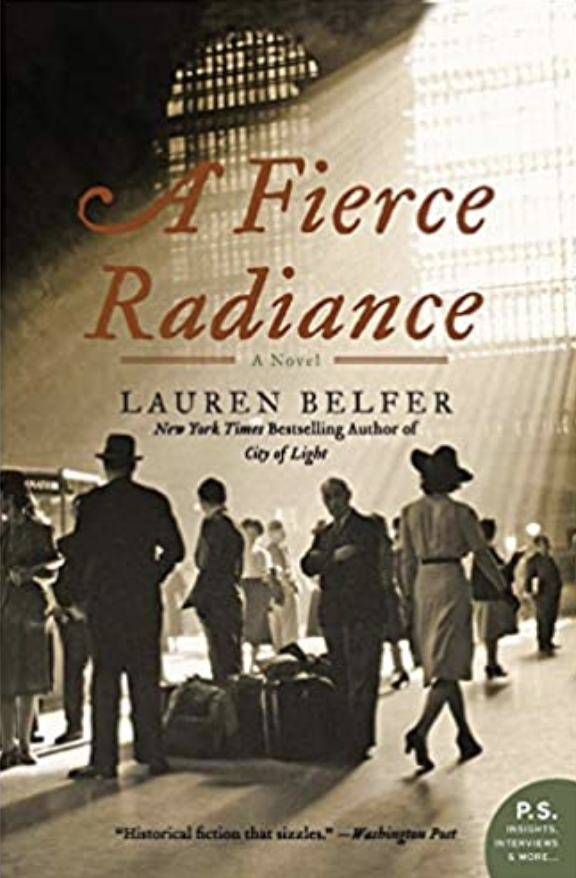
A Fierce Radiance by Lauren Belfer (Historical fiction)

Writing: 5/5 Characters: 5/5 Plot: 4.5/5

How have I never read this book? This will definitely be one of my top reads of 2022. Historical fiction immersed in the drive to commercialize the production of penicillin for the troops. Here’s a shocking statistic — over 50% of the deaths in the Civil War were from infection; over 30% in the “Great War.”

The story opens with Claire Shipley — photojournalist for Life magazine — covering the story of early trials on penicillin for humans. 1941 — just days after Pearl Harbor — a man makes an almost miraculous recovery from near death by the injection of penicillin — only to die days later when researchers literally run out of the drug: it is that difficult to produce. Together the U.S. Government, the Rockefeller Institute for Medical Research (a real place — look it up), and reluctantly drafted pharmaceutical companies race to find a process to produce enough of the miracle drug to save the men on the front.

Part love story, part murder mystery, part home front war story, and part industry story, the author does an incredible job of making war-time New York City come to life. New York is a great setting for historical fiction as it is and always has been teeming with people, innovation, and secrets. While the main characters are fictional, the historical characters (e.g. Vannevar Bush, Henry Luce, Claire Booth Luce, Margaret Bourke-White, Margaret Sanger, Jack Reed) are presented realistically (without any fictionalized access to their inner thoughts). Beautiful writing — I highlighted a lot of quotes in the (physical) book but I was too lazy to transcribe them 😦

In addition to the description of the historical setting, what I loved about the book were the characters. Each had his or her own passion, and the author explored the depth of their work, their attraction to it, and the kind of personalities and background that made them so suited to it. The descriptions of Claire and her photos were completely absorbing and beautifully described; Dr. James Staunton leading the research at the Rockefeller Institute; his sister Tia the mycologist, exploring dirt samples from around the world to find other antibacterial “cousins” to penicillin; and Edward Rutherford, one of the very earliest venture capitalists, describing the process of making money from opportunity.

Completely captivating. This was her second novel, published in 2010. Novels 1,3, and 4 are all excellent as well!

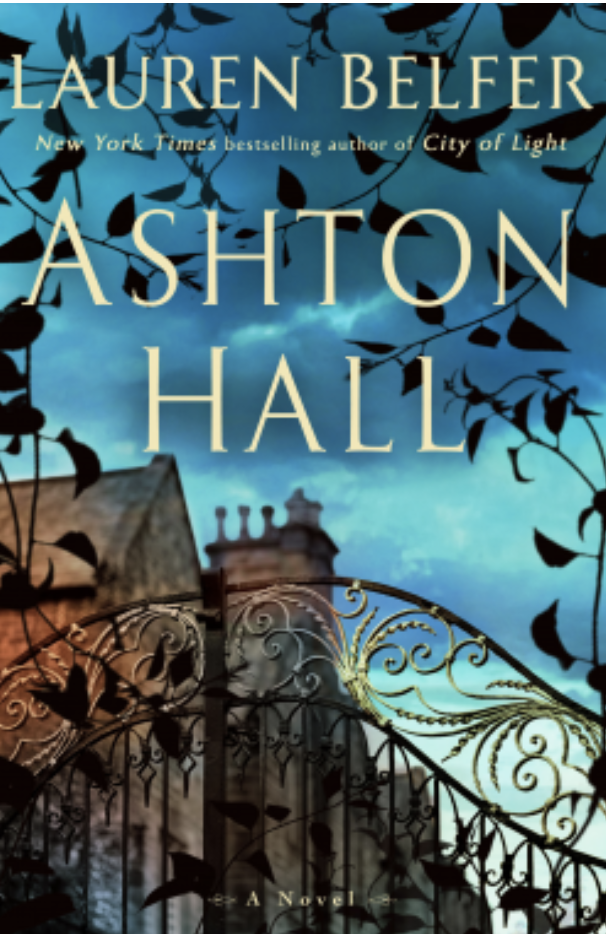
Ashton Hall by Lauren Belfer (Literary and Historical Fiction)

Writing: 4/5 Characters: 5/5 Plot: 5/5

A fabulous book full of all the literary things that I love.

Hannah Larson and her neurodiverse son, Nicky, move to a historic manor house outside of Cambridge to care for a beloved, elderly relative. Hannah uses the opportunity to take up her abandoned dissertation while simultaneously escaping a recent and devastating betrayal. While there, Nicky, through his “oddities” discovers a skeleton (dated ~late 1850s) in a bricked up room.

It’s a rich, multi-layered novel delving into both the mystery of the female skeleton, the historical context of her life, and the historical research process by which Hannah uncovers the story. In the current day story, Hannah faces a pretty major problem in her marriage and some real difficulties in raising her son who appears to be on the autism spectrum though is never officially labeled as such. He is finding a place — and friends and interests — in the new world he inhabits while continuing to have “incidents” that she is not able to control. In the past, our skeleton inhabits a world rife with religious conflict, plague, and famine. A strong theme running through both time frames is the choices women have made and the options they were given over the centuries. Interesting parallels and the author never slips into anti-man territory (thank you — so sick of that).

The author does a brilliant job at bringing to life both the world of the1800s for our bricked in skeleton and the current world of an American on leave from her “real” life in a place that opens her eyes to new possibilities. While each of these “worlds” is a context, it is a context experienced by people with different wants, desires, personalities, and situations. I love a book filled with individuals who not only don’t fall into the stereotypes of their culture, but actively question their decisions and roles!

Great for fans of Julia Kelly and Carol Goodman.

Quotes:

“The talents possessed by women had been overlooked, denigrated, dismissed, and suppressed for centuries. The diseases they might have cured. The technological advanced they might have made, the cruelties righted, works of art created, buildings designed — all denied. The tragedy and failure of it affected not only individuals but communities and societies. The women who’d found meaning by devoting themselves to their families had also been silenced by history, erased, the importance of their household labor unrecognized.”

“Even as I said this, I knew that one of the biggest roadblocks to understanding history was the false notion that the individuals of the past were more or less like us, thought like us, and would only do things we would do. I realized that I’d been thinking about Isabella this way all along. I had to stop seeing her through the filter of myself.”

“Her reign is referred to as theGolden Age, but it was a flowering of culture against a backdrop of religious suppression, torture, disease, and waves of starvation.”

“The first year of nothing, 1593, was the year when Catholics were required to have a license to travel more than five miles from their homes. It was also the year when a bill was introduced in Parliament calling for the removal of children from Catholic families, so they could be raised in Protestant homes. The bill was withdrawn, but the point had been made, brutally.”

“Such energy expended, to arrive at this restrained intimacy.”

“Four hundred years from now, was this how Anne Frank’s attic would be viewed? After enough time had passed and the trauma had faded, would the attic evolve into something fun for kids to see because it was gruesome in a shivery, Halloween sort of way, the horrifying truth rewritten to make the site more visitor-friendly? I prayed we’d never reach a day when kids could tour Anne Frank’s hiding place and after ward receive smiley-face stickers for their shirts”

“Bringing starvation and war into this discussion was like saying is was okay to cheat on an exam because the exam was insignificant compared to the atomic bomb. Individuals as well as societies needed moral standards.”

“Ah, yes, 1545 to 1610. Years of traumatic religious upheaval, played out against crop failures, famine, smallpox, sweating sickness, plague. Also, a flowering of culture, of poetry, music, and drama.”

“I wished I could view the world as Christopher did , a place where the most mundane errands were part of an adventure story.”

Thank you to Ballantine Books and NetGalley for providing an advance copy of this book in exchange for my honest review. The book will be published on June 7th, 2022.

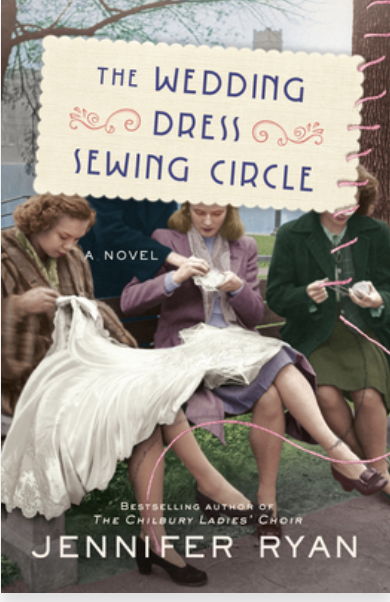
The Wedding Dress Sewing Circle by Jennifer Ryan (Historical Fiction)

Writing: 4/5 Characters: 5/5 Plot: 4/5
Another upbeat, can-do, WWII based piece of historical fiction from Jennifer Ryan, author of The Kitchen Home Front and The Chilbury Ladies’ Choir. Three women in Aldhurst Village help transmute the local sewing circle into a shining example of community spirit during the deprivations of war — launching a wedding dress sewing circle, transforming old, often moth-eaten wedding dresses into modern beauties available for loan to brides in need. Grace Carlisle — the dutiful vicar’s daughter, soon to marry her father’s curate; Cressida Westcott, renowned fashion designer, returning to the village manor house (from which she was evicted decades before due to non obedience) when her home and business in London are reduced to rubble; and her spoiled niece Violet Westcott, who wants nothing but to marry a title and live the luxurious life to which she is entitled.

There was romance and it is handled well, but the real treats for me were the friendships, the awakening of awareness of opportunities and alternate lifestyles for each of the women, and the well-researched details of life on the home front. Ryan’s tidbits about wartime clothing were fascinating: The rationing (40 coupons per year — about enough for a a couple of dresses), the government Make Do and Mend program, the restriction on bathing to 5 inches of bathwater twice per week to save on fuel, the “paint on stockings” made from gravy — useful if there are no dogs around! — and most interesting, the challenges for designers who had to make do with “less fabric, more synthetic materials, and absolutely no metal fastenings or elastic.” It was just technical enough on the design and sewing aspects to be interesting but not overwhelmingly confusing to a sewing ignormus like myself.

As always, Ryan captures the real community spirit of wartime in Britain — ordinary people “joining forces to overcome the difficulties of war.” While not avoiding the terror and depression of the time, the book manages to focus on the positive and uplifting aspects of people coming together to do what needs to be done.

Thank you to Ballantine Books and NetGalley for providing an advance copy of this book in exchange for my honest review. The book will be published on May 31st, 2022.

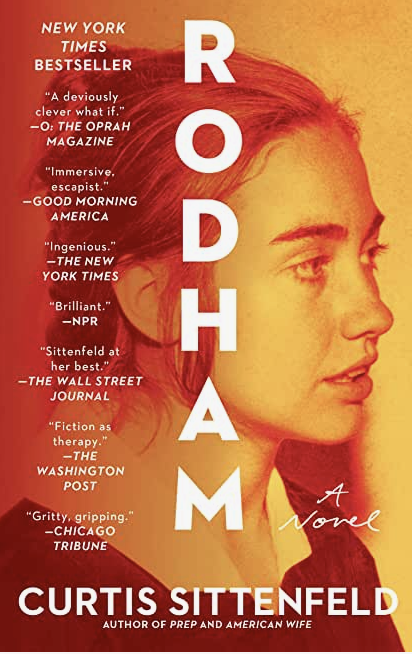
Rodham by Curtis Sittenfeld (historical / speculative fiction)

Writing: 4/5 Characters: 4/5 (well written but I don’t like them) Plot: 3.5/5

An alternate history — what would Hillary Rodham Clinton’s life be like if she hadn’t married Bill Clinton. It certainly had its interesting points, but overall I was not a fan. If you ever had a positive thought about Clinton (Bill) before, you won’t after reading this (remember it’s fictional!) book. In this book, Bill is charismatic, intelligent, but ultimately unprincipled and an egotistical sexual predator full stop. Lots of sex scenes in the first part of the book — I guess to explain why / how Hillary fell in love with him to begin with — but the white powerful all-bad male trope pervaded the pages. While Bill’s womanizing would not be something I would enjoy in a husband, the real Hillary got to make her own decisions, frame her own life and choose to stay with her husband (who very much supported her career throughout his own). The fact that many women (Sittenfeld obviously included) decided she was wrong to do this — what business is it of theirs? This (obviously) irked me.

Lots of political strategy and maneuvering which isn’t my thing (but if it’s your thing you might enjoy this!). The best part for me was a very realistic reminder of what life was like for strong, smart women who were born just fifteen years before I was. I had it so much better, and my daughter lives in what feels like a completely different world. The book also served as a sad (to me) reminder of what the population seems to value in a candidate — charisma, good looks, etc. The high school popularity contest continues unabated…

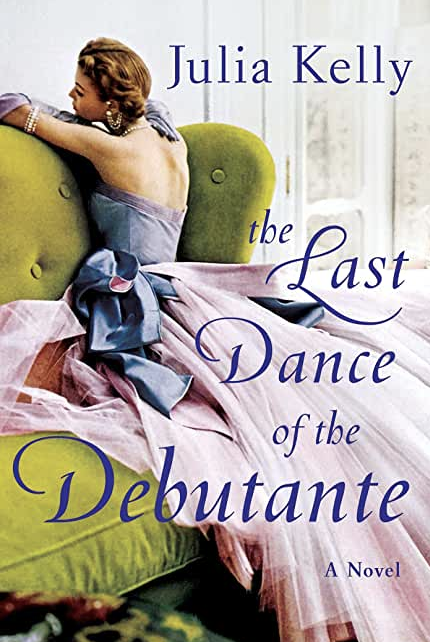
The Last Dance of the Debutante By Julia Kelly

Writing: 4/5 Plot: 4/5 Characters: 4.5/5
A description of the London debutante season during the last year at which debs were presented to Queen Elizabeth (March 1958). Told from the perspective of Lily — a young woman who would much prefer furthering her studies in literature but nevertheless obliges her mother and grandmother by being the best deb she can be. While there are plenty of descriptions of gowns, parties, and balls (as one would expect), what I liked was the perspective of someone for whom the daily activities were — while pleasurable at times — more chore than treat. Utterly exhausting at times, in fact. The Season had a purpose and it was to be pursued with brutal focus: meet the “right” people and find an eligible man with whom to start the “right” kind of life. Lily has principles and gains a greater understanding of what those principles are and how to handle the conflicts that arise when her principles meet her family’s goals. We gain access to a variety of characters through an unusual take on the lives of “quality” women during this time period. Some secrets are unearthed, some surprising events occur, and the story is engaging from start to finish. The author describes her interviews with various debutantes of the time — very well put together!

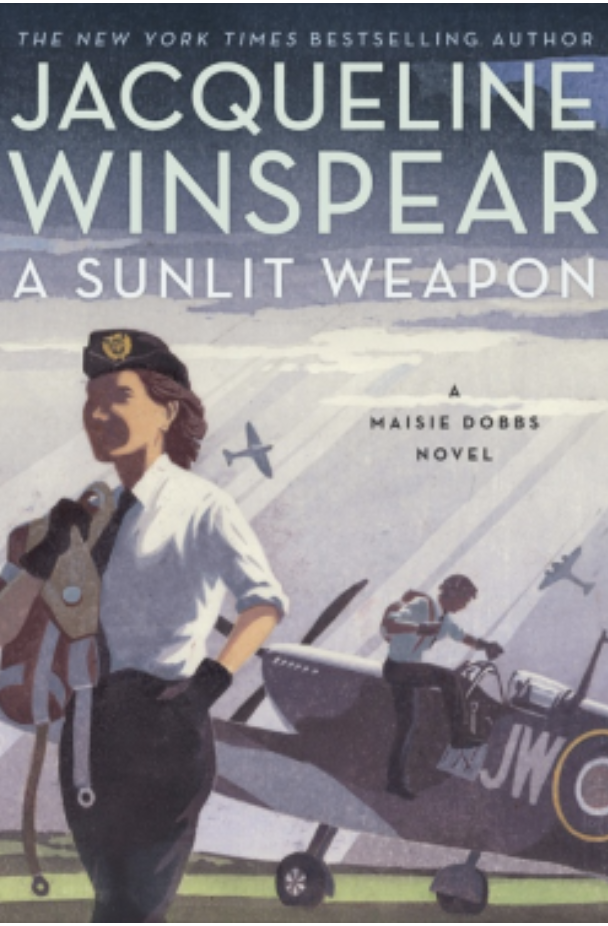
A Sunlit Weapon by Winspear

Writing: 3.5/5 Characters: 4/5 Plot: 5/5

Historical mystery at its best. Winspear’s Maisie Dobbs (a “psychologist and investigator” well connected with both the war office and the local chapter of Scotland Yard) continues to solve complex crimes while the timeline moves from early WWI (the first volume) through 1942 (WWII) in this 17th installment. Unlike many mystery series, these never get repetitive, nor are they replete with filler (as way too many are!). Each story draws from history to lay out a context in which the particular mystery takes place. The series reminds me of Foyle’s War — one of my favorite British television series — which similarly retells history via specific and accurate events.

The plot of A Sunlit Weapon centers around the women pilots who comprise the Air Transport Auxiliary (ATA). One crashes near Bromley for no apparent reason, and when a second goes to the area to investigate, she finds an American soldier — a black American soldier — left tied up in a barn with a second (white) soldier missing in action. At the same time Eleanor Roosevelt is heading to Britain, and there is real fear around trying to keep her safe, given that she likes to talk with everyone — particularly those whom others find uninteresting — the workers and the women.

Major themes of racial prejudice pervade — both with the American soldiers (who strive to maintain color segregation in Britain despite the fact that there is no such practice or policy there) and for Maisie’s adopted daughter, whose darker skin tone leads to bullying in the local school. Good writing, appealing characters whose lives also progress from one volume to the next, and a satisfyingly twisted plot. Full of real history — my favorite: the female ATA pilots were the first governmental employees to achieve pay parity with men.

I love this series — hope she keeps going!

Thank you to Harper and NetGalley for providing an advance copy of this book in exchange for my honest review. The book will be published on March 22, 2022.

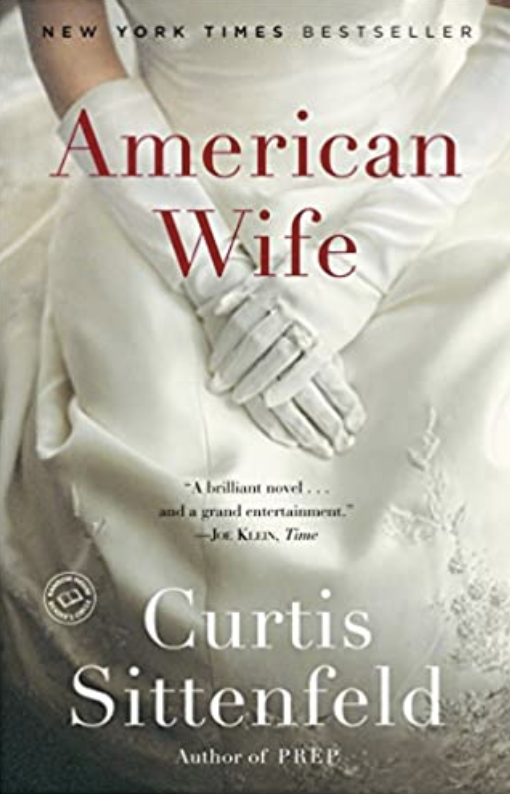
American Wife by Curtis Sittenfeld (literary fiction)

Writing: 5/5 Characters: 4/5 Plot: 4/5

An extremely well-written novel based on the life of Laura Bush. Alice Lindgren (the names have been changed to emphasize the fictional nature of the story) has been an inveterate reader since childhood (my kind of girl!). The story takes us from a relatively normal childhood to working as a librarian to meeting Charlie Blackwell (George W Bush) to becoming the First Lady and enduring the ensuing celebrity.

Each of the four sections in the book is based on a real life event in Laura’s life (accidentally killing a classmate in a terrible car accident; George drinking heavily and then becoming religious, etc.) but everything else is purely fictional. Sittenfeld’s aim is to explore what it is like to “lead a life in opposition to itself” based on the liberal tendencies of Laura Bush as compared with her ultra conservative leader-of-the-free-world husband. As far as I can tell, this liberality is deduced from Laura’s (non-elaborated) support for gay marriage and a woman’s right to choose (abortion) along with a smattering of donations to liberal style causes (soup kitchens, etc). (Spoiler alert) Sittenfeld went a step further (too far IMHO) by giving the fictional Alice a gay grandmother and an abortion. I guess the author felt Alice needed personal reasons to support those more liberal policy decisions — which is a shame as I like to feel that people can have political opinions that aren’t necessarily based on their own needs and experiences.

I found the story gripping — I had a paperback with small print (difficult for me to read) and I still couldn’t put it down, reading late into the night. Alice is a delightfully introspective character and her internal commentary and ponderings brought her life into full perspective for the readers. At the same time, I really dislike fictionalized history — regardless of the careful name changing and outright statements of FICTION FICTION FICTION, it is hard (impossible) to leave this book without a strong idea of what these people were like, despite the fact that the characterizations were a complete fabrication on the part of the author. While “Alice” comes off as a sympathetic and engaging character, “Charlie” comes off as a complete buffoon. I’m no George Bush fan, but this doesn’t really seem like a full and complete portrayal of a man!

Some sample quotes:
“This is our implicit agreement, that we can suggest or recommend but that we never force, never make ultimatums. It’s why we don’t resent each other.”

“I’ve thought often since Charlie became governor that it isn’t a surprise so many famous people seem mentally unstable. As their celebrity grows and they’re increasingly deferred to and accommodated, they can believe one of two things: either that they’re deserving, in which case they will become unreasonable and insufferable; or that they’re not deserving, in which case they will be wracked with doubt, plagued by a sense of themselves as imposters.”

“I had the fleeting thought then that we are each of us pathetic in one way or another, and the trick is to marry a person whose patheticness you can tolerate”

“He had told me I had a strong sense of myself, but I wondered then if the opposite was true — if what he took for strength was really a bending sort of accomadation to his ways, if what he saw when he looked at me was the reflection of his own will and personality.”

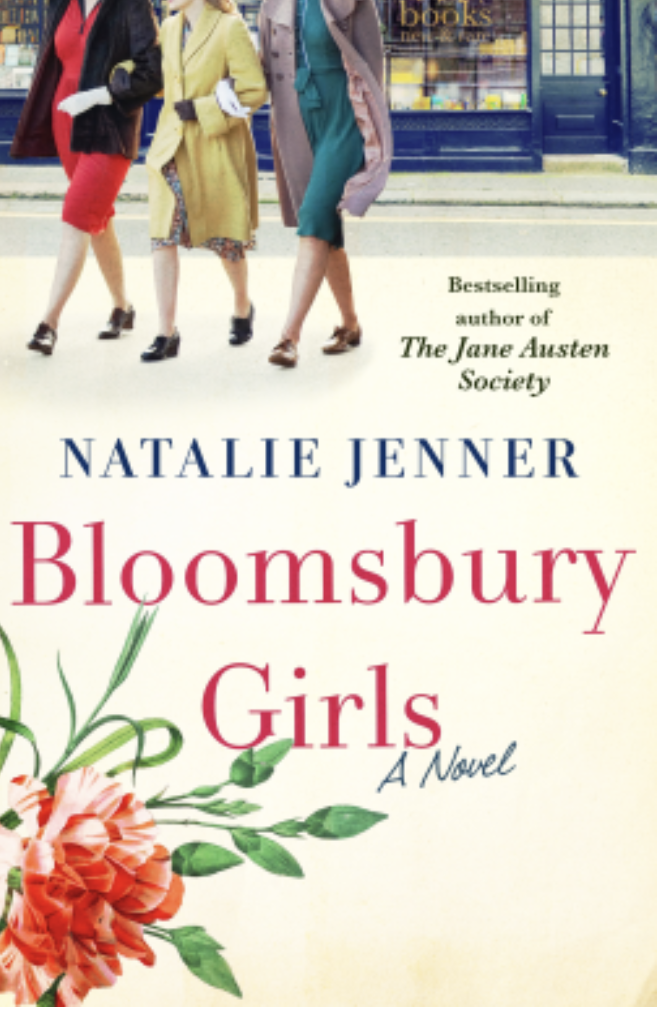
Bloomsbury Girls by Natalie Jenner (Historical Fiction)

Writing: 4.5/5 Characters: 5/5 Plot: 4.5/5

I loved this book — a great story that manages to combine a fascinating bit of history and early feminism with a literary mystery, historically accurate relationships, insightful writing, in-depth characters, and some great historical characters tossed in (Peggy Guggenheim, Daphne DuMaurier, Samuel Beckett to name a few)!

The story: three women are working at Bloomsbury Books in 1950. Vivien Lowry is a budding novelist with skill, drive, and determination who bristles at the male dominated store where nothing (including any promotion for women) has changed in years; Grace Perkins is married with two sons and grateful to have a job at all as her husband is an unemployed malcontent — “a difficult man, needing the whole of daily life joylessly cut into pieces to fit his unpredictable moods;” Evie Stone (my favorite) has one of the first Cambridge degrees bestowed on a woman but is denied an academic position in favor of a less-skilled man who will nonetheless manage to capitalize on her work. She has a wonderful plan in mind, though, and her position at the bookstore is not an accident!

What I loved about this book is that it depicts an accurate, not overly dramatized, portrayal of life for intelligent woman who sought to live outside the restrictive norms of the day. The three primary female characters each have their own talents, motivations, and personalities — and through them we can understand the experiences and frustrations of different women in this time period — because after all, not all women are the same, then or now. I absolutely loved Evie’s passion for literary history and bringing neglected (not obscure!) 18th century women writers back into print. The author (who once ran an independent bookstore herself) knows her stuff and it comes out with delightful depth in every aspect of the story. I also appreciated the fact that, while a few of the men were simply two-dimensional jerks, many of the others were more ignorant than mean, and the author included some nice analyses of the motivations different men had for behaving the way they did and adhering to what were, after all, the norms of the time. Tossed into the mix were a gay male couple and a high-caste Indian gentleman in charge of the science section of the bookshop — all facing their own issues resulting from not fitting into the expectations of the time.

This is what I call a new breed of women’s fiction — there is some romance (though the developing relationships are formed based on compatibility and mutual trust and admiration rather than looks and money) but romance is but one component of a happy life, not the only ultimate goal. The book did have the requisite happy ending and while it may not have been completely realistic, surely it’s nice to enjoy the possibility.

Thank you to St. Martin’s Press and NetGalley for providing an advance copy of this book in exchange for my honest review. The book was published on May 17th, 2022.

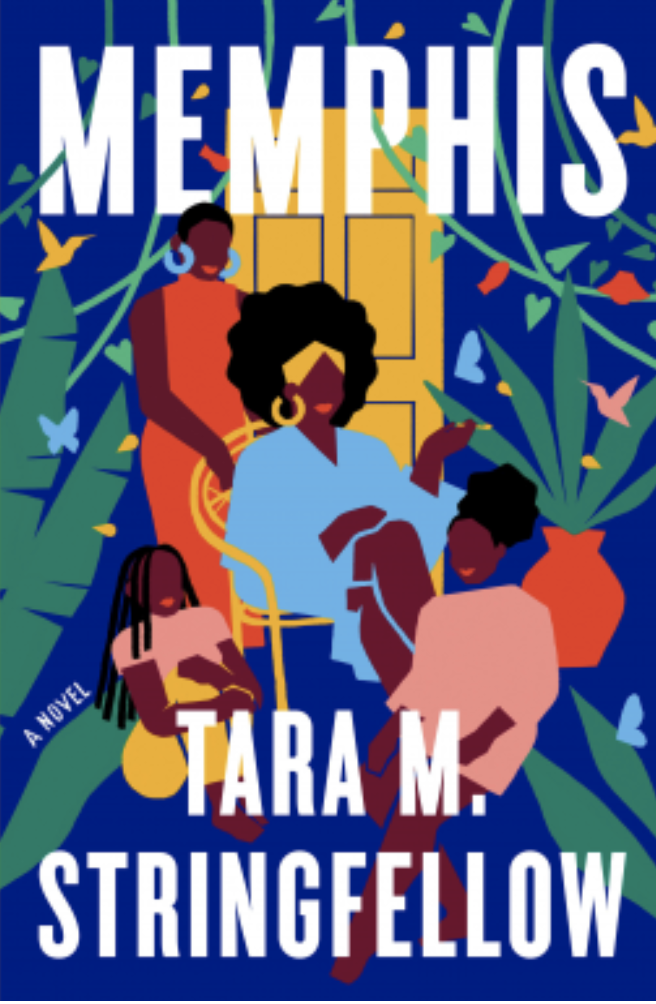
Memphis by Tara Stringfellow (Fiction / Multi-cultural interest)

Writing: 4/5 Plot: 3/5 Characters: 4.5/5

The story covers 70 years in the lives of a family in Memphis ranging from 1937 through 2001. Sisters August and Miriam, their mother Hazel, and Miriam’s daughter Joan are the voices that tell the story with date labeled chapters that jump back and forth across time (which can be confusing — I had to take careful notes). The book is written in a highly emotional style, guaranteed to make you angry at the injustice and hardships these women must suffer through.

I believe this is intended to be a positive novel about the tight knit Black community of women who pull together and give each other strength when needed — and I loved these women characters and would have loved to be a part of the community. But the other side of the coin is that the book is strongly anti-man and pretty anti-white as well. The big sign in August’s hair shop is “NO CHILDREN, NO MEN, & WE EAT WHITE FOLK HERE.” It’s not really a joke.

Through the generations, everything bad possible happens to this family including a child rape, multiple instances of domestic abuse, and lynching. It reinforces negative stereotypes of current Black culture — single mothers and abusive, violent men. The one decent man in the history was lynched, with the strong implication being that he was lynched by his white colleagues (he had made homicide detective — the first Black man in the area to do so). The author took every opportunity to blame whites or men for everything that went wrong, without considering any errors of judgement made by the women. And while she gave each of the violent black men a backstory that might explain their violence, she gave them no path to rehabilitation and completely exonerated the women who may have contributed to their “badness,” whether intentionally or not.

In summary, the story was gripping but I found the writing overly dramatic, manipulative, and full of good messages (be strong, be independent) based on the wrong (IMHO) reasoning. I’m all in favor of women being independent because everyone should be able to take care of themselves — this is not a safe or uniformly just world — but they shouldn’t need to be independent because men are uniformly violent, bad, and untrustworthy.

I know a lot of people love these emotionally heavy-handed books. For me, however, it is too easy to absorb strong, negative, messages without a more nuanced treatment. No, there is no amount of nuance that makes lynching or domestic violence OK, but there are a lot of good men (black and white) out there and lots of good white people, too. Do we really need to fan the flames of racism and sexism (in reverse) by ascribing horrible behavior to every person who appears to be male and / or white? I found the book disturbing — not just for the content (which was disturbing enough!) but for the incendiary way that Black men and all white people (except one nice Jewish store owner!) were painted as irreedemably and unquestionably bad.

Thank you to Random House Publishing and NetGalley for providing an advance copy of this book in exchange for my honest review. The book was published on March 1st, 2022.

Booth by Karen Joy Fowler (Fictionalized History)

Writing: 4/5 Characters: 4.5/5 Plot: 4/5

What an unusual book. It is a fictionalized history of the Booth family from 1822 to 1865 when its most infamous member — John Wilkes — shot Abraham Lincoln. John Wilkes is kept as an important but minor character throughout until his action at the end tears everything apart. The story is told from the perspective of three of his siblings: “poor” Rosalie, the eldest daughter who remains a spinster family caretaker for life; Edwin, who becomes the leading tragedian of the 19th century; and Asia, the youngest daughter and eventual poet and writer.

Fowler is a fantastic writer — every book she writes is completely different and spans topics and genres easily. In this — her first fictionalized history — she brings the place and time to life in incredible physical, political, and every day life detail. Following their lives in rural Maryland, Baltimore, and later Philadelphia, New York, and then California (including a harrowing description of the trip across the 40-mile Panamanian isthmus, pre-canal) we are immersed in the attitudes and experiences of a very different time.

Fowler doesn’t modernize sentiments — we are treated to multiple attitudes towards women, immigrants, and slavery. Having read a lot about the time period, I found them to be accurate and comprehensive. As examples, the family’s patriarch — Junius Brutus Booth (a famous Shakespearean actor of the time) — didn’t like slavery but had two slaves; John Wilkes declaimed frequently on the value of slavery and the tyranny of the North; and various speeches (including Lincoln’s, Douglas’ and others) offer additional viewpoints.

I had to keep remembering I was reading a book which while novel-like had to adhere to actual history so while some details seemed extraneous to the plot, they were not extraneous to the lives of those living through them. For me it was a bit of a slow start — I let myself be unhappy that I was having to read a book about someone I did not want to know more about and of course, knowing what happens at the end, I had a kind of dread creeping up on me. However, if you can avoid the kinds of destructive thoughts I was having, it really is gripping reading, and the assassination and aftermath actually takes up a very small part of the end of the book.

Thank you to Penguin Group Putnam and NetGalley for providing an advance copy of this book in exchange for my honest review. The book will be published on March 8th, 2022.