The Candy House by Jennifer Egan (Literary Fiction)

Writing: 5/5 Plot: 5/5 Characters: 5+/5
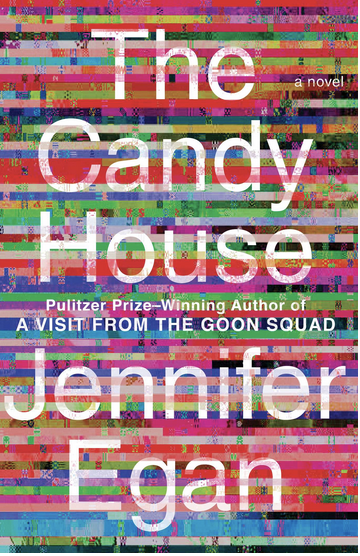
This is one book where the marketing blurb is spot on, so I’m going to quote from it rather than trying to describe it myself: It is “an electrifying, deeply moving novel about the quest for authenticity and meaning in a world where memories and identities are no longer private.” Own Your Unconscious — a technology that enables recording your own unconscious memories, and the attendant Collective Unconscious arising from the blending of millions of such externalized memories is transforming the world — for better or worse. In a set of tangled vignettes connecting characters who are, in their way, each pursuing the answers to their own existential dilemmas, we follow their reactions, reflections, experiences, and goals in this rapidly changing dynamic.

I loved this book — full of the complexity and layering of life where we are all spinning in and out of our each others’ stories. Egan has fantastic insight into so many wildly different characters — full of depth and quirk with none of the shallow explanations for behavior we (too often IMHO) accept in fiction. Each vignette is written in a slightly different style, depending on the “voice” of the main character — I liked them all but my favorites were those told from the perspective of a troubled (and troubling) child, one from an autistic perspective, and one told in a set of text / emails spreading out to include ever more surprisingly (to them) connected characters. I wish I had drawn out a character map from the beginning because I sometimes lost track of current (and past) relationships. If you read Welcome to the Goon Squad, you will recognize several of the characters.

Plenty to think about — lots of philosophy, psychology, linguistics, and anthropology applied to the social media ++ of shared memories and identities within a well thought out slightly speculative fiction setting. Some interesting multi-generational family dynamics and a particularly thought-provoking examination of the role of fiction in a world which has the actual recording of experience as opposed to those crafted by authors. Egan’s writing — as always — is flawless.

Some good quotes:

“He was known not to curse; his mother, a sixth-grade grammar teacher, had heaped such withering scorn on the repetitive dullness and infantile content of profanity that she’d managed to annul its transgressive power.”

“Gazing up at the lighted windows on one, Bix thought he could practically hear a potency of ideas simmering behind it.”

“I never know what’s going on, and because my attempts to find out lack the tactful goo that typicals smear all over their actions and words to blunt their real purpose, I come across as lurching and off-putting.”

“But whereas in music, a prolonged pause adds power and vividness to the refrain that follows it, pauses in conversation have the opposite effect, of debasing whatever comes next to the point that a perfectly witty riposte will be reduced to the verbal equivalent of a shrunken head, if too long a pause precedes it.”

“… no one escaped the roving, lacerating beam of my judgement. I can access that beam, even now, decades later: a font of outraged impatience with other people’s flaws.”

“In this new world, rascally tricks were no longer enough to produce authentic responses; authenticity required violent unmasking, like worms writhing at the hasty removal of their rock.”

“Social media was dead, everyone agreed; self-representations were inherently narcissistic or propagandic or both, and grossly inauthentic.”

“Here was his father’s parting gift: a galaxy of human lives hurtling toward his curiosity. From a distance they faded into uniformity, but they were moving, each propelled by a singular force that was inexhaustible. The collective. He was feeling the collective without any machinery at all. And its stories, infinite and particular, would be his to tell.”

Thank you to Scribner and NetGalley for providing an advance copy of this book in exchange for my honest review. The book will be published on April 5th, 2022.
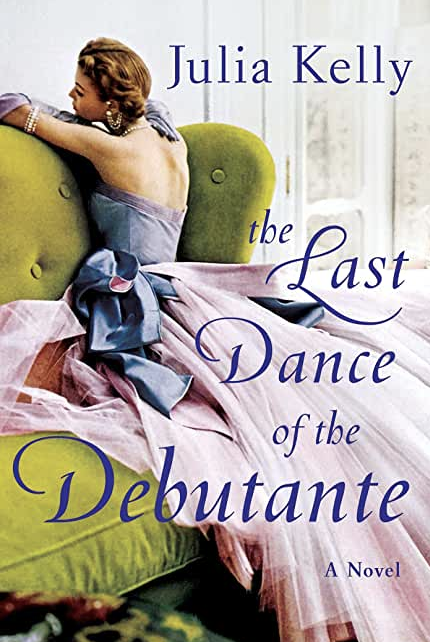
The Last Dance of the Debutante By Julia Kelly

Writing: 4/5 Plot: 4/5 Characters: 4.5/5
A description of the London debutante season during the last year at which debs were presented to Queen Elizabeth (March 1958). Told from the perspective of Lily — a young woman who would much prefer furthering her studies in literature but nevertheless obliges her mother and grandmother by being the best deb she can be. While there are plenty of descriptions of gowns, parties, and balls (as one would expect), what I liked was the perspective of someone for whom the daily activities were — while pleasurable at times — more chore than treat. Utterly exhausting at times, in fact. The Season had a purpose and it was to be pursued with brutal focus: meet the “right” people and find an eligible man with whom to start the “right” kind of life. Lily has principles and gains a greater understanding of what those principles are and how to handle the conflicts that arise when her principles meet her family’s goals. We gain access to a variety of characters through an unusual take on the lives of “quality” women during this time period. Some secrets are unearthed, some surprising events occur, and the story is engaging from start to finish. The author describes her interviews with various debutantes of the time — very well put together!

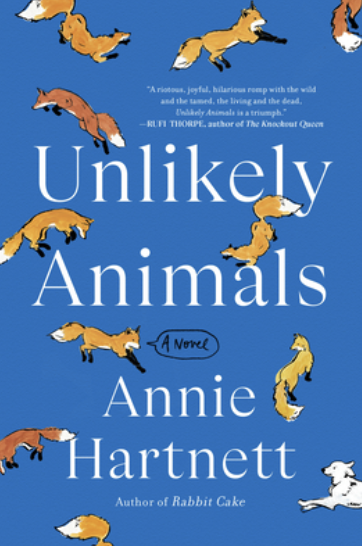
Unlikely Animals by Annie Hartnett (Literary Fiction)

Writing: 4/5 Plot: 5/5 Characters: 5/5

Wonderfully fun and engaging book — one of the most creative I’ve read in a long time.

Emma was born with “The Charm” — magic hands that could heal injuries in her small New Hampshire community. But the charm appears to have deserted her as she is called back from medical school (which she never exactly started) to “heal” her rapidly declining father. As part of his degenerative brain disease, he sees things — hordes of rabbits, stray cats, and a long-dead naturalist (Ernest Harold Baynes — the real life Dr. Doolittle!) who keeps him company. You would assume these were all hallucinations but then the narrator of the book is the collective “we” of the local grave dwellers who provide occasional opinionated commentary on events. And from here it just gets weirder and more fun. Despite tackling a number of disturbing issues: the opioid crisis, degenerative brain disease, a missing person, and drastic and unintentional life plan changes, this novel is always cheerful and always fun. A highly responsible stray dog, an expensive imported Russian fox, and some pretty adorable 5th graders join the living and the dead in the cast.

Some random fun quotes:
“That’s why we like living with animals so much; they exhibit their joy so outwardly, remind us how to be better alive.”

“Emma found that Moses had ripped open a bag of flour on the couch, another way the dog was dealing with his separation anxiety: challenging himself to make messes that were increasingly difficult to vacuum up.”

“Auggie rolled his eyes toward his skull, and Emma regretted hoping Auggie could pull his life together. In fact, she didn’t care if anything good ever happened to him.”

“It was her wedding china, but she didn’t care. Her marriage wasn’t doing her any favors lately.”

“And Clive knew he was loving, really loving, when he remembered to be.”

“Nothing to be embarrassed of. Just the imperfect human body having a hard time.”

Thank you to Ballantine Books and NetGalley for providing an advance copy of this book in exchange for my honest review. The book will be published on April 12th, 2022.

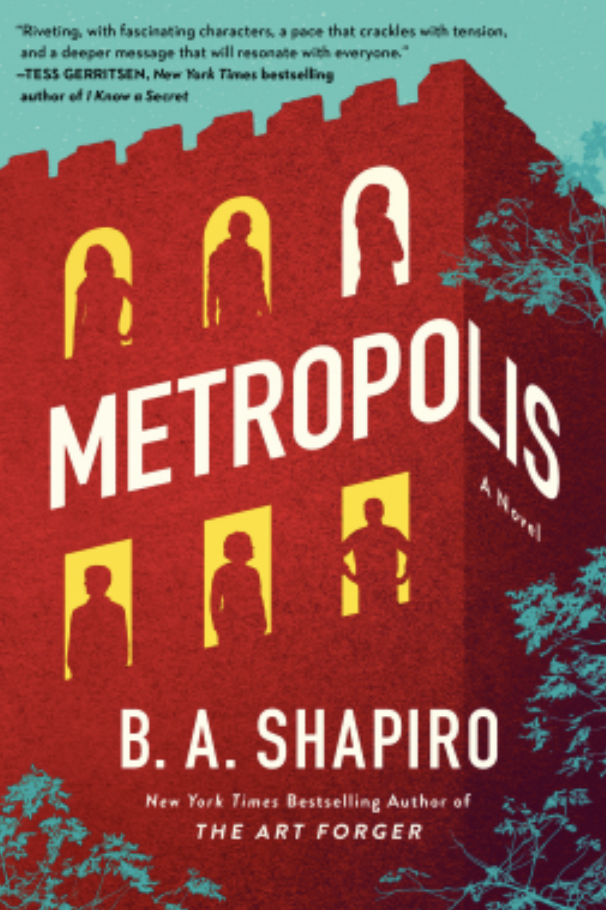
Metropolis by B. A. Shapiro (Literary Fiction)

Plot: 3.5/5 Characters: 4/5 Writing: 4/5
The Metropolis is an old fashioned self-storage unit in Boston — with variable sized units many of which have windows. The best part of this book is the peek into the lives of those who have found themselves in need of excess storage space and the way they use said space. Liddy Haines, wife of the uber wealthy (and not terribly nice) Garrett Haines, keeps her children’s things in the unit when they are shipped off to boarding school courtesy of the not-nice daddy; Jason, the black Harvard educated lawyer who found himself at odds with his corporate employer, houses his office there; Marta, a beautiful Venezuelan on the run from ICE, has moved in, feverishly focussing on her Sociology PhD thesis on how disparities at birth play out in life; and Serge, a brilliant and increasingly mentally disturbed photographer.

The unit is owned by Zach as an effort to go legit and managed by Rose who has her own set of issues. Everything is going along tickety-boo until an “incident” occurs in the unit elevator…

I love the premise of the story — who doesn’t think about all the diverse lives contained in such a collection of rooms with no other commonality? The characters were well-drawn and relatable, though I found their situations were all over-the-top and each was a little tropish. I always love her art commentary, in this case focused on Serge’s extraordinary photographs.

A fun read!

Thank you to Algonquin Books and NetGalley for providing an advance copy of this book in exchange for my honest review. The book will be published on May 17th, 2022.

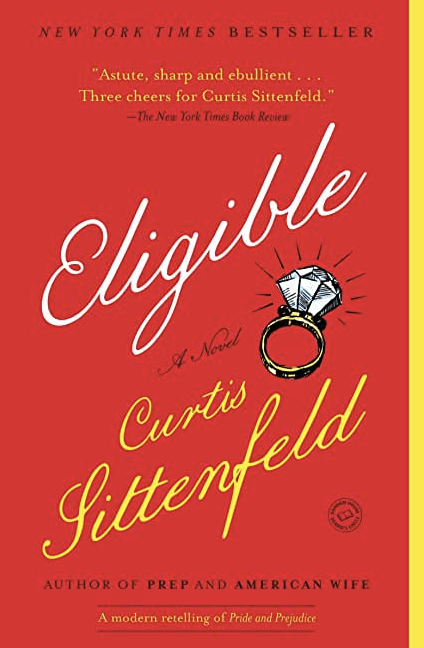
Eligible by Curtis Sittenfeld (Literary Fiction)

Writing: 5/5 Characters: 4.5/5 Plot: 4.5/5

A retelling of Austen’s popular Pride and Prejudice: Sittenfeld did a masterful job at “modernizing” the characters while keeping their essential personalities and issues intact. (As a quick recap, one could summarize P & P as about a family with five daughters that tries to marry them off, although the book is much more interesting than that). Jane, the eldest, at 40 is trying to have a baby via artificial insemination, while Liz (#2) has been dating a married man, having been led on for decades. While Jane and Liz both live in Manhattan, they are home in Cincinnati to help care for their father who is recovering from a heart attack. It is from this setup that they meet newly local doctors Chip Bingley and Fitzwilliam Darcy. What follows is hysterically funny and completely engaging, including Reality TV shows, tech millionaires, Atherton estates, and — wait for it — a trans husband. My absolutely favorite part, though, oddly enough, is Mr. Bennet with his ROFL sardonic one liners.

Sittenfeld is a seriously good writer. While this review may make this sound like a light weight beach read, it really goes much deeper than that — full of the insight, reflection, and social commentary featured in the original. I guess I’m going to have get over my prejudice against modernizations because this was hilarious, fun, and a good piece of literature. Put me in a great mood for the New Year.

Quotes:
“There’s a belief that to take care of someone else, or to let someone else take care of you — that both are inherently unfeminist. I don’t agree. There’s no shame in devoting yourself to another person, as long as he devotes himself to you in return.”

“The truth, however, was that he did not seem egomaniacal to her; he seemed principled and thoughtful, and she felt a vague embarrassment that she worked for a magazine that recommended anti-aging creams to women in their twenties and he helped people who’d experienced brain trauma.”

“At the table, Caroline was on Darcy’s other side and had spent most of the meal curled toward him in conversation like a poisonous weed.”

“Liz felt the loneliness of having confided something true in a person who didn’t care.”

“‘Fred’, the nurse said, though they had never met. ‘How are we today?’ Reading the nurse’s name tag, Mr. Bennet replied with fake enthusiasm, ‘Bernard! We’re mourning the death of manners and the rise of overly familiar discourse. How are you?’”

It occurred to Liz one day, as she waited on hold for an estimate from a yard service, that her parents’ home was like an extremely obese person who could not longer see, touch, or maintain jurisdiction over all of his body; there was simply too much of it, and he — they — had grown weary and inflexible.”

It all Comes Down to This by Therese Anne Fowler (Literary Fiction)

Writing: 4/5 Characters: 5/5 Plot: 4/5

Three grief-stricken sisters (Beck, Claire, and Sophie) wondering how to go forward without their mother, one recently released felon trying to move forward after the drastic side-swipe of events leading to his conviction, and one old house (which said dead mother insisted posthumously be sold) on a gorgeous and remote island off the coast of Maine. These are the components of Fowler’s “messy-families dramedy.” Beck — a freelance journalist with a quietly crumbling marriage; Claire — a pediatric cardiologist whose marriage crashed when her secret unrequited love was inadvertently revealed; Sophie — living an instagram life hobnobbing with wealthy art investors while house sitting because she can’t afford rent; and CJ — poster child of the poor little rich boy who wants nothing more than a peaceful place to paint after a harrowing three years in the pen.

Very good writing full of tart observations on life from a variety of perspectives. Good character insight. I found it interesting that I actually liked CJ more than I liked any of the sisters — probably because he was a little less self centered than the others having already gone through his lesson learning phase (prison will do that to you I hear) while they spend much of the book going through theirs. Some great background stories featuring Manhattan, LA, Dubai, and the wealthy world of art collectors. Also, an adorable little boy who kind of stole the show from my perspective.

Very enjoyable read.

Some good quotes:

“I needed to be humbled — I see that now. It’s the antidote for self-pity, which I admit to indulging more than a few times during the Great Undoing, when I allowed myself to think about how well everything was going for everyone else.”

“I never meant to get so caught up in all the artifice. I never thought the lifestyle would come to own me. It was a kind of addiction, I can totally see that now. … No more fueling myself with the facade of adulation from strangers who think I’m more than I am.”

“What unreasonable, illogical bastards feelings were.”

“Besides, a wealthy, liberal man with high intelligence and a sense of ethics like Sophie wanted was probably not going to look at her and see spouse material. Leaving aside her fine-tuned physical appearance, what did she have to offer? Being nimble, being wily, being conniving when that’s what was necessary to do the task at hand — this was not a compelling attribute list for a future Mrs. Liberal Billionaire.”

“Maybe because Mom was the glue. You know? Dad was … he made us like dandelion seeds, scattering us all over the city so that we could see and do everything. But then Mom held us all together, and now we’re adrift because neither of them are here.”

“CJ could not speak for every man, but in his view softer parts were just fine! Softer parts were natural! If God had meant for women to look like praying mantises, he’d have made their ability to bite men’s heads off literal.”

Thank you to St. Martin’s Press and NetGalley for providing an advance copy of this book in exchange for my honest review. The book will be published on June 7th, 2022.

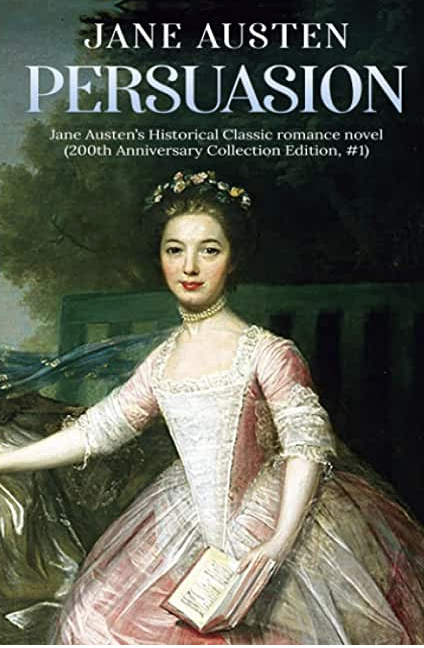
Persuasion by Jane Austen (Literary Fiction)

I reread this for a book club and am so glad I did. We’ve all seen the BBC period dramas that have brought all of Austen’s books to life, and they are all wonderfully delightful, but upon rereading I found a lot of depth that simply can’t be put easily into film.

Persuasion — the story of a woman who was once persuaded to reject the man she loved upon the recommendation of a trusted family friend — brings together all of the thoughts, manners, and considerations of a woman in the landed gentry at that time (~1815). While I am no expert in literary history, I wonder if this isn’t one of the first books to emphasize marital happiness and harmony over passionate love or a business like negotiation for status and money. Austen looks at the essential temperaments and morals of her characters and makes those considerations paramount in thoughts of marriage. And like many classics, the lessons are completely apt for today, despite their being couched in an “olde” patter. Plenty of early feminism, too, in the more open consideration of women as full beings in their own right, without application of the stereotypes of the day.

Delightful characters, thorough descriptions of the rules of society, and a real description of what is and isn’t important in considering one’s place in society, one’s duty, and one’s hope for happiness. The style is not modern — there are many long sentences with a great many commas liberally applied — but once I was back in the rhythm of the thing I had no problem.

Some good quotes:

“She felt that she could so much more depend upon the sincerity of those who sometimes looked or said a careless or a hasty thing, than of those whose presence of mind never varied, whose tongue never slipped.”

“Mr. Elliot was rational, discreet, polished, but he was not open. There was never any burst of feeling, any warmth of indignation or delight, at the evil or good of others. This, to Anne, was a decided imperfection. Her early impressions were incurable. She prized the frank, the open-hearted, the eager character beyond all others.”

“She thought it could scarcely escape him to feel that a persuadable temper might sometimes be as much in favour of happiness as a very resolute character.”

“…on more serious reflection, that, like many other great moralists and preachers, she had been eloquent on a point in which her own conduct would bear ill examination.”

“His looks shewing him not pained, but pleased with this allusion to his situation, she was emboldened to go on; and feeling in herself the right seniority of mind, she ventured to recommend a larger allowance of prose in his daily study; and on being requested to particularize, mentioned such works of our best moralists, such collections of the finest letters, such memoirs of characters of worth and suffering, as occurred to her at the moment as calculated to rouse and fortify the mind by the highest precepts, and the strongest examples of moral and religious endurances.”

“We never shall. We never can expect to prove anything upon such a point. It is a difference of opinion which does not admit of proof. We each begin, probably, with a little bias towards our own sex; and upon that bias build every circumstance in favour of it which has occurred within our own circle; many of which circumstances (perhaps those very cases which strike us the most) may be precisely such as cannot be brought forward without betraying a confidence, or in some respect saying what should not be said.”

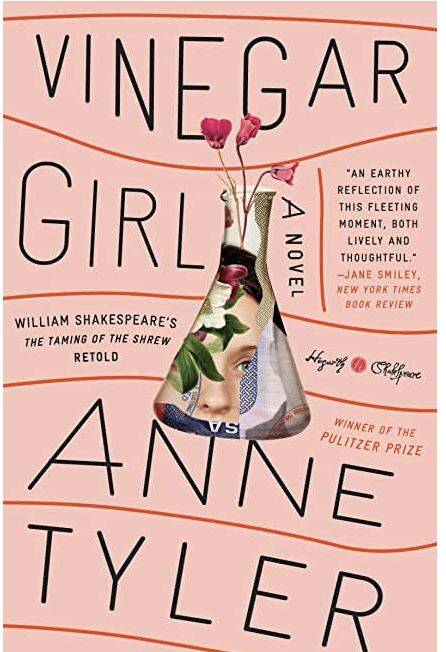
Vinegar Girl by Anne Tyler (Literary Fiction)

Writing: 5/5 Characters: 4/5 Plot: 4.5/5

Vinegar Girl is ostensibly a retelling of Shakespeare’s classic Taming of the Shrew, but really it is a recasting of the story — and one which makes you wonder if it isn’t what Shakespeare meant in the first place (couched in terms of the culture of the times).

29-year old Kate Battista is a blunt preschool teacher assistant with little interest in the social niceties. She’s been caring for her father (a man devoted to his research in autoimmunity and supposedly on the verge of a breakthrough) and her younger sister Bunny (the epitome of the eyelash batting, pouting, childish demeanor that’s apparently quite “alluring to adolescent boys”) since her mother’s death fifteen years earlier. When her father hatches a plan to marry her off to his assistant — a brilliant Russian whose visa is about to expire — she is appalled. And yet, at times she is almost drawn to his equally blunt and direct manner and his alien perception of American culture and conventions.

Great dialog, hysterical at times, fascinating social commentary, and impossible to put down (at only 237 pages I gobbled it up in an afternoon). The speech at the end, where Kate defends her husband against her sister’s accusations is worthy of the bard himself. The writing quality is not surprising — Tyler has been nominated for the Pulitzer three times and won once.

Loved this book and really did not expect to (I’m not a fan of rewrites in general).

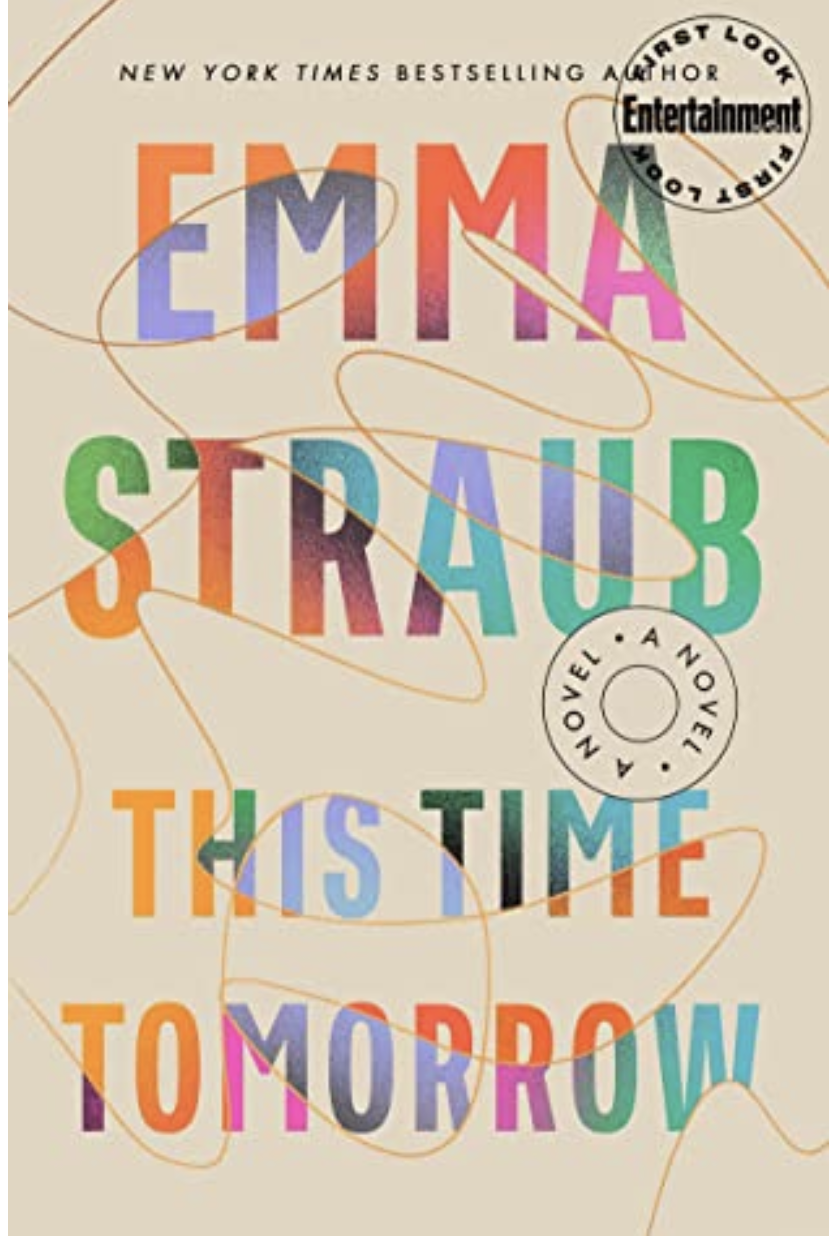
This Time Tomorrow by Emma Straub (Literary Fiction)

Writing: 4.5/5 Characters: 4/5 Plot: 5/5

On Alice’s 40th birthday, she finds herself working in the admissions office of the private Upper West Side school she attended as a child, single, and facing the death of her only parent — an unconventional single dad who earned his keep with a best selling science fiction novel about time travel. But here is where things take a sharp 90 degree turn: after a drunken blow out of a birthday, she falls asleep in the shed outside her father’s house and wakes up … as her teenage self on her 16th birthday.

This was an impressive book in that we have all the character depth, insight, and good writing of a literary novel with the fantastic philosophical considerations made possible by the opportunity to potentially impact the future with some targeted behavior shifts on this one, important night. I loved her wry tone and engaging reflections, and I greatly enjoyed her descriptions of New York City from the perspective of a native. As a diehard SF fan, I was also pretty impressed with the breadth of time travel stories Alice ponders as she tries to come to terms with her situation. Some impressive thoughts about the nature of grief as well. I both enjoyed reading this book and feel like I gained some understanding from it as well.

Some fun quotes:

“In the real world, and in her own life, Alice had no power, but in the kingdom of Belvedere, she was a Sith Lord, or a Jedi, depending on whether one’s child got in or not.”

“Her pants were so long that they dragged on the ground, creating a seismograph of filth along the raw bottom edge.”

“It was like there were two of her, the teenage Alice and the grown-up Alice, sharing the same tiny patch of human real estate.”

“Everyone was gorgeous and gangly and slightly undercooked, like they’d been taken out of the oven a little bit too early, even kids that she’d never really looked at too closely, like Kenji Morris, who was taking the SAT class a whole year early, like he was Doogie Howser or something.”

“Her vision was clear, but it was coming from two different feeds. Alice was herself, only herself, but she was both herself then and herself now. She was forty and she was sixteen.”

“Like many transplants from small towns around the world, Matt seemed to look at New York City as a set to walk through, not thinking too much about what had come before.”

Thank you to Riverhead Books and NetGalley for providing an advance copy of this book in exchange for my honest review. The book was published on May 17th, 2022.

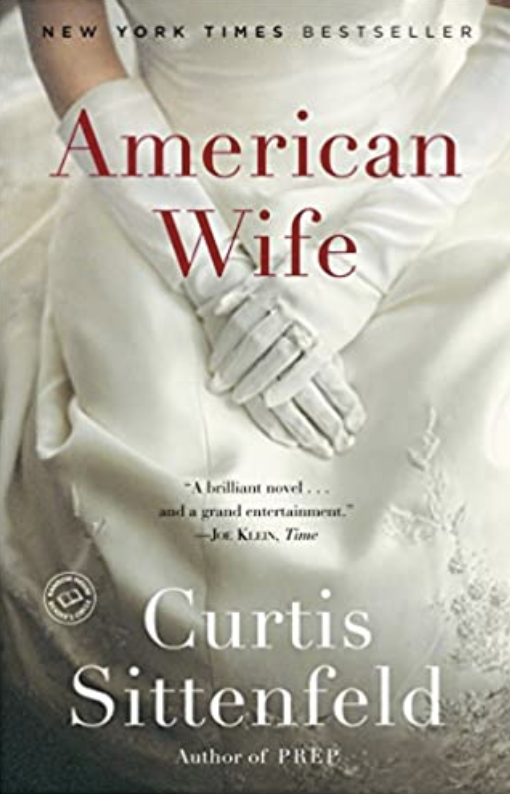
American Wife by Curtis Sittenfeld (literary fiction)

Writing: 5/5 Characters: 4/5 Plot: 4/5

An extremely well-written novel based on the life of Laura Bush. Alice Lindgren (the names have been changed to emphasize the fictional nature of the story) has been an inveterate reader since childhood (my kind of girl!). The story takes us from a relatively normal childhood to working as a librarian to meeting Charlie Blackwell (George W Bush) to becoming the First Lady and enduring the ensuing celebrity.

Each of the four sections in the book is based on a real life event in Laura’s life (accidentally killing a classmate in a terrible car accident; George drinking heavily and then becoming religious, etc.) but everything else is purely fictional. Sittenfeld’s aim is to explore what it is like to “lead a life in opposition to itself” based on the liberal tendencies of Laura Bush as compared with her ultra conservative leader-of-the-free-world husband. As far as I can tell, this liberality is deduced from Laura’s (non-elaborated) support for gay marriage and a woman’s right to choose (abortion) along with a smattering of donations to liberal style causes (soup kitchens, etc). (Spoiler alert) Sittenfeld went a step further (too far IMHO) by giving the fictional Alice a gay grandmother and an abortion. I guess the author felt Alice needed personal reasons to support those more liberal policy decisions — which is a shame as I like to feel that people can have political opinions that aren’t necessarily based on their own needs and experiences.

I found the story gripping — I had a paperback with small print (difficult for me to read) and I still couldn’t put it down, reading late into the night. Alice is a delightfully introspective character and her internal commentary and ponderings brought her life into full perspective for the readers. At the same time, I really dislike fictionalized history — regardless of the careful name changing and outright statements of FICTION FICTION FICTION, it is hard (impossible) to leave this book without a strong idea of what these people were like, despite the fact that the characterizations were a complete fabrication on the part of the author. While “Alice” comes off as a sympathetic and engaging character, “Charlie” comes off as a complete buffoon. I’m no George Bush fan, but this doesn’t really seem like a full and complete portrayal of a man!

Some sample quotes:
“This is our implicit agreement, that we can suggest or recommend but that we never force, never make ultimatums. It’s why we don’t resent each other.”

“I’ve thought often since Charlie became governor that it isn’t a surprise so many famous people seem mentally unstable. As their celebrity grows and they’re increasingly deferred to and accommodated, they can believe one of two things: either that they’re deserving, in which case they will become unreasonable and insufferable; or that they’re not deserving, in which case they will be wracked with doubt, plagued by a sense of themselves as imposters.”

“I had the fleeting thought then that we are each of us pathetic in one way or another, and the trick is to marry a person whose patheticness you can tolerate”

“He had told me I had a strong sense of myself, but I wondered then if the opposite was true — if what he took for strength was really a bending sort of accomadation to his ways, if what he saw when he looked at me was the reflection of his own will and personality.”