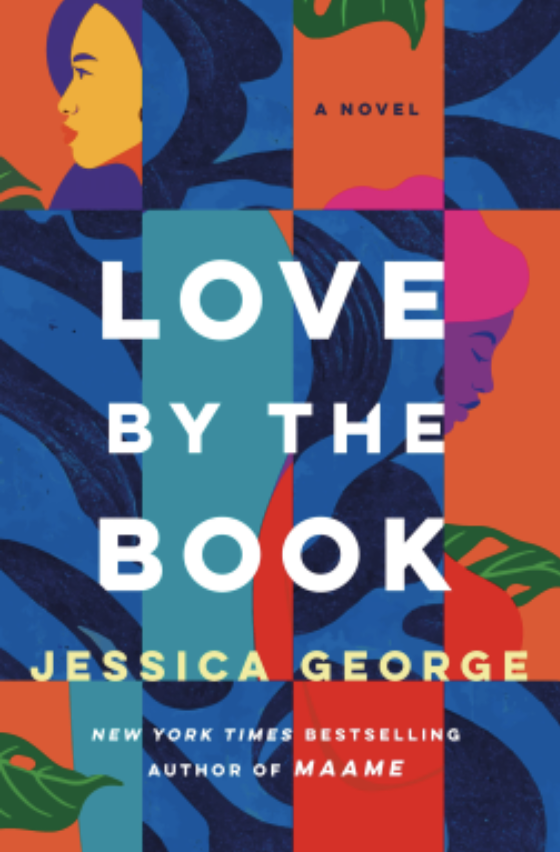
Love by the Book by Jessica George (Literary Fiction)

Writing: 5+/5 Characters: 5+/5 Story: 5

Remy is a writer struggling to produce a second book at the same time as her ten-year, very close, friendship circle is dispersing leaving her jonesing for a new friend. For her, the love she has for her close female friends is far more important than the promise of sexual relationships with men. Simone is an introvert who loves her job as a Year 1 teacher, but also loves the lifestyle provided by her second, and rather secret, job. When the two meet in a kind of platonic “meet cute,” it’s not at all clear that a friendship could be the result, but it does in fact pave the way for an incredibly rich book about female friendship. The best descriptions come straight from the book itself: “Great food, the complexities of female friendship, and the romantic nature of platonic love” and “adult friendship, and the beauty, intimacy, and unappreciated joy of platonic love are explored through the lens of the moral ethics of storytelling.”

I love that the book fully delves into so many issues of importance to women. Real issues such as whether or not have to children; how to tease apart your own moral compass from the judgment of your community; how to define selfishness and is it necessarily a bad thing; and how to manage (which is actually required) a tight friendship group. The idea of platonic love applied to friendship without attraction was a real eye-opener for me. Something I think I’ve always longer for, but honestly could never have even described. These characters are beyond rich — they are so much more interesting and complicated than the typical stereotypes and behavior groupings we get daily from fiction and the beastly news. I found the discussions of life philosophies to be penetratingly insightful (as did the characters themselves). I was able to dive into so many topics that I simply hadn’t spent much time exploring. One of my favorite lines is when one character is exposed to another’s viewpoint and says: “I’ve never really seen life that way. The idea of taking from it as opposed to merely accepting what you receive.” Think about that from the perspective of typical expectations of women!

Jessica George is a startlingly beautiful writer. A large vocabulary precisely placed into perfectly crafted phrases depicting the intricacies of human interaction and self-reflection. I enjoyed the meta-fiction circularity detailing the intricacies of Remy’s writing process while struggling to write the very book that I believe we end up reading. Masterfully done, engaging, and surprisingly unconfusing! I loved her first book — Maame — just as much (see my review here).

Thank you to St. Martin’s Press and NetGalley for providing an advance copy of this book in exchange for my honest review. The book will be published on April 7th, 2026.

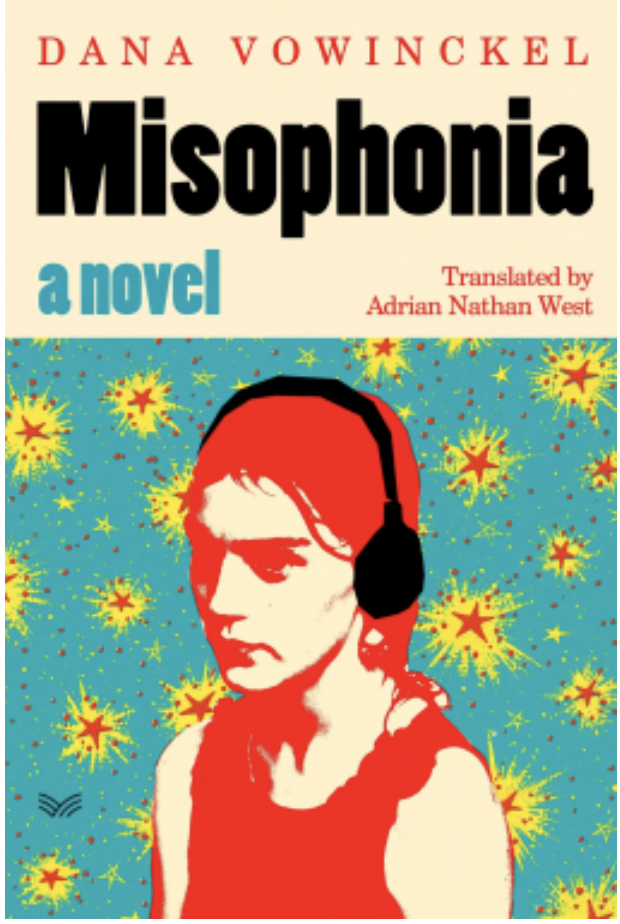
Misophonia by Dana Vowinckel (Literary Fiction)

Part coming-of-age story and part family dynamics, this is the story of an unusual family. Avi is an Israeli born and bred Cantor in Berlin living with his 15-year old daughter Margarita. Her American, linguist mother, Marsha, lives in the U.S. and has little involvement with Margarita to this point. The action takes place in Germany, Israel, and Chicago, where Margarita spends time every summer with her maternal grandparents. While there, Margarita is heavily pressured to go to Israel to stay with her mother who has a summer Fellowship to study Yiddish and Arabic as “oppressed minority languages.”

This is a translation from German, and the prose feels very German to me — methodical depictions of action, thoughts, individual insights, and development — very organized. The opposite of stream-of-consciousness and relaxing for my structured brain. What wasn’t particularly relaxing was the extreme depth of the exposure to the inner turmoil of troubled characters. Margarita’s story becomes cringeworthy in the way that only a particularly astute description of a teenaged girl’s inner struggles can be. The pressures — both internal and external — of being Jewish in multiple contexts (e.g. in Israel, Germany, or America) is thoroughly explored to the point where the reader is completely immersed in the religion from multiple viewpoints, and the impact of Jewish people dwelling within these contexts — much of which is exposed as the revelations different characters have as they develop through the story. I found all this extremely eye-opening, despite the fact that these are topics I’ve read a lot about. There are some absolutely beautiful comments about faith and ritual and Jewish Philosophy. Some very interesting thoughts about how context shapes children as much as their parents do, and how this can cause friction and non-understanding between them.

In the acknowledgements, the author explains that she worked on the novel the year before the events of Oct 2023 so the huge impact that the Hamas massacre had on Israel and the rest of the world is not a part of the story, though I noticed that you can see some hints in a few of the attitudes of some characters. I can’t say that I enjoyed reading this book — the characters are dysfunctional — not in a hopeless or upsetting way, as they are all working to figure things out and improve themselves and their lives, but in a painful way to read. However, I am very glad I read the book and feel like I gained some fresh understanding of the lives of people very different than myself (which is big part of what I look for in my reading).

Thank you to HarperVia and NetGalley for providing an advance copy of this book in exchange for my honest review. The book will be published on May 6th, 2025.

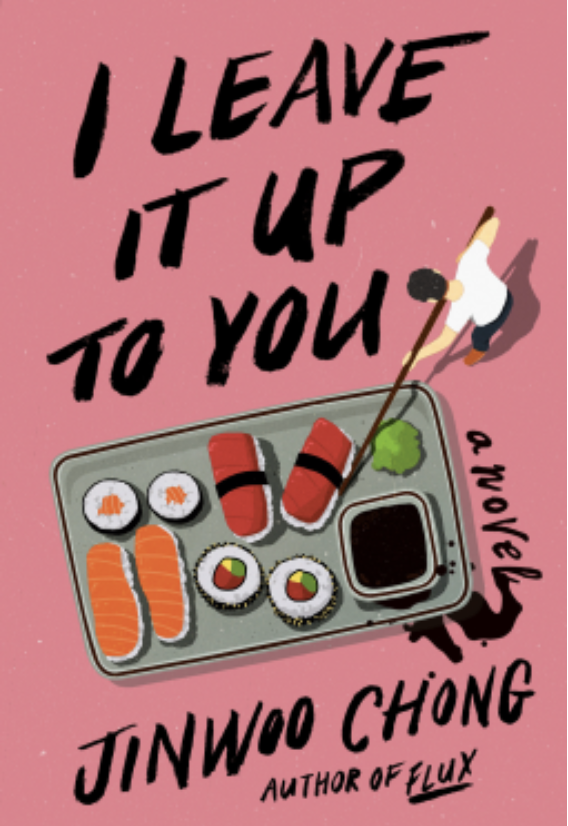
I Leave It Up to You by Jinwoo Chong (Literary and Multicultural Fiction)

Writing: 4/5 Characters: 5/5 Plot: 5/5

Loved this unusual book about family, culture, relationships, and … Korean style sushi — all told in a heartfelt, reflective, and often humorous style.

Jack Jr. wakes up from a nearly two year coma to a fair amount of confusion and a deeply interrupted life. So interrupted that his job, apartment, and husband seem to have all disappeared while his family — whom he hadn’t spoken to in years — seems reluctant to give him the information he needs. What follows is a kind of coming-to-age-redux story, as he in many ways has to start over again — forced to revisit familial relationships and previous life choices.

I loved the characters — all deeply drawn, realistic, and appealing (to me); I loved the personal and insightful description of working the sushi restaurant — everything from the creative new dishes to the “fish run” at o’dark thirty AM; and I really loved the clashes between cultural, familial, and internal expectations — also know as “family dynamics.”

I gobbled it up.

Thank you to Ballantine Books and NetGalley for providing an advance copy of this book in exchange for my honest review. The book will be published on March 4th, 2025.

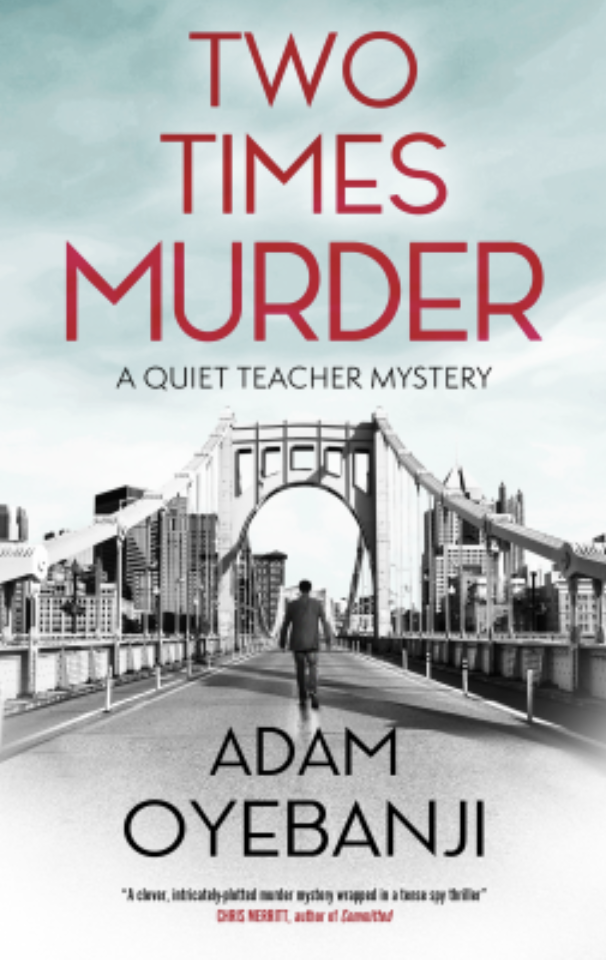
Two Times Murder by Adam Oyebanji (Mystery)

Writing: 4/5 Plot: 4.5/5 Characters: 4.5/5

Greg Abimbola is a multi-racial Russian with British citizenship who is trying to stay under the radar by teaching Russian at a small private school in Pittsburgh. But the book would be pretty dull if he managed to achieve that goal! He’s got an interesting and twisted history that unwinds slowly in response to the events brought to his doorstep despite his reluctance to accept them. There are several independent but connected plot lines — an apparent suicide, an unidentified body tossed in the river, and a DEI triggered clash at a neighboring elite school — all leading down some pretty engrossing paths. The writing is clean, the characters are diverse (in more than color) and have depth that is both quirky and sometimes inspiring, and I appreciated the (fairly) unbiased inclusion of a specific instantiation of the DEI/woke culture war.

This is the second book in the “Quiet Teacher” series. I look forward to reading future installments and will try to go back and catch up on whatever I have missed. I’ve seen the series labeled as “Agatha Christie meets John le Carre” and that’s not a bad tag line!

Thank you to Severn House and NetGalley for providing an advance copy of this book in exchange for my honest review. The book will be published on November 5th, 2024.

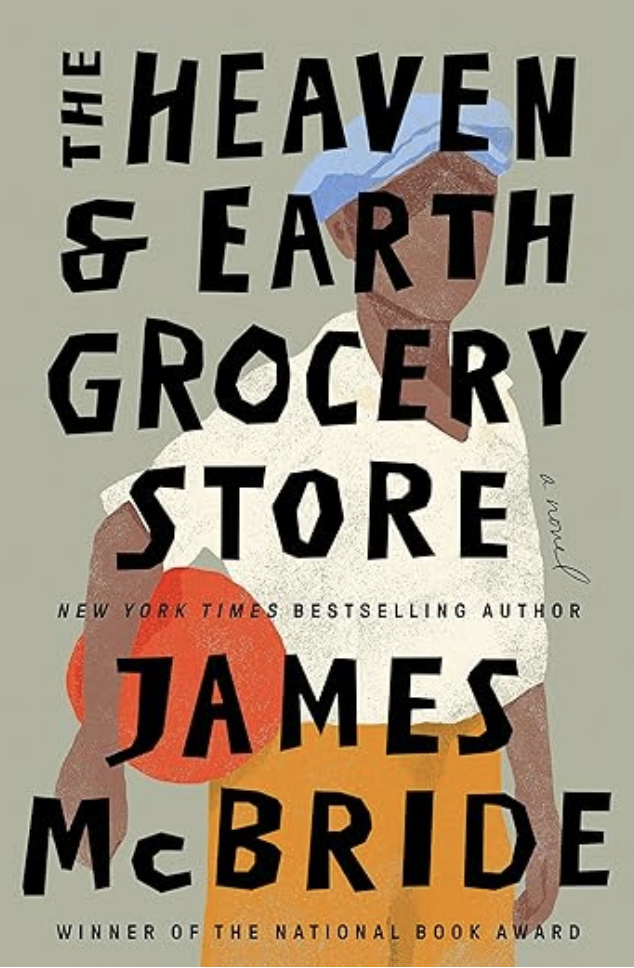
The Heaven & Earth Grocery Store by James McBride (Literary Historical Fiction)

Plot: 4.5 Characters: 5/5 Writing: 4.5/5

A body found in 1972 during a building project in Pottstown, PA, gives rise to the 400 page story describing (in a very roundabout way!) how it got there. But really the body is unimportant — it’s just a piece of string that connects the reader to the tumultuous world of Chicken Hill in the early 1900s — Chicken Hill being the part of Pottstown where the Blacks, Jews, and immigrant whites who couldn’t afford any better lived. When an orphaned, 12-year old, deaf boy is taken by the state to be institutionalized “for his own good,” the best parts of this community combine forces and in a complex effort (bringing to mind Mission Impossible) work to extract him.

That’s the plot but it’s really a tiny part of the story. McBride is a masterful storyteller — presenting a layered tableau of individual (full and richly rendered) characters, disparate groups that form constantly fluctuating alliances and communities, and the realities of life for the disenfranchised. This is not a story of lynchings, or people being shot at traffic stops, but of persistent bias, disdain, and shifting laws that are set and enforced by people who owe allegiance only to their own interests. But again, the story is not focused on the injustice, but about how one goes about living in an unjust world. How one gets on with it, and all the different ways people choose to do so.

I loved the characters and their deeply complex (and utterly consistent) backstories. I loved the tumult of the constantly evolving immigrant populations — the Jews and Blacks taking the main stage but the Jews broken into multiple, distinct, groups from Romania, Lithuania, Poland, Hungary, etc. and the Blacks divided into different groupings based on attitude. Throw in Germans, Italians (but with a strong sense of identity from their origin in different parts of Italy!). This book is one of the best portrayals of the bedlam of immigrant assimilation in the early 1900s that I have ever read. I loved the depiction of the historic friendship between Blacks and Jews that lasted well into the Civil Rights era of the 60s.

The writing style was hard for me at times — long sentences, paragraphs, scenes with tangential information spinning in rapidly at multiple points — but it was necessary to get across the reality of the multiple forces and influences at play. So much valuable content but hard to hold in your head at the same time. Poor me! On the other hand, who wants to cut the live music scenes that Moshe, the Wandering Romanian, brings into his first-to-integrate theaters (see quote below about the kind of music preferred by the white upper-crusters), or of the experiences and daily dismissals that forged Nate Timblin into the strong, deeply principled man that he was, or the many, many restrictions put on Black people at the time and how they impacted simple, every day activities. I can’t honestly come up with a single scene I could do without, so my advice — caffeinate a bit before reading or take good notes.

In addition to all of the above, and perhaps most importantly, it’s a book about love, connection, community, and trying to be the best person that you can in the world in which you land.

Some great quotes:
“Principle. In all the years of being a fusgeyer, when he and Moshe were children, running for their lives from the soldiers and starving, that was the one thing that Moshe never gave away. He never hated anyone. He was always kind. He’d give away his last crumb. And here in America, he’d married a woman who was the same way. Kindness. Love. Principle. It runs the world.”

“Nate peered into his wife’s searching, pleading brown eyes, then down at her hand on his chest, the long fingers that wiped the sweat off his face after work, that knitted his pants and stroked his ear and cared for him in ways that he’d never been cared for as a child. And the rage that overcame him eased.”

“Nate Timblin was a man who, on paper, had very little. Like most Negroes in American, he lived in a nation with statutes and decrees that consigned him as an equal but not equal, his life bound by a set of rules and regulations in matters of quality that largely did not apply to him. His world, his wants, his needs were of little value to anyone but himself. He had no children, no car, no insurance policy, no bank account, no dining room set, no jewelry, no business, no set of keys to anything he owned, and no land. He was a man without a country living in a world of ghosts, for having no country meant no involvement and not caring for a thing beyond your own heart and head, and ghosts and spirits were the only thing certain in a world where your existence was invisible.”

“ ‘That woman,’ his cousin Isaac once grumbled, ‘is a real Bulgarian. Whenever they feel like working, they sit and wait til feeling passes. They can’t pour a glass of water without making a party of it.’”

“To make peace with the town’s power brokers, every month or so Moshe booked a bevy of horrible bands that Pottstown’s high-class, pasty-faced Presbyterians enjoyed, just to keep the peace. Moshe watched in puzzlement as these Americans danced with clumsy satisfaction at the moans and groans of these boneless, noise-producing junk mongers, their boring humpty-dumpty sounds landing on the dance with all the power of empty peanut shells tossed in the air.”

“Most of the seventeen original Jewish families on Chicken Hill were German and liked getting along. But the newer Jews from Eastern Europe were impatient and hard to control. The Hungarians were prone to panic, the Poles grew sullen, the Lithuanians were furious and unpredictable, and the Romanians, well, that would be Moshe — the sole Romanian — he did whatever his wife told him to do even though they didn’t agree on everything; but the relatively new Jewish newcomers were not afraid to fight back.”

“These lost people spread across the American countryside, bewildered, their yeshiva education useless, their proud history ignored, as the clankety-clank of American industry churned around them, their proud past as watchmakers and tailors, scholars and historians, musicians and artists, gone, wasted. Americans cared about money. And power. And government. Jews had none of those things; their job as to tread lightly in the land of milk and honey and be thankful that they were free to walk the land without getting their duffs kicked — or worse. Life in America was hard, but it was free, and if you worked hard, you might gain some opportunity, maybe even open a shop or business of some kind.”

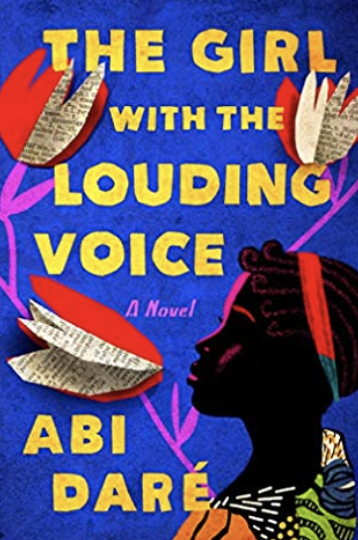
The Girl with the Louding Voice  by Abi Dare (Multicultural Fiction)

14-year old Adunni has grown up rural Nigeria with a drive to be educated that is foiled by her family’s lack of money for school fees and a father who thinks “a girl-child is a wasted waste, a thing with no voice, no dreams, no brain.” Married off at 14 as a third wife with a cruel elder wife and later sold into domestic slavery with a cruel mistress, she somehow never gives up hope — she has dreams of being a teacher and having a real voice — a Louding voice — that people will have to listen to.

The book is easy to read — the unique pidgin english (developed specifically for our fictional protagonist) wasn’t a problem, though I expected it to be. It was consistent and I found I adapted to its rhythm very quickly. There is no faulting the main message — that girls born into cultures where they are not educated, are married off at young ages into often polygamous households, or sold into domestic slavery — are still human, important, and valuable. Who wants to argue with that?

Adunni is a special character. She has real drive and an unquenchable curiosity despite the vicissitudes to which she is subjected. I loved the way she absorbed an education wherever she could find it. She read scraps of books when dusting in the library, she asked questions of everybody (despite receiving beatings for the impudence) and was constantly updating her understanding as a result. However, I did not enjoy reading it, and I’m trying to understand why.

First of all, it’s frustrating to read about such primitive conditions in the modern world with no real path to change. Although not explicitly stated, this story must take place in the Muslim Northern regions of Nigeria. While (civil marriage) polygamy is prohibited federally in Nigeria, polygamy is allowed in the twelve northern, Muslim-majority states as Islamic or customary marriages. And while the literacy rates hover between 80-90% (boys and girls) in the Southern part of Nigeria, the Northern regions show a 20% differential between boys and girls, with the boys at only 50-60% (source statista.com). So what exactly should I be doing with this information about how rural girls in Muslim Nigeria are living? I just find it depressing. The answers in this book are fictional and rely on help for one individual girl that came from a variety outsiders. One tiny drop in a giant bucket and I wasn’t left with the feeling that this kind of help would be easy to find.

Also, despite the fact that the (negative) practices and beliefs described are still in play today, it feels like the book is feeding right into Western stereotypes of Africans — uneducated, primitive, and holding beliefs anathema to our Western ideals of equality for all. And yet, Nigeria has the largest population and strongest economy in Africa, and leads the continent in literature, music, cinema and drama — surely there are other more nuanced worlds and characters who could populate a story. I much prefer the novels of Chimamanda Ngozi Adichie where each character is painted with the depth of an individual regardless of his or her identity and background.

So … well-written with an upbeat ending and some appealing characters, but I certainly didn’t feel inspired, nor did I feel like I learned anything new.

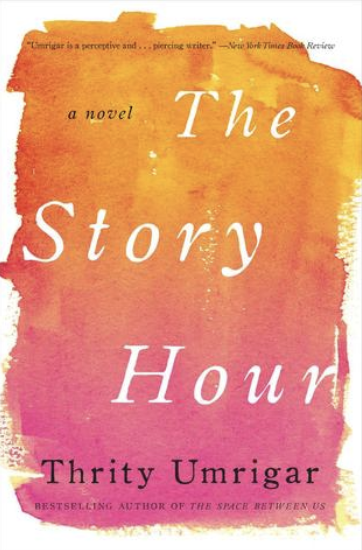
The Story Hour by Thrity Umrigar (Literary Fiction — Audio book)

Writing: 5/5 Characters: 5/5 Plot: 4/5

A beautifully written (with fantastic audio reader) story about an Indian immigrant woman who attempts suicide (in the first chapter — this is not a spoiler) and the black therapist who is assigned her case. Their stories form an interlocking spiral as themes of betrayal, grief, and loneliness play out in both of their lives as the two become more connected than a typical therapeutic relationship warrants.

Lakshmi — the immigrant — is a complex character in a tired body with the loneliness incumbent with an uncaring husband and being cut off from her family home in India. Maggie — the therapist — is a black woman on the verge of an (ill advised) affair, married to a loving and caring Indian professor. Both have complex and well-articulated, deeply considered backstories that have a surprising amount of commonality.

The book is a study in interpersonal engagements of all sorts — the urges, the mistakes, the trust, the quest for redemption, forgiveness and for happiness and intimacy. Incredible breadth and depth. I liked every one of the characters and yet frequently grew angry with them for their all too human errors of judgement. At the very end, there is no specific resolution — highlighting the fact that life is not lived as a novel with a consistent narrative arc and closure.

I was completely engaged and could not stop reading, but there was a lot of pain to share, and I will need something light and happy to read before I venture back into another like it.

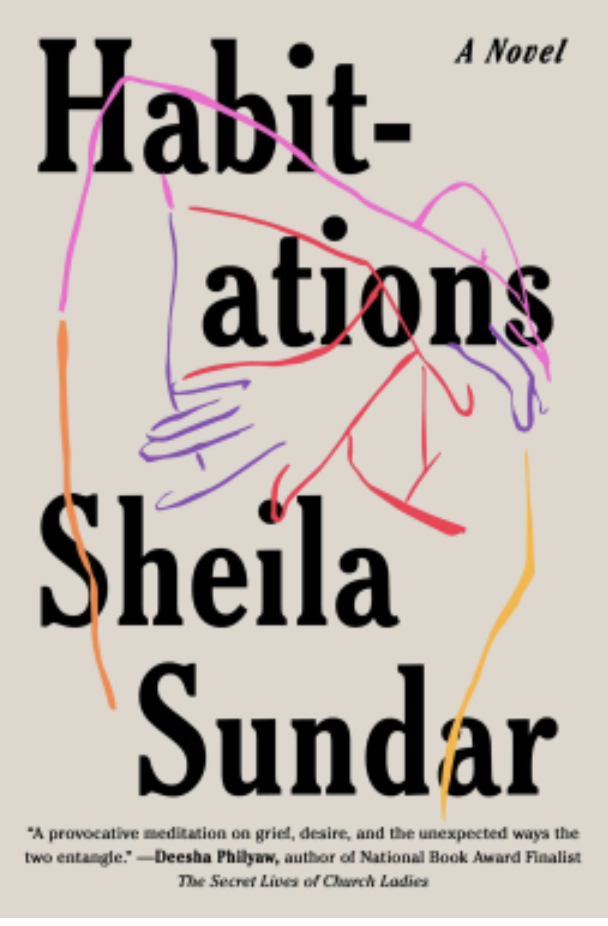
Habitations by Sheila Sundar (Literary Fiction)

Writing: 5/5 Characters: 4.5/5 Plot: 3.5/5

A deeply thoughtful book about Vega Gopalan — an Indian academic (Sociology) who immigrates to the U.S. and shares her introspective take on all her observations of life for herself and the people she meets. Pervading her experiences is the memory of her sister who died at 14 from a disease that would have been easily detectable (and treatable) had she been born in the U.S.

The writing is beautiful, with a talent for capturing complex feelings and thoughts in a few apt phrases. It read like a memoir to me — no foreshadowing, no clearly defined narrative arc — more the development of a life with the actions and events paralleled by Vega’s internal commentary and awareness of self-discovery as it occurs. It was interesting that I didn’t really like Vega — she is not the type of person I would befriend. This is not because she was in any way an unpleasant character, but because she is a deeply interior person who does not always show (or feel?) the empathy and interest in others that I personally like in friends. One of her friends says (appropriately) at one point: “… but sometimes, when we talk, I feel as though I’m interrupting your thoughts.” I usually need to really like a character to enjoy reading about her, but in this case I found myself relating to her intellectually, if not emotionally, so perhaps I would have enjoyed her friendship after all. 🙂

I was impressed by all of the topics discussed in the pages — none with heavy agendas and all with the kind of verbal interactions that show several individuals tackling a topic from multiple personal contexts rather than pulling the latest PC verbiage from a shelf. Vega spends her time in her (American) university keeping company with a wide variety of people — almost all immigrants themselves (from East Africa, Pakistan, Jamaica, etc.). There are a lot of discussions of cultures, advantages, and a realistic depiction of choices that have to be made in order to be allowed to stay or to study. All were treated as facts of life for which you needed to adopt strategies, rather than focussing on the unfairness.

Vega experiences racism at various points but doesn’t let it define her — it’s just more of the expanding context that provides the soundtrack for her developing life. I loved the fact that she was irritated by the “inclusive educational models” at her daughter’s school which featured simplistic math sheets and overly exclamation pointed reading guides, but at the same time had the awareness that if one of her colleagues had written a paper on such models she would have applauded the theories. The book referred to some fascinating academic studies about topics I couldn’t have imagined myself — opening me up to new worlds of thoughts and experiences. Also some lovely references to some of my favorite (and not that well-known) books such as Maya Angelou’s “I Know Why the Caged Bird Sings,” and Tsitsi Dangarembga’s “Nervous Conditions.”

I enjoyed reading the book, but it was one of those books that I found become more interesting the more I thought about it after I finished it. I felt exposed to the multi-faceted reality behind the academic reports, news coverage, and general stereotypes through a stream of social commentary that pertained to individuals in groups, rather than groups as a whole. And lots of stereotype smashing roles — her characters were all influenced by their cultures and backgrounds, but never defined by them. Every time I assumed it would go in a predictable direction it didn’t. Definitely worth reading.

A few good quotes:

“She has long had the sense that there were two types of men: spectacularly bad choices, and interchangeably mediocre ones. She only realized, now, how far she had come from that impression. There was such a thing as a happy marriage. Easy and generous love.”

“She found the veneer of friendship lonelier than being alone.”

“I just grew up with so many people like that. People who lived privileged lives in India, but the moment they travel abroad or talk to foreigners, they want to establish themselves as experts as poverty.”

“There was something broken in her. She knew how to desire a person, but not to care for them.”

Thank you to Simon & Schuster and NetGalley for providing an advance copy of this book in exchange for my honest review. The book will be published on April 12th, 2023.

Welcome to the Hyunam-dong Bookshop by Hwang Bo-reum

I loved this quiet, reflective, and ultimately upbeat book about a young South Korean woman — Yeongju — who drops out of the rat-race to open a bookshop in a quaint residential area of Seoul. This is a far cry from similarly themed American versions with sassy owners or drama gushing from every page. Instead this bookstore slowly grows a community filled with polite and kind people who help each struggle with philosophical questions of life such as: What constitutes success in life? Have we become the person we wanted to be? We meet an array of people, each taking an unusual (especially for South Korea) path through living and hear discussions of the tactics each is employing along with a self-assessment of his or her happiness.

This is a translation of a surprise best-seller from Korea whose popularity spread completely through word of mouth. I enjoyed knowing that I was reading something authentically Korean that had appealed to a non mainstream audience in that way. What I assume was a modern Korean culture permeated the behavior and reflections of each of the characters in a way I found enlightening. I also loved the writing style: Quiet. Observational. Unfiltered. The story was sweet, honest, and real and had many points of resonance for me. I loved the way people communicated with each other with simultaneous insight into each person’s thoughts and assumptions. And of course, I loved all the “action” around reading and books! Yeongju reads. At the start of the book she is reading about people who have left their old lives behind, as that is what she has just done. She reads and discusses the ideas with herself. She learns but also disagrees and in this way furthers the development of her own sense of self and purpose. She makes recommendations but is far from the know-all librarians portrayed in much fiction. My favorite request: a mother whose 18-year old son is already sick of life asks for a book that will “unclog a smothered heart.”

I loved that this book tackled deep issues with neither false cheer nor gloominess. I found it ultimately inspiring while simultaneously grounded in reality. As an aside, I really had to focus on all the Korean names as I don’t have a lot of experience with them and am happy to report that with just that little bit of focused effort, the names felt very familiar to me by the end.

Quotes:
“In The past, she used to live by mantras like passion and willpower, as if by imprinting the words on her mind, they would somehow breathe meaning into her life. It only felt like she was driving herself into a corner. From then on, she resolved never to let those words dictate her life again. Instead, she learned to listen to her body, her feelings, and be in happy places. She would ask herself these questions: does this place make me feel positive? Can I be truly whole and uncompromisingly myself? Do I love and treasure and myself here? For Yeongju, the bookshop checked all the boxes.”

“Yeongju loved such stories. Stories of people going through hard times, taking one step forward at a time as they seek comfort from the flicker of light across the horizon; stories of people determined to live on, despite their sufferings. Stories of hope – not the rash, or innocent kind, but the last glimmer of hope in life.“

“Yeongju’s home felt like an extension of her — somewhat lonely, but a reassuring presence nevertheless.”

“She took care and pride in writing each piece, even though it felt like she had to squeeze out every last bit of her brain juices.”

“Isn’t that what life is about? Foraging forward with the answer you have — stumbling along the way and picking yourself up — only to one day realize that the answer you’ve held onto for a long time is not the right one. When that happens, it’s time to look for the next answer. That’s how ordinary folks, like herself, live. Over our life span, the right answer will keep changing.”

“What counts as a good book? Books by authors who understand life. Those who write about family, mother and child, about themselves, about the human condition. When authors delve deep into their understanding of life to touch the hearts of readers, helping them to navigate life, isn’t that what a good book should be?”

“Small talk could be a considerate gesture, but most of the time, at your own expense. With nothing to say, squeezing the words dry leaving only an empty heart and a desire to escape.”

Thank you to Bloomsbury Publishing and NetGalley for providing an advance copy of this book in exchange for my honest review. The book will be published on February 20th, 2024.

Family Lore by Elizabeth Acevedo (Fiction)

I read / listened to this book simultaneously, going back and forth between the two editions. The audio book really gives you the lilting flavor of the poetic prose, and much of it is read by the author. On the other hand, for some reason, the audio book does NOT read aloud the chapter headings that tell you which family member is narrating. This can be very confusing as it often takes some time before it becomes obvious whose story is being taken up.

The novel tells the stories of the women of a multigenerational Dominican-American family — each with a gift that is not wholly of this world. It begins with one of the sisters — Flor — demanding a wake for herself in three days. Since her gift is predicting the day of someone’s death, her family naturally expects the worst, though Flor won’t answer any questions. The prose is lyrical, moving between present and past and among the three sisters and the two cousins of the next generation.

The story is slow paced and completely sensual — it is a story of sensory experiences and personal feelings, not a story of plot or thought. That was interesting to me because I realized that I personally prefer more thought and a little less feeling and experience, but I can appreciate the flow. The stories center on women — all the men are described from the women’s perspective which is another interesting way of telling of a story.

I enjoyed the story but you do have to be in a patient mood, as the story unfolds slowly with a different sense of time than I’m used to. Read after the caffeine in your system is spent, else you will not be able to settle in to the language the way you should.

Thank you to Ecco and HarperAudio and NetGalley for providing an advance copy of this book in exchange for my honest review. The book will be published on August 1st, 2023