
The Ghost Dancers by Adrian C Louis (Literary / Multi-cultural Fiction)

Writing: 4.5/5 Characters: 4.5/5 Plot: 4.5/5

A posthumous publication by the author of Skins, this is a raw story of Indian life in late 80s / early 90s. Bean Wilson is an educated Indian — a well known poet and journalist. Born and raised a Paiute in Nevada, he now lives and works with Lakota Sioux on the Pine Ridge reservation in South Dakota. The events in the book follow Bean, his son Quanah, and his girlfriend’s son Toby. Wilson’s interior and verbalized rants permeate the pages on topics ranging from Indians (and himself in particular) being their own worst enemies to harangues on White oppression. While he tries to honor the old ways, he grapples with alcoholism and his womanizing tendencies. The writing depicts his internal struggles and the male culture in which those are common and even respected traits. This is extremely well done. It’s often crude, but feels real and does an excellent job of fleshing out each of the primary male characters — their experiences, their interactions with friends, family, and those who are “other” and the impact on their personal development. Oddly enough, while plenty of bad things happen, I didn’t find it depressing the way I do most Louise Erdrich books (for example). The tone is not as emotional, or maybe it is just more angry and less hopeless. Perhaps this is because the real focus is on men? The women characters have depth, but the real magnifying glass is on the men.

I have no insight into why this was not published when it was written — probably in the late 80s or early 90s according to the Forward. That was the only frustrating bit — the world was so well-depicted and I have no clue how things may or may not have changed since then.

The writing is powerful, insightful, and supports the complexity required of any real story. Some quotes below demonstrate both the writing and some of the rants. I loved the first line (which is also the first quote) — somehow it just completely grabbed me.

“The Cancerous burrito of Los Angeles summer seemed to have no effect upon the rambunctious innocence of yelling Chicano kids.”

“Bean looked from the two warriors in the painting to the two Pine Ridgers and repressed an urge toward epiphany.”

“America was a cannibalistic society. There was no true freedom in America. The White man thought he was free. The Black man thought he had been freed. The Indian knew he had been corn-holed.”

“…that garish monument to White greed, carved out of the mother earth, gouged out of the sacred Black Hills, and stolen from the Indians despite the treaties promising no intrusion.” (About Mount Rushmore)

“He despised the rhetoric of contrition that AA and its kindred organizations espoused. He despised the self-righteous reformed drunks who made their various programs for alcoholics a large industry on the Pine Ridge reservation.”

“It’s depressing to the max around here. I hate to say it, but you Sioux live like Black people in ghettos. No pride. No hope. Just booze, drugs, and violence. Pregnant teenagers and commodity cheese.”

“And as educated Indians, we know who our worst enemies are. Some of the worst are our own people. They must be re-educated, those that are the rip-offs. And the other bad enemy is the White liberal who lives on the reservation and purports to help our people. They are bloodsuckers. But that is a different matter.”

Thank you to University of Nevada Press and NetGalley for providing an advance copy of this book in exchange for my honest review. The book will be published on September 14th, 2021.
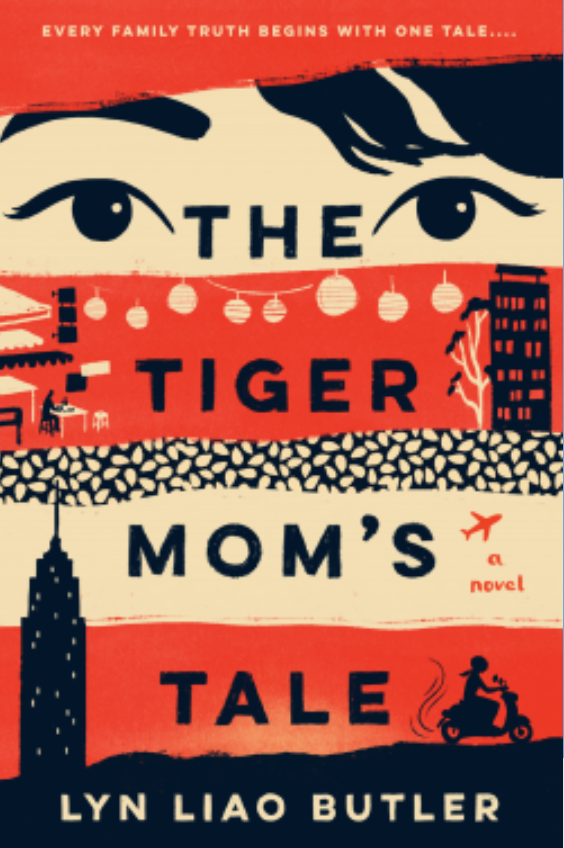
The Tiger Mom’s Tale by Lyn Liao Butler (Fiction)

Plot: 4/5 Characters: 4/5 Writing: 3/5

36-year old Alexa Thomas is hit with a double whammy when she learns that Chang Jing Tao — her Taiwanese biological father — is dead after 22 years of estrangement and that it is up to her whether or not his extended Taiwanese family will lose their homes. A personal trainer in New York City who loves her clients, Alexa was raised by her white American mother and adoptive father. Efforts to learn more about her Taiwanese family came to a screeching halt the summer she was 14 and had a lot to do with the titular Tiger Mom — Jing Tao’s second wife.

A fun book with good writing and likable characters. Butler is a great storyteller, and I confess I read this in a single sitting on one insomniac night! Taiwanese culture is explored — mostly through mouth watering food descriptions but with some customs and the tiniest bit of history added in. While hitting plenty of hot topic buttons (being bi-racial, not fitting in, family break up, and … wait for it … the exploration of one’s sexuality at an “elderly” age), they weren’t the agenda laden center of the book. Instead they were simply influencing factors of Alexa’s life. We all have individual personalities and contexts in our lives, and I like to see “hot topic” forces relegated to the background of one person’s individual story.

Thank you to Berkley Publishing Group and NetGalley for providing an advance copy of this book in exchange for my honest review. The book will be published on July 6th, 2021.

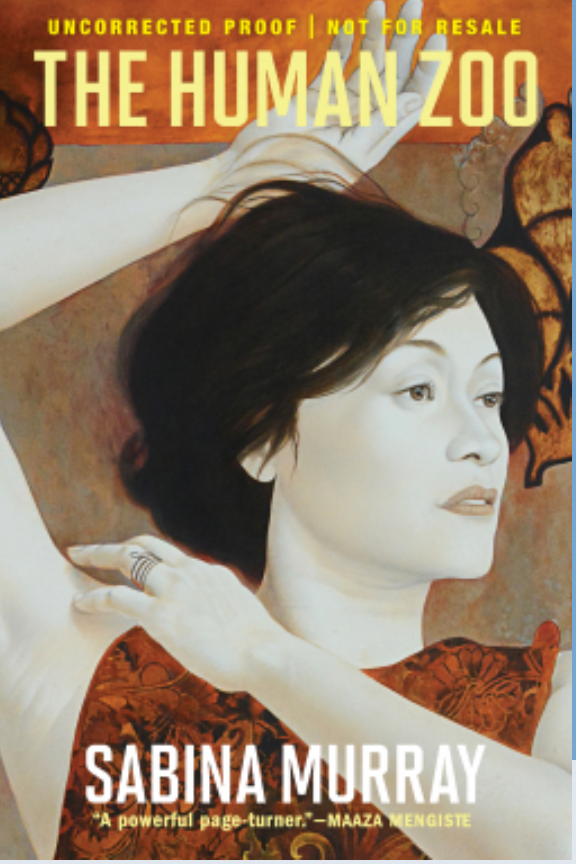
The Human Zoo by Sabina Murray (Literary Fiction)

Writing: 4/5 Characters: 4/5 Plot: 4/5
An unusual (and engaging) book — the narrative felt so real I had to remind myself it was fiction, not memoir.

Filipino-American writer Christina Klein (Ting) travels back to the Philippines — ostensibly to write a book about an episode in Filipino history featuring a headhunter tribe’s role in Coney Island’s “human zoo.” A short year after the election of a dictatorial leader, Ting experiences the new Manila superimposed on the remembered culture and practices of her youth, which in turn are layered on stories and experiences from a more distant past as told through her historical research and the stories of her many elderly Titas and Titos.

The writing is fluid and provides fascinating linkages over time and class — her interactions span people with varied backgrounds, living conditions, and political opinions, from her aristocratic family to earnest socialists to those in the current circles of power. The dialog perfectly distills different perspectives and her ongoing reflection gives us insight into her personal journey to understand and evolve her sense of morality in a situation where nothing at all is perfectly clear. It’s masterfully done, IMHO.

As an aside, I learned a lot about Philippine history, although it is a backdrop to the story rather than a comprehensive presentation — 7,000 islands and 182 non mutually intelligible languages!

Some good quotes:

“Morality is the spine of fiction, even if it is most often twisted and deformed.” <— my fav

“They liked microphones and Spam. America’s streets and classrooms had instilled in many a sense of inferiority and in some a seething resentment at being brown in a white world. The Fil-Ams suffered from the shame of otherness, while Filipinos born and educated in the Philippines struggled with disdain for gauche American culture. In the States, we were all seen as being of the same tribe, but it was, at times, a flawed taxonomy.”

“This was to illustrate the colorful ways of the backward Filipinos and justify American’s occupation of the islands. Why exterminate all the brutes when you could display them and make a profit?”

“Inchoy watched me watching the children, and I felt my perspective slowly shift from mine to his: from my joy at the beauty of the children to Inchoy’s perception of forced child labor. He flicked his eyebrows at me to drive home the point.”

“Tita Rosa’s ambush resolved itself quickly: this was Manila and duty presented itself in clear, direct ways. Resignation was the backbone of survival here. Resistance only created anxiety.”

“The results of Gumboc’s presidency are that the poor live in fear for their lives and with reason. Gumboc’s army of assassins operates in a price per head economy and there is no due process. These people are murdered for money as part of a government-sanctioned program.”

Thank you to Grove Atlantic and NetGalley for providing an advance copy of this book in exchange for my honest review. The book will be published on August 10th, 2021.

The Poet X by Elizabeth Alcevedo (Young adult)

Spectacular book — possibly one of the best I’ve read this last year. Made me really “get” some concepts that I knew only peripherally.

This is a coming-of-age story about Xiomara — an Afro-Latina teenager with an intensely religious immigrant mother and a father who is absent even in his presence. She is “unhideable” with “too much body for such a young girl.” And she is a secret poet who puts her thoughts about family, religion, boys, and the place for girls into her poetry.

The story is a novel-in-verse — told in poetry with an overall narrative arc. I was hesitant because I don’t typically enjoy poetry but this was utterly engrossing. The author was able to consistently distill complex thoughts, feelings, and narrative into a concise set of stanzas of great profundity. Told from Xiomara’s point of view, we see depth in the characters — her mami, papi, twin brother, best friend, potential boyfriend, priest, and the teacher who convinced her to join Poetry Club — through their relationship with her. Incredibly engaging and incredibly well-executed. No stereotypes in this book — Xiomara is anything but — she is always “working to be the warrior she wanted to be.” I was surprised to find that I really liked the character of the priest who was culturally bilingual (able to deal simultaneously with Mami’s deeply religious life and Xiomara’s search for her own way) and thus was able to help Xiomara and her mother come to terms with their different priorities and goals.

I’ve put some of my favorite quotes below — additionally, I absolutely loved the whole of the “Church Mass” poem on page 58-59.

“The world is almost peaceful
when you stop trying
to understand it.”

“But everyone else just wants me to do:
Mami wants me to be her proper young lady.
Papi wants me to be ignorable and silent.
Twin and Caridad want me to be good so I don’t attract attention.
God just wants me to behave so I can earn being alive.”

“How your lips are staples that pierce me quick and hard.”

Firekeeper’s Daughter by Angeline Boulley (YA / Mystery / Thriller / Romance)

Writing: 4/5 Characters: 5/5 Plot: 4/5

I loved this book! Daunis Fontaine is 18 years old, 6 feet tall, an ice hockey ace, and a science whiz. While she grows up in Sault Ste Marie, Michigan with her white mother and grandparents she is also deeply ingrained in the local Ojibwa community of her father. What starts off looking like an upbeat teen romance takes a sharp left turn and becomes mystery, intrigue, and thriller (romance takes a back seat — pun intended). The plot keeps swerving — surprise after surprise after surprise — with Daunis giving us an intelligent and fiercely community oriented view of the ride. I couldn’t put it down. I’ll give you a hint — Daunis ends up being a Confidential Informer (she calls it being a Secret Squirrel) for law enforcement.

One of the things I loved about this book is the way the many characters in the Ojibwa community are portrayed. While references to past injustices are present and individual incidents of prejudice occur (Daunis and her friend like to play Bigotry Bingo — see quote below), they are not front and center. This is a novel of today — various members of the community are successful (by personal definitions of the word) while others are not; some are greedy and conniving while others are supportive and helpful; some have drug and alcohol problems while others have steered clear. In other words, no group stereotypes and no group victimhood. An array of well-drawn individual characters.

Daunis is a great character — I love her scientific approach to life, her fearless and unconcerned approach to typically male endeavors, and her deep involvement with the tribal culture and people. Great themes, great unfolding of the many mysteries past and present, and an absorbing view into a culture unlike my own. Ojibwa is a matriarchal society, and the story includes many strong women characters of all ages. I enjoyed the embedded language and cultural practice tutorials.

A couple of quotes:
“When Lily and I were on Tribal Youth Council, we all played a game called Bigotry Bingo. When we heard a comment that fed into stereotypes, we’d call it out. Dream catchers were the free space. Too easy. There are so many others though. ‘You don’t look Native.’ ‘Must be nice to get free college.’ ‘Can you give me an Indian name for my dog?’ ”

“My mother’s superpower is turning my ordinary worries into monsters so huge and pervasive that her distress and heartache become almost debilitating.”

“When you love someone, but don’t like parts of them, it complicates your memories of them when they’re gone.”

Thank you to Henry Hold & Co and NetGalley for providing an advance copy of this book in exchange for my honest review. The book will be published on March 2nd, 2021.

Remote Control by Nnedi Okorafor (YA / African Futurism)

Writing: 4/5 Plot: 3/5 Characters: 4/5

A coming-of-age story set in a future Northern Ghana. Sankofa is only five when her favorite tree pushes up a strange seed after a meteor shower brought sparkling bits of green to the Earth. Before she has any clue as to what is happening, she has been “gifted” with a terrible power which continues to bring tragedy even as she struggles to control it.

A combination of myth, juju, and technology populate this picture of future Ghana. The “bad guy” is LifeGen — a “big American corporation that’s probably going to eventually destroy the world.” But Sankofa is a child, and we watch as she absorbs information and tries to understand what has happened to her, why, and what she can possibly do with it. This is not your typical, action-oriented, one man against a giant, evil machine.

Okarafor labels her work a combination of “African Futurism” and “African Jujuism” — terms she coined — to reflect its African-centricity. I like her definition: “I am an African futurist and an African jujuist. African futurism is a sub-category of science fiction. Africanjujuism is a subcategory of fantasy that respectfully acknowledges the seamless blend of true existing African spiritualities and cosmologies with the imaginative.”

I enjoyed the writing and the characters and the imagery of a blended future — but I did find the plot a little weak.

Thank you to Macmillan-Tor/Forge and NetGalley for providing an advance copy of this book in exchange for my honest review. The book will be published on January 19th, 2021.

The Bad Muslim Discount by Syed M. Masood (Literary Fiction)

Thank you to Doubleday Books and NetGalley for providing an advance copy of this book in exchange for my honest review. The book will be published on February 2nd, 2021.

Writing: 4.5/5 Characters: 4.5/5 Plot: 4/5
An utterly engaging novel combining a coming-of-age story, a love story, and a story about the relationship one American Muslim has with his religion and community.

Anvar Faris is a sharp, wise-cracking, Pakistani immigrant who uses humor as a shield to protect his vulnerabilities and confusions. He questions his religion — his belief in God, the rigorous requirements of being a “good” Muslim, and most definitely the wrath of his mother who prefers moral to rational arguments. At heart, despite his apparent irreverence, he struggles to do the right thing in the messy human situations that pervade life.

I love the characters in this book — Anvar, the morality-wielding mother, the brother who always colors insides the lines, the fairy-godfather-like Hafeez who reserves his dilapidated apartments for “good Muslims” and has his own means of judging what is good, and Zuha — the woman Anvar has been in love with since childhood who struggles to get Anvar to see that she is living her own coming-of-age story that isn’t completely linked to his.

A separate thread follows Azza — a young woman growing up in war-torn Iraq who eventually makes her way to the U.S. and serves as a kind of catalyst for Anvar’s growth in self-knowledge. Azza is more of an exemplar of a situation than a nuanced individual but the moral choices she makes and the way she questions God about her fate as compared to the Americans she sees are pointed in addition to the part she plays in Anvar’s story.

Spanning 9/11 and the Trump election, the narrative explores multiple aspects of Islam on the global stage — from the radicalizing of the religion in response to “Allah’s punishment” for moral failures to the US execution (without trial) of an American citizen of Yemeni descent suspected of being a terrorist in Syria and beyond. I enjoyed the writing and have included several quotes below. Great character depth and another window into the lives of a community I know little about. As always, I appreciated the focus on individuals rather than stereotypes.

Quotes:
“As usual, Karachi was screaming at its inhabitants and they were screaming right back.”

“My mother preferred morality to rationality because it put God on her side.

“Aamir Faris, in short, uses dull crayons but he is relentlessly fastidious about coloring inside the lines.”

“Checkers is the game of life. Idiots will tell you that chess is, but it isn’t. That’s a game of war, Real life is like checkers. You try to make your way to where you need to go and to do it you’ve got to jump over people while they’re trying to jump over you and everyone is in each other’s way.”

“Muslims — our generation, in the West — are like the Frankenstein monster. We’re stapled and glued together, part West, part East. A little bit of Muslim here, a little bit of skeptic there. We put ourselves together as best we can and that makes us, not pretty, of course, but unique. Then we spend the rest of our lives looking for a mate. Someone who is like us. Except there is no one like us and we did that to ourselves.”

“My husband says that I’m the YouTube of tears. Always streaming, you know.”

“The moment that I took God out of the equation, the world became too large, too cruel and too indifferent for me to live in. I decided then that there was a God. There had to be. I needed Him.”

“Aamir’s chunky laptop hissed, shrieked and beeper its mechanical anxiety as the dial-up connection attempts to link it to the internet. The panicked sound a computer made in the early days of the internet, before cable and before wi-fi, was the swan song of solitude.”

Riot Baby by Tochi Onyebuchi (Fiction)

Writing: 5/5 Plot: 3.5/5 Characters: 4/5

This was a hard book to read — not because of the ugly truths it laid bare (that too) but because of the ugly truths the author calls for: black revenge in the form of “Apocalypse sweeps the South. Vengeance visits the North.”

It’s the story of two siblings. Ella has her “Thing” — a deep and growing power that she spends years learning to control: clairvoyance, astral projection, and the ability to destroy with a glance. Her younger brother Kevin was born into violence: he is “Riot Baby” — born just as the Rodney King riots sparked. Kevin’s life is supposed to represent that of a typical black urban youth. We strobe through it: a smart kid doing well in school; a kid taunting cops; a failed armed robbery attempt; 7 years in Rikers waiting for an ever-delayed trial; parole release into a “sponsored community” with a chip in his thumb to keep him both tracked and drugged as necessary (the author extrapolates seamlessly into this future vision of released prisoners). The word “n**ga” is ubiquitous in the dialog as in every single sentence.

Onyebuchi’s writing is phenomenal — he brings the people, culture, and environment to life. He illustrates societal issues via Kevin’s life while Ella serves as the symbol of black anger and black power — the former slowly coming to a boil as she learns how to control it and turn it into the latter.

Reading this book you are immersed in the author’s feeling of what life is like in this environment. And it’s horrible and depressing. He doesn’t hide the fact that individuals are contributing to their own problems: Kevin didn’t have to try to try to rob a bank, he didn’t have to harass the cops when they patrolled, he could have stayed in school and taken advantage of what appeared to have been a good brain. But Onyebuchi appears to lay the blame squarely in White America’s lap calling out (fairly) the police brutality and discriminatory justice system. Like most fiction, the information included is emotionally powerful but also anecdotal. While the studies definitely show the discriminatory patterns, is it really the case that every black urban youth is destined for this future? Is there nothing short of the revolution he calls for that would help? Is every policeman who goes into these neighborhoods an a*hole bent on harassing the residents? Could we not try to do something about the bangers who commit far more murder of black residents than any number of cops? I know these are complicated issues, and I know as a white middle class woman I can’t possibly know what it would be like to be born into this life — but I also know it is the rare revolution (I can only think of one) that doesn’t just cause a lot of murder and destruction and end up in a similar situation with just another set of people with power.

Bottom line — powerful book, worth reading but very disturbing. One pretty dark picture of modern urban black life — I hope in future books Onyebuchi can come up with some positive actions towards improving things rather than revolution and rebirth. Definitely an author to watch — I’ll have to go back and look at his young adult fiction; this is his first adult novel.

Just Like You by Nick Hornby (Fiction)

Writing: 4/5 Characters: 4/5 Story: 3.5/5

London, England.  Boy meets Girl in this simple story with character depth and plenty of everyday life thrown in. Girl is Lucy — a 42-year old white English teacher, divorced with two sons. Boy is Joseph — a 22-year old black “portfolio worker” (someone who works lots of jobs rather than one) interested in grime music and hoping to DJ. (As an aside, it is not possible to have a Nick Hornby book in which there is no character who is immersed in music).

I’m a Nick Hornby fan — this book had the great dialog and likable characters I’ve come to expect from him — while the characters didn’t all agree with each other, I would be happy to spend more time with most of them. Plenty of topics covered in ways that gave me something to think about: race, age and socioeconomic gaps, stereotypes, affinity groups, and how opinions can be formed by one’s willingness to to cling closer to or distinguish oneself from a group.

Brexit and later the Trump election form the larger-than-life background topics. He must be kicking himself to have finished this too soon — the pandemic would have made another excellent backdrop! By throwing together two people with wildly different backgrounds and characteristics, each situation can be specific to them and not representation of a category. I liked the way difficult issues could be presented and discussed as part of daily life without the heavy handedness of larger-than-life events. I also liked the fact that there was no clear resolution, because guess what? How often do we get real resolution in life? Deftly done and entertaining to boot.

Thank you to Riverhead Books and NetGalley for providing an advance copy of this book in exchange for my honest review. The book will be published on Sept 29th, 2020.


The Sleepwalker’s Guide to Dancing by Mira Jacob (Literary Fiction)

Writing: 5/5 Plot: 5/5 Characters: 5+/5
Loved this book — 500 pages and I read it in a day and a half — I couldn’t stop!

A skillfully constructed family drama pulsing with life, love, relationships, tragedy, and personality — yet (thankfully) never crossing that line into the minefield of melodrama. Amina Eapen is a talented photojournalist who fled to the safety of weddings and quinceaneras after taking a stunning suicide photo that led to both massive acclaim and massive recrimination. A second-generation, Indian-American immigrant, this story features some of the immigrant flavor, but primarily throws stereotype aside to focus on intricately drawn individuals with so much detail I feel I know them better than I know myself. The action takes place primarily in Albuquerque and moves between the present (1998) and (well sign-posted) pieces of personal history.

I always hesitate to give anything away because the stories unfold at the perfect pace and you should get to enjoy the uncoiling. Suffice it to say that this is a book about family relationships, concomitant personal growth for all, love and loneliness, life and death. Characters: Amina’s father Thomas, the brain surgeon who prefers life in the U.S.; his wife Kamala who wants nothing more than to go back to India; brother Akhil, angry and ranting until he meets his perfect foil; and their extended families — the biological portion left in India and the even closer family created locally.

The writing is beautiful and manages to be funny and poignant at the same time. One of those books where I highlight phrases on most pages (see samples below). I thought the last line of the novel was absolutely perfect. Some comprehensive and edifying descriptions of the process of creating artistic photography which I found fascinating.

As an aside, I learned about a group of Christians that was completely new to me: Amina’s family are part of the Syrian Christians of India who trace their conversion to the 1st century AD after a visit from Thomas the apostle. This plays only a tiny role in the book but I love a good historical tidbit.

It reminded me a little bit of A Place For Us — which I also loved — probably because both are 2nd generation immigrant family dramas that do not claim to represent the category but are splendidly unique and have that amazing character insight that draws me in.

Some quotes:

“Amina nodded calmly, trying to keep her face from registering any hint of worry, but something in her chest bunched up on itself, like a cat being cornered.”

“It wasn’t that she doubted their love or intentions, but the weight of that love would be no small thing. What would they do with everyone else’s worry on top of their own? Thomas did not weather other people’s concern well. He was not going to be happy with her.”

“Cool, flabby arms squeezed her round the middle hard, more a Heimlich than an actual greeting.”

“A minute later Amina set everything on the counter between them and sat down, instantly more jittery, like there was a panic button on her ass.”

“It resembled nothing as much as a set of monster’s dentures fallen from some other world and forgotten on the dusty side of the thoroughfare”

“Her mother’s convictions that movies continue in some private offscreen world had always been as baffling as it was irrefutable. Whole plots had found themselves victims to Kamala’s reimagining, happy endings derailed, tragedies righted.”

“Like plumage that expanded to rainbow an otherwise unremarkable bird, Kamala’s ability to transform raw ingredients into sumptuous meals brought her the kind of love her personality on its own might have repelled.”

“…she would not destroy another creature’s carefully wrought world. If she were God, she’d be a little fucking kinder.”

“Why is it that fathers so often ensure the outcome they are trying to avoid? Is their need to dominate so much stronger than their instinct to protect? Did Thomas know, Amina wondered as she watched him, that he had just done the human equivalent of a lion sinking his teeth into his own cub?”

“… it was that every part of Paige, from her conscience to her politics to her grown woman’s body, was suffused by an optimism so assured that to stay with her, Akhil had to stop being such an angry dick.”

“Her cigarette had a thumb-tip-sized ash growing on it. She flicked it, stuck it between her lips like a straw, and sucked. A cat with its claws out skidded down her trachea.”

“Why bother? Once rewritten, Kamala’s history was safer than classified government documents.”

“It was one of Dimple’s favorite theories, how thousands of years of obsession with a Christian God in a subcontinent of more dynamic religions had petrified the Syrian Christian community, turning them into what she alternately called ‘the stalest community on earth’ or ‘Indian’s WASPs.’ “

“She hated seeing her own face right next to Simple’s — all beak and long chin and awnings for eyebrows, where Dimple’s was a crisp, pert heart.”

“She imagined all of it gone, undone, erased back to 1968, when the city was nothing but eighty miles of hope huddling in a dust storm. She imagined Kamala on the tarmac, walking toward a life in the desert, her body pulled forward by faith and dirty wind.”