Plot: 4.5 Characters: 5/5 Writing: 4.5/5
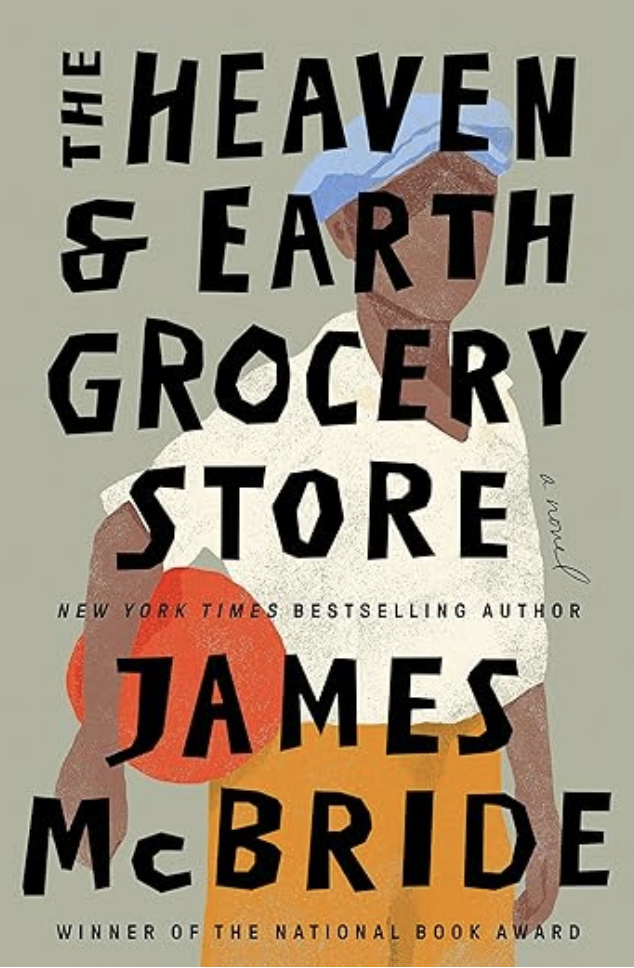
A body found in 1972 during a building project in Pottstown, PA, gives rise to the 400 page story describing (in a very roundabout way!) how it got there. But really the body is unimportant — it’s just a piece of string that connects the reader to the tumultuous world of Chicken Hill in the early 1900s — Chicken Hill being the part of Pottstown where the Blacks, Jews, and immigrant whites who couldn’t afford any better lived. When an orphaned, 12-year old, deaf boy is taken by the state to be institutionalized “for his own good,” the best parts of this community combine forces and in a complex effort (bringing to mind Mission Impossible) work to extract him.
That’s the plot but it’s really a tiny part of the story. McBride is a masterful storyteller — presenting a layered tableau of individual (full and richly rendered) characters, disparate groups that form constantly fluctuating alliances and communities, and the realities of life for the disenfranchised. This is not a story of lynchings, or people being shot at traffic stops, but of persistent bias, disdain, and shifting laws that are set and enforced by people who owe allegiance only to their own interests. But again, the story is not focused on the injustice, but about how one goes about living in an unjust world. How one gets on with it, and all the different ways people choose to do so.
I loved the characters and their deeply complex (and utterly consistent) backstories. I loved the tumult of the constantly evolving immigrant populations — the Jews and Blacks taking the main stage but the Jews broken into multiple, distinct, groups from Romania, Lithuania, Poland, Hungary, etc. and the Blacks divided into different groupings based on attitude. Throw in Germans, Italians (but with a strong sense of identity from their origin in different parts of Italy!). This book is one of the best portrayals of the bedlam of immigrant assimilation in the early 1900s that I have ever read. I loved the depiction of the historic friendship between Blacks and Jews that lasted well into the Civil Rights era of the 60s.
The writing style was hard for me at times — long sentences, paragraphs, scenes with tangential information spinning in rapidly at multiple points — but it was necessary to get across the reality of the multiple forces and influences at play. So much valuable content but hard to hold in your head at the same time. Poor me! On the other hand, who wants to cut the live music scenes that Moshe, the Wandering Romanian, brings into his first-to-integrate theaters (see quote below about the kind of music preferred by the white upper-crusters), or of the experiences and daily dismissals that forged Nate Timblin into the strong, deeply principled man that he was, or the many, many restrictions put on Black people at the time and how they impacted simple, every day activities. I can’t honestly come up with a single scene I could do without, so my advice — caffeinate a bit before reading or take good notes.
In addition to all of the above, and perhaps most importantly, it’s a book about love, connection, community, and trying to be the best person that you can in the world in which you land.
Some great quotes:
“Principle. In all the years of being a fusgeyer, when he and Moshe were children, running for their lives from the soldiers and starving, that was the one thing that Moshe never gave away. He never hated anyone. He was always kind. He’d give away his last crumb. And here in America, he’d married a woman who was the same way. Kindness. Love. Principle. It runs the world.”
“Nate peered into his wife’s searching, pleading brown eyes, then down at her hand on his chest, the long fingers that wiped the sweat off his face after work, that knitted his pants and stroked his ear and cared for him in ways that he’d never been cared for as a child. And the rage that overcame him eased.”
“Nate Timblin was a man who, on paper, had very little. Like most Negroes in American, he lived in a nation with statutes and decrees that consigned him as an equal but not equal, his life bound by a set of rules and regulations in matters of quality that largely did not apply to him. His world, his wants, his needs were of little value to anyone but himself. He had no children, no car, no insurance policy, no bank account, no dining room set, no jewelry, no business, no set of keys to anything he owned, and no land. He was a man without a country living in a world of ghosts, for having no country meant no involvement and not caring for a thing beyond your own heart and head, and ghosts and spirits were the only thing certain in a world where your existence was invisible.”
“ ‘That woman,’ his cousin Isaac once grumbled, ‘is a real Bulgarian. Whenever they feel like working, they sit and wait til feeling passes. They can’t pour a glass of water without making a party of it.’”
“To make peace with the town’s power brokers, every month or so Moshe booked a bevy of horrible bands that Pottstown’s high-class, pasty-faced Presbyterians enjoyed, just to keep the peace. Moshe watched in puzzlement as these Americans danced with clumsy satisfaction at the moans and groans of these boneless, noise-producing junk mongers, their boring humpty-dumpty sounds landing on the dance with all the power of empty peanut shells tossed in the air.”
“Most of the seventeen original Jewish families on Chicken Hill were German and liked getting along. But the newer Jews from Eastern Europe were impatient and hard to control. The Hungarians were prone to panic, the Poles grew sullen, the Lithuanians were furious and unpredictable, and the Romanians, well, that would be Moshe — the sole Romanian — he did whatever his wife told him to do even though they didn’t agree on everything; but the relatively new Jewish newcomers were not afraid to fight back.”
“These lost people spread across the American countryside, bewildered, their yeshiva education useless, their proud history ignored, as the clankety-clank of American industry churned around them, their proud past as watchmakers and tailors, scholars and historians, musicians and artists, gone, wasted. Americans cared about money. And power. And government. Jews had none of those things; their job as to tread lightly in the land of milk and honey and be thankful that they were free to walk the land without getting their duffs kicked — or worse. Life in America was hard, but it was free, and if you worked hard, you might gain some opportunity, maybe even open a shop or business of some kind.”

 Books to look forward to ...