
The Parisian Chapter by Janet Skeslien Charles (Fiction)

A sequel to Charles’ The Paris Library which alternates between Paris during the Nazi occupation and a small Montana town to which the protagonist (Odile) flees about 40 years later. In this “chapter,” Lily Jacobson, the young girl Odile befriended in Montana, gets a chance to go to Paris and work in the same American Library that meant so much to Odile in the 40s. The story — MUCH less depressing than the last (as there are no Nazis in this one) — alternates Lily’s experiences with short character vignettes on others in the library community.

The best part of the book for me are these characters and the way they come together to maintain an under-funded, increasingly shabby, but definitely beloved library. Characters range from library staff, to volunteers, to patrons, to a live-in (hidden) homeless person. And the rather two-dimensional and all around loser — the current Library Director. My favorite chapter is the first, introducing Head Librarian Lorenzo Bruni who complains bitterly (but also quite humorously) about the annoying habits of the Public and all of the things he is not allowed to do. I wonder why that appealed to me so much?

It’s a charming story with a happily-ever-after style ending, and lots of literary and artistic references. While I found all of the characters to be interesting people (they all love libraries, so how could I not??), I would have preferred a little more depth, but overall I quite enjoyed my last read of the year (finishing exactly two hours before the New Year began!)

Thank you to Atria Books and NetGalley for providing an advance copy of this book in exchange for my honest review. The book will be published on May 5th, 2026.
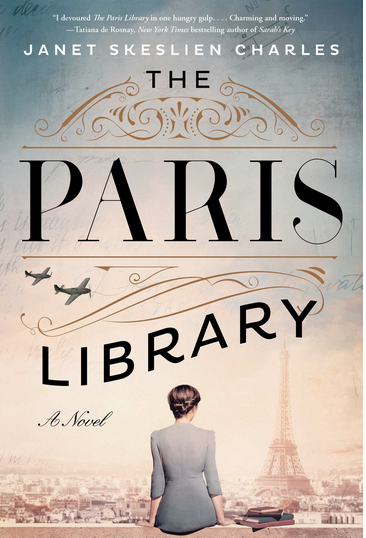
The Paris Library by Janet Skeslien Charles (Historical Fiction)

Writing: 4/5 Plot: 3/5 Characters: 4/5

I’m conflicted about this book — on the one hand a good, engrossing story with an array of interesting characters; but on the other hand I found it utterly depressing (in the last third of the book) and developed a real dislike for the main character (which I don’t think was the author’s goal!).

The story primarily takes place in Paris just before and during the Nazi occupation, with occasional interleaving chapters 40 years later in a small, Montana town. Odile is the young, naive, book loving girl in Paris who gets her dream job at the American Library in Paris with the formidable Miss Reeder. The library is full of wonderful characters — many of them real figures of history (such as Miss Reeder and Boris, the head librarian, in Paris having fled the Russian revolution).

Paris declares itself a “Quiet City” so that the Nazis are allowed to occupy without bloodshed. And as they occupy they plunder libraries (trying to “eradicate the cultures of certain countries, in a methodical confiscation of their works of science, literature, and philosophy”), arrest people for being enemy aliens (e.g. British), and begin the persecution of local Jews. It’s the same old story but this time the Parisians cooperate with the nasty “crow letters” — voluntary letters denouncing their neighbors for rule breaking — all of which the local constabulary is obligated to investigate. Shades of the French revolution, this made me feel sick.

In the Montana timeline, a young girl who loses her mother befriends an older Odile who is able to help Lily not make the same mistakes we slowly find out she made back in Paris. Structurally, the book is well-paced and there are good messages that come out of the story, but it took me (the emotional sponge that I am) a full day to get over feeling utterly depressed by the whole thing.

I will say that I appreciated that the book was not melodramatic — the times were full of drama and the story itself was dramatic enough without embellishment. I thought the book was well-written, and I did like the well-drawn characters — I just don’t feel the need to be this depressed about something I’ve already spent enough time being depressed about.

A few good quotes:
“Of course he knew something was wrong, he was a librarian — part psychologist, bartender, bouncer, and detective.”

“After three months of no rest, Eleanor yawned constantly, no longer a perky parakeet, but a plump pigeon that waddled from the crib to the rocking chair.”

“Books the fresh air breathed in to keep the heart beating, to keep the brain imagining, to keep hope alive.”

“The French language was a nasal bog that she had to wade through in the shops, the hairdressers, and the bakery.”

“The best thing about Paris? It’s a city of readers,” our neighbor said.