The Story Hour by Thrity Umrigar (Literary Fiction — Audio book)

Writing: 5/5 Characters: 5/5 Plot: 4/5

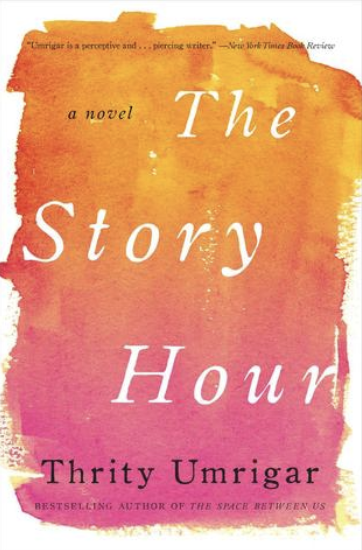
A beautifully written (with fantastic audio reader) story about an Indian immigrant woman who attempts suicide (in the first chapter — this is not a spoiler) and the black therapist who is assigned her case. Their stories form an interlocking spiral as themes of betrayal, grief, and loneliness play out in both of their lives as the two become more connected than a typical therapeutic relationship warrants.

Lakshmi — the immigrant — is a complex character in a tired body with the loneliness incumbent with an uncaring husband and being cut off from her family home in India. Maggie — the therapist — is a black woman on the verge of an (ill advised) affair, married to a loving and caring Indian professor. Both have complex and well-articulated, deeply considered backstories that have a surprising amount of commonality.

The book is a study in interpersonal engagements of all sorts — the urges, the mistakes, the trust, the quest for redemption, forgiveness and for happiness and intimacy. Incredible breadth and depth. I liked every one of the characters and yet frequently grew angry with them for their all too human errors of judgement. At the very end, there is no specific resolution — highlighting the fact that life is not lived as a novel with a consistent narrative arc and closure.

I was completely engaged and could not stop reading, but there was a lot of pain to share, and I will need something light and happy to read before I venture back into another like it.

Habitations by Sheila Sundar (Literary Fiction)

Writing: 5/5 Characters: 4.5/5 Plot: 3.5/5

A deeply thoughtful book about Vega Gopalan — an Indian academic (Sociology) who immigrates to the U.S. and shares her introspective take on all her observations of life for herself and the people she meets. Pervading her experiences is the memory of her sister who died at 14 from a disease that would have been easily detectable (and treatable) had she been born in the U.S.

The writing is beautiful, with a talent for capturing complex feelings and thoughts in a few apt phrases. It read like a memoir to me — no foreshadowing, no clearly defined narrative arc — more the development of a life with the actions and events paralleled by Vega’s internal commentary and awareness of self-discovery as it occurs. It was interesting that I didn’t really like Vega — she is not the type of person I would befriend. This is not because she was in any way an unpleasant character, but because she is a deeply interior person who does not always show (or feel?) the empathy and interest in others that I personally like in friends. One of her friends says (appropriately) at one point: “… but sometimes, when we talk, I feel as though I’m interrupting your thoughts.” I usually need to really like a character to enjoy reading about her, but in this case I found myself relating to her intellectually, if not emotionally, so perhaps I would have enjoyed her friendship after all. 🙂

I was impressed by all of the topics discussed in the pages — none with heavy agendas and all with the kind of verbal interactions that show several individuals tackling a topic from multiple personal contexts rather than pulling the latest PC verbiage from a shelf. Vega spends her time in her (American) university keeping company with a wide variety of people — almost all immigrants themselves (from East Africa, Pakistan, Jamaica, etc.). There are a lot of discussions of cultures, advantages, and a realistic depiction of choices that have to be made in order to be allowed to stay or to study. All were treated as facts of life for which you needed to adopt strategies, rather than focussing on the unfairness.

Vega experiences racism at various points but doesn’t let it define her — it’s just more of the expanding context that provides the soundtrack for her developing life. I loved the fact that she was irritated by the “inclusive educational models” at her daughter’s school which featured simplistic math sheets and overly exclamation pointed reading guides, but at the same time had the awareness that if one of her colleagues had written a paper on such models she would have applauded the theories. The book referred to some fascinating academic studies about topics I couldn’t have imagined myself — opening me up to new worlds of thoughts and experiences. Also some lovely references to some of my favorite (and not that well-known) books such as Maya Angelou’s “I Know Why the Caged Bird Sings,” and Tsitsi Dangarembga’s “Nervous Conditions.”

I enjoyed reading the book, but it was one of those books that I found become more interesting the more I thought about it after I finished it. I felt exposed to the multi-faceted reality behind the academic reports, news coverage, and general stereotypes through a stream of social commentary that pertained to individuals in groups, rather than groups as a whole. And lots of stereotype smashing roles — her characters were all influenced by their cultures and backgrounds, but never defined by them. Every time I assumed it would go in a predictable direction it didn’t. Definitely worth reading.

A few good quotes:

“She has long had the sense that there were two types of men: spectacularly bad choices, and interchangeably mediocre ones. She only realized, now, how far she had come from that impression. There was such a thing as a happy marriage. Easy and generous love.”

“She found the veneer of friendship lonelier than being alone.”

“I just grew up with so many people like that. People who lived privileged lives in India, but the moment they travel abroad or talk to foreigners, they want to establish themselves as experts as poverty.”

“There was something broken in her. She knew how to desire a person, but not to care for them.”

Thank you to Simon & Schuster and NetGalley for providing an advance copy of this book in exchange for my honest review. The book will be published on April 12th, 2023.

The Running Grave by Robert Galbraith (Mystery)

960 pages and I downed it in three days. Would have been less time but I literally can no longer sit still for that amount of time without massive squirming. As with her Harry Potter books, Rowling grabs your interest on sentence one, and then just refuses to release it. (Just in case you didn’t know, Robert Galbraith is a pen name for J. K. Rowling).

This is the seventh book in the Cormoran Strike series, starring the afore mentioned Strike — a one-legged military hero, with a wildly unconventional background — and Robin Ellacott — partner in the firm with a passion for psychology. All the books have been made (or are being made) into movies — I’ve seen them and they are fine but the books are infinitely better (IMHO). You won’t have to have read all the previous books — any required piece of background is restated as needed.

Her books are often dark — while things tend to work out by the end, there is a lot of darkness taking a long time to herald the dawn. In this “case,” Robin is required to go undercover into a pretty horrifying cult, with its own fully developed world view, massive organization, and fully fleshed out doctrine and practices. I had to stop reading well before bedtime lest I get too stressed…

For those up to date on the series, a little more progress on the personal side of things with a bit of an emotional cliff hanger on that front. While there were two years between previous installments, this one came a mere one year after the last so it looks like Rowling is on a roll. Maybe next fall will see volume 8? According to wikipedia, Rowling said she had plans for ten more after the third …

960 pages and I downed it in three days. Would have been less time but I literally can no longer sit still for that amount of time without massive squirming. As with her Harry Potter books, Rowling grabs your interest on sentence one, and then just refuses to release it. (Just in case you didn’t know, Robert Galbraith is a pen name for J. K. Rowling).

Real Americans by Rachel Khong (Literary Fiction)

Writing: 4/5 Characters: 4.5/5 Plot: 3.5/5

An exploration of how we become who we are (nature vs nurture and all the permutations) through the stories of three generations of a single family: Lily — raised American (down to the bologna sandwiches she took to school) by her immigrant Chinese parents; her son Nick who looks almost completely like the rich, white father he never met, and not Chinese at all; and Lily’s mother May, who escaped from China during the Cultural Revolution with broken teeth and broken English — and a sharp mind trained in genetic research. Into this mix roam themes of wealth and poverty, racial inequalities, and the ethics of gene editing.

The book held my interest throughout — it’s a plot that thoroughly covers all sorts of interesting times and places from Mao’s cultural revolution to a pharmaceutical empire and across the different stages of an individual’s lifespan. Lily and Nick’s stories felt more real to me. May’s story felt more like a recap of documented history — all true but it didn’t feel like someone’s personal experience to me in the same way the others did (this could be my problem). I liked the depiction of the science, and I thought the descriptions of relationships — with the true intentions, unrealistic expectations, and the heaviness of eventual disappointments — felt genuine. I was sad that these genuine seeming relationships included several people not speaking to others for decades, rather than trying to work through the problems — a sad waste of love. I’m honestly not sure what the overall message of the book was — I get the ethical dilemmas the book (adeptly) portrayed, but I had a hard time understanding what led to individuals literally breaking off all contact with the most important people in their lives. I’m open to someone explaining this to me!

Thank you to Knopf and NetGalley for providing an advance copy of this book in exchange for my honest review. The book will be published on April 30th, 2024.

The Museum of Lost Quilts by Jennifer Chiaverini

I tend to think of Chiaverini’s “Quilt Books” as generic uplifting women’s fiction, but coming to this latest installment after reading her fantastic WWI historical fiction — Switchboard Soldiers and Canary Girls — I now recognize all of the deeply interesting history embedding in the Quilt books. Specifically history focusing on the often hidden contributions made by women. The plot of this book focuses on the fundraising for an historical building restoration to save it from a (somewhat two dimensional) greedy developer by collecting and curating a set of beautiful old quilts with strong ties to local history. It is the story of the individual quilts and the research process for tracking down and understanding their history that made it so interesting to me. Plenty of individual stories and the unearthing of historical context that made those stories possible. While the plot was fairly predictable, it was pleasant and entertaining, and the historical bits really kept my interest.

Thank you to William Morrow and NetGalley for providing an advance copy of this book in exchange for my honest review. The book will be published on April 30th, 2024.

Chenneville by Paulette Giles (Historical Fiction)

Writing: 5/5 Characters: 4/5 Plot: 3.5/5

A beautifully written book that fits into the same post Civil War world as her News of the World and Simon the Fiddler. Jean-Louis Chenneville — once a successful farmer and gentleman — returns from the war a broken man having spent a year in the hospital in a semi-coma. He awakens to a dark world of ruin — Lincoln had been assassinated, Lee had surrendered, and the Gray Union army had gone home. His body and mind are slowly healing — his memory has wide gaps.

When he does finally get home, he gets worse news — news that sends him off on a long, single-minded journey to right a terrible wrong. Giles excels at bringing a place and time to life — in this case I almost wish she was a little less skilled. It is a depressing time — full of chaos, corruption, and despair. The war is over but things have not returned to any kind of normal — there is little stability in the South, with deep-seated hatreds and little consistent law enforcement.

The story is slow paced with characters — some unpleasant but many good people just trying to make things work again — introduced as part of his heroic journey. Each character had a unique backstory that highlighted all the different people who found themselves in this difficult time and place from a wide variety of starting points. My favorite part had to do with the telegraph operators that he met and the sub community they formed (with details completely and accurately belonging to the time period). There were definitely times that I wished we could have a little less atmosphere and more plot. The book was thick with description and I don’t visualize from textual description very well, which made some of the (albeit exquisitely depicted) passages tedious for me. I was happy with the ending, but until then it was a bit of a depressing read — depressing because of how hard that time really was, not because someone put a bunch of dramatic events to force readers into heavy emotions. I’m very glad I read it, but I wasn’t super cheerful during that week …

Some quotes:
“The clippers ran like teeth over the long scar. John shut his hands together with tense precision as if pain were a mathematical problem, as if he had just solved it and the solution did not include making a noise if he could help it. Sweat ran down his face.”

“The Ohio steamboat was better because the only movement was the unhinged, sliding feel of a vessel with a shallow keel as it moved across the water.”

“He tried to get a grip on himself. This was no way to live, in this messy chaos of despair.”

“People were draining south like wintertime migratory birds.”

“Every word seemed some strange phrase of dejection and unhappiness.”

Thank you to William Morrow and NetGalley for providing an advance copy of this book in exchange for my honest review. The book was published on September 12th, 2023

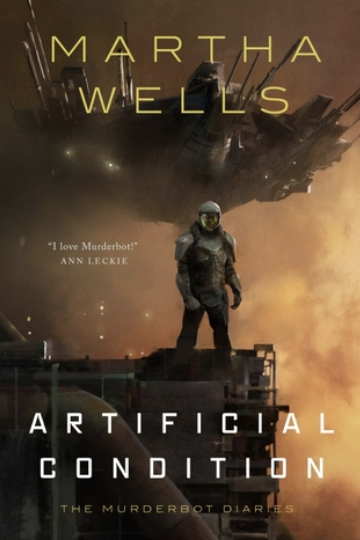
Artificial Condition by Martha Wells (SciFi — Audio Book)

Book two in Martha Well’s MurderBot series following the adventures of a rogue “Sec Unit” (part organic / part inorganic bot uber-designed for security). Just as good as the first one! Our hero is a perfect symbol of what I have recently heard called “Heroic Masculinity” as opposed to “Toxic Masculinity.” Strong, caring, and bent on protection. (In truth, our Sec Bot is an it — I think of it as “male” because the audio book reader was male and the story is told in the first person, but SecBots have no genitals so … “it” it is even though it makes the next paragraph read poorly IMHO.)

I like its funny and acerbic “voice” and its constant search for how to pretend to be human to evade capture but also to understand interactions well — kind of reads like the story of someone with autism struggling both to fit in and to understand what it is it wants to fit into. In this story it (we never get a name!) makes a “friend” and finds that it surprisingly “misses” its team from book one. Its new friend is called ART for Asshole Research Transport — they weren’t friends when the name was coined. ART is a supremely intelligent and advanced bot pilot who helps our hero purely out boredom and excitement at the challenge. Plenty of action but without the dull and pointless extended chase scenes. Lots of exploration of evolving cultural norms as new types of beings are brought into play.

Moving on to book three — there are many and they are short!

Welcome to the Hyunam-dong Bookshop by Hwang Bo-reum

I loved this quiet, reflective, and ultimately upbeat book about a young South Korean woman — Yeongju — who drops out of the rat-race to open a bookshop in a quaint residential area of Seoul. This is a far cry from similarly themed American versions with sassy owners or drama gushing from every page. Instead this bookstore slowly grows a community filled with polite and kind people who help each struggle with philosophical questions of life such as: What constitutes success in life? Have we become the person we wanted to be? We meet an array of people, each taking an unusual (especially for South Korea) path through living and hear discussions of the tactics each is employing along with a self-assessment of his or her happiness.

This is a translation of a surprise best-seller from Korea whose popularity spread completely through word of mouth. I enjoyed knowing that I was reading something authentically Korean that had appealed to a non mainstream audience in that way. What I assume was a modern Korean culture permeated the behavior and reflections of each of the characters in a way I found enlightening. I also loved the writing style: Quiet. Observational. Unfiltered. The story was sweet, honest, and real and had many points of resonance for me. I loved the way people communicated with each other with simultaneous insight into each person’s thoughts and assumptions. And of course, I loved all the “action” around reading and books! Yeongju reads. At the start of the book she is reading about people who have left their old lives behind, as that is what she has just done. She reads and discusses the ideas with herself. She learns but also disagrees and in this way furthers the development of her own sense of self and purpose. She makes recommendations but is far from the know-all librarians portrayed in much fiction. My favorite request: a mother whose 18-year old son is already sick of life asks for a book that will “unclog a smothered heart.”

I loved that this book tackled deep issues with neither false cheer nor gloominess. I found it ultimately inspiring while simultaneously grounded in reality. As an aside, I really had to focus on all the Korean names as I don’t have a lot of experience with them and am happy to report that with just that little bit of focused effort, the names felt very familiar to me by the end.

Quotes:
“In The past, she used to live by mantras like passion and willpower, as if by imprinting the words on her mind, they would somehow breathe meaning into her life. It only felt like she was driving herself into a corner. From then on, she resolved never to let those words dictate her life again. Instead, she learned to listen to her body, her feelings, and be in happy places. She would ask herself these questions: does this place make me feel positive? Can I be truly whole and uncompromisingly myself? Do I love and treasure and myself here? For Yeongju, the bookshop checked all the boxes.”

“Yeongju loved such stories. Stories of people going through hard times, taking one step forward at a time as they seek comfort from the flicker of light across the horizon; stories of people determined to live on, despite their sufferings. Stories of hope – not the rash, or innocent kind, but the last glimmer of hope in life.“

“Yeongju’s home felt like an extension of her — somewhat lonely, but a reassuring presence nevertheless.”

“She took care and pride in writing each piece, even though it felt like she had to squeeze out every last bit of her brain juices.”

“Isn’t that what life is about? Foraging forward with the answer you have — stumbling along the way and picking yourself up — only to one day realize that the answer you’ve held onto for a long time is not the right one. When that happens, it’s time to look for the next answer. That’s how ordinary folks, like herself, live. Over our life span, the right answer will keep changing.”

“What counts as a good book? Books by authors who understand life. Those who write about family, mother and child, about themselves, about the human condition. When authors delve deep into their understanding of life to touch the hearts of readers, helping them to navigate life, isn’t that what a good book should be?”

“Small talk could be a considerate gesture, but most of the time, at your own expense. With nothing to say, squeezing the words dry leaving only an empty heart and a desire to escape.”

Thank you to Bloomsbury Publishing and NetGalley for providing an advance copy of this book in exchange for my honest review. The book will be published on February 20th, 2024.
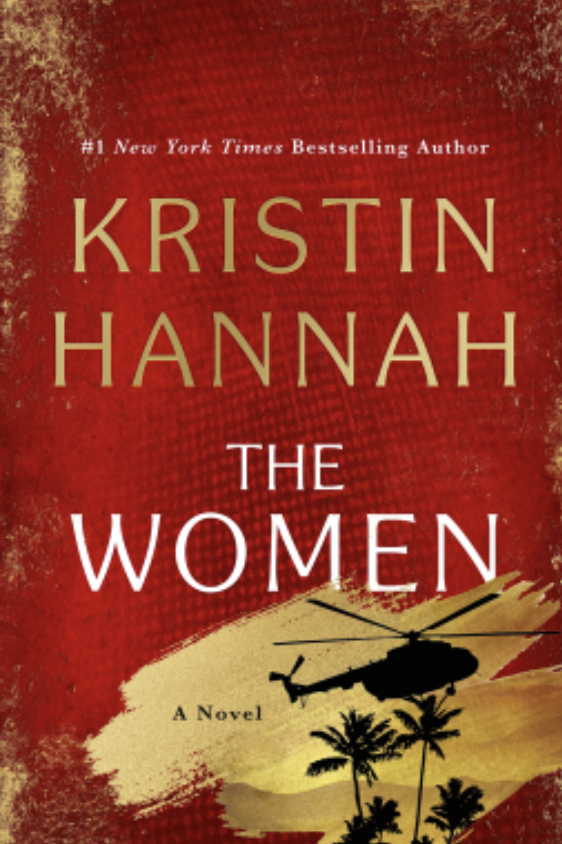
The Women by Kristin Hannah (Historical Fiction)

Writing: 4.5/5 Characters: 5/5 Plot: 4/5

In 1966, freshly minted nurse Frances “Frankie” McGrath joins the Army to be sent to Vietnam in order to be in country with her brother and earn a spot of the family’s “wall of heroes.” The story follows Frankie through nursing on the front lines, returning two years later to a country that (literally) spits on her for her service, and her reliance on alcohol and pills to get through the day. She has a need to be recognized as a veteran when everyone knows there were “no women in Vietnam.” Her life is heavily influenced by the trends of the day: the wide availability of “mother’s little helpers,” the burgeoning awareness of PTSD, and the shocking lies about the War that start coming to light.

The writing is good, and the characters are appealing and have depth. I thought she captured the times and various scenarios well — front line nursing environment (far worse than on MASH!), the reception she received back in Coronado (island community outside San Diego) when she got home, the Veterans administration, and others. I loved the friendships she depicted. Hannah is overly dramatic for my taste — though I think that is exactly why she is such a popular author.   For me the story has plenty of innate drama without loading it down with coincidences and a focus of every possible “bad thing” happening to one person. However, I thought the book did a credible job of explaining exactly how a young, well-off woman could form this track through life and how she could finally turn things around.  I also couldn’t stop reading so the writing was certainly effective!

The author’s stated goal was to bring to light the (whole) story of the women who were in the Vietnam War and she did that admirably. A very good piece of historical fiction with detailed and accurate surroundings and fully embedded characters.

Thank you to St. Martin’s Press and NetGalley for providing an advance copy of this book in exchange for my honest review. The book will be published on February 6th, 2024.

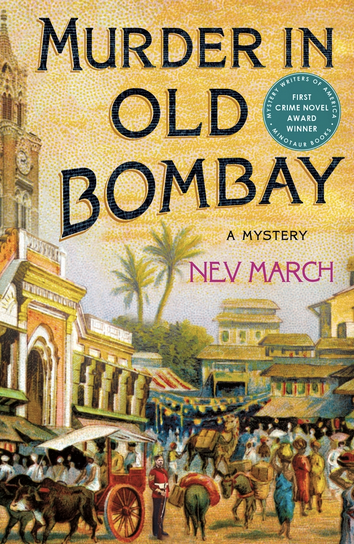
Murder in Old Bombay by Nev March (Mystery –Audio Book)

Writing: 3/5 Characters: 4/5 Plot: 4.5/5

Mixed feelings on this one. This historical mystery takes place in India during the late 1800s. It is full of intrigue and plot twists embedded in little known (to me or to average American readers) parts of Indian history. Captain Jim Agnihotri is recovering from a brain injury resulting from a military skirmish when he reads of the deaths of two Parsi ladies who “fell” from a watchtower to their deaths. Intrigued, he approaches the widower and is hired to investigate. So begins a convoluted plot that incorporates disparate religious and cultural norms, political machinations, and the question of British rule, the princely states, and new bids for Indian independence.

The writing is decent, the characters are appealing, and the historical context was fascinating. On the negative side (for me), there was far too much repetitive anguish on the parts of two characters whose love was forbidden, and too many “impossibly dangerous” situations which Captain Jim — in true heroic style — managed to defuse / rescue / solve without too much trouble. Also, too much unnecessary (to me) hand wringing. In one case, one character killed another — a truly evil person who had had no qualms of committing truly horrific crimes and was about to kill a family member — and still our character was full of pain at the thought of killing someone. Really? That always seemed false to me. I would not relish killing another person, but in those circumstances? I would neither hesitate nor feel any remorse.

I listened to this on audio, and although I very much liked the reader it was so slow that I listened at 1 1/4 speed — something I rarely do. That sped things up but made everything sound even more fraught with tension because of the increased speed! Might have been better to read it so I could skim over the repetitive parts. This is the first book of a series which is now up to number three. The (somewhat tedious) romantic plot was resolved so perhaps the next two books won’t have to go through all that constant angst. Glad I read it and I’m going to try book two in the hopes that she keeps the great plots and drops the romance and the endless heroics. We shall see!