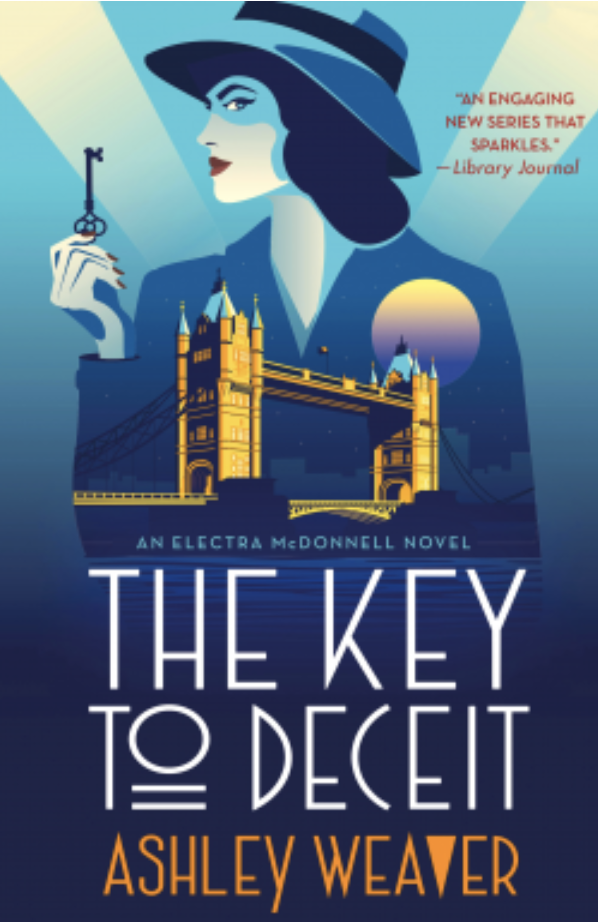
The Key to Deceit by Ashley Weaver (Mystery)

A real palette cleanser — light, fun, non-standard characters, the closure of a good mystery, and some historical context. The second in the Electra McDonnell series (I have not yet read the first), the semi-reformed Ellie (her family was happily living on the wrong side of the law) teams up again with the well-bred and straight-laced Major Ramsey to break up a spy ring in London, 1940. Some very likable thieves and forgers, a pleasant clash or classes, and a background mystery concerning Ellie’s own (long deceased) mother all make this a great read in the cacophonous world of today!

Thank you to Minotaur Books and NetGalley for providing an advance copy of this book in exchange for my honest review. The book will be published on June 21st, 2022.

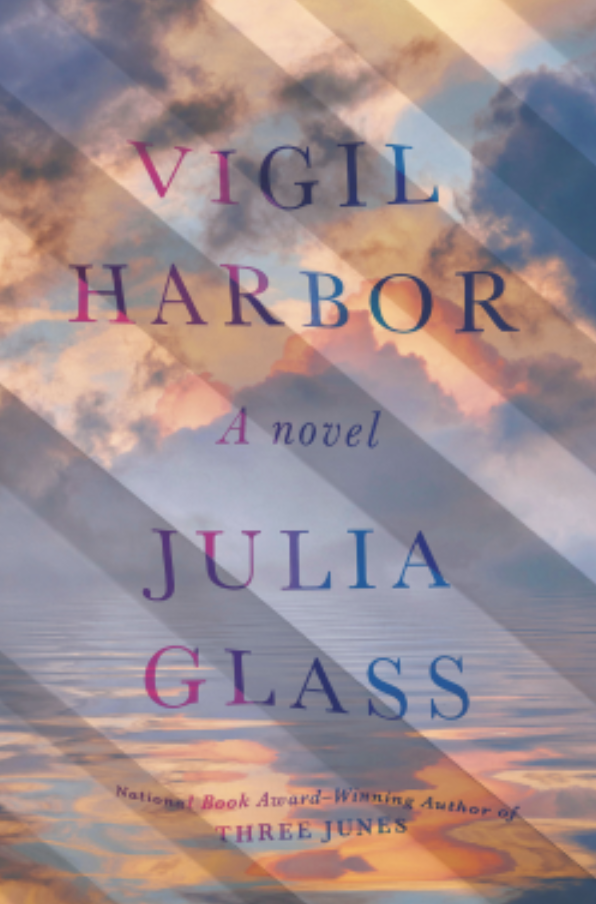
Vigil Harbor by Julia Glass (Literary Fiction)

Writing: 5/5 Plot: 4/5 Characters: 5/5

Vigil Harbor — an historic town on the Atlantic Seaboard — is a kind of safe harbor for many of its residents. It feels protected from the ever increasing calamities of the broader world — rising oceans, increased acts of terrorism, epidemics. When a spate of divorces and a couple of strangers arrive —each with a hidden agenda — suddenly the problems of the world seem to hit a little closer to home.

Only ten years into the future, many of the characters are understandably living in a constant state of fear, anxiety, and despair. In the world (too well) portrayed by the author, Survival Studies has become a college major, climate change has diminished songbirds and summer fruit almost to extinction, coastal towns have been triaged into oblivion, various groups are hunkering down in survivalist bunkers, and eco-terrorism is on the rise with frequent and deadly bombings. One character suggests that humankind is busy “unbuilding the ark.” Other characters are stubbornly optimistic or simply moving on with their lives, adapting to a constantly changing reality as we humans have been doing for millennia.

A set of deeply drawn characters — a despairing biologist who believes he works in “marine hospice”; a retired English high school teacher bent on revenge; an optimistic architect who considers himself “an architect for the future, not the apocalypse”; a college drop out back home after a narrow escape; a brilliant landscaper still terrified of possible deportation after 40 years in the country; and others — all wind around each other while living, reflecting, worrying, and hoping. They are having children and consciously considering what it means to parent in a rapidly deteriorating landscape. They are creating art, appreciating beauty, and finding people and places to love. They are finding ways to define and follow their passions to try to make the world a better place (for some definition of better and some definition of place).

Julia Glass is one of my favorite writers — as in the actual use of words to describe, set a mood, bring to life. Her vocabulary is both large and up-to-date (it’s possible that she made up several of the more modern slang words). She creates these amazing turns of phrase — the words literally turning / tumbling around in the phrase — and so many of her sentences are gorgeous little nuggets that I grew tired of underlining. She does a pretty interesting job of describing nature, pieces of art, and different architectures. I say “interesting” because I typically don’t enjoy descriptions — I don’t visualize from words well — but her descriptions touch on more than just the visual, and I find myself reading slowly, rapt. Her depiction of technology evolution and the resulting shifts in human behavior over the next ten years was seamlessly and utterly believably done.

I valued the personal reflections, discussions, and general interactions between characters — each with sometimes wildly different perceptions of reality — what was happening, what was important, what could be done, who to blame. I appreciated the sometimes subtle differences between generations, culminating in a last few pages describing the thought processes of a young (middle school age) boy whose worldview had obviously been molded by the events of his short life.

Overall, a book that made me think, made me understand other people a little better, and gave me a set of characters that I would enjoy knowing better. I did stick to reading during the day because I am easily anxietified (my word) and wanted to be able to sleep.

Some good quotes:
“The slivers of grief in your flesh dissolve or work their way out. One day they’re gone, even if they leave you with tiny, whisper-thin scars.”

“Celestino is not a man who thinks that thorough knowledge of a person’s history, much less his or her emotional “journey,” equates with greater trust or deeper love.”

“The art she made was the obsession reaching for a language.”

“Did all intelligent, creative people need to be tangled up in thickets of neurosis, their psyches riddled with the stigmata of previous heartache?”

“She was living on less than a shoestring; she was living on a filament of fishing line.”

“I am a living redundancy. I realize: the wife not so much replaced as deleted, just as I might take my green pen … and blithely score through a student’s unnecessary adverb when the verb can stand on its philandering own.”

“Time will tell,” said Margo. “As it alway does, the fucker.”

“Is this the beginning of old age, this irrepressible pull of futility? My own father lapsed into a storm cloud of silence once he retired.”

“But that was one of my worst faults: fretting over past choices when they have been chiseled into history.”

“His step father refers to his generation as Generation F: failure, fuckup, fatalist; take your pick.”

This book will be published on May 3, 2022. Many thanks to the author for giving me an early reader copy

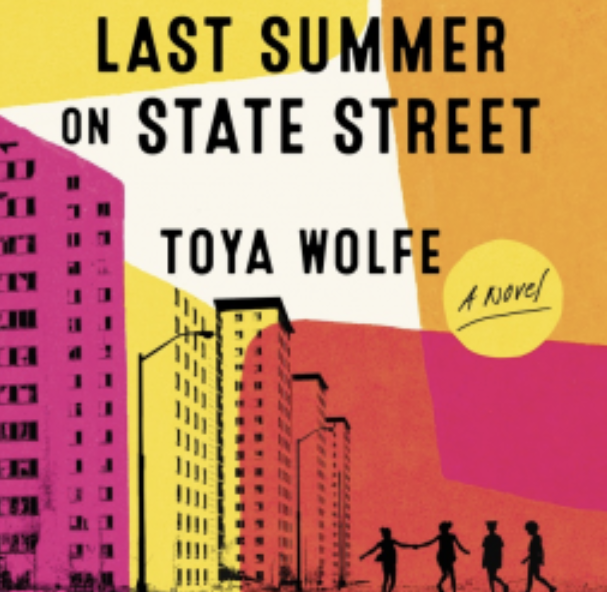
Last Summer on State Street by Toya Wolfe (Fiction — Audio book)

Summer 1999 — the Robert Taylor Homes (aka the Projects) on State Street on the South Side of Chicago. 12-year old Felicia (Fefe) is happy jumping rope on the third floor porch with her three friends: Precious, the daughter of a pastor; Stacia, member of the notorious, gang-affiliated, Buchanan family; and newcomer Tanya, the ultra-timid, obviously neglected daughter of a crackhead on the 10th floor. Everything changes during this fateful summer: The Chicago Housing Authority is demolishing all of the Project buildings on State Street, and theirs is slated to go next; her brother, Meechee, is taken by the police in the middle of the night in a warrantless raid; random gunfire becomes more frequent; and Stacia begins to favor the family business over jumping rope.

Labeled a novel, the story reads like a memoir, and it would be easy to believe that much of the story comes from the author’s personal experience as she was raised in the Robert Taylor Homes in this time period. The writing is excellent (I have no quotes as I listened to it on audio), and the reader is absolutely excellent — perfect pacing, differentiated and consistent voices for the multiple characters, and beautifully timbre in her voice. Told in the first person from Fefe’s perspective, we follow her through that summer and then on through her life for the next twenty years, giving her an opportunity to revisit the turning point that summer was and to get closure on some of the events. It’s a gritty and truthful telling with added introspective commentary as Fefe comes of age in the midst of gangs, police crackdowns, drugs, single mothers on the one hand, and a strong community, loving family, and supportive clergy, teachers, and neighbors on the other. I love the advice she is given, the wide array of people from whom she gets it, and what she does with it. Fefe is a success story — she gets out of the Projects and finds her vocation in helping others — unlike some of the friends she had who do not have some of the same advantages offseting the meanness, cruelty, and unfairness of the environment.

This is a coming-of-age story, not a political treatise. Her conclusion near the very end is that “We are not the originator of our misfortunes — we are all the victims of it.” Her point: people do what they have to do to survive. I would have been a little happier with some ideas on what creates these misfortunes and how everyone — including those who live amidst it — could contribute to making it better.

Thank you to Harper Audio and NetGalley for providing an advance copy of this book in exchange for my honest review. The book will be published on June 14th, 2022.

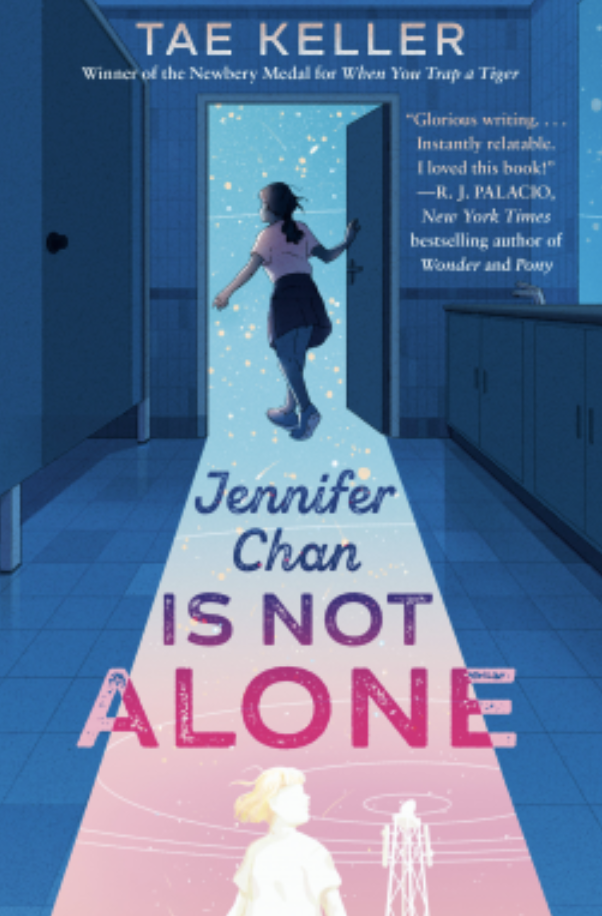
Jennifer Chan is Missing by Tae Keller (Middle School)

12-year old Mallory Moss is a worrier. She knows that people are really “just a collection of what other people think about us.” So although she thinks her own opinion matters, she is sure that what others think matters even more. And this becomes a problem when she meets Jennifer — the intriguing new girl who enthusiastically and loudly believes in aliens and is never going to fit in with the kids at school.

This is a coming of age story both about an outsider (based on beliefs, not color or ethnicity) and a girl who is intent on always fitting in, even in the face of unfairness, meanness, and outright bullying of others. Excellent writing, good messaging with a variety of sources: parents, religion(s), and introspection.

Some good quotes:
“At services tonight, the rabbi talked about forgiveness, how it’s not only between you and God. He said God exists in the relationships between people, so forgiveness is between you and the person you hurt.”

“Why are people so afraid to believe? Well, Jennifer, maybe because it’s impossibly embarrassing to be proven wrong.”

“It’s so easy to talk bad about someone. It’s so easy to bond over hating someone else. It’s almost scary how naturally it comes.”

“Maybe. But sometimes I think complicated is the word people use when they don’t want to think too hard.”

“Confession isn’t about telling our secrets to God. God already knows. It’s about revealing our true hearts to ourselves, because we can’t know who we are when we’re hiding from who we’ve been.”

“I had to make her understand that this mattered — what people thought had everything to do with who she was. Because how do we know who we are without knowing our place in the world?”

Thank you to Random House Children’s and NetGalley for providing an advance copy of this book in exchange for my honest review. The book will be published on May 26th, 2022.

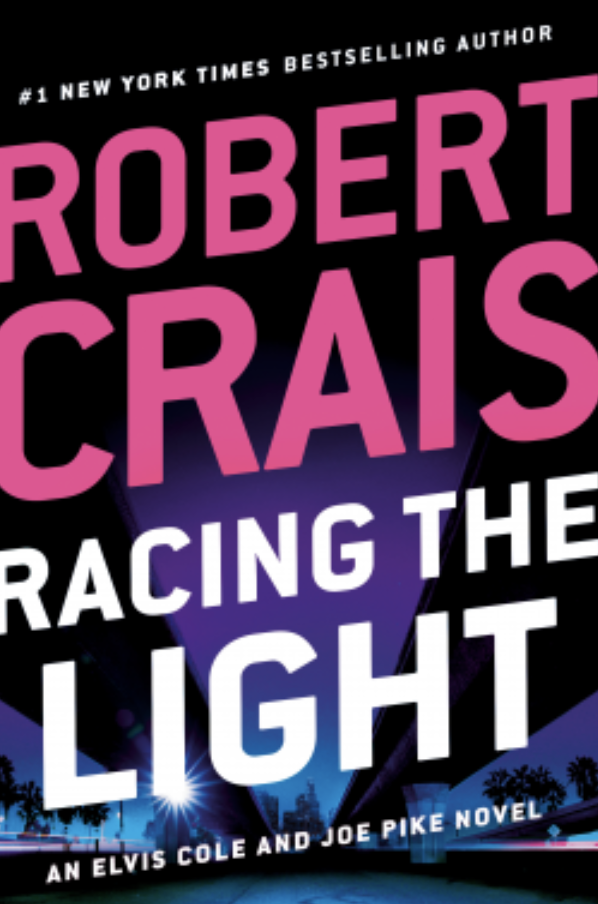
Racing the Light by Robert Crais (Action / Mystery)

Elvis is back! Well, Elvis Cole that is — sorry — couldn’t help myself! Cole and his quiet (but definitely-the-guy-you-want-to-have-your-back) partner, Joe Pike, help an old woman find her missing adult son, Josh. But it’s not just any old woman and not just any missing son. Adele Schumacher pays in cash, doesn’t trust phones, and talks about conspiracies and aliens as obvious facts. She has a couple of very buff “helpers” who follow her everywhere. And Josh is the controversial podcaster of In Your Face with Josh Shoe (with a listenership of approximately 20 people).

Laugh out loud funny, with plenty of action (the good kind where a lot happens and it happens quickly but we don’t have to suffer through long car chases or drawn out battles — ugh) and plenty of colorful characters. A fast and thoroughly enjoyable read. This is book 19 but you can really start anywhere — a few references to previous cases but nothing problematic.

Thank you to G.P Putnam’s Sons and NetGalley for providing an advance copy of this book in exchange for my honest review. The book will be published on Nov 1st, 2022.

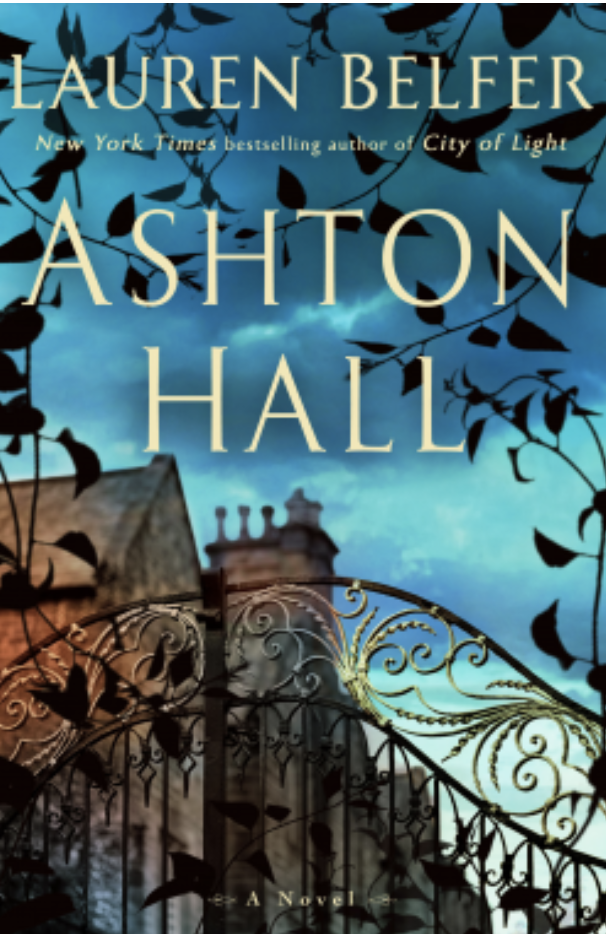
Ashton Hall by Lauren Belfer (Literary and Historical Fiction)

Writing: 4/5 Characters: 5/5 Plot: 5/5

A fabulous book full of all the literary things that I love.

Hannah Larson and her neurodiverse son, Nicky, move to a historic manor house outside of Cambridge to care for a beloved, elderly relative. Hannah uses the opportunity to take up her abandoned dissertation while simultaneously escaping a recent and devastating betrayal. While there, Nicky, through his “oddities” discovers a skeleton (dated ~late 1850s) in a bricked up room.

It’s a rich, multi-layered novel delving into both the mystery of the female skeleton, the historical context of her life, and the historical research process by which Hannah uncovers the story. In the current day story, Hannah faces a pretty major problem in her marriage and some real difficulties in raising her son who appears to be on the autism spectrum though is never officially labeled as such. He is finding a place — and friends and interests — in the new world he inhabits while continuing to have “incidents” that she is not able to control. In the past, our skeleton inhabits a world rife with religious conflict, plague, and famine. A strong theme running through both time frames is the choices women have made and the options they were given over the centuries. Interesting parallels and the author never slips into anti-man territory (thank you — so sick of that).

The author does a brilliant job at bringing to life both the world of the1800s for our bricked in skeleton and the current world of an American on leave from her “real” life in a place that opens her eyes to new possibilities. While each of these “worlds” is a context, it is a context experienced by people with different wants, desires, personalities, and situations. I love a book filled with individuals who not only don’t fall into the stereotypes of their culture, but actively question their decisions and roles!

Great for fans of Julia Kelly and Carol Goodman.

Quotes:

“The talents possessed by women had been overlooked, denigrated, dismissed, and suppressed for centuries. The diseases they might have cured. The technological advanced they might have made, the cruelties righted, works of art created, buildings designed — all denied. The tragedy and failure of it affected not only individuals but communities and societies. The women who’d found meaning by devoting themselves to their families had also been silenced by history, erased, the importance of their household labor unrecognized.”

“Even as I said this, I knew that one of the biggest roadblocks to understanding history was the false notion that the individuals of the past were more or less like us, thought like us, and would only do things we would do. I realized that I’d been thinking about Isabella this way all along. I had to stop seeing her through the filter of myself.”

“Her reign is referred to as theGolden Age, but it was a flowering of culture against a backdrop of religious suppression, torture, disease, and waves of starvation.”

“The first year of nothing, 1593, was the year when Catholics were required to have a license to travel more than five miles from their homes. It was also the year when a bill was introduced in Parliament calling for the removal of children from Catholic families, so they could be raised in Protestant homes. The bill was withdrawn, but the point had been made, brutally.”

“Such energy expended, to arrive at this restrained intimacy.”

“Four hundred years from now, was this how Anne Frank’s attic would be viewed? After enough time had passed and the trauma had faded, would the attic evolve into something fun for kids to see because it was gruesome in a shivery, Halloween sort of way, the horrifying truth rewritten to make the site more visitor-friendly? I prayed we’d never reach a day when kids could tour Anne Frank’s hiding place and after ward receive smiley-face stickers for their shirts”

“Bringing starvation and war into this discussion was like saying is was okay to cheat on an exam because the exam was insignificant compared to the atomic bomb. Individuals as well as societies needed moral standards.”

“Ah, yes, 1545 to 1610. Years of traumatic religious upheaval, played out against crop failures, famine, smallpox, sweating sickness, plague. Also, a flowering of culture, of poetry, music, and drama.”

“I wished I could view the world as Christopher did , a place where the most mundane errands were part of an adventure story.”

Thank you to Ballantine Books and NetGalley for providing an advance copy of this book in exchange for my honest review. The book will be published on June 7th, 2022.
The Family Chao by Lan Samantha Chang (Audio Book – Fiction)

Writing: 4/5 Characters: 5/5 Plot: 4/5

Fine Chao Restaurant in Haven, Wisconsin, serves mouthwatering Chinese food to the local Chinese American community. While the jacket blurb promises us the dead body of the patriarch and all around not-very-nice-guy, this doesn’t appear until roughly half way through the book. In the meantime, we are introduced to his three sons (Dagou, the brash head chef; Ming, a financial success overcome with self-hatred; and James, home from college for Christmas) along with Katherine, a stubborn but no longer wanted fiancee, and an entire community struggling to define itself in an environment that is not exactly hostile, but isn’t exactly welcoming either.

I listened to this on audio so had more trouble taking notes and identifying quotes. The writing is very good — with an excellent vocabulary and the ability to tease out individual personalities and issues for each of the distinct characters (even the dog!). The racially based and often insidious experiences of each character was felt and reacted to differently for a more subtle and (IMHO) realistic portrayal. I found the book deeply interesting, but not nearly as comic as the marketing blurb suggested. I’m honestly confused about why it is billed as a comedy (I have a hard time laughing at other people’s problems unless they themselves are making a joke of it). I also found it less tense than I expected (which is a plus, as who needs more tension in their life?). I was impressed that the book didn’t resolve in anything even approaching a formulaic way — another big plus!

In summary — definitely worth reading, more family drama than mystery, stereotype busting, and full of character depth.

Thank you to RB Media and NetGalley for providing an advance copy of this book in exchange for my honest review. The book was published on February 11th, 2022.

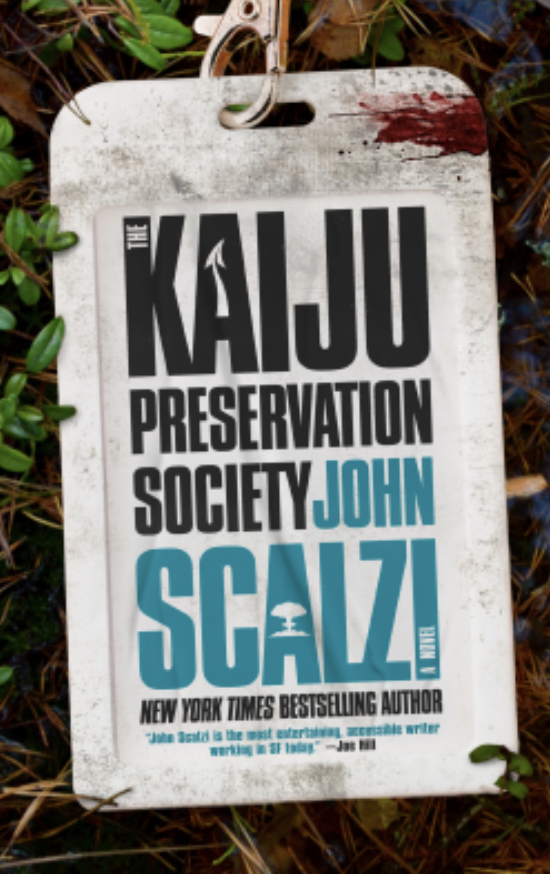
The Kaiju Preservation Society by John Scalzi (SF)

Laugh out loud funny and full of action (which normally bores me to tears but Scalzi always manages to pull it off), this latest standalone novel from one of my favorite SF authors is a breath of fresh air.

Jamie Gray — a recently fired, PhD drop out (her dissertation was going to be on utopian and dystopian literature), is making an unhappy living as a deliverator when a chance customer offers her a job with an animal rights organization. Only as it turns out, the “animals” are more ecosystem than animal, are absolutely humongous (and scary), and don’t exactly live on this particular version of Earth. Armed with her sci-fi mindset and a talent for lifting things (think heavy, not theft), Jamie manages to save the day … quite often. Added bonuses: Godzilla origin story explained and Snow Crash properly revered.

For Scalzi newbies, a few writing extracts:

“It’s more like we have a workable service relationship with a tenuous personal history.”

“It was stupidly perfect how all my problems were suddenly solved with the strategic application of money.”

“I’m officially skeptical about this Godzilla origin story.”

“That thing looks like H.P. Lovecraft’s panic attack.”

“It’s not the trees, you dense argumentative spoon.”

Thank you to Macmillan-Tor/Forge and NetGalley for providing an advance copy of this book in exchange for my honest review. The book will be published on March 15th, 2022.

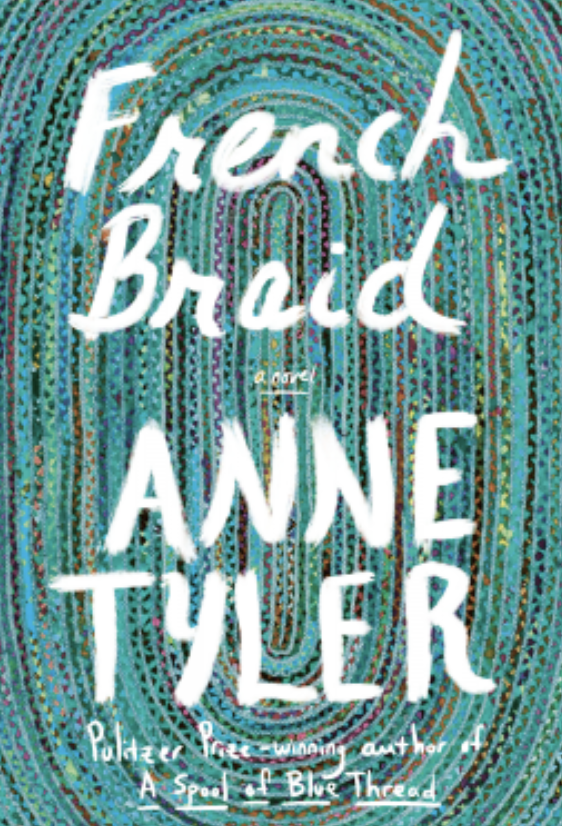
French Braid by Anne Tyler (Literary Fiction)

Writing: 4.5/5 Characters: 4/5 Plot: 3/5

A classic Anne Tyler novel following the lives of a Baltimore family through generations from 1959 to the present (including the Covid lockdown). Blending family dynamics with individual personalities in the context of the times, it is a study in the ways that families simultaneously work and don’t work.

Naturally well-written (Pulitzer prize winning author!) with a set of characters drawn in depth and with a high degree of verisimilitude. The characters were not always likable — in fact, I was struck by how few of these people I would actually enjoy spending time with. Not that there was anything terrible about them, but their very realness reminded me of the difference between live people with their selfishness, tiny cruelties, and obliviousness to the interests of others, and my favorite book characters who seem to always have their best foot forward even when making mistakes. This may be more of a commentary on why I don’t have more friends than anything else!

Thank you to Knopf Doubleday Publishing Group and NetGalley for providing an advance copy of this book in exchange for my honest review. The book will be published on March 22nd, 2022.

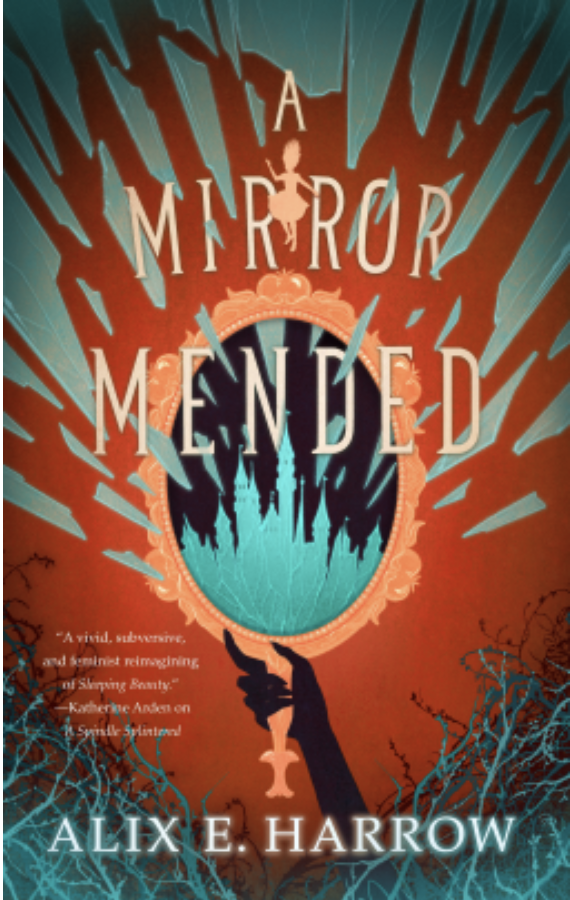
A Mirror Mended by Alex E Harrow (Speculative fiction)

Book two in Harrow’s Fractured Fables series continues the adventures of Zinnia Gray — a self-professed “folklore major with a significant Grimm obsession” — hopping around the multi-verse helping young fairy tale princesses cursing their cruel fates. In the five years she’s been adventuring, she has never managed to escape the Sleeping Beauty narrative, but suddenly a beautiful and cruel face is beckoning to her through a mirror and asking for help. Enter not Snow White, but the Evil Queen, and while she lives up to her Evil reputation (Zinnia calls her “Eva”), things are not at all what they seem.

A good romp through the multiverse with plenty of non-venomous snark, academic folklore overlays, and welcome feminist twists on standard fairy tale princess tropes. Well-written (as always), funny, and great messaging on how to write your own story without succumbing to cultural expectations.

Book one was excellent! Read it while you wait for this book to be published! See review here.

Some great quotes:

“It’s just that they’re so damn happy. I doubt they’ve ever lain awake at night feeling the bounds of their narratives like hot wires pressing into their skin, counting each breath and wondering how many are left, wishing — uselessly, stupidly — they’d been born into a better once upon a time.”

“I’m sure Charm would explain about the psychic weight of repeated motifs and the narrative resonance between worlds if I asked, but I don’t ask…”

“The queen is watching me in a way that reminds me uncomfortably of a lean-boned stray watching a very stupid robin.”

“Am I in some kind of fairy tale mash-up? Is Chris Pine about to pop out and sing Sondheim lyrics in a confused accent?”

“There were plenty of other stories floating around the European countryside at the time — weirder, darker, stranger, sexier stories — but the Grimms weren’t anthropologists. They were nationalists trying to build an orderly, modern house out of the wild bones of folklore.”

“I know how I must sound, what you must think of me, but I only mean power over myself. Power to make my own choices, and arrive at my own ends.”

“Anyway, you’ve created a universe that runs on plot, and a main character who smashes plots like a human wrecking ball. In refusing to complete her narrative arc, she is compromising the integrity of the universe.”

Thank you to Macmillan-Tor/Forge and NetGalley for providing an advance copy of this book in exchange for my honest review. The book will be published on June 14th, 2022.