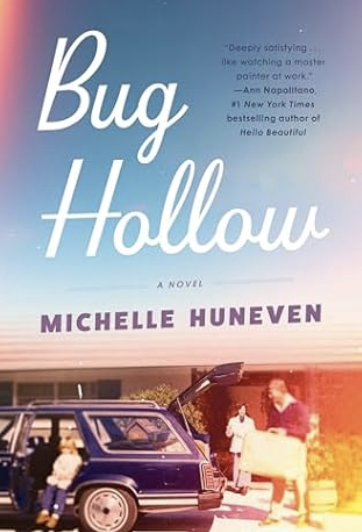
Bug Hollow by Michelle Huneven (Literary Fiction)

A multi-generational family story told through progressing vignettes, each told from the 3rd person perspectives of different family members during precipitating events. Throughout it all, we learn about each character in some depth. I found myself advancing through various stages of a reader’s judgmental process with respect to each of them as they did things I admired, found annoying, detested, felt sorry for, etc. I’m not always aware of how judgmental I am as a reader, but this shifting perspective and focal point made me realize it. With excellent, clear, writing, the author exposes us to the many different facets of an individual’s personality and how easily we fall into judgement as measured against an idea of perfection that few people can attain.

The prose contained beautiful description of places, feelings, and interactions — I loved the author’s use of language, and I loved her portrayal of realistic family interactions — this was not a dysfunctional family, but also not an idealized one. The story moved through tragedy, adoption and birth mothers, an assignment in Saudi Arabia, death, worries, college tours and my favorite vignette: the very different love story of Mrs. Wright (the upstanding Principal of the local school) and a Jamaican immigrant.

Highly recommended.
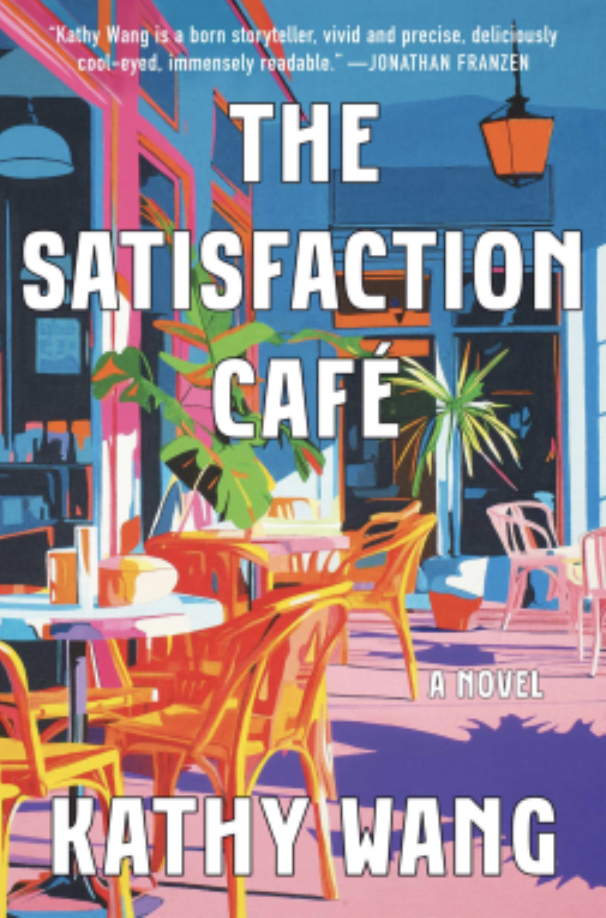
The Satisfaction Cafe by Kathy Wang (Fiction)

Joan’s whole life — from Taiwan to California, through relationships and motherhood, to a late-life plunge into a unique business — surprises her. In this life story, told in a blunt manner free from the kind of artifice that filters most of the stories we read and hear (dare I say personal branding?), we follow her as she learns what is important, accepts what she needs to, and continues in her search for satisfaction and meaning. I love her voice and the honesty with which she contemplates the life she is leading — it is remarkably free of hand-wringing, self-flagellation, and other neuroses which seem to plague a lot of modern novels (IMHO).

I enjoyed the variety of ways opportunities (the surprises) arose. Some were serendipitous; some were created by Joan herself, through personal will; some were the roads not taken, which gave rise to regret, but also reflection and growth. In many ways, I felt that this book followed a whole life arc, rather than a narrative one. I really liked the concept behind the Satisfaction Cafe — a place where people go to be heard and understood — and I equally enjoyed the full process that took her there. But mostly, I liked it for the reason specified by the last line of the marketing blurb: “Vivid, comic, and intensely moving, The Satisfaction Café is a novel about found family, the joy and loneliness that come with age, and how we can give ourselves permission to seek satisfaction and connection at any stage of life.”

Thank you to Scribner and NetGalley for providing an advance copy of this book in exchange for my honest review. The book will be published on July 1st, 2025.

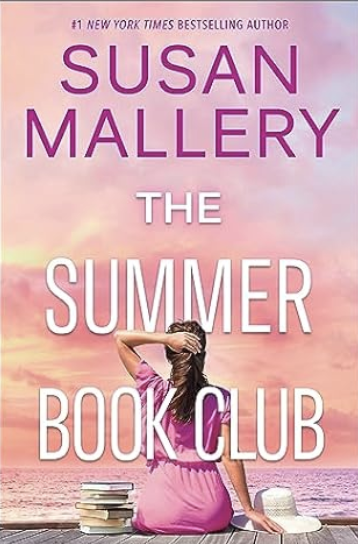
The Summer Book Club by Susan Mallery

This upbeat piece of women’s fiction starts with Laurel (one of the three main female characters in the book) getting called into school because her daughter has been telling the school that all men are terrible. Laurel realizes that her daughter has, in fact, not a single good male role model in her life so she sets out to make a male friend in order to show her daughter that some men are actually not terrible! Female lead #2 is Laurel’s best friend Paris whose husband left her ten years ago due to her uncontrollable rage. With years of therapy and learning anger management technique, Paris still worries she could flip out at any moment. Lastly, fem-hero #3 is Cassie — kicked out of the family home in Bar Harbor and told to get herself a life. It’s no surprise that by the end of the novel, everyone is doing great — that’s why we read these books!

Here is why I continue to read Susan Mallery novels, as opposed to many of the other women’s fiction selections. Yes, I have to suspend a lot of disbelief because in real life they just don’t make men like the ones these three manage to snag (except for my husband, of course!), but reading a Mallery book is kind of like reading an entertaining how-to manual for parenting and other relationships (including with yourself). Great advice, articulately doled out, and without having to resort to stupidity and game playing.

A couple of funny bits — the three women have a summer book club focused on Romance novels and the three men join in for one, pretty hysterical, discussion. And Mallery manages to make a thrift store shopping experience actually exciting to me (and trust me when I tell you that I dislike shopping for anything that doesn’t come with turning pages).

I read this while trying hard not to read about the horrible things happening in the world and found it very calming and reassuring. Even if it is fiction, it reminds me that not everybody is out there chanting horrible and ill informed slogans.

Thank you to Canary Street Press and NetGalley for providing an advance copy of this book in exchange for my honest review. The book will be published on February 13th, 2024.

Goodbye, Vitamin by Rachel Khong

Writing: 4/5 Plot: 4/5 Characters: 4/5 Personal Enjoyment: 5/5

Sweet, touching, and laugh-out-loud funny — and this is a book about Alzheimers. I didn’t think that sentence was even possible!

30-year old Ruth quits her job in San Francisco to move back home (Southern California) to help with father —a prominent history professor father (Howard) who is slowly losing his mind to Alzheimers. Written in a journal style (short, dated, segments over a year), the entries slowly morph into a set of notes addressed to her father describing their days together — a mirror of the delightful notes he had addressed to her about their time together during her childhood.
Ruth, her brother, and her mother all have their own issues to deal with — breakups, infidelity, betrayal — but the focus on helping Howard helps them in unexpected ways: Ruth finds herself more forgiving, and more understanding of the frailties of the people around her. The story abounds in kindnesses, both large and small. Instead of focusing on the loss, they are able to reestablish the love and connections that bind them into a family, with this new (or old) version of their father. A beautiful, and insightful, line: “Sharing things is how things gets started, and not sharing things is how they end.”
Well-written, fun to read, full of odd factoids and observations, and really touching insights into what relationships (of any kind) are really about.
Great for fans of Weike Wang.