
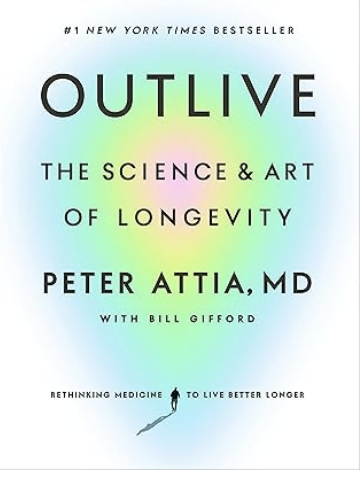
I’m not terribly into “self-help” books, so I put off reading this one (despite multiple recommendations from people I trust) for far too long. It was fantastic and while saying it changed my life feels over the top, it certainly did shift my thinking in a pretty big way. The writing is clear and goes as deep as you would like, with the well articulated structure making it easy to skip about and explore areas of particular interest. In addition to the depth, I appreciated the refreshing honesty about what is known, what is evolving, and what is still pretty unclear in terms of actual data gathered in the confines of a well-designed scientific study.
The overall theme is “Medicine 3.0,” with a greater emphasis on prevention, personalization of treatment through genetic testing, biomarkers, and continuous monitoring rather than one-size-fits-all, and decision making using on evidence-based data. What was eye opening for me was how much of the “four horsemen” of aging (heart disease, cancer, neurodegenerative diseases, and metabolic dysfunction) begin their silent destruction sometimes decades before becoming symptomatic. We now have the technology to suggest preventative actions (specific steps on diet, exercise, sleep, and emotional health) through early measurement and experimentation. Too bad I’m not reading this in my forties!
I like models and reading through the book I was able to build up a real understanding of how all of these interconnected biological systems work, making it much easier to think about how lifestyle really can impact your health, especially as you age. I get tired of just hearing “eat well, exercise, and don’t smoke” as the generic advice. The deep dives on nutritional biochemistry and different types of exercise went way beyond that vague advice. Even the chapter on emotional health, which didn’t appeal to me at first as I feel like I have plenty of data on that, was actually quite an excellent and insightful summary of how our emotional state contributes to our overall health and feeling of well-being. Surprisingly applicable.
Easy to read — I’m very impressed at how complex systems are explained without oversimplification. Highly recommended.
 Books to look forward to ...