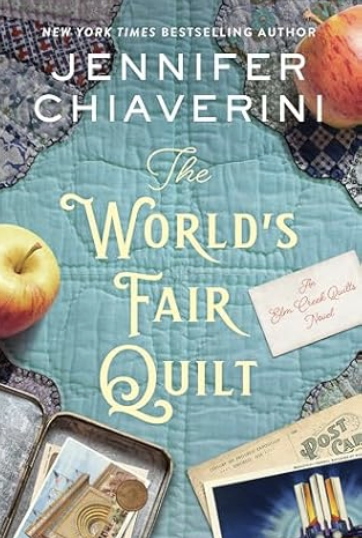
The World’s Fair Quilt by Jennifer Chiaverini (Women’s / Historical Fiction)

Another installment in Chiaverini’s feel good Elm Creek quilts series. While appearing like basic Women’s Fiction (not really my thing), I like this series for two reasons: I like the characters and the way of life they represent, and I love the “every person history” stories of the featured piece of the past.

This book recalled the 1933 nationwide quilting contest sponsored by Sears Roebuck. With a grand prize take of $1,200 in prizes (remember — this was depression era) and the best quilts to be displayed at the Chicago World’s Fair, it garnered over 25,000 entries. In our time, when you can see / experience anything with a tap on the screen, I enjoyed the excitement and wonder the book made me feel along with a couple of expert (but teenaged) quilters entering the contest. Their thoughts (and designs) on the contest’s theme (“A Century of Progress”) was excellent history and told completely within the context of the time period.

I also like the way the characters in these books tackle life — with strength and fortitude, a network of supporters, and a focus on doing the right thing. There is plenty of adversity (this isn’t a fairy tale) but little complaining, little blaming on past events, and little neuroticism. Kind of refreshing 😉

Thank you to William Morrow and NetGalley for providing an advance copy of this book in exchange for my honest review. The book will be published on April 1st, 2025.

The Museum of Lost Quilts by Jennifer Chiaverini

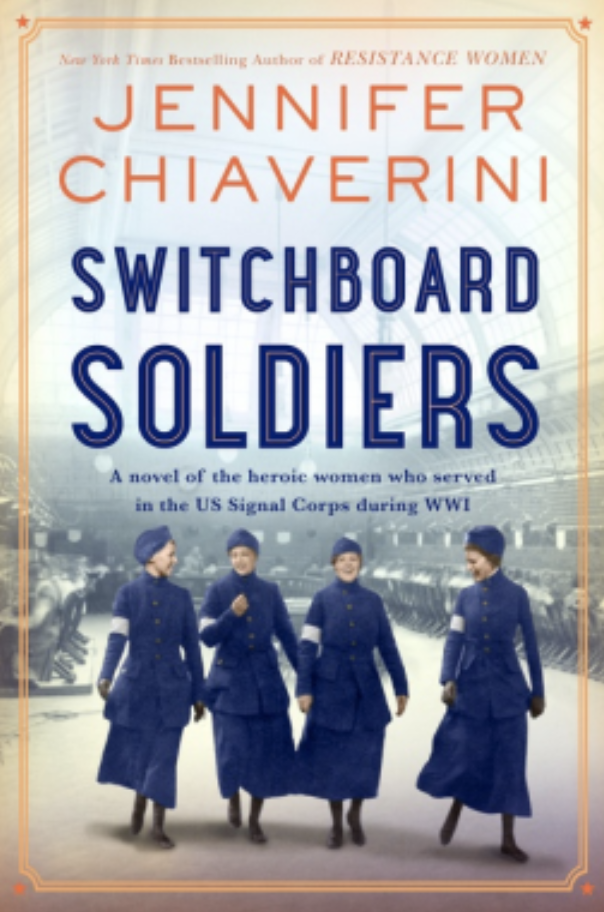
I tend to think of Chiaverini’s “Quilt Books” as generic uplifting women’s fiction, but coming to this latest installment after reading her fantastic WWI historical fiction — Switchboard Soldiers and Canary Girls — I now recognize all of the deeply interesting history embedding in the Quilt books. Specifically history focusing on the often hidden contributions made by women. The plot of this book focuses on the fundraising for an historical building restoration to save it from a (somewhat two dimensional) greedy developer by collecting and curating a set of beautiful old quilts with strong ties to local history. It is the story of the individual quilts and the research process for tracking down and understanding their history that made it so interesting to me. Plenty of individual stories and the unearthing of historical context that made those stories possible. While the plot was fairly predictable, it was pleasant and entertaining, and the historical bits really kept my interest.

Thank you to William Morrow and NetGalley for providing an advance copy of this book in exchange for my honest review. The book will be published on April 30th, 2024.

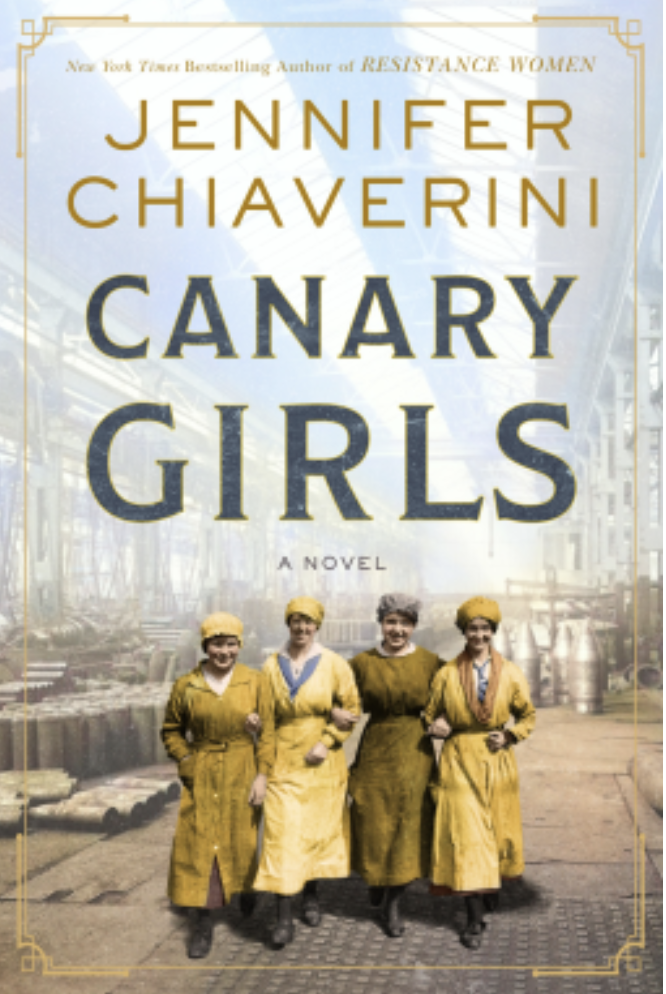
Canary girls by Jennifer Chiaverini (Historical Fiction)

Writing: 4/5 Characters: 4.5/5 Plot: 5/5

A story about Britain’s World War One “munitionettes” — women who answered the call of duty and worked in round-the-clock shifts to produce the much needed munitions for the war arsenal. The label referred to a specific group of munitionettes who worked with the (very poisonous) trinitrotoluene (TNT) which over a short period of time, turned their skin, bleached their hair (green for brunettes and white for blondes), and brought on plenty of health problems, some fatal. The story follows three women from just before war breaks out until it is over: Lucy, married to a professional footballer (that’s soccer to us) and architect; Helen, daughter of an Oxford professor whose husband runs one of the biggest munitions plants; and April, a girl sent into service at 15, who leaves for a better paying, more meaningful job in munitions once the call for women goes out.

Chiaverini’s last book (Switchboard Soldiers) focused on the female Telephone Operators who managed the switchboards in France during WWI (at a time when every single call was connected manually). She brings the same attention to historical detail to this book managing to cover a panoply of issues from the perspective of multiple women who are driving or affected by them . These include women’s suffrage which was put on hold during the war with promises made for after; women’s football, which took off during the war and was brutally shut down by the men’s league until 1971; the massive propaganda techniques used to make men enlist; the pressure on male footballers to enlist when no such pressure was applied to the more elite leagues (golfers, cricketers, and polo players); the impact on British citizens of German heritage, the many fatal accidents at munitions plants; the hunger resulting from German blockades; the posters for “surplus women” to migrate out of country; and the Swiss Medical Mission prisoner exchange (to name just a few!)

I was in awe of her ability to weave in so much about life for these women in that time period in such a meaningful, genuine, and never heavy handed way. Could not put it down. If you haven’t read Switchboard Soldiers, go back and read that one, too.

Great bibliography!

Thank you to William Morrow and NetGalley for providing an advance copy of this book in exchange for my honest review. The book will be published on August 8th, 2023.

Switchboard Soldiers by Jennifer Chiaverini (Fictionalized History)

I absolutely loved this book — one of the best pieces of fictionalized history I’ve read in a long time. The subject is the recruitment of female Telephone Operators to manage the switchboards in France during WWI as part of the Signal Corps.

Few people alive today can remember a time when every single call made using a telephone had to go through an actual person to be connected. And physical lines had to be in place for any call to be connected. Now picture the war torn fields of France during WWI — physical lines had to be laid and relaid to remote and exposed pieces of war terrain, and operators had to be in place in multiple locations to connect calls to send out new orders, to get reports, to contact other units and allies. It is estimated that during the two years the 223 bilingual women were in place, they connected over 26 million calls.

In this book, the history IS the story, not the backdrop for a romance or a mystery, and the story is rich and full of historical, technical, and personal detail. Characters — both real and fictional — are true to the time as they reflect on their roles, worries, and hopes. We get all the details of their lives: training, required uniforms, wildly varying accommodations, gas mask training, the conditions of the locals, the camaraderie they develop, and the respect and appreciation they slowly earn from the initially skeptical men. Also, the strong patriotism each of them feels — true to the time, patriotism is not the dirty word it appears to have become today. This book is well researched (an excellent and long bibliography available at the back) and does not sink into melodrama — there are no broken hearts, gratuitous sobbing, or overwhelming romances. These women were competent, had an important purpose, and thrived in an environment of hard work, pressure, and real need. It wasn’t all rosy — after the war they were treated as volunteers and were discharged without proper veterans benefits. This was not rectified until 1977 when only 50 of the women were still alive.

The narrative follows three women (one real, two fictional) as they go through the process from recruitment shortly after the U.S. enters the war through the Versailles Peace Talks: Grace Banker of New Jersey (who later received the Distinguished Service Medal), Marie Miossec (a Frenchwoman and aspiring opera singer), and Belgian born Valerie DeSmedt (whose widowed mother ran a boarding house in Los Angeles).

Highly recommended.

Thank you to William Morrow and NetGalley for providing an advance copy of this book in exchange for my honest review. The book will be published on July 19th, 2022.