James by Perceval Everett

Writing: 5/5 Characters: 5/5 Plot: 4/5
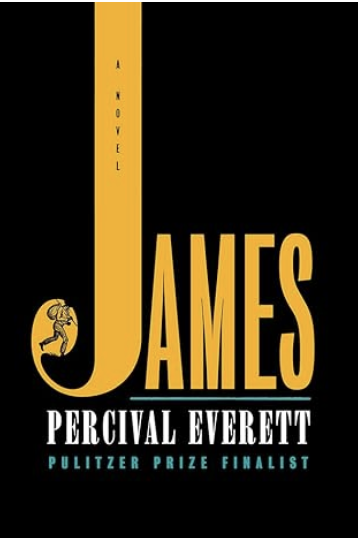
A beautifully written reimagining of Twain’s Huckleberry Finn, told from the perspective of “Big Jim,” the slave with whom Huckleberry Finn escapes down the river. While Finn is escaping an abusive father, Jim is running from the rumor that he will be sold away from his family. This aligns with the original work. However, in this version of the story, Jim is presented as an intelligent, educated, and feeling man with a rich interior life and a strong sense of responsibility. He is the narrator of the tale and we hear the story from his perspective — drastically different than that of the Twain’s narrator Huckleberry Finn.
The key mechanism of the storytelling (for me) is the code-switching that all the slaves use when in the presence of white people — adopting an unsophisticated patois along with ignorant and superstitious behaviors. Among themselves they speak with good grammar and have a rational (if somewhat resigned) outlook. It’s fascinating what (often inaccurate) signals we receive simply by the way someone talks and behaves.

I enjoyed the writing, the deep characterization, and the (somewhat uplifting) end, although I didn’t particularly enjoy the “adventures.” Starting with the same plot lines as Huck Finn, the book expanded to include plot elements that supported Jim’s drive to free himself and his family. The story was full of realistically depicted attitudes and behaviors towards slaves. While I had read many fictionalized accounts of slavery, I thought this was one of the best for highlighting the varying attitudes of whites, as well as adding depth to the experiences of the slave himself. White characters ranged from cruel men who took pleasure in their cruelty, to those who didn’t believe in slavery but didn’t take any steps to stop it, to those who were actually kind and yet still considered Black people to be subhuman. Everett managed to convey the intense tension present in every moment for a person who is enslaved — the constant worry and lack of any kind of control, the constant tamping down of anger, the constant need for vigilance lest anyone notice anything about you that doesn’t jive with the “dumb animal” they expect. But the real stroke of mastery in the writing is how everything shifts for the reader simply by making it clear that the characters are fully recognizable as human being simply by speaking in a way that we recognize as intelligent.

While I don’t think this was the primary point of the book, it also got me thinking about when violence is justified. Without giving too much away, Jim intentionally kills two other (white) characters even though his own life was not at risk at the time. I was completely happy with his actions which left me feeling vicariously satisfied at the death of two absolutely horrible people. And yet, those people had done nothing that was illegal — instead they were cruel, violent, and behaved immorally according to my own ethical standards. Most of us today are horrified by the idea of slavery and the specific cruelty of many of those who practiced it; however, there are people today who are celebrating the murders committed by Luigi Mangione (United Healthcare CEO Brian Thompson), Tyler Robinson (Charlie Kirk), and the Hamas attack on Israel (1200 murders, rapes and 250 people kidnapped — all non combatants). In their minds, the victims were “guilty” and merited murder. The line between these situations feels clear to me, but is it?
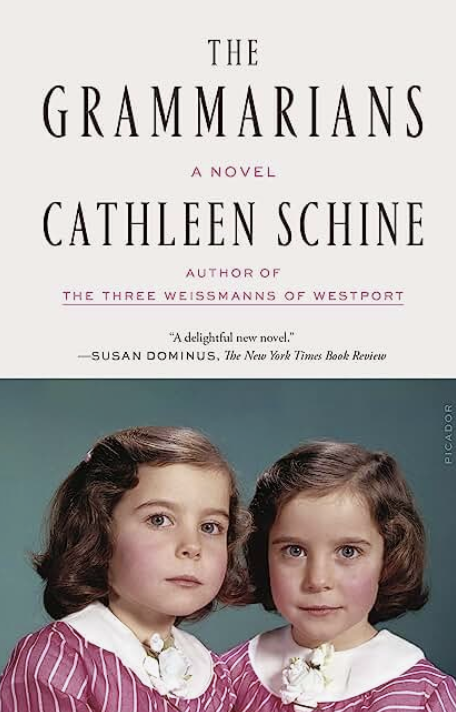
The Grammarians by Cathleen Schine (Literary Fiction)

Writing: 5/5 Plot: 4/5 Characters: 5/5
As with all of Schine’s writing, this is (at least) a two for one story. It is the story of identical, red-haired twins who — across their lifetimes — are simultaneously striving to bind tighter around each other and struggling to separate. Both fascinated by words and grammar, they take residence in diametrically opposed viewpoints on the nature and purpose of language. Daphne is writing a popular grammar column called “The People’s Pedant” , while Laurel cobbles together stories from phrases sampled out of old letters. As a child, Daphne collects words she likes, even if she has no idea what they mean, while Laurel looks them up and can’t understand the pleasure of a word without meaning. Daphne wants language to be correct, Laurel wants language to grow and be what people actually speak opining that “standard English is really just the dialect of the elite.”

We watch the two diverge in a kind of novelistic time lapse photography accompanied by constant wordplay (which I loved). As the twins grow older, we watch them dive into their love of language and watch their brains shifting with their observations. They love finding obsolete meanings in dictionary listings because “Obsolete meanings were treasures of infinite value and no use.”

Each chapter begins with a word and definition from Johnson’s dictionary circa a very long time ago. These are both fun and historically enlightening as you get a real sense of how language continually evolves. Some examples: Conversableness (the quality of being a pleasing companion; fluency of talk); Scrine (a place in which writings or curiosities are reposited); Collectitious (gathered up); Oberration (the act of wandering about); Genial (that which contributes to propagation); Citess (a city woman).

Everything is quotable. Schine has the best grasp (and obvious love for) language. I learned so many new words: fugacious (fleeting), diplopia (double vision), privity (private communication, joint knowledge), and my favorite — edacious (eating; voracious; devouring; predatory; ravenous; rapacious; greedy). And while we are enjoying the deep dive into all aspects of the beauty of language, we do so in the context of prose that is intricate in the nature of depicting full personalities in all their complexities and seeming incongruities. It’s simply wonderful to read.

Quotes:
“In an aquarium-like glassed-in enclosure, a tall woman and a short man shook their fists at each other, silent behind the glass, like exotic fighting fish.”

“There is something fair and just in what we do. Grammar is good. I mean ethically good. If you think of all these words just staggering around, grammar is their social order, their government.”

“Grammar makes you respect words, every individual word. You make sure it’s in the place where it feels the most comfortable and does its job best.”

“It was so draining, worrying about finding love, as if it were an upcoming exam.”

“Copyediting is helping the words survive the misconceptions of their authors.”

“But Michael suspected Larry was as smart as anyone, just not paying attention. Like a Galapagos tortoise, he had no need to pay attention. He had no predators. He was protected by an expansive carapace of good nature, money, and family status.”

“The little girl with the hair that surely harbors a large bird of prey gave her an astonished look. It was not a look of astonished liberation, as Laurel momentarily hoped. It was a look of astonished pity.”

“They played with the words, as if they were toys, mental toys, lining them up, changing their order, and involving them in intrigues of love and friendship and bitter enmity.”

“Arthur had never understood how someone so humorless could claim to uncover the secrets of another person’s soul.”

“What is a soul if not a repository of the absurd? Expectations, disappointments, grievances, good wishes.”

“And Brian smiled and thought families were not so bad. They were like these pigeons, cooing and puffing up and scrapping for crumbs. Like every other kind of creature.“