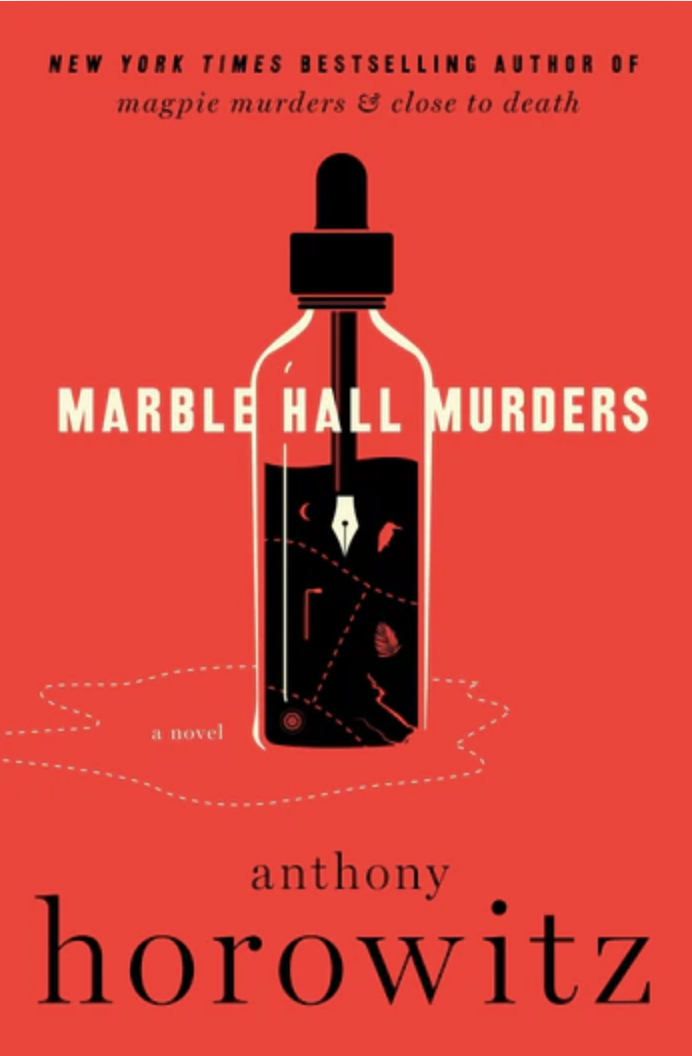
Marble Hall Murders by Anthony Horowitz (Mystery)

Number three in the Susan Ryeland series (after Magpie Murders and Moonflower Murders — both now streaming on Masterpiece). Susan was the editor of the fantastically successful Atticus Pünd detective series — from inception until disastrous events brought the series to an end. You’d think she would have had enough, but dire straights lead her to accept a job editing a continuation novel, written by Eliot Crace — a well-known loose cannon who is nevertheless blessed with a beloved children’s author as a (now deceased) grandmother.

It’s a classic story-within-a-story format — we’re reading the Crace novel as fast as he produces pages while simultaneously reading Ryeland’s story as she keeps sticking her nose into the author and the story, which continues to mirror reality to an uncomfortable extent. The two stories dovetail in weird and twisted ways and I never saw what was coming, though the clues were all there. I love Horowitz’s writing — clear and concise and bringing characters to life with minimal, essential, prose. The mystery (two in parallel really, one fictional and one not) is excellent on its own, but I also loved the meta layer exposure of the literary world — how writers write, the relationship between author and editor, and basic survival tips for the publishing industry. It’s full of anagrams, ethical discussions, and deliciously clever (albeit often evil) moves. I always appreciate a book that has no stupidity — intentional or not — in its pages!

Some facts new to me: According to the Authors, Licensing and Collecting society, the average salary earned by a novelist is a mere 7,000 pounds a year — not a lot (not even a little, really). There are around 200,000 books published in the UK every year ( and as many as 1 million in the USA) and as Horowitz writes: “How many of them do you really think are going to end up on the front table at Waterstones?.” Lastly, I had never heard of the Nazca lines in Peru — giant geoglyphs in a Peruvian desert dated between 500 BC and 500 AD that are so large they can be seen from space (for those who have read it, this reminded me of Vonnegut’s Sirens of Titan.

Easy read, completely engaging, and (IMHO) book clearly better than the Masterpiece series (which itself is very good, but the book is better)

Thank you to Harper and NetGalley for providing an advance copy of this book in exchange for my honest review. The book will be published on May 13th, 2025.
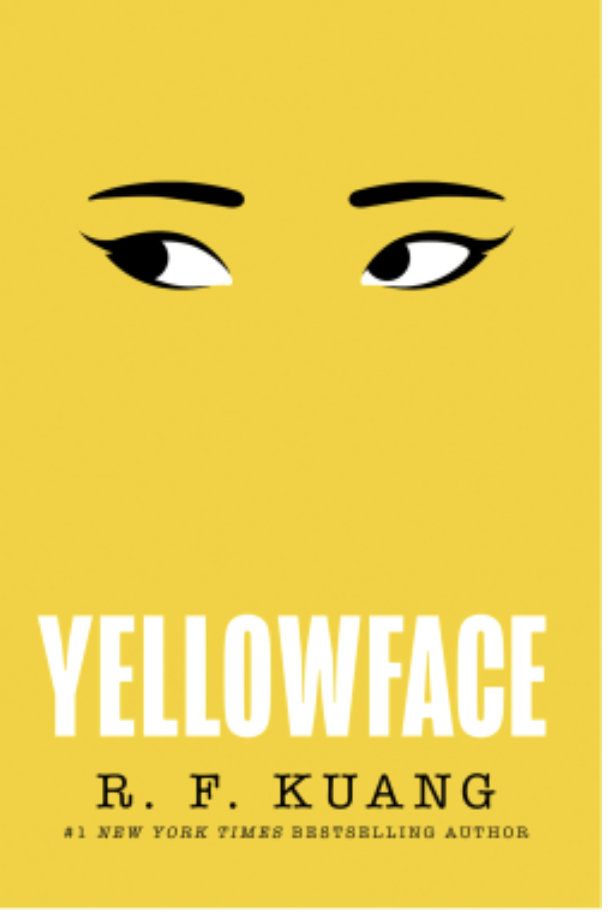
Yellowface by RF Kuang (Literary Fiction)

Writing: 5/5 Characters: 4/5 Plot: 4.5/5

This book never goes where you expect it to go. Ostensibly the story of an author (Juniper Song) who takes the latest manuscript from a recently deceased friend (Athena Liu), completes it, and publishes it as her own. But the depth of introspection, thought, and reaction every step of the way neatly details the complexities of every aspect of the world of writing, publishing, marketing and fandom. And it is absolutely fascinating.

Ever noticed how easy it is to have a (strong) opinion on something for which you’ve only read a headline? You’re not the only one. This book forces us to think a lot more deeply about a whole slew of issues: What is plagiarism vs influence vs mashups? How are we influenced by both direct marketing / branding and the more subtle (but equally insistent) influence of current trends and fads? How quick are we to leap to conclusions without analysis or an attempt at understanding?

Kuang also tackles the hydra of cultural appropriation by having her narrator (a white woman) writing a (thoroughly researched) book about Chinese history. Does she have the right to write about something that is not her heritage? Is it more reasonable for someone who is of Chinese descent but has never experienced (or been exposed to) anything like the characters in the book to write it? Kuang (who herself is ethnically Chinese) presents multiple sides to a whole slew of issues via the opinions, thoughts, and comments of various characters — both fully fleshed out and spewed in every angry storm of social media commentary. If Kuang herself has a strong opinion on these topics, she keeps it well camouflaged through her characters’ many disparate voices. I think she showed real courage tackling the subjects — helpful that she is already an award winning author — but I hope the strong-minded Internet trolls bother to think things through before attacking!

Lots of literary references, real insight into the industry, and a wildly convoluted plot that is actually clean, believable, and easy to follow. Human nature presented with all of its intricate folds dancing about in the intersection of morality, social acceptability, and judgement. Very different from her last book (Babel — which I loved) — it is equally compelling.

A fantastic first line, which drew me in instantly: “The night I watch Athena Liu die, we’re celebrating her TV deal with Netflix.” A fantastic last line, too, but I won’t include that here!

A small selection of good lines — there are so, so many:
“I stare at Athena’s brown eyes, framed by those ridiculously large lashes that make her resemble a Disney forest animal, and I wonder, What is it like to be you?”

“Cue the myth making in real time, the constructed persona deemed maximally marketable by her publishing team, paired with a healthy dose of neoliberal exploitations. Complex messages reduced to sound bites; biographies cherry-picked for the quirky and exotic.”

“The Last Front hardly breaks new ground; instead, it joins novels like The Help and The Good Earth in a long line of what I dub historical exploitation novels: inauthentic stories that use troubled pasts as an entertaining set piece for white entertainment.”

“In any case, Twitter discourse never does anything — it’s just an opportunity for firebrands to wave their flags, declare their sides, and try to brandish some IQ points before everyone gets bored and moves on.”

“It’s hard to reach such a pinnacle of literary prominence that you remain a household name for years, decades past your latest release. Only a handful of Nobel Prize winners can get away with that. The rest of us have to keep racing along the hamster wheel of relevance.”

“But enter professional publishing and suddenly writing is a matter of professional jealousies, obscure marketing budgets, and advances that don’t measure up to those of your peers. Editors go in and mess around with your words, your vision. Marketing and publicity make you distill hundreds of pages of careful, nuanced reflection into cute, tweet-size talking points. Readers inflict their own expectations, not just on the story, but on your politics, your philosophy, your stance on all things ethical. You, not your writing, become the product — your looks, your wit, your quippy clapbacks and factional alignments with online beefs that no one in the real world gives a shit about.”

Thank you to William Morrow and NetGalley for providing an advance copy of this book in exchange for my honest review. The book will be published on May 16th, 2023