
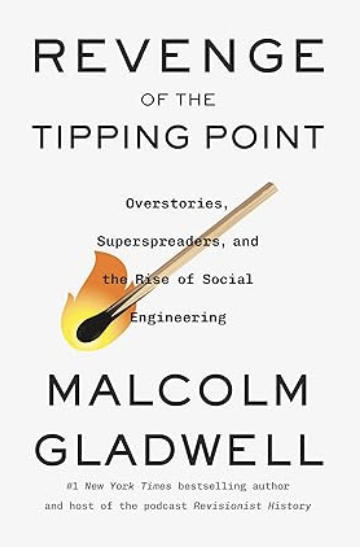
Always an engaging storyteller, Gladwell expands on the Tipping Point theme with an array of anecdotes, research, and social trends to show the impact of tipping points in many important constituents of our society. Ranging from localized bank robbery surges to medical mysteries to social epidemics to group proportions to — my favorite — why Harvard cares so much about arcane sports teams (like girl’s rugby), Gladwell works to understand the evolution of social problems and various bits of social engineering that have or could be applied to nudge things in the right direction. He includes several thought provoking ethical questions regarding these issues — no answers, but I always appreciate the ethical angle.
Some of the book sections that I particularly enjoyed: superspreaders — people who spread germs, pollution, bad behavior — spread orders of magnitude more than “regular” people. Group proportions — the “magic” 1/3 which is the fraction of a group that converts token outsiders into fully fledged members, with both good and bad consequences (think white flight and a truly shocking — to me — story of how Harvard developed its complex admissions process). Small area variation — how monocultures in small areas can lead to radically different behavior when compared to neighbor communities. Think vaccination rates, tonsillectomies, or suicide. The Overstory — how a story can get embedded into a culture without anyone being aware of the shifts. My favorite story here — a connection between the legalization of gay marriage and a long running sitcom starring an openly gay man.
In the last chapter — Conclusion — Gladwell applies the tipping point components developed in the book to the opioid crisis — quoting frequently from the Purdue Pharma (makers of Oxycontin) / Sackler family trial. I don’t completely agree with his conclusions, but was pretty shocked by some of the marketing and sales practices the pharmaceutical company used and how beyond effective (in terms of profit) they were.
Overall this was a thought provoking book, and I enjoyed reading it — with the exception of the first chapter about the LA bank robbery surge which for some reason both bored and upset me. If you feel yourself losing interest as well — just skip the first chapter! I quite enjoyed everything after.
 Books to look forward to ...