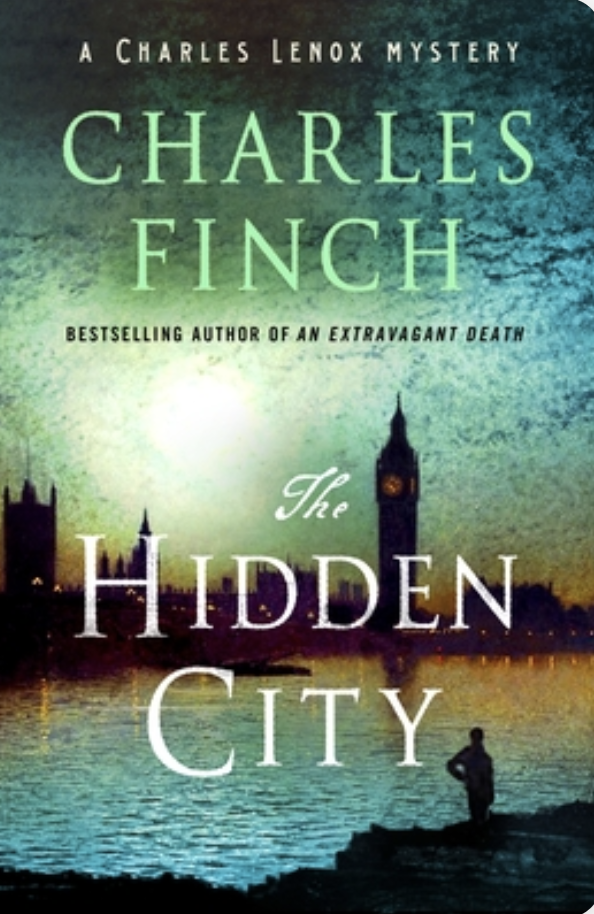
The Hidden City by Charles Finch (Historical Mystery)

Number 12 in this historical mystery series, but number one for me. Regardless of not knowing the history of the characters I was able to follow the story very well. I would definitely categorize this as a “cozy” as there were no “thrilling” (i.e. terrifying for the reader) scenes to get my anxiety going. Fine by me! Interesting that as a cozy written by a man, there was less filler of the tea parties and gown description types (also fine by me) but plenty of historical detail about the Victorian Age in which the stories are set. This included plenty of social as well as policy / political commentary. I particularly enjoyed the description of various “guilds” (known here as “livery companies”) started in medieval times — all styled as the “Worshipful Company of xxx.” Tickled me. Some good bits on women’s suffrage and the complete injustice of the treatment of London’s “lower classes.” This particular episode felt like more of a novel than a mystery, although there was a mystery obviously (old murders just tied together with a current threat to someone living in the house where one of them occurred). I quite liked the characters and will likely go back to number one and see how things progress!

Thank you to Minotaur Books and NetGalley for providing an advance copy of this book in exchange for my honest review. The book will be published on November 4th, 2025.

A Most Intriguing Lady by Sarah Ferguson, Duchess of York (Historical Fiction)

Writing: 3.5/5 Plot: 4.5/5 Characters: 4.5/5
Not at all my typical read but I confess I did find it entertaining. A “Novel of the Victorian era,” it reads like a (much) steamier Jane Austen style novel (and yes, I know that Austen was Georgian period, not Victorian, but it still has lifestyle similarities in my mind). In Ferguson’s novel, there is a stronger (and more interesting) theme of well-born women wanting more from their life than obedience to husband, mother to children, and gardening. They want to be useful. At least our heroine, Lady Mary Montagu Douglas Scott, daughter of Queen Victoria’s good friends, the Duke and Duchess of Buccleuch, wants that and wants it very much indeed. Intelligent and determined, she becomes a kind of (unpaid) lady detective, focussing on issues that call for a knowledge of society and utter discretion. There is also a non-traditional romance fluttering through the pages as Lady Mary struggles to integrate her strong attraction (both physical and mental) to a Darcy-style Colonel Trefusis with her desires to have a full life that does not involve subservience to another being.

Most of the characters in the novel were real people and the authors (in small print it does say “with Marguerite Kaye”) go into the historical detail about their real lives as well as the history of women detectives which I found quite interesting. One expects that by her rank and previous membership in the Royal Family, Ferguson has a kind of “in” when it comes to the kind of house parties, hunts, and what not that populate a novel of this sort. I can’t verify any of it but I enjoyed reading it and am now extra thankful that a) I live in an era where being a woman did not limit me in any way and b) that I do not ever have to attend any of what appears to be the most tedious gatherings on Earth!

I enjoyed the more modern take on an historic period. While the time period is not necessarily known (to me) for women empowerment or feminist leanings, Lady Mary’s feelings and worries did not feel at all anachronistic, and I could readily identify with her. I liked the balance between the description of time and place, the types of mysteries, the romance, and Lady Mary’s inner thoughts and motivations. Again, not my typical book but I did quite enjoy it!

Thank you to Avon and NetGalley for providing an advance copy of this book in exchange for my honest review. The book will be published on March 7th, 2023

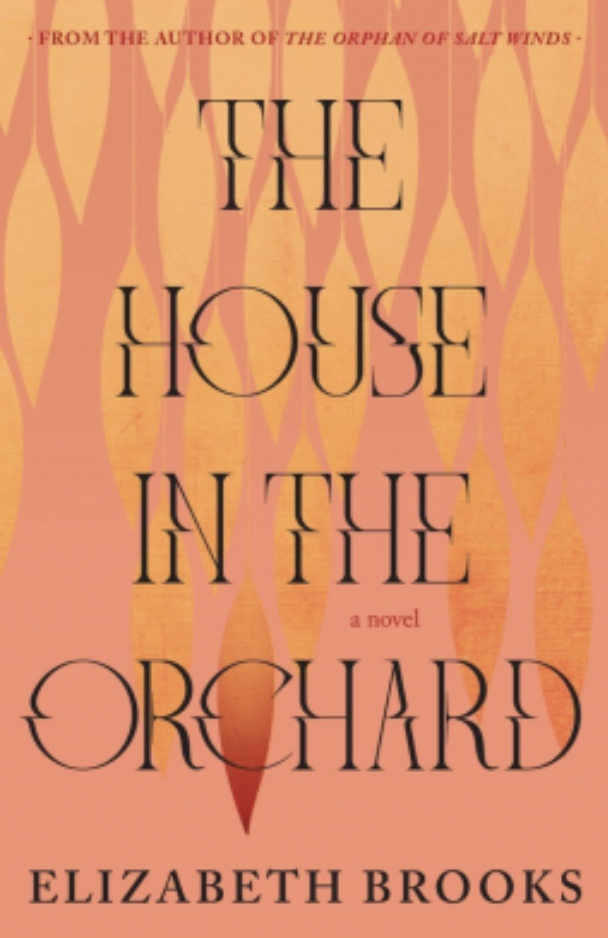
The House in the Orchard by Elizabeth Brooks (Fiction)

Plot: 2/5 Characters: 3/5 Writing: 3/5

A story within a story — in 1941 Peggy inherits the house in the orchard (in Cambridgeshire) from her husband’s Aunt Maude (her husband died in the war). Her rather difficult father-in-law (Maude’s brother Frank) hates the place and encourages her to sell. The bulk of the book is Peggy reading Maude’s diary (beginning in 1876) — a rather horrific tale of how Maude came to own the place.

I wanted to like this book — I love English historical fiction, and there was the potential for a good story. “Victorian era girl brought up to be proper in a home devoid of warmth makes good” is the story I wanted to read, but it was not to be. Instead I disliked her more and more until I thought I couldn’t dislike her any more (I was wrong). By the end, I had to ask myself what was the point of the book? What lesson should I have learned? Who was I supposed to empathize with? And was the story at all believable?

The story moved slowly, and there was a lot of description which I kind of skimmed over, but my main objection is the insidious way the story went downhill into darkness. Luckily (for me) it was not written in a melodramatic way, so I was able to finish the book with my emotional state intact, but I can’t say I gained any wisdom or enjoyment from reading it.

Thank you to Tin House and NetGalley for providing an advance copy of this book in exchange for my honest review. The book will be published on September 27th, 2022.