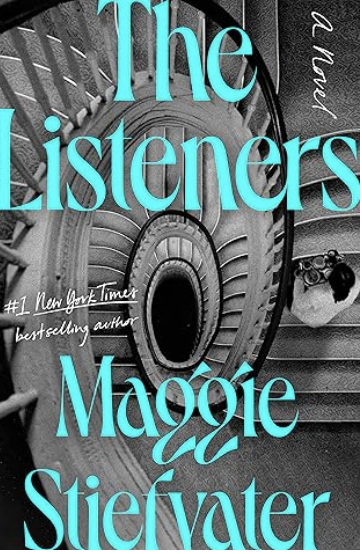
The Listeners by Maggie Stiefvater (Literary Historical Fiction)

Writing: 5/5 Characters: 5/5 Pure story: 5+/5

I loved this book — the exquisite and content rich writing, the elaborate storytelling with deep and resonant themes, the faint whisper of otherworldliness. I probably won’t do it justice in this review, but I will try.

It’s just after Pearl Harbor and the world is falling apart — recklessly, rapidly, relentlessly. The Avallon Hotel — known for Extreme Luxury — has been offered to the State Department as a holding area for hundreds of foreign Axis diplomats until they can be exchanged for similarly trapped Americans in Axis countries. The hotel is held together through sheer force of will by the new manager — June Hudson — a local mountain girl with an untamed native twang, who possesses an innate talent for “listening” to the mountain sweetwater — the mineral springs that give the Avallon its luxury reputation. But the new residents bring with them foul sentiment, angry expressions, and bitter fear and stimulate the same in others. And it threatens to turn the sweetwater into something much darker. You can read it as metaphor or as a hint of fantasy. I chose both.

The many and varied characters — from diplomats to families to hotel staff to FBI and State Department agents — were deep, real, unusual, and individual. Despite a large cast of characters, I never mixed anyone up — they were each unique. And each struggled with their own challenges — the complexities of justice, deeply held principles challenged by the realities of a world at war, threatened loyalties, the definition of bravery, the scale of protection, and the pull of love. The story wound itself into knots while the broader plot moved inexorably forward. There was no filler. I never had a moment to contemplate whether or not I might be bored. I really loved the “character” of the sweetwater, a powerful metaphor but also reified in a compelling and illuminating way. The resolution was complex, perfect, and satisfying. The (short) authors note at the end brought out some of the more dramatic events that were based on reality. The diplomat housing and eventual swap was real, as were some of the (ridiculous) tantrums, pressures, and demands of individuals.

Highly, highly, recommended.
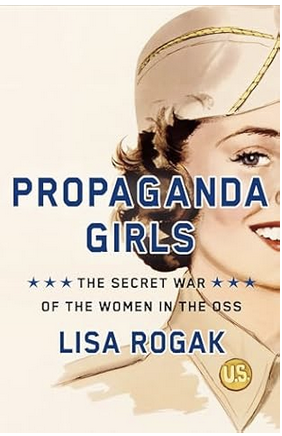
Propaganda Wars: The Secret War of the Women in the OSS by Lisa Rogak (Non Fiction — History)

Propaganda Girls follows the lives of four women who worked in WWII’s OSS spinning propaganda webs that demoralized the enemy and helped speed the war to an end. Taking place in the European theater, behind enemy lines in occupied China, and in Washington, D.C., the story follows each of the women from her recruitment, through her placements and work, through her post-war life. The women: Marlene Dietrich — well known German actress who worked non stop for the effort; Betty MacDonald (NOT of Mrs. Piggle Wiggle fame) — the women’s editor in the Oahu paper, one of the first on the ground during Pearl Harbor; Jane Smith-Hutton — wife of a Naval Attache, fluent in Japanese, and held with her family for six months in the Tokyo American embassy after Pearl Harbor; and Barbara (“Zuzka”) Lauwers, a Czech national polyglot married to an American, who worked the European theater.

Each got into the work wanting to do something more for the war — and also wanting to do all that they were capable of doing, rather than living the traditional life available for most women. The story was full of details of life in that time period, the actual strategy and implementation of a propaganda war, and the (often ignored) contributions women made.

So many details were fascinating: The weird training they went through, details on procuring the exact right kind of papers, inks, and using the current language idioms. The arrays of people who had to be recruited with special skills. One story told of an innovative propaganda delivery system — condoms born up and stuffed with a pamphlet that could float across the water. The strategy for determining targets, fake stories, and deployments. How to deal with targets who were not actually literate. Special issues in places like India with hot, ink-melting climates and irregular electricity. But my favorite was a description of the “manual” face lift Marlene Dietrich had to undergo before filming, a kind of elastic pulling of her face, bound back into her hair. Painful and not permanent!

Part personal story, part full program debrief, the book was readable, entertaining, and enlightening.

Thank you to St. Martin’s Press and NetGalley for providing an advance copy of this book in exchange for my honest review. The book was published on March 4th, 2025.

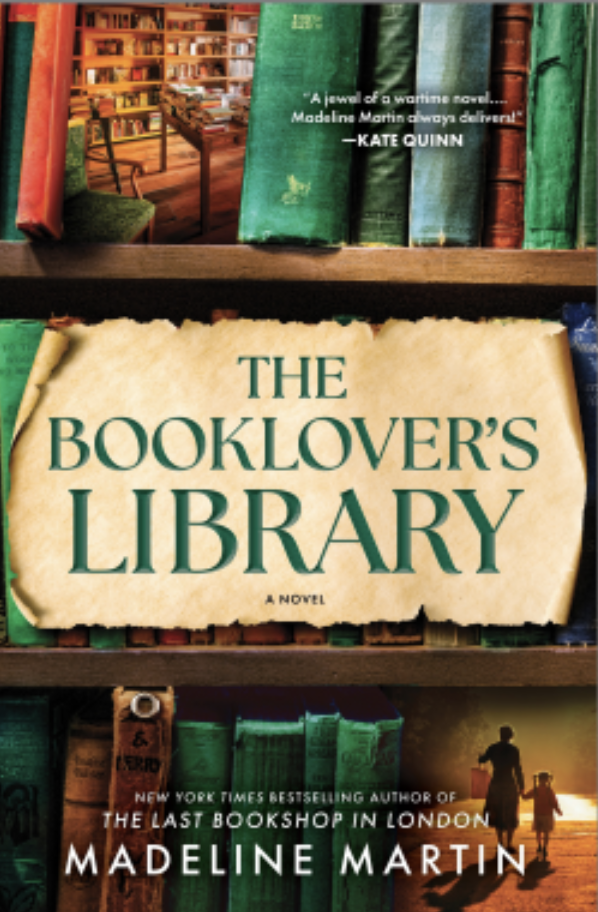
The Booklover’s Library by Madeline Martin (Historical Fiction)

A heartwarming piece of historical fiction taking place during WWII in Nottingham (I’ve read tons of books about the home front in London so this is new for me!). It is 1939 and 25-year old Emma is a single mother whose husband died five years before in a car accident. She manages to get a much needed job at the subscription library in the back of Boot’s (UK pharmacy), which was difficult and UK law at the time made it illegal to hire married women or widows with children. The story is of Emma’s war — working, volunteering with the WVA, but mostly dealing with the trauma of having to send her 7-year old daughter away to the country for her own safety.

My favorite thing about historical fiction such as this is the way we get the full and individual experience of living through times that are too easily summed up in history books in terms of events and casualty numbers, and not on the experience of individuals. I particularly liked the way Martin added all sorts of details of which I was unaware. I loved the way the subscription library worked and the explanation of why public libraries didn’t meet the needs of all subscribers. Librarians at the subscription libraries were responsible for curating loans for each individual patron. I would have been very happy to have that job! Special “red label” books such as Lady Chatterly’s Lover had to be specifically requested and were not allowed on the floor. There was plenty of story about the patrons of the library, their reading habits, and the librarians who helped them. Plenty of other new details (for me) as well. One character turns out to be part of the “Mass Observation.” This is a program started in 1937 that continued for 30 years. The “observers” carefully noted down what people talked about and did. Apparently it was originally started to capture the feelings of people about King Edward’s abdication, but of course continued to be valuable once the war started. And did you know that pet owners were “ordered” to put their pets down at the start of the war to save food for people?

Some romance, plenty of hardships, and always enough community pulling together when necessary. I liked the characters — books like this focus on the best in people which (fortunately) does come out in times of trouble. Of course I also loved the story of how books and reading help us when we need them. It’s a good pairing with one of her other books — The Last Bookshop in London — and there is a cameo appearance of that very bookshop and its booksellers in this volume.

Thank you to Hanover Square Press and NetGalley for providing an advance copy of this book in exchange for my honest review. The book will be published on September 10th, 2024.

Shy Creatures by Clare Chambers

Writing: 4/5 Characters: 5/5 Plot: 3.5/5

1964. When William — a mute and (very) shaggy man — is found in decrepit conditions in a London suburb, he is taken to a psychiatric clinic for evaluation.  He apparently had not left the house for over ten years.  When William turns out to have a real artistic talent, Helen, the clinic art therapist, feels drawn to the “Hidden Man” and makes him into a special project.  The narrative branches off in two directions.  The first follows Helen as she tries to unravel the mystery of the Hidden Man’s origins while also coming to terms with her increasingly disastrous relationship with the appealing, but definitely married, psychiatrist treating William.  Alternating sections follow William’s story backwards through time — eventually providing the answers in events taking place in 1938.

The story was compelling, and I liked the backwards progression through William’s life slowly explaining how he developed into the man he became.  All of the characters were deftly drawn, and I enjoyed the reflection and details that helped me understand (though not necessarily empathize with!) their various personalities.  I found the psychological tools and thinking of the era fascinating and wished there had been slightly more of that and less day-to-day descriptions.  I found the book a little long winded, but with a little judicious skimming (sorry!) I enjoyed it from beginning to end and appreciated the relatively upbeat ending (will say no more about this!)

I found the writing at the sentence level to be excellent.  Here are a few quotes:

“Helen started to feel the intestinal cramping and queasiness that often accompanied the contemplation of her moral failings.”

“As usual, thoughts of her mother prompted a wave of guilt, swiftly followed by a cancelling backwash of resentment.”

 “The fact that his ire was aimed not at them, but at some nearby object that confounded him didn’t make it any easier to ignore; for quiet people, raised voices are experienced as a kind of aggression even when directed elsewhere.”

Thank you toMariner Books and NetGalley for providing an advance copy of this book in exchange for my honest review.The book will be published on November 12th, 2024.

The Huntress by Kate Quinn (Historical Fiction)

Another powerhouse from Kate Quinn — propulsive (my new favorite word for books like this where one page practically forces you to turn to the next quickly) and intriguing at multiple levels. Parenthetically, I listened to this on audio and cannot stress enough how fantastic the reader (Saskia Maarleveld) was. I generally prefer reading to listening, but I’m fairly certain that her reading made this book significantly better than it would have been without (and that starts from a high rating to begin with!)

Three intertwined timelines racing towards the identification, location, and capture of the Nazi war criminal called die Jagerin — the Huntress. This is the woman who engaged in murder as Nazi sport, including the killing of children in cold blood towards the end of the war. The timelines: 1946 — Jordan — a 17-year old girl who passionately wants to be a photojournalist a la Margaret Bourke-White; 1950 — Ian Graham — world-weary British war correspondent turned Nazi hunter with an almost desperate need to see die Jagerin caught and tried; 1941 — Nina Markova — born in the frozen wastelands of Siberia whose sheer force of will gets her into the legendary (and historically accurate) Night Witches — an all female bomber squad that marked the beginning of Soviet acceptance of women in combat.

The writing is excellent, with perfect pacing. The characters are detailed and completely believable (to me). Tons of little details that make me feel as though I really know these people and made me miss them when the story was over. Plenty of reflection on life for each of the characters — threads of trust, context, truth without sensationalism (always my favorite), what it means to find a community, the importance of friendship and of having a purpose, and how someone can both love another person and be horrified by them at the same time. Additional details about groups as well — attitudes toward the war and the criminals it produced five years later. I really couldn’t stop reading (listening).

My only negatives — it felt just a little too long — especially listening to an audio book; and I had a hard time knowing who die Jagerin was (this is pretty obvious to the reader from the beginning) but I had to watch the characters NOT FIGURE IT OUT FAST ENOUGH FOR ME!

Highly recommended — especially the audio book.

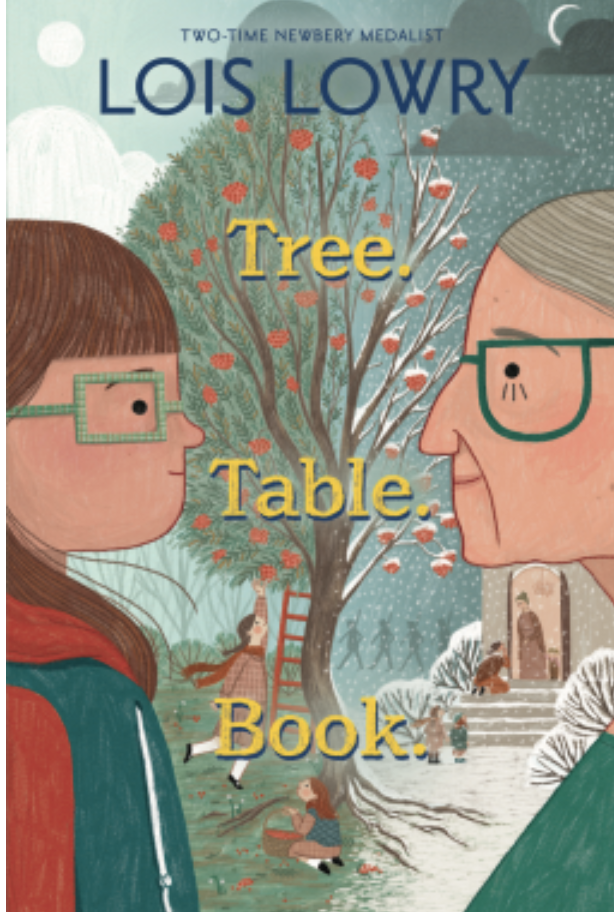
Tree. Table. Book. by Lois Lowry (Middle Grade Fiction)

11-year old Sophie’s best friend is another Sophie — her 88-year old neighbor Sophie Gershowitz. Older Sophie is the one with whom young Sophie has a “true and lasting friendship, a friendship of the heart.” But older Sophie is not doing well — her memory is failing and there are rumors of her being removed to a facility in a distant town. To help, young Sophie tries to prepare her for the memory tests she will be faced with. She tries to get her to remember three simple words — Tree, Table, Book — by cementing them in stories that are important to the older woman. But the stories that come out are heartbreaking, secret, and revealing to the point of translucency. Pieces of history that explain who Sophie G is and how she became that person.

Lowry is (and always has been) an incredible writer. I’ve probably read everything she has written, and she has never failed to catch me in surprise with her revelations. The 86-year old author is able to put herself into the characters of both Sophies beautifully. Young Sophie’s mind meanders like an intelligent, curious, 11-year old. Older Sophie’s mind loses details but holds on tenaciously to the important truths of life. Lowry — as usual — manages to get essence into every single sentence. I was brought to tears multiple times. The tears were not dragged out of me, though, but were natural products of the feelings at the heart of the book. I felt more reading this 200 page book aimed at 8-12 year olds than the most dramatic adult books. And I love the (almost) last line which is included in one of the quotes below.

Quotes:
“I had told Sophie Gershowitz that I always got the dates right, on history tests, always got As. That was true. But I had never really got it, never understood history, how things fit together, because I needed someone to tell me the stories not of politics and dictators, but of berries and bunnies and books. Of how things are lost, and what that means and how it hurts.”

“I prefer curved and winding roads. They make me think about Stuart Little setting off in his tiny car to look for love.”

“In order to understand how it feels to say goodbye to your dearest friend, you need to know about a flowered apron, a Jello-O mousse, an old refrigerator with ice trays, and a whistling teakettle. You need a size-small T-shirt that says Live Long and Prosper. You need a yardstick. Maybe you above all need a yardstick, because you have to measure everything so that it fits together, because you have to aim for an understandable ending.”

“It is exhausting to think about it. There is so very very much to fix. And I know, of course, that a lot of it isn’t fixable. I understand that.
But I can try. I’ll start small.”

Thank you to Clarion Books and NetGalley for providing an advance copy of this book in exchange for my honest review. The book will be published on April 23rd, 2024.

Locked in Pursuit by Ashley Weaver

Writing: 3/5 Characters: 4/5 Plot: 3.5/5

A perfect airplane read! Number four in the Electra McDonnell series in which a (former) safe cracking thief turns her skills to help the British government in the person of the (handsome, naturally) Major Ramsey in London around 1941. Some nice twists and connections to historical events. I like all the characters — they are interesting and well drawn. In addition to the case in hand, each book makes some progress on Electra’s backstory (father murdered and mother accused of the crime before Electra was born) while the Electra and stoic Manjor Ramsey romance continues at a steady parboil.

Thank you to Minotaur Books and NetGalley for providing an advance copy of this book in exchange for my honest review. The book will be published on May 14th, 2024.

The Underground Library by Jennifer Ryan

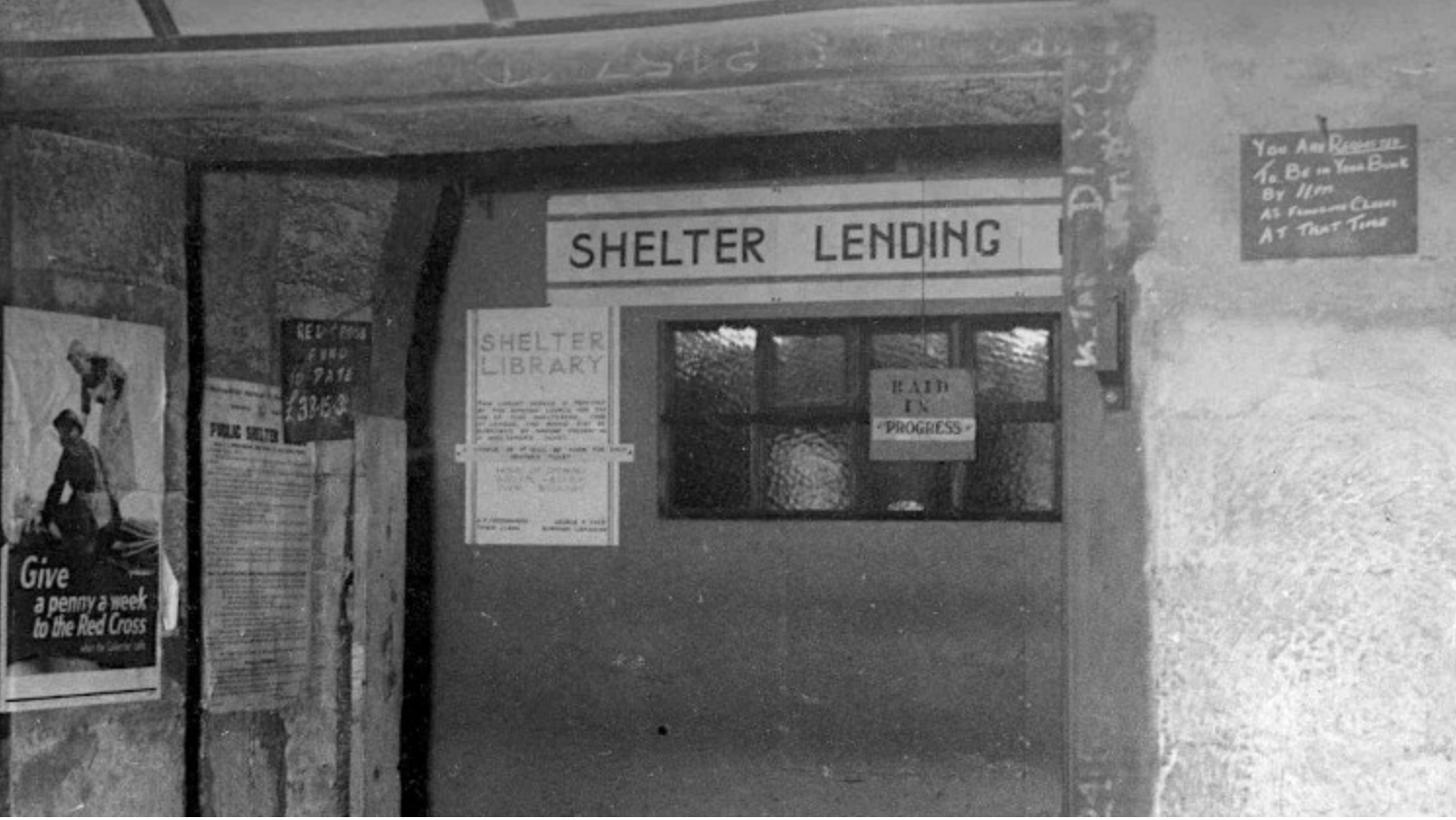
I thoroughly enjoyed this fictionalized history of the underground library at Bethnal Green tube station in London during WWII. The story follows three women during the early stages of WWII (~1940). Near the beginning of the London Blitz, the German bombs destroyed the large and beautiful Bethnal Green Library, necessitating its relocation underground.

Juliet Lansdown has just taken the role of Assistant Librarian, a role usually reserved for men (who were of course in short supply). Jewish Sofie Baumann has managed to obtain a visa to leave Berlin for London as a household servant — also in short supply and one of the few ways Jews could still get out of Germany and go to the relatively safe shores of England. Katie Upwood, a library assistant, finds out she is pregnant shortly after hearing that her beau is missing in action, presumed dead. Together these women, and the growing community taking to the tube station for nightly shelter, form a support system for the predominantly female cast of The Underground Library.

Jennifer Ryan always gives her characters a happily-ever-after which made it easier for me to read of a harrowing time without too much additional stress which I greatly appreciate. I loved the attention to historically accurate details of the age — the big hotels fixing up their cellars for dancing, the women in internment camps on the Isle of Man teaching each other skills, the treatment of unwed mothers, deserters, efforts at Jewish reunification, and the fact that universities, rather than close, started opening up to women while the men were away — Margaret Thatcher got her 1943 Chemistry degree from Oxford! I also always love Ryan’s characters and the way they work to make the best of whatever situation they find themselves in — usually through some wonderful friendships. All learning to take whatever joy is available to them and cherish it.

Ryan does differentiate where her fiction veers off from fact in the afterward, and she covered (almost) all of the points that I had noticed being off while reading. However, one thing that does slightly irritate me is that in addition to making a woman the heroine of making the library happen, she also makes the male head librarian someone who tries very hard to get in the way of it being a success, except when Juliet flatters him and basically offers to give him all the credit. In fact (according to wikipedia) it was a male librarian and his male assistant who worked hard to get the library moved underground and kept it going! I don’t mind her making the characters female, but I think it’s sad to make the male character a “bad guy” when he wasn’t (I don’t see the need to empower women at the expense of men). It could be that Ryan has more information than I do, but I wasn’t able to to find it.

If the story sounds familiar, that may be because this is the second book to fictionalize this WWII underground library this year. The Little Wartime Library by Kate Thompson covers the later years of the war and was also very enjoyable. For those interested in the real story, here is a somewhat personal accounting: https://www.historic-uk.com/HistoryUK/HistoryofBritain/Bethnal-Green-Tube-Disaster/. I’ve embedded a couple of photos in this post.

Thank you to Ballantine Books and NetGalley for providing an advance copy of this book in exchange for my honest review. The book will be published on March 12th, 2023.

No Crying in Baseball –The Inside Story of A League of Their Own: Big Stars, Dugout Drama, and a Home Run for Hollywood by Erin Carlson

A League of Their Own is one of my favorite movies. I’m sure I’ve seen it close to a hundred times. It’s funny, upbeat, and brings to light an easily forgotten piece of history with matter of fact detail that doesn’t slide into heavy handed territory. My daughter loved the movie so much she requested a trip to the Baseball Hall of Fame for her 9th birthday. This book is devoted to telling the “inside story.”

It’s a messy narrative, reading more like a super complete (and utterly engaging) set of IMDB trivia than a cohesive story, but if you loved the movie, you’ll love reading all of it: the incredibly drawn-out, complex, work of casting; Penny Marshall’s very insecure directorial style; her mega-lavish use of film (Kodak threw an expensive party for the cast and they don’t do that for every film!); the detailed history of women’s athletics over time and how that impacted the film, the crew, and the many, many, women who swarmed the tryouts for athletic extras.

I didn’t read through the copious notes at the end of the book, but Carlson basically took each topic and interviewed or studied interviews of cast, crew, friends, family, etc so that the reader gets an extensive set of viewpoints without the author sticking her own oar in too often. Everything from feminism to unaddressed lesbianism to all the hidden elements of making a film — so many personalities and so few of them easy. I found all the various bits of financial and creative control and the way individual contracts stipulated such to be quite fascinating. The in-depth baseball training and the injuries the actresses sustained (a broken foot, a broken nose, and that horrible thigh length bruise Shirley Baker sustained that was NOT makeup(!) really grabbed me.

All the details of making the movie were nested in a complete history of Penny Marshall from birth to death — which I had already read about in Marshall’s memoir but was still interesting (and accurate). I loved this one Penny Marshall quote: “I think my problem is that I have a massive insecurity complex combined with a very huge ego.” Seems to be accurate!

I was surprised by some of the information on women’s sports — I’m not even a little bit sporty so it was all new to me — the public attitude towards women in sports and the various excuses used to push them to softball, for example, when the top athletes were perfectly capable of playing baseball. The idea that women were physically inferior and unable to keep up certainly permeated my thinking growing up in the 60s. Being not sporty (at all) myself, I never challenged any of those assumptions. Add to that the idea that it would emasculate the men if they were included certainly didn’t help anyone. The parallel to this story is the story of women in Hollywood as they vie for a spot in this almost all female and female directed cast.

Very enjoyable reading especially if you loved (or even liked) this movie!

Thank you to Hachette Books and NetGalley for providing an advance copy of this book in exchange for my honest review. The book was published on Sept. 5th, 2023.

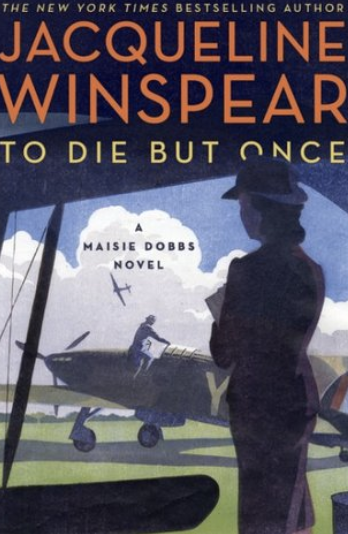
To Die But Once by Jacqueline Winspear (Maisie Dobbs #14 — Historical Mystery)

Somehow I missed this one episode of Maisie Dobbs even though I’ve read all of the previous and the three following. Argh! Thanks to my friend for mentioning it in passing…

This England based historical mystery series starts during WWI and by this episode is up to 1940. Maisie Dobbs — a psychologist and investigator trained by the best — is such a compelling protagonist. She is intelligent, articulate, discerning, careful in speech, and empathetic. I love that she always earns the respect of the various men in power (police detectives, senior military types, etc.) without ever resorting to “feminine wiles” or anything other than dogged determination and sheer, unquestionable, competence. Each book in the series includes a good mystery, but also a great deal of what it is like to live in such “exciting” times.

Maisie is asked to investigate the odd behavior and eventual murder of a young boy working with a paint crew to cover all of the RAF stations with a new (poorly tested) fire retardant paint in advance of the expected German invasion. In the afterward (Winspear’s afterwards are always worth reading as they include more information on all the historical fact that is embedded in the pages), we learn that this boy working with (and being damaged by) the new paint is based on her own father’s experiences. The Dunkirk miracle also plays a big role in this book. This is a WWII episode that I never tire of reading about. If ever there was an event that showed true community commitment to achieve the impossible, this is it.

This is probably my favorite historical mystery series, and this book one of the best!