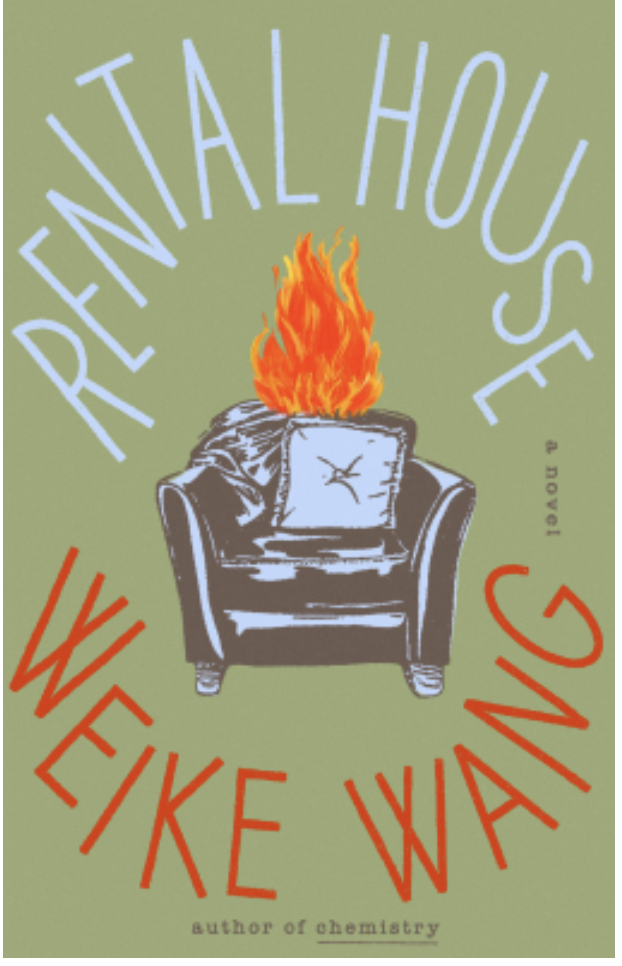
Rental House by Weike Wang (Literary Fiction)

Two vacations five years apart. A married couple from (very) different backgrounds invite their parents to join them for vacation number one.. Keru’s Chinese immigrant parents are post-Covid germaphobes with a suffering-suffused view of life, while Nate’s are outwardly friendly xenophobes from rural Appalachia. On vacation number two, nobody is invited … but some interesting people show up anyway. The whole thing is an incredibly perceptive description of what happens when people of multiple (and often conflicting) worldviews come together.

I read this shortly after reading Tamim Ansary’s “The Invention of Yesterday,” a book blaming most of history on the clashing of misunderstood worldviews (he’s not wrong). Rental House looks at this same problem at the personal level — clashing individual worldviews and the resulting problems and miscommunications. Keru’s observations and incisive analysis gets to the root of how we understand (or don’t) each other — what each person values, perceives, prioritizes and feels entitled to — things people often don’t take the time to understand even about themselves.

I found this to be a remarkably non judgmental book. The clashes developed across the board — political affiliations, race, socioeconomic class, choice of profession, and family expectations — but each person had both different opinions and different levels of investment in those opinions. Did the clash cause mild irritation or offend deeply held principles? Did one person try to understand another, or just get upset at how stubborn the other person was? Keru applied her analytic blade to herself just as often, noting when she may have overreacted to perceived slights, as an example. I appreciated the analytic vs emotional drive for understanding. Reading through someone’s pain allows an empathetic connection for the reader, but doesn’t teach anything about understanding why that someone is in pain, or how he or she (or the reader) might prevent similar pain in the future.

I like Wang’s writing style — clear, insightful, wry, and thought provoking. I also appreciate how thoroughly drawn her characters are — I feel I understand these people in ways that would take years in real life.

Just a few quotes — don’t want to give too many away :
“… An exercise that was like, shoving a square peg into a round hole, but with enough force, and with every neuron dedicated to the problem, he could smash the square peg through.”

“and this led to a heated discussion that characterized the early years of their dating – the aggressive comparison of their worldviews, which ultimately led to clarifications in their basic English vocabularies. Expats left wealthy nations to humble themselves at the altar of the world, immigrants escaped poorer nations to be the workforce of the rich. “

“…because suffering is required. To suffer is to strive and to set a bar so high that one never becomes an obstacle a a complacent. to become complacent is to become lazy and to lose one’s spirit to fight, and to lose one’s spirit to fight is to die. So, to suffer is to live. “

“Then his father chirped back a safe retort, next his mother, and Keru wondered if all white families in public acted like a set of affable birds.”

Thank you to Riverhead Books and NetGalley for providing an advance copy of this book in exchange for my honest review. The book was published on December 3rd, 2024.
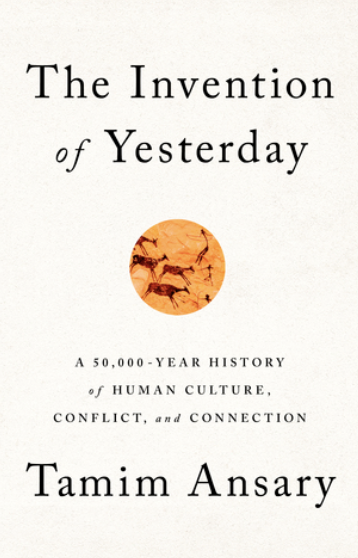
The Invention of Yesterday: A 50,000-Year History of Human Culture, Conflict, and Connection by Tamim Ansary (Non Fiction)

In this ambitious book, Ansary tackles 50,000 years (literally) of history with the thesis that pervasive narrative is the key driver of both cohesion and conflict. Narratives are the glue holding together the social constellations that give rise to culture. From stone age to digital age and beyond the singularity, he traces these narratives through giant hinge points such as the evolution of language, worldviews stemming from religion or ideologies, and methods of conquest and absorption. Why can’t we all get along? Because we are living in different worlds of meaning.

What I gained from reading this book is a much better understanding of the Islamic World, as that, of all the histories, is the one I know least about. Looking through his other books, I now wish I had read “Destiny Disrupted: A history of the world through Islamic Eyes” or “Games Without Rules,” a history of Afghanistan. His primary concept is (to me) not new, and does not really help think of solutions — I think we’ve known for a long time that we need to really understand the other in order to try to find some kind of compromise — and sometimes that is simply impossible. The way he tied global peoples and events across time was pretty interesting, though I found it often very high level.

There were a lot of small surprises (to me). Here are some of them (I have fact-checked some, but not all):
• North Americans didn’t develop the wheel because they had no tamable beasts (I don’t completely understand this since 1) a wheeled cart would be helpful to a person and 2) has anyone tried to tame a buffalo? I really don’t know.)
• Unlike the Western world, the Chinese had no tradition of jealous gods, demanding exclusive worship, so it was easier to absorb multiple narratives.
• Arabs were the (big) slave traders in East Africa, while Europeans became the traders in West Africa. Since Islam forbids enslaving Muslims, many conquered peoples decided to convert.
• Rome never fell, but did kind of get taken over by the conquered who had been given a path to citizenship through battle. More of the German tribes (German meant “barbarians who keep bugging us” — his words) ended up in leadership positions shifting things.
• Persians were OK with Islam but not with Arab superiority and so found an acceptable path by finding a Persian descendant of the Prophet leading to the Shia split.
• History of the development of the Caste system in India and description of why political fragmentation did not lead to cultural fragmentation there.
• The main Arab contribution around 800 CE was to catalog everything done elsewhere, e.g. medical knowledge. Their central project was the documentation of Sharia — the complete manual of how to be a Muslim. Meanwhile, the central project of the Western world was Science.
• Mongols brought bubonic plague to Europe from the Himalayan foot hills via fleas. In 1345 they lay siege to cities by catapulting diseased warrior corpses into the city.
• Movable type could handle the Roman alphabet better than Chinese pictographs. Arab writing also had something about it (he was vague) that made it more difficult.
• When Mongols took over China they tried to be Chinese, but their policies came from a different environment (e.g. water shortage in their home on the Steppes led to policies that discourage bathing in China)
• Systems based on patronage and relationships (Islamic world) vs commerce (western) and what that led to.
• Columbus “discovering” America led to one of the biggest hinges: — some estimates are that 90% (55 million) of people in all the Americas died — mostly of disease — after that “visit.” A catastrophe that dwarfs the Mongol hordes, the Holocaust, the Black Death, and both world wars.
• Tools and machines were as seminal as the acquisitions of language. Western social constellations could incorporate machines into their networks of meaning much more easily than the other large empires of the time.
• The Muslim narrative with its patronage networks and Sharia law did not have a way of turning inventions into products. The Chinese world with its dream of a socially cohesive centralized state operated by an all pervasive bureaucracy didn’t either. New technology had the potential for disrupting existing social arrangements, and in much of the world preserving existing social arrangements took precedence over building better stuff.
• Societies shaped by the progress narrative (ie the West) had an advantage not because of the tools, but because of the improvements and variations they kept building on the first.
• The invention explosion was the busy energy of all the entrepreneurial companies and corporations that got excited about making things happen

In summary — it was a long book and the ratio (for my personal background) of new ideas or information to number of pages was lower than I would like. However, the writing was accessible — it didn’t tend to get dragged into too much tedium — and I did learn a lot about the Muslim World. However, at this point I’m more interested in going back and reading the two books I mentioned at this beginning of this review. I did read (in 2007 so I unfortunately do not recall the details) his memoir of growing up in Afghanistan and then coming to the U.S. in high school. That was excellent!

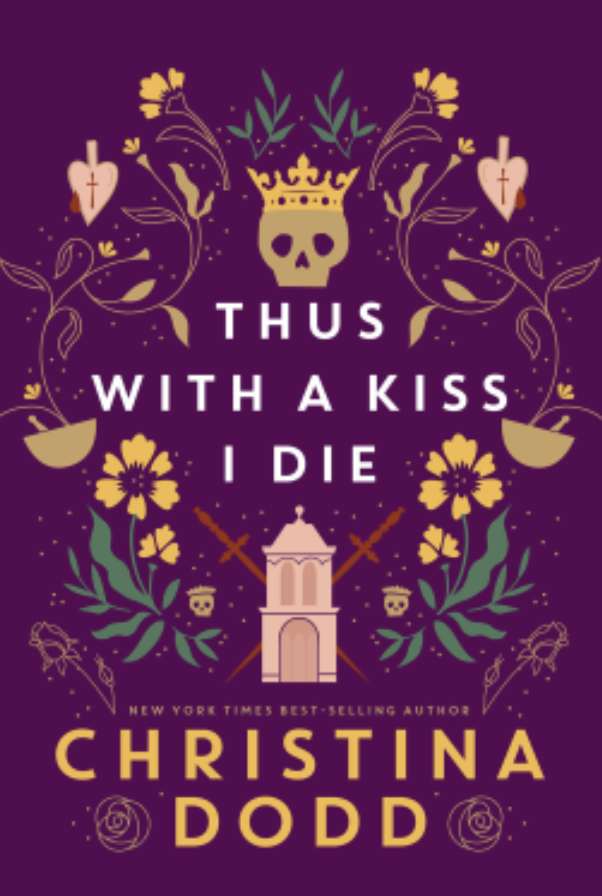
Thus with a Kiss I Die by Christina Dodd (Fiction)

Such a witty, clever, rom-com / adventure story / alternative Shakespearean fan fiction … not sure what to call it but it is thoroughly enjoyable. This is the second book starring Rosaline, the eldest daughter of the very much alive (as explained in book one and reiterated here) Romeo and Juliet. She is a very strong female character — much aware of her expected place in society (the focus on her virtue aka virginity is endlessly irritating), but not terribly affected by it. The Montague home is full of love (and the offspring of love — plenty of children) while Romeo is still one of the best swordsmen in Verona. As the story opens, Rosaline has been tricked into a betrothal with a scarred Prince (don’t let the scarring worry you — he’s a good guy) and while at the castle visiting her betrothed with the whole passel of Montagues, she is treated to a visitation from the Ghost of the murdered King who needs to know the identity of his murderer.

Whip-smart dialog, appealing and saucy characters, a twisted plot, and a pretty decent interleaving of romance, whodunit, and thriller style adventure scenes (featuring parapets!). For those Shakespeare purists who wince at the idea of the mauling of the master, I’ll hasten to say that the Shakespearean characters ring true to their initial depiction, with the only shift being their trickery of death.

Well done and plenty of fun. I look forward to future episodes!

Thank you to A John Scognamiglio Book and NetGalley for providing an advance copy of this book in exchange for my honest review. The book will be published on June 24th, 2025.

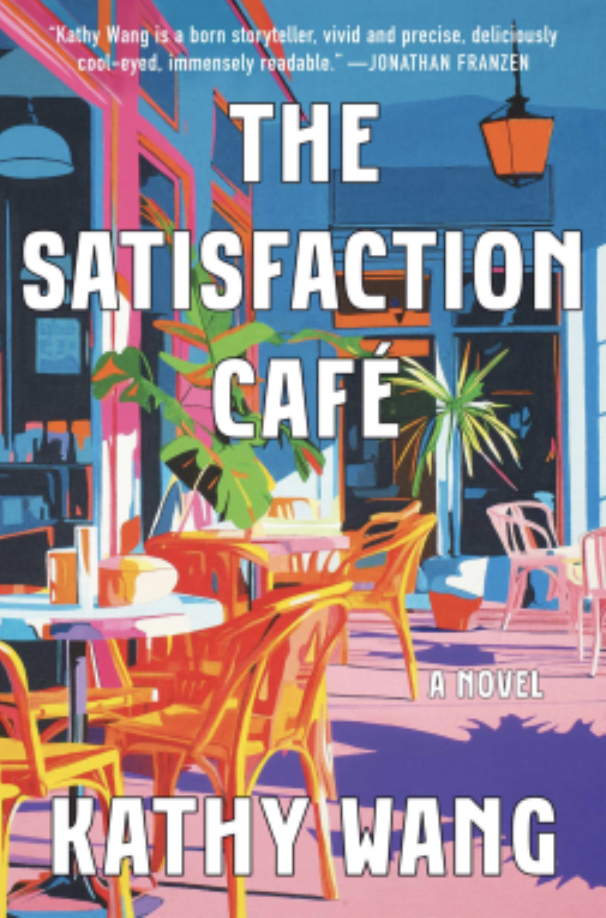
The Satisfaction Cafe by Kathy Wang (Fiction)

Joan’s whole life — from Taiwan to California, through relationships and motherhood, to a late-life plunge into a unique business — surprises her. In this life story, told in a blunt manner free from the kind of artifice that filters most of the stories we read and hear (dare I say personal branding?), we follow her as she learns what is important, accepts what she needs to, and continues in her search for satisfaction and meaning. I love her voice and the honesty with which she contemplates the life she is leading — it is remarkably free of hand-wringing, self-flagellation, and other neuroses which seem to plague a lot of modern novels (IMHO).

I enjoyed the variety of ways opportunities (the surprises) arose. Some were serendipitous; some were created by Joan herself, through personal will; some were the roads not taken, which gave rise to regret, but also reflection and growth. In many ways, I felt that this book followed a whole life arc, rather than a narrative one. I really liked the concept behind the Satisfaction Cafe — a place where people go to be heard and understood — and I equally enjoyed the full process that took her there. But mostly, I liked it for the reason specified by the last line of the marketing blurb: “Vivid, comic, and intensely moving, The Satisfaction Café is a novel about found family, the joy and loneliness that come with age, and how we can give ourselves permission to seek satisfaction and connection at any stage of life.”

Thank you to Scribner and NetGalley for providing an advance copy of this book in exchange for my honest review. The book will be published on July 1st, 2025.

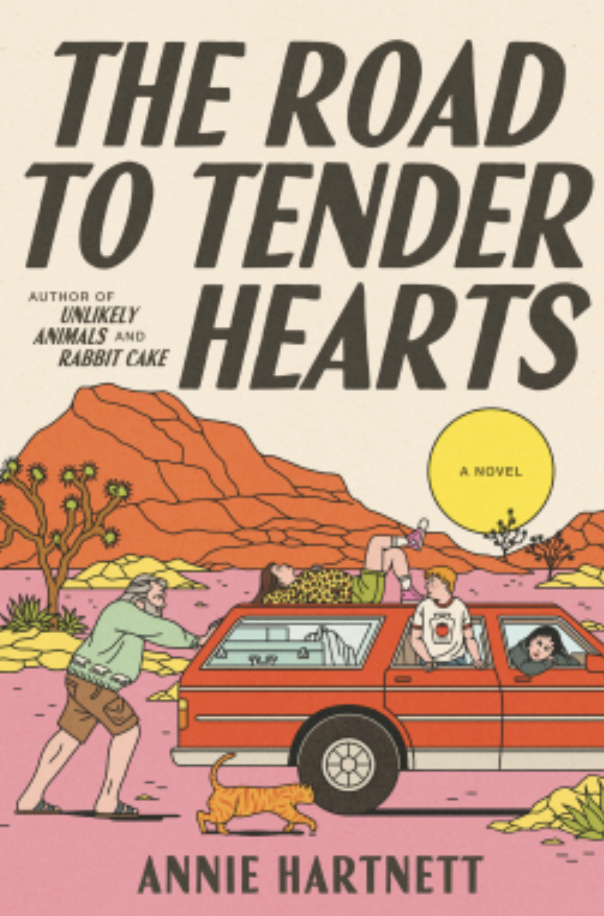
The Road to Tender Hearts by Annie Hartnett (Literary Fiction)

I was a big Annie Hartnett fan and after reading this book I am a bigger fan!

The very first line: “Things were falling apart at the nursing home in Pondtown, a small town in the armpit of Massachusetts,” was quickly followed by the introduction of my favorite character — Pancakes the cat — with his affinity for those whose (sometimes surprising) deaths are on the Grim Reaper’s schedule. And that was it — I was hooked.

A cast of characters: PJ, a lottery winner who has succumbed to alcoholism after the death of a daughter; Sophie, his other daughter who has developed a healthy distrust of him as a parental figure; Luna and Ollie, two youngsters suddenly orphaned in not the healthiest way, suddenly dropped in PJ’s lap; and the aforementioned cat. All set off on the world’s weirdest road trip chasing a fantasy paternity prospect and an equally fanciful long lost love prospect. While each character is a little broken, this only tugs the heartstrings in what turns out to be a positive way. Great dialog, wild and wonderful storytelling sprouting from memories and passed down tales, and some atypical (understatement) attitudes toward life and death.

Thank you to Ballantine Books and NetGalley for providing an advance copy of this book in exchange for my honest review. The book will be published on April 29th, 2025.

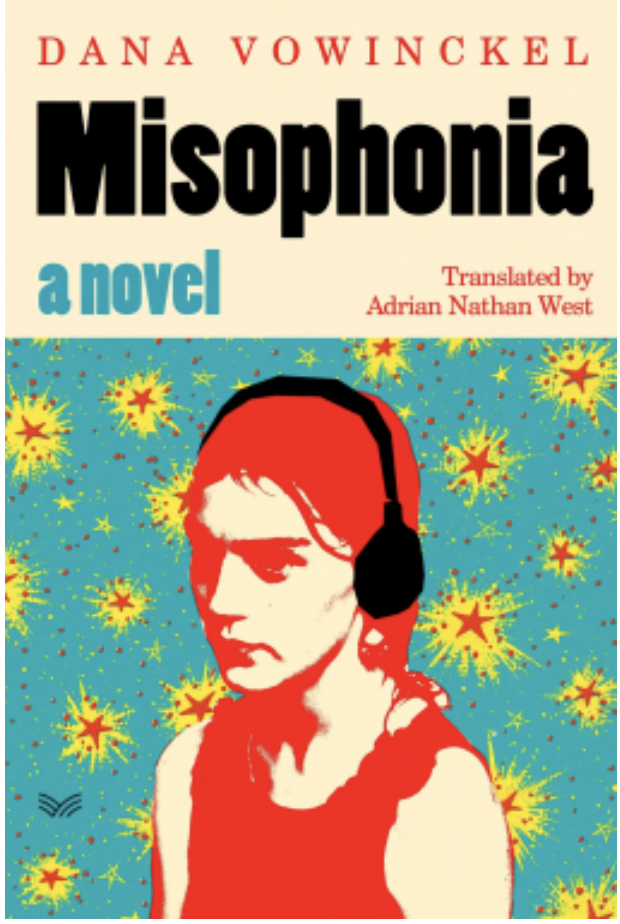
Misophonia by Dana Vowinckel (Literary Fiction)

Part coming-of-age story and part family dynamics, this is the story of an unusual family. Avi is an Israeli born and bred Cantor in Berlin living with his 15-year old daughter Margarita. Her American, linguist mother, Marsha, lives in the U.S. and has little involvement with Margarita to this point. The action takes place in Germany, Israel, and Chicago, where Margarita spends time every summer with her maternal grandparents. While there, Margarita is heavily pressured to go to Israel to stay with her mother who has a summer Fellowship to study Yiddish and Arabic as “oppressed minority languages.”

This is a translation from German, and the prose feels very German to me — methodical depictions of action, thoughts, individual insights, and development — very organized. The opposite of stream-of-consciousness and relaxing for my structured brain. What wasn’t particularly relaxing was the extreme depth of the exposure to the inner turmoil of troubled characters. Margarita’s story becomes cringeworthy in the way that only a particularly astute description of a teenaged girl’s inner struggles can be. The pressures — both internal and external — of being Jewish in multiple contexts (e.g. in Israel, Germany, or America) is thoroughly explored to the point where the reader is completely immersed in the religion from multiple viewpoints, and the impact of Jewish people dwelling within these contexts — much of which is exposed as the revelations different characters have as they develop through the story. I found all this extremely eye-opening, despite the fact that these are topics I’ve read a lot about. There are some absolutely beautiful comments about faith and ritual and Jewish Philosophy. Some very interesting thoughts about how context shapes children as much as their parents do, and how this can cause friction and non-understanding between them.

In the acknowledgements, the author explains that she worked on the novel the year before the events of Oct 2023 so the huge impact that the Hamas massacre had on Israel and the rest of the world is not a part of the story, though I noticed that you can see some hints in a few of the attitudes of some characters. I can’t say that I enjoyed reading this book — the characters are dysfunctional — not in a hopeless or upsetting way, as they are all working to figure things out and improve themselves and their lives, but in a painful way to read. However, I am very glad I read the book and feel like I gained some fresh understanding of the lives of people very different than myself (which is big part of what I look for in my reading).

Thank you to HarperVia and NetGalley for providing an advance copy of this book in exchange for my honest review. The book will be published on May 6th, 2025.