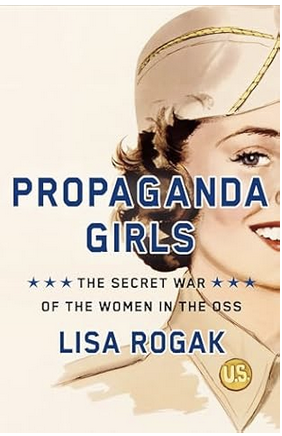
Propaganda Wars: The Secret War of the Women in the OSS by Lisa Rogak (Non Fiction — History)

Propaganda Girls follows the lives of four women who worked in WWII’s OSS spinning propaganda webs that demoralized the enemy and helped speed the war to an end. Taking place in the European theater, behind enemy lines in occupied China, and in Washington, D.C., the story follows each of the women from her recruitment, through her placements and work, through her post-war life. The women: Marlene Dietrich — well known German actress who worked non stop for the effort; Betty MacDonald (NOT of Mrs. Piggle Wiggle fame) — the women’s editor in the Oahu paper, one of the first on the ground during Pearl Harbor; Jane Smith-Hutton — wife of a Naval Attache, fluent in Japanese, and held with her family for six months in the Tokyo American embassy after Pearl Harbor; and Barbara (“Zuzka”) Lauwers, a Czech national polyglot married to an American, who worked the European theater.

Each got into the work wanting to do something more for the war — and also wanting to do all that they were capable of doing, rather than living the traditional life available for most women. The story was full of details of life in that time period, the actual strategy and implementation of a propaganda war, and the (often ignored) contributions women made.

So many details were fascinating: The weird training they went through, details on procuring the exact right kind of papers, inks, and using the current language idioms. The arrays of people who had to be recruited with special skills. One story told of an innovative propaganda delivery system — condoms born up and stuffed with a pamphlet that could float across the water. The strategy for determining targets, fake stories, and deployments. How to deal with targets who were not actually literate. Special issues in places like India with hot, ink-melting climates and irregular electricity. But my favorite was a description of the “manual” face lift Marlene Dietrich had to undergo before filming, a kind of elastic pulling of her face, bound back into her hair. Painful and not permanent!

Part personal story, part full program debrief, the book was readable, entertaining, and enlightening.

Thank you to St. Martin’s Press and NetGalley for providing an advance copy of this book in exchange for my honest review. The book was published on March 4th, 2025.
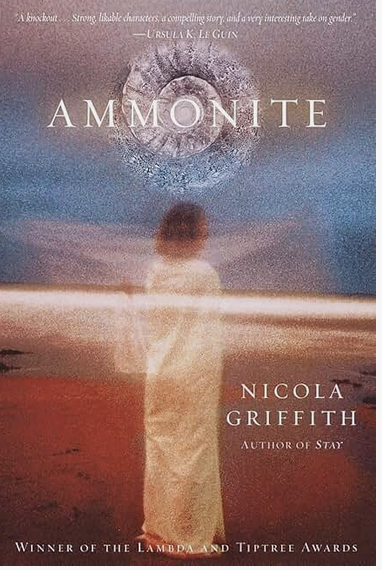
Ammonite by Nicola Griffith (Science Fiction)

A surprisingly engaging sci fi story about an anthropologist sent to a planet that is host to a terrifying virus that kills all men and most women. A guinea pig for a new vaccine which should prevent her from catching it, Marghe gets to the planet and quickly leaves the tightly guarded military post in order to meet the natives who have somehow survived the virus and inexplicably managed to procreate in the absence of any men.

There is plenty of action and the “secrets” of this world are slowly revealed. There is a bad “Company” who cares far more about profits than people, but happily (for me) the Company really only appears as necessary to nudge the plot a bit. Far more focus on the evolving culture of the planet and its all female inhabitants.

The author mentioned in her notes that she was sick of books that generalized males or females to be all of one kind — aggressive males, nurturing females blah blah blah. She wanted to create an all female culture that had as many variations among its populace as it would have with two sexes. She did a great job. I appreciated how this all female world evolved without having to have any anger at or fighting with men. They just were irrelevant to the story.

I’m surprised that I enjoyed this as much as I did —I think the character and culture centric nature of the speculation is what did it. I really do get bored with pure action 🙂

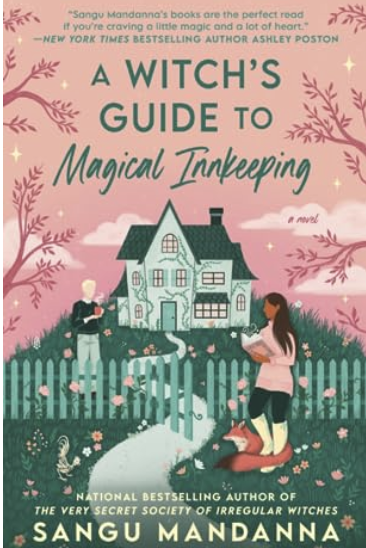
A Witch’s Guide to Magical Innkeeping by Sangu Mandanna (Happy Magic Fiction)

I loved this light, uplifting, quirky and unashamedly magic book, just as I did her previous book “The Very Secret Society of Irregular Witches.” Sera Swan is a young and powerful witch who resurrects her recently dead great aunt (a big no-no) and is stripped of her magic and guild membership. Reduced to managing the highly and eccentrically enchanted Inn, she tries to find her magic again with the help of an oddball collection of Inn denizens — a scheming witch trapped in a fox body, a geriatric oddball and part time Hobbit, a would-be knight in somewhat shiny armor, some undead rooster bones to name a few. It’s really about family, doing the right thing even when it hurts, understanding your own vulnerabilities and shifting life goals. I was very impressed with that last bit — there aren’t many real happy ever afters in the world, but by understanding what is actually important you can be awfully darn happy (A Rolling Stones song comes to mind…)

Thank you to Berkley and NetGalley for providing an advance copy of this book in exchange for my honest review. The book will be published on July 15th, 2025.

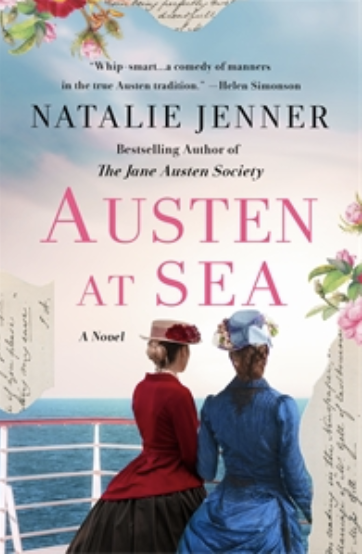
Austen at Sea by Natalie Jenner — Read by Rupert Graves (Historical Fiction)

An enthusiastic five stars for this marvelously fulfilling piece of historical fiction. The story manages to be both intellectually rich and emotionally pleasing. My perfect blend! In 1865, two daughters of the long-widowed Massachusetts Supreme Court Justice pen a daring request to the only surviving brother of their favorite author — Jane Austen. Meanwhile, two Philadelphia book collectors have similarly engaged with Admiral Austen about Austen memorabilia and editions. On the side, the Justices of the Massachusetts Supreme Court have elected to read and discuss the entire Austen oeuvre over the very summer break that sees the four correspondents heading off to England. Their discussions are completely engrossing, putting into dialog multiple well crafted opinions and surprising me with their depth. The story itself takes the reader from Boston, across to the sea to Hampshire, and concludes with a courtroom drama spectacular spanning both countries.

On the surface, this could pleasurably be read as an engaging comedy of manners a la Austen herself, with the delightful development of surprising relationships etc. But under the tip of the romantic iceberg lies the depth, thoroughness, and insight of the literary, political, legal, and economic contexts of the time period. Equality, justice, freedom — these are topics on everyone’s tongues during the post-Civil War recovery period, the still relative newness of the United States, and the current battles in both locations for various forms of women’s rights (including, but not limited to, women’s suffrage). These issues are brought out with a number of different techniques. Those discussing Austen’s works have literary discussions about her characters, their roles, purposes, desires, and life lessons. Women’s rights are addressed (and argued) through a fascinating panoply of laws, Acts, and jurisdictions — exemplified by the situations and experiences of the various characters. It’s obvious to us today (I hope!) that women should have rights equal to those of men, but to hear the completely sensical arguments and rebuttals on both sides of the issue during that time period by people who were not inherently “evil,” was deeply interesting.

I both read and listened to this book. I actually preferred the audio in this case. It slowed me down enough to actually listen to different viewpoints and consider them carefully — I usually read too fast and often miss important details. Rupert Graves is the reader — a wonderful actor with a beautiful reading voice. I learned a lot about Austen’s life and her works (despite the fact that I’ve read each multiple times) and enjoyed a wide array of references from that time period — including Louisa May Alcott who appeared in a delightful cameo role. The cast of characters at the start of the book is quite helpful.

Highly recommended.

Thank you to St. Martin’s Press, Macmillan Audio, and NetGalley for providing an advance copy of this book in exchange for my honest review. The book will be published on May 6th, 2025.

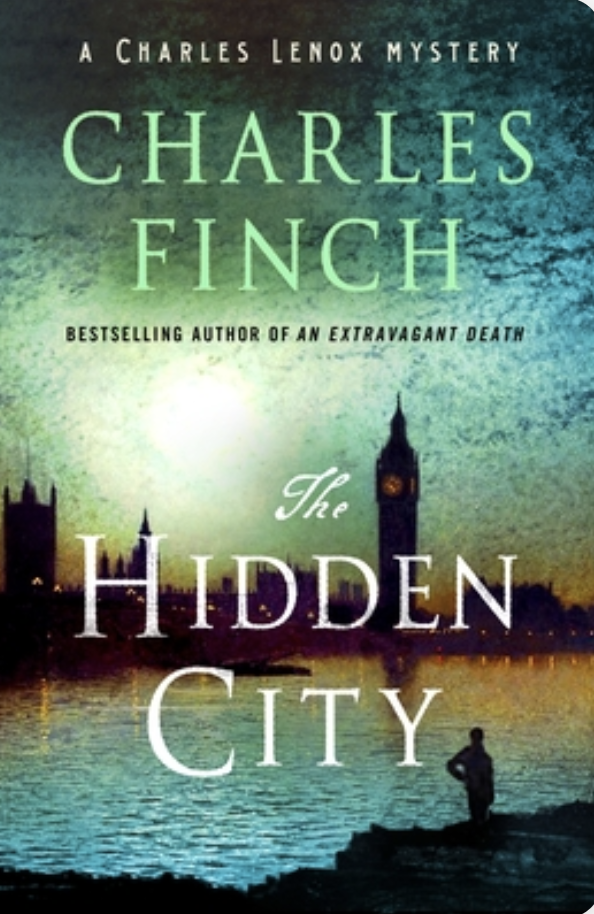
The Hidden City by Charles Finch (Historical Mystery)

Number 12 in this historical mystery series, but number one for me. Regardless of not knowing the history of the characters I was able to follow the story very well. I would definitely categorize this as a “cozy” as there were no “thrilling” (i.e. terrifying for the reader) scenes to get my anxiety going. Fine by me! Interesting that as a cozy written by a man, there was less filler of the tea parties and gown description types (also fine by me) but plenty of historical detail about the Victorian Age in which the stories are set. This included plenty of social as well as policy / political commentary. I particularly enjoyed the description of various “guilds” (known here as “livery companies”) started in medieval times — all styled as the “Worshipful Company of xxx.” Tickled me. Some good bits on women’s suffrage and the complete injustice of the treatment of London’s “lower classes.” This particular episode felt like more of a novel than a mystery, although there was a mystery obviously (old murders just tied together with a current threat to someone living in the house where one of them occurred). I quite liked the characters and will likely go back to number one and see how things progress!

Thank you to Minotaur Books and NetGalley for providing an advance copy of this book in exchange for my honest review. The book will be published on November 4th, 2025.

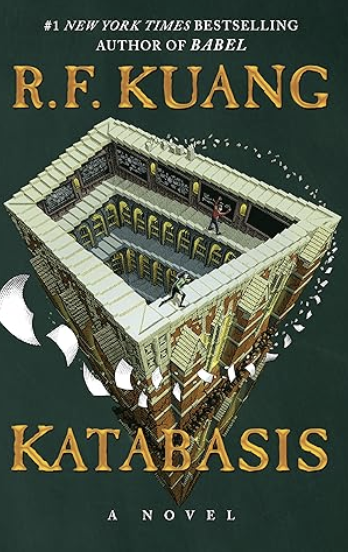
Katabasis by R F Kuang (Speculative Fiction)

Plot: 3/5 Writing: 5/5 Characters: 4/5
When a Magick goes awry and her brilliant and cruelly demanding professor is dispatched to Hell in a particularly gruesome way, Alice Law follows him in an attempt to bring him back to Oxford, guided by ancient texts, paradoxical logic puzzles, and esoteric mathematics. Accompanied at the last minute by fellow magician-in-training wunderkind Peter Murdoch, the entire story is their “Katabasis” — the Hero’s journey into the underworld.

Kuang’s writing is always spectacular with vivid imagery, twisting plots, and an impressive inclusion of scientific, philosophical, and classical arcana woven together into a complete and warped world. It is one long adventure story — surprising in its twists and turns — but still a one-threat-after-another adventure story. Far too much for my taste. The characters had depth — but IMO with far more focus on the neurosis of genius and susceptibility to manipulation, and the (way too) slow unpacking of that neurosis to expose self knowledge and latent interpersonal gains. I am a huge fan of both “Babel” and “Yellowface” but I can’t say I enjoyed this book. I do think it will appeal to those who love adventure stories and are perhaps more interested in the kind of self discovery one makes in their twenties.

Thank you to Harper Voyager and NetGalley for providing an advance copy of this book in exchange for my honest review. The book will be published on August 26th, 2025.

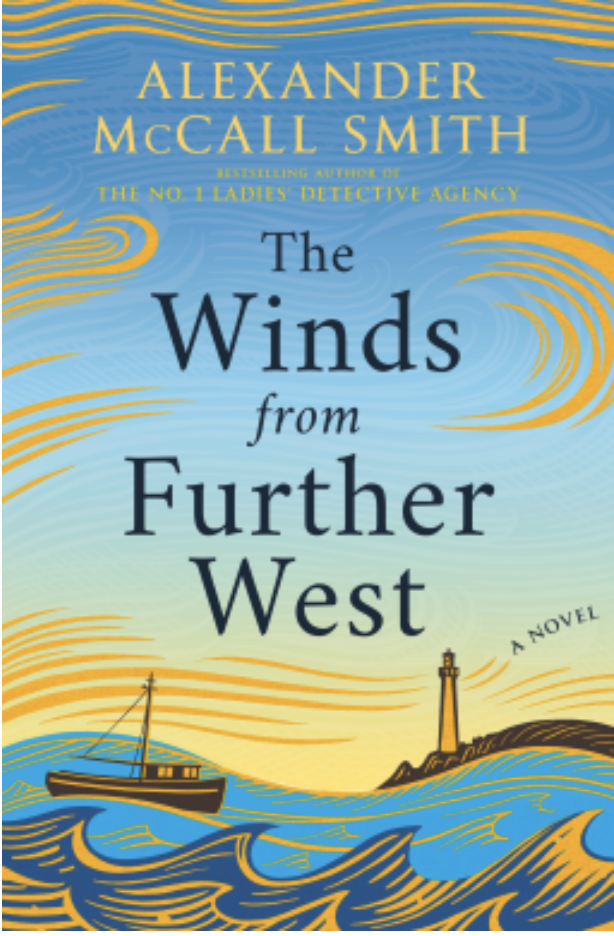
The Winds from Further West by Alexander McCall Smith (Literary Fiction)

In this new, standalone novel, McCall Smith takes on the ethics and responsibilities of those caught up in cancel culture — including the perspectives and calculations of those willing to play along (on either side) for personal gain. We follow Neil, a University of Edinburgh public health lecturer and researcher, as he is accused of making an “insensitive” comment and is asked by an unscrupulous dean to apologize regardless of guilt. I’ll hasten to say that McCall Smith does not allow the book to slide into a Kafkaesque nightmare from which our hero cannot emerge unscathed (I almost stopped reading when I thought it was going in that direction). Instead, he focuses on how people react to “life experiences” such as these and how they can be used to further self (and world-at-large) awareness and growth. I found it insightful and inspiring.

I love that McCall Smith always brings the ethics of big social trends into how they play out in individuals. The book is full of pithy commentary as to the state of the world (or one’s university!) and one’s role within it. His characters are always interesting — one is caught reading a book called “A Brief History of the Smile.” Others contemplate and discuss such random (but IMO engaging) topics such as a recent theory about Neanderthals, people vs. microbes, the use of shaming in society, and as always, a lovely collection of quotations from (mostly Scottish) poets (my favorite is Auden’s line: “If equally affection cannot be, let the more loving one be me.” It made me cry. I also loved the discussion (minor argument?) about the democratization of science — while Neil’s girlfriend feels teachers should be less didactic, Neil points out that Bernoullis equation is not an opinion.

Honestly, I have loved almost all of McCall Smith’s books and really can’t believe he hasn’t run out of philosophical musings and expositions after all this time. Every book seems to cleanly dissect complex problems into clear and concise points to help you thread through them.

Some of my favorite quotes:
“One had to become indifferent to the things you could not do anything about, unless you were prepared to let them hurt you indefinitely.”

“He, and people like him, might do a little to change the basic rules of engagement between human beings and microbes, but here and there, in small corners of the battlefield, they achieve their largely unsung victories. And in the background, their research, sometimes painfully slow and seemingly entirely theoretical, built up the human armory against microbial defeat.”

“People say that the thing about poetry is its power to haunt.“

“The world’s in a sorry mess. People put so much energy into finding fault with others, with attacking them, with calculating personal advantage, with … with all of those things. We’ve broken the bonds that exist between us, with the result that we are all potential enemies of one another, locked in mutual suspicion and distrust. And do you know what? I’ve had enough of it, I can’t bear to be part of that any longer.”

Thank you to Pantheon and NetGalley for providing an advance copy of this audio book in exchange for my honest review. The book will be published on July 29th, 2025.

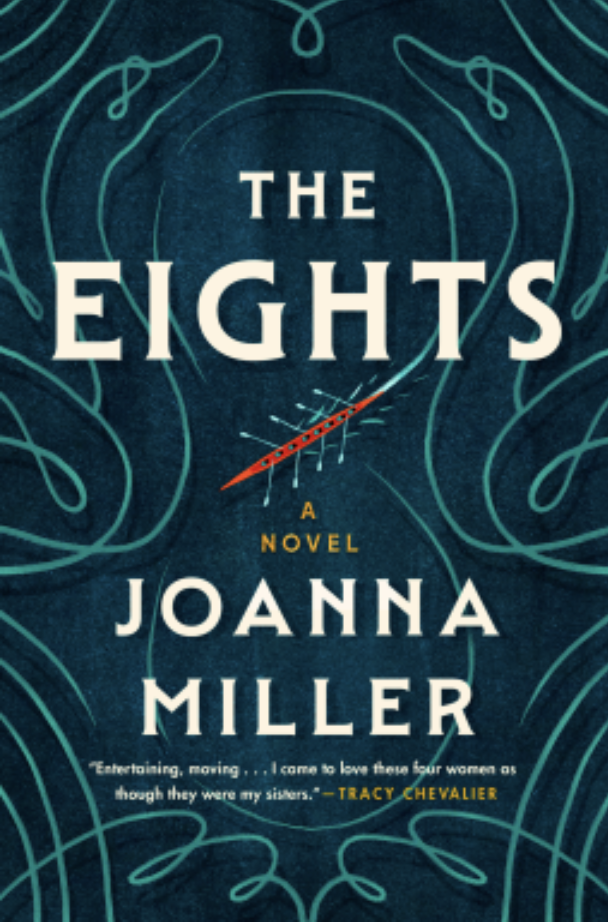
The Eights by Joanna Miller (Historical Fiction)

Historical fiction at its best! Four women are part of the historic 1920 matriculation of women to Oxford — the first in over 1,000 years. Roomed together in “corridor eight,” this is the story of their first year, with several flashbacks to flesh out their personal context. Beatrice Sparks — almost 6 feet tall, daughter of a famous (and vigorous!) suffragette, with an appetite for politics; Marianne Gray — the motherless daughter of an English vicar; Dora Greenwood — beautiful and still grieving for the brother and fiancee who died in the war; and Ottoline Wallace-Kerr — wealthy and at odds with her family’s expectations, who keeps herself calm with mathematics. There are some secrets and some surprises — all quite realistic and perfectly embedded in the well-drawn context of the time. And for the girls, a discovery of unexpected, but deeply felt, friendship.

I say this is historical fiction at its best because it finds the right balance between the extremes of dull, historic, facts and overly sensationalized (and manipulatively emotional) story telling with a minimum of historic accuracy. There are no modern sensibilities sneaking in — but plenty of individual reactions and experiences nestled in the very real context of the day. The country had just emerged from WWI, (some) women had just gotten the vote, and now — Oxford was open to women who wanted to pursue a more intellectual path through life. I loved the many small details that peppered the prose: a new mystery author — Agatha Christie — who was set the challenge to write a novel where it was impossible to guess who did it — and succeeded; the introduction of ouija boards; stories of the Bodlein library and how the rare books were protected during the war; the second wave of influenza; the origin of Chequers (home to Britain’s prime ministers); practice trenches in the countryside; suffragette pennies, etc. A pretty interesting Oxford-style debate on whether or not women should be at Oxford at all. I loved the bits of discussions on various studied subjects. The secondary impact of the war on various people after the war was over was equally interesting — more personal, individualized, and detailed. Philosophical and ethical issues pervaded the experiences because how could they not?

I like historical fiction because, when done well, you learn about what history might have meant to the people who lived through it. The author’s note delineates fact from fiction as well as describes inspirations — with a nice bibliography on relevant sources. Also — there is a glossary at the end that I really wish I had known about before I finished! Plenty of period specific slang was used that I had to constantly look up or guess at. Now you know!

Thank you to G. P. Putnam’s Sons and NetGalley for providing an advance copy of this book in exchange for my honest review. The book will be published on April 15th, 2025.