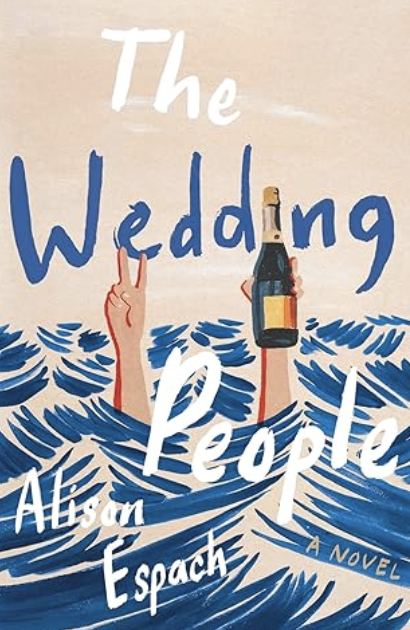
The Wedding People by Alison Espach


When life gets to be too much — the last IVF failed, her husband left her for another woman, and her beloved cat has died — Phoebe decides to go off to a luxury hotel, armed with her cat’s painkillers, and end her life. However, the hotel is hosting an over-the-top wedding and the bride refuses to let her big day get spoiled with a suicide! Phoebe is sucked into the wedding celebrations and emerges on the other side with a brand new attitude towards life.

This book is well-written and FUNNY. While there are obviously some depressing bits (see aforementioned suicide triggers), Phoebe is intelligent and wry and seems to be able to engage with the best in people. The situation is not too realistic, but the lessons learned are. This is a fun book — funny, insightful, and completely uplifting. I read this in a day and a half and felt happy the whole time. This isn’t news, but the quality of the writing has a huge impact on whether or not I like a book, and this one is a couple cuts above your average rom-com. Makes all the difference.

I hadn’t heard of Espach before, but I’m adding her to my feel-good / rom-com list.

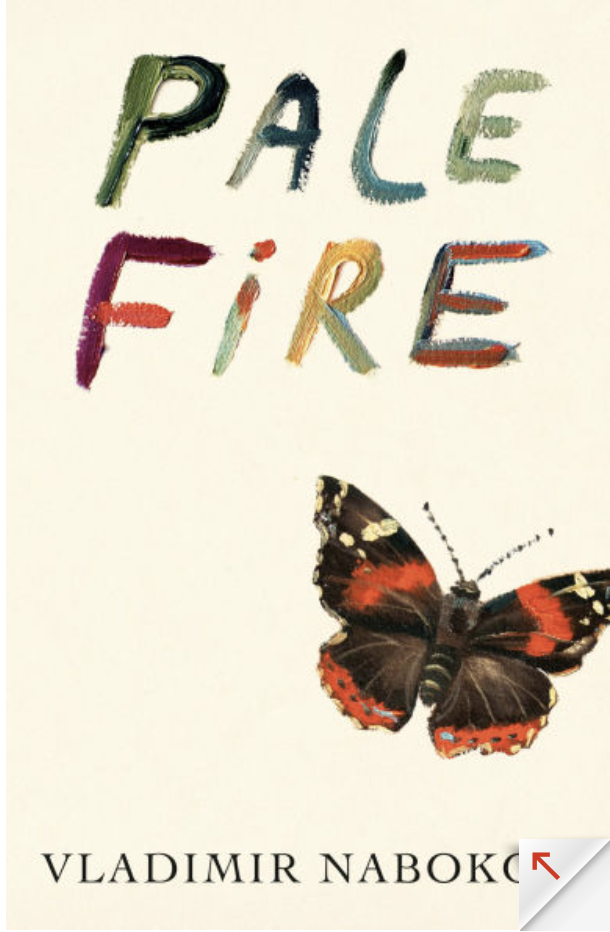
Pale Fire by Vladimir Nabakov (Literary Fiction)

After plowing through this book, reading some online explanations, and having a discussion with other literary fans, I can honestly say that I think this is a masterpiece of literature but not terribly fun to read. The book comprises an introduction, a 999 line poem, and a (very) lengthy, almost line-by-line commentary about the poem.

The poem is written by John Shade, while the introduction and commentary is written by the character Kinbote. Kinbote is the epitome of an unreliable narrator, but that’s OK because what narrative there is is buried in fits and starts within the commentary. While it may seem like “cheating,” I did read a couple of summaries that helped me frame the basic premise my structure craving brain required to make any headway. I won’t include anything here in case you are a firm non-peeker, but know that it can help. Suffice it to say that nothing is what it seems, and the hints to what might be reality are all included but told through the perspective of a madman and only dribbled out in disjoint segments. And yet, it is beautifully done. The writing is incredible (see some quotes below) and the vocabulary … I love words and have (I think) a pretty good vocabulary but the non-native speaker Nabokov blew me away. Just a few of the new (to me) words: Orbicle, Nacreous, Quiddity, Bimanist, stillicide, Ephebe, Pudibundity, Maculation, Architectonically, Trochee, Goetic, Contrapuntal, Perlustration, Selenographer, Versipel, Ament. Life is so much easier when you can look them up on your phone without getting out of the chair!

If you appreciate intricate, highly complex book structure, love beautiful language, and understand that the plot isn’t always the point, this is the book for you!

Quotes:

Alas, my peace of mind was soon to be shattered. The thick venom of envy began squirting at me as soon as academic suburbia realized that John Shade valued my society above that of all other people.

His misshapen body, that gray mop of abundant hair, the yellow nails of his pudgy fingers, the bags under his lusterless eyes, were only intelligible if regarded as the waste products eliminated from his intrinsic self by the same forces of perfection which purified and chiseled his verse. He was his own cancellation.

Nevertheless the urge to find out what he was doing with all the live, glamorous, palpitating, shimmering material I had lavished upon him, the itching desire to see him at work (even if the fruit of his work was denied me), proved to be utterly agonizing and uncontrollable and led me to indulge in an orgy of spying which no considerations of pride could stop.

I notice a whiff of Swift in some of my notes. I too am a desponder in my nature, an uneasy, peevish, and suspicious man, although I have my moments of volatility and fou rire.

And moreover [he said] we, whites, are not white at all, we are mauve at birth, then tea-rose, and later all kinds of repulsive colors.

All the seven deadly sins are peccadilloes but without three of them, Pride, Lust and Sloth, poetry might never have been born.

And let me add here how much I was honored a fortnight later to meet in Washington that limp-looking, absent-minded, shabbily dressed splendid American gentleman whose mind was a library and not a debating hall.

Resemblances are the shadows of differences. Different people see different similarities and similar differences.

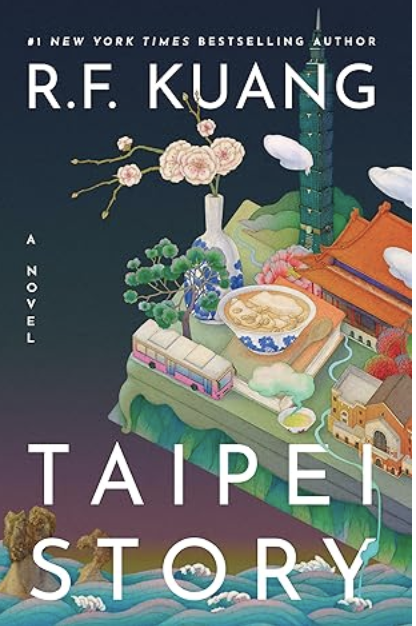
Taipei Story by RF Kuang (Literary Fiction)

College freshman Lily Chen heads to Taipei for a summer Chinese language intensive. Having only retained the Chinese she spoke before leaving the mainland for California when she was four, she hopes to both improve her skills and get closer to the heritage that never really felt like hers. It’s a grueling and isolating experience — and when her grandfather dies in Guangzhou and she is unable to attend because she hadn’t procured a mainland visa, she achieves a whole new level of reflection about what heritage and culture really mean to the emigre.

What could be a straightforward coming-of-age story becomes something else completely in the hands of the stunningly talented Kuang who layers meticulously detailed observations with deep and evolving reflection and multi-dimensional insights. We learn about Chinese culture, politics, and history from the subjective viewpoint of our shy, thoughtful, possibly overly analytic young woman. Following her train of thought is half the fun of taking in all that she learns from the experience — all coalescing into the gestalt that is an individual.

The story spans personal experiences (some so honest as to be cringeworthy for me) as well as uncovering some fairly horrific stories from her Chinese ancestors (think Khmer Rouge) — stories nobody had ever told before. What parts of history do you integrate and what parts better left alone? I also loved the focus on linguistics — obviously an intense interest of the author. She goes into just the right amount of detail about how language affects our thinking, how difficult it is to communicate anything even slightly complex without the grammar, vocabulary, and structure available to native speakers, and how she worked to reprogram her brain to be able to speak and read more or less seamlessly.

This is billed as a novel but it felt like an incredibly well-written memoir to me. In any case, I enjoyed every minute of it!

Thank you to William Morrow and NetGalley for providing an advance copy of this book in exchange for my honest review. The book will be published on September 8th, 2026.

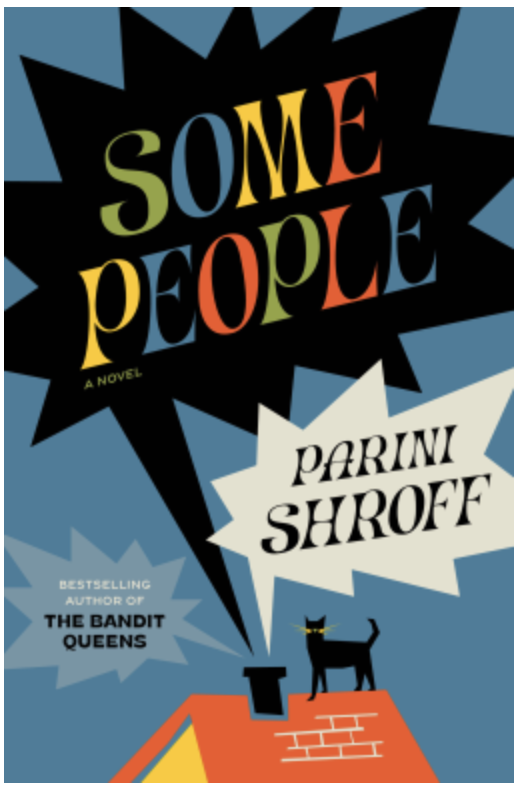
Some People by Parini Shroff (Literary / Multicultural Fiction)

Loved this book. Nathan — a crusty, hyper rational type with “minimal emotional amplitude” — is called to the bedside of Malta, his soon-to-be-ex mother-in-law (no love lost there!) when a bad fall lands her in the hospital. While neither is particularly happy with the new arrangement, Nathan has committed to moving in to help until Malta can care for herself as Kavya, Malta’s daughter (and Nathan’s soon-to-be ex-wife) is in India on a two year study program.

What follows is humorous, insightful, and almost like an unraveling mystery — but the kind of mystery based on the more difficult question of how to really understand another person (dead bodies are easier to deal with!). While untangling the relationships is the primary theme, I also enjoyed the constant cross-cultural commentary. Malti is outspoken and somewhat acerbic as she expresses her (usually negative) judgement of others. A common refrain at the end of several conversations is “Some People…” I found myself (of course) judging each of them as they worked through their mutual misunderstanding and was quite surprised by some of the perceptions. As an example, Nathan is great at fixing things and wants to fix the (many, many) broken things around Malta’s house. But Malta tells him that she takes this as an implicit criticism of her and the way she lives. To me that is crazy, but how interesting that someone could actually feel that way! Plenty more of that kind of perception war in the pages.

The writing is expressive, with clear descriptions of abstractions that aren’t always easy to articulate. I ended up appreciating and understanding all three of the characters, though it is very clear (to me) which I could be long term friends with.

Thank you to Ballantine Books and NetGalley for providing an advance copy of this book in exchange for my honest review. The book will be published on July 7th, 2026.

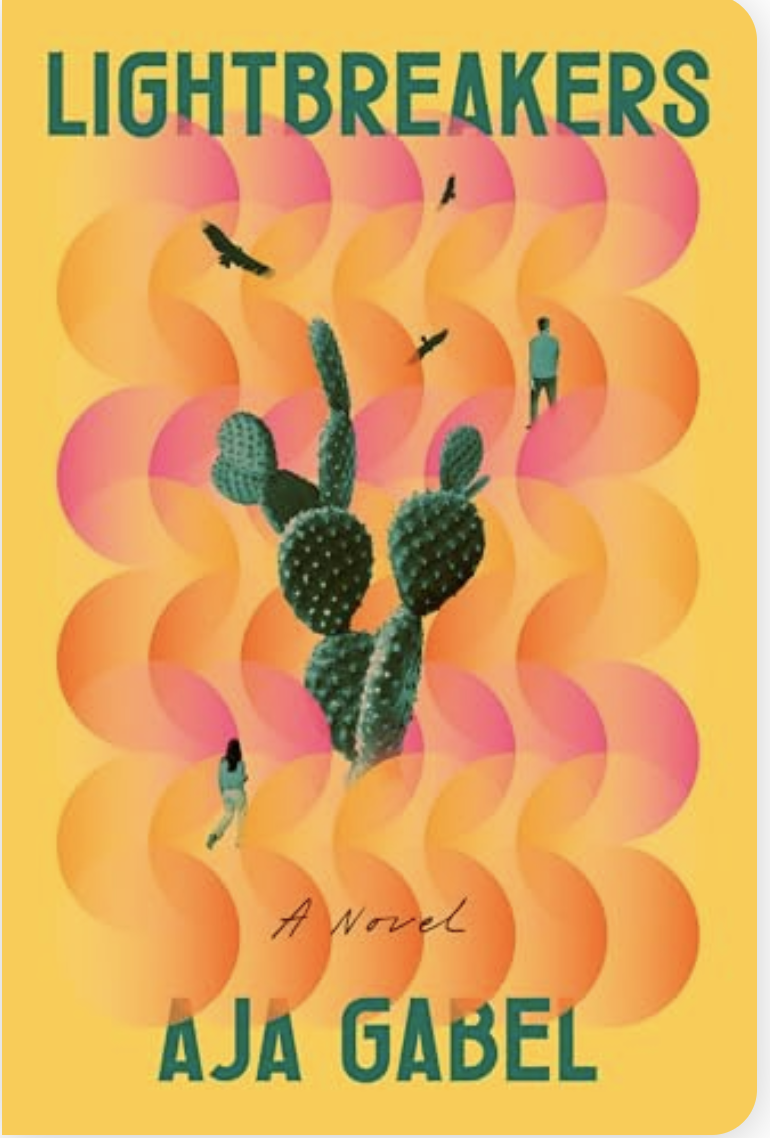
Lightbreakers by Aja Gabel

Writing: 4/5 Plot: 5/5 Characters: 4/5

This was a wild ride — adventurous (plenty of plot), insightful, and deep dives into broad domains of art, physics, and relationships. Noah, a quantum physicist, is enticed into a top secret, billionaire funded project that explores the nature of time, memory, and consciousness in an intriguing, and quite personal, way. His wife Maya, a Tokyo-born, biracial artist, joins him hoping to explore the vibrant, though isolated, art scene in Marfa, Texas (look it up — the art scene is real!). Noah has never fully recovered from the death of his three-year old child and the ensuing collapse of his previous marriage, and he hopes that this project will somehow allow him to reconnect with a past that he can’t quite escape.

I was particularly drawn to how a single book could so thoroughly explore topics (time, memory, and consciousness) from two so dissimilar perspectives and manage to create a synergy between them. The physics explanations were far more plausible than I expected and the artistic dives were far more interesting (to me — a non artist) than I expected. I liked the characters, found the philosophical scrutiny well-paced and satisfyingly twisted, and the commentary on the motivations, approaches to problems, and subjective experiences of the three main characters (the physicist, his wife, and his ex-wife) fascinating.

The author also wrote The Ensemble — a novel about a young string quartet navigating the complex and somewhat cutthroat world of classical music performance. I loved that book as well. I’m impressed by the way this author is able to bring these very different worlds (classical music performance, modern art, quantum physics) to life in a way that allows the reader to inhabit a world in which they have no real expertise through the eyes of a character who actually does.