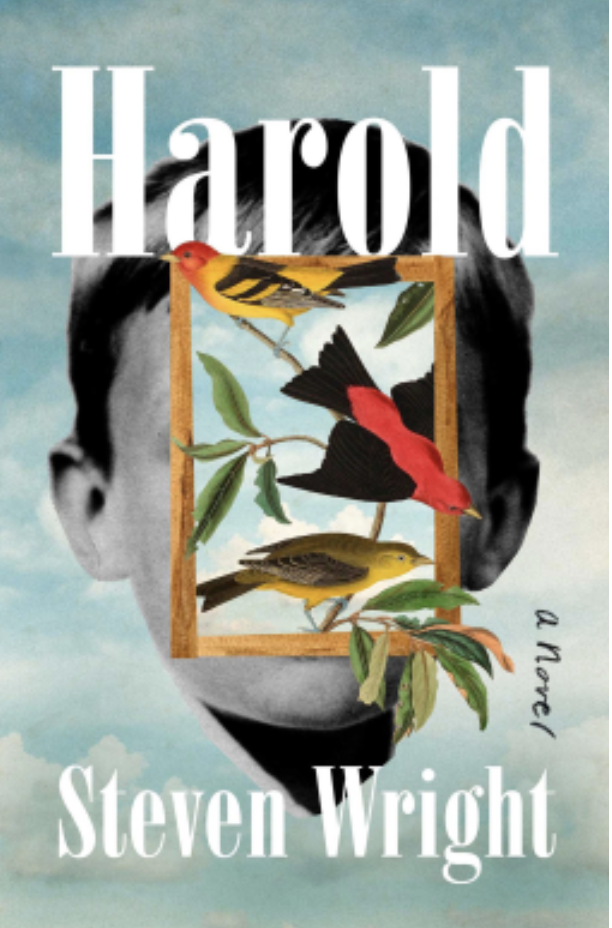
Harold by Steven Wright (Literary Fiction?)

Writing: 5/5 Plot: 3/5 Characters : 2/5
A deeply interior book with constantly catchy and cerebral writing. The narrative purports to be the thoughts of an obviously gifted and unusual seven-year old boy, primarily while he is sitting in a classroom absolutely not paying attention to the woman in charge. Harold has “tangent festivals in his head” — what a great way to put it! While I’ve read other interior novels, they often seem to focus on neuroses and over thinking, while this one is focussed purely on imagination.

I very much enjoyed the writing and the constant stream of bizarre and connected thoughts — my own brain works that way and it was fun experiencing someone else’s stream. Every thought in Harold’s head presents itself as a well-depicted bird flying through a rectangle in his head. I liked the imagery. However, to be honest, I did get a little bored with the book about half way through — the novelty wore off and I began to notice that Harold’s thoughts were more bitter, superior, and snide than comical (yes, I realize that that is the very definition of comedy for some people, but not me). I also started realizing that there was a fair amount of misogyny — his thoughts on his mother, the young, pretty girl he is obsessed with (Elizabeth), and his teacher are all pretty negative in stereotypical ways. For example, on Elizabeth: “Said the pretty very very smart, blonde girl who years later would send several men to their emotional deaths.”

A couple of good quotes:
“Harold loved living in the circus in his head. He saw his mind as a soup made up of a mixture of what was on the inside of his head and what was on the outside of his head. He considered himself a brain chef.”

“Harold thought that an echo was audio plagiarism.”

Thank you to Simon & Schuster and NetGalley for providing an advance copy of this book in exchange for my honest review. The book will be published on May 16th, 2023

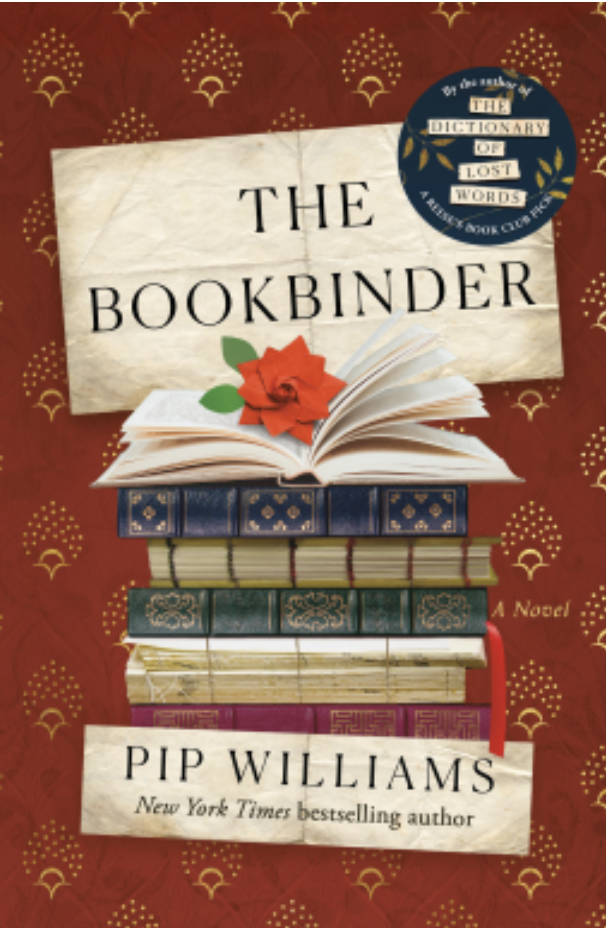
The Bookbinder by Pip Williams (Historical Fiction)

Writing: 4/5 Plot: 4/5 Characters: 5/5

Another book by Pip Williams — author of The Dictionary of Lost Words — about an element of The Oxford University Press (aka Clarendon Press) during the early 1900s. While Dictionary focused on those working to compile the OED, Bookbinder focuses on those working in the physical production of the books.

The eponymous bookbinder is Peggy Jones — a young woman who is working in the “Bindery” — the all-female component of the Press, which focussed on folding and preparing the pages of books. There is an absolutely fascinating 1925 silent video titled “Oxford University Press and the Making of a Book” which really helped me visualize Peggy’s work.

Peggy has been working at the Press with her neurodivergent (my term, not the way it is described in the book) twin sister since the age of 12 (they are now ~22). She has always wanted more — she longs for an education, longs to read and have opinions on the books she is folding — but feels that is impossible for someone of her background. She reads bits as she folds (watch the video — you’ll see how difficult that is), and the canal boat they live in is literally papered with scraps of books that did not meet quality requirements, but certainly meet hers.

The time period covered spans WWI — from 1914 to 1918 — with Peggy’s quest for “more” tied in with opportunities at the Press, the fight for women’s suffrage, and her volunteering with recuperating soldiers and Belgian refugees — all arisising from the upheaval of everyday life. Williams did an excellent job of bringing this time period to life, I was able to feel all the complex emotions of that insane time in a manner that felt very time appropriate.

I found the beginning a little muddy and confusing, but once I got into it, I very much enjoyed the story — particularly the vibrant and believable characters: the twin sister, some of the refugees, the canal community, and various suffragists, librarians, and female students. Every one was drawn deeply and was a person I would want to know. I also loved the details of how the Press was run, women’s colleges (which at the time were not allowed to confer degrees), access to libraries, and classical study. And of course, the ultimately successful effort of a woman from the “wrong side of the tracks” to attain an education and make more of herself.

Two interesting quotes:
“When we bound these books, I thought, they were identical. But I realised they couldn’t stay that way. As soon as someone cracks the spine, a book develops a character all its own. What impresses or concerns one reader is never the same as what impresses or concerns all others. So, each book, once read, will fall open at a different place.”

“The words used to describe us define our value to society and determine our capacity to contribute. They also … tell others how to feel about us, how to judge us.”

Thank you to Ballantine Books and NetGalley for providing an advance copy of this book in exchange for my honest review. The book will be published on August 1st, 2023

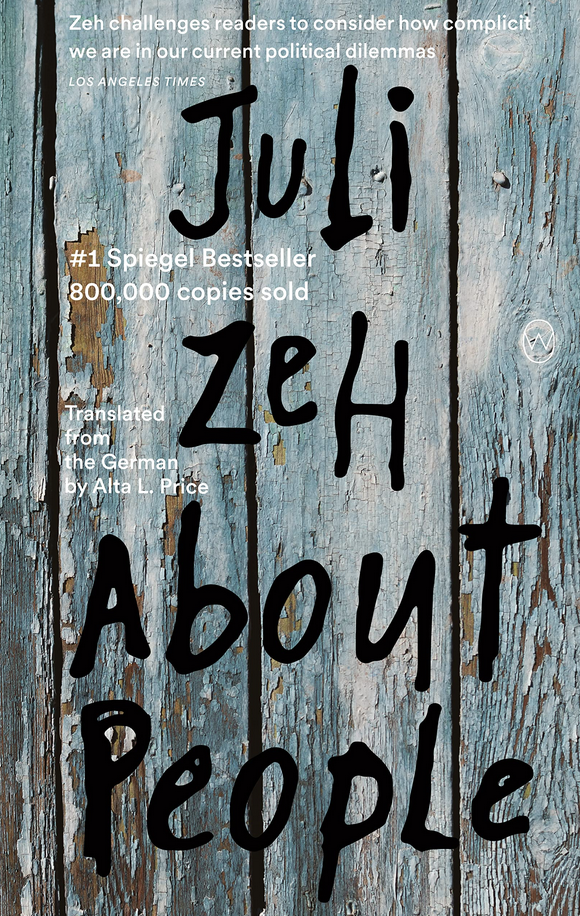
About People by Juli Zeh (Literary Fiction)

Writing: 5/5 Characters: 5/5 Plot: 4.5/5

Dora — a 36-year old advertising creative — thinks a lot. It doesn’t necessarily make her happy, but the stubborn core inside her makes her bristle at any hint of absolute truth, absolute authority, or socially enforced groupthink. Her long-term boyfriend, Robert, has become obsessed with climate change, steadily ramping up his insistence on (her) behavior modification to meet his right-thinking absolutes. When Covid hits, he retargets his laser focus on lockdown adherence and becomes unbearable in close quarters. Dora escapes to a dilapidated house in a small village for a breath of fresh air and finds herself in an AfD (right-wing German populist party) hotbed with the self-proclaimed Village Nazi as a neighbor. Thus begins an unasked for opportunity for a deeply introspective and stubbornly think-for-yourselfer to contemplate existence, humanity, and the nature of moral certitude while the world goes nuts around her.

Had I known anything about the author when I picked this book up, I wouldn’t have been as surprised as I was by how good it was — Zeh is an award winning German author and former judge. I realize that I haven’t kept up with European authors at all in the last decades. The writing / translation is excellent. Through a widely variable set of characters — her rigid climate activist boyfriend, the neo-Nazi next door, her highly confident (veering on the arrogant) neurosurgeon father, advertising colleagues, and a slew of village denizens — Zeh is able to cover a wide range of viewpoints on both specific hot topics (e.g. climate change, covid) as well as general socio-political attitudes towards life.

I loved this mildly satirical look at the way we humans cope with life — “mildly” satirical because it didn’t feel unkind to me. We all have our weaknesses, biases, rationalizations, and expectations and figuring out how to accept that ourselves and others seem like one of the more important problems to tackle. I appreciated Dora’s stubborn insistence on doing her own thinking and doing a lot of it. I loved the way explanation and depth was present in every argument, regardless of the character spouting it. It helped me to (surprisingly) be able to empathize with all of the characters, not just the ones I liked.

There were a lot of great quotes — here are a few:

“She follows the rules and regulations. But her thoughts remain free. Nobody can force her to view the beer drinkers outside the Spatis as treasonous public enemies.”

“What happened to the old certainty that there are no absolute certainties, which is why everything needs to be doubted, debated, and thought about? Dora couldn’t understand how Robert could feel so completely certain his lifestyle was so superior. She just didn’t follow.“

“The era of endless self-pity and constant complaining, JoJo will say. When everyone is always offended, afraid, and feels like they’re in the right. What a combination.”

“Take away the possibility of escape, and every refuge turns into a prison.“

“That sense of superiority is a long-acting poison that devours all humanity from the inside. “

“Then life prescribed her a neighbor. A nazi behind a wall. He was ugly and he stank. If he had been a product, he would’ve gotten only one star in the customer reviews on Amazon.”

“She’s often wondered what, exactly, lies behind this racism-triggered stiffness. Maybe a quandary. A series of impossible either-or decisions: Be a moralizer, or be a coward. Follow your convictions, or society’s expectations — or go for a third option and follow your aversion to conflict.”

“Everyone’s busy being interesting and important. And successful, of course, in both their professional and their personal lives. It’s a rat race of conformists outcompeting one another to come across as something special, someone different.”

“Of course there’s no law stating that neo-Nazis can’t appreciate hydrangeas. But it’s a jarring notion nevertheless. It poses a threat to the life-affirming yet mistaken idea that good and evil can easily be distinguished from one another.”

Thank you to World Editions and NetGalley for providing an advance copy of this book in exchange for my honest review. The book will be published on October 3rd, 2023

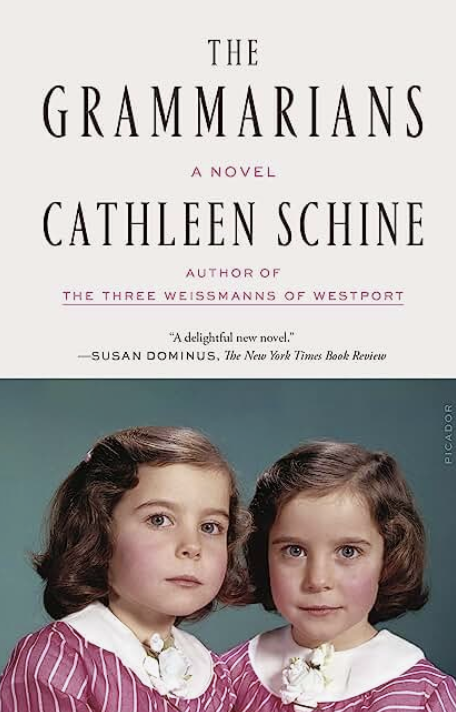
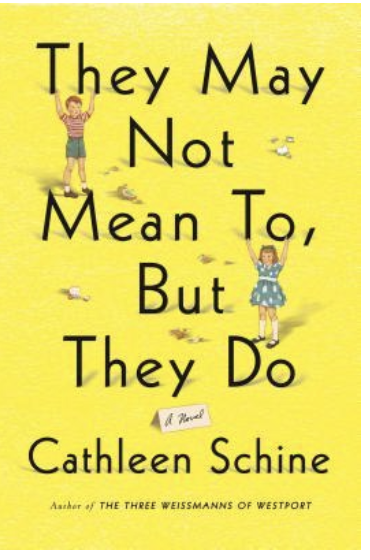
The Grammarians by Cathleen Schine (Literary Fiction)

Writing: 5/5 Plot: 4/5 Characters: 5/5
As with all of Schine’s writing, this is (at least) a two for one story. It is the story of identical, red-haired twins who — across their lifetimes — are simultaneously striving to bind tighter around each other and struggling to separate. Both fascinated by words and grammar, they take residence in diametrically opposed viewpoints on the nature and purpose of language. Daphne is writing a popular grammar column called “The People’s Pedant” , while Laurel cobbles together stories from phrases sampled out of old letters. As a child, Daphne collects words she likes, even if she has no idea what they mean, while Laurel looks them up and can’t understand the pleasure of a word without meaning. Daphne wants language to be correct, Laurel wants language to grow and be what people actually speak opining that “standard English is really just the dialect of the elite.”

We watch the two diverge in a kind of novelistic time lapse photography accompanied by constant wordplay (which I loved). As the twins grow older, we watch them dive into their love of language and watch their brains shifting with their observations. They love finding obsolete meanings in dictionary listings because “Obsolete meanings were treasures of infinite value and no use.”

Each chapter begins with a word and definition from Johnson’s dictionary circa a very long time ago. These are both fun and historically enlightening as you get a real sense of how language continually evolves. Some examples: Conversableness (the quality of being a pleasing companion; fluency of talk); Scrine (a place in which writings or curiosities are reposited); Collectitious (gathered up); Oberration (the act of wandering about); Genial (that which contributes to propagation); Citess (a city woman).

Everything is quotable. Schine has the best grasp (and obvious love for) language. I learned so many new words: fugacious (fleeting), diplopia (double vision), privity (private communication, joint knowledge), and my favorite — edacious (eating; voracious; devouring; predatory; ravenous; rapacious; greedy). And while we are enjoying the deep dive into all aspects of the beauty of language, we do so in the context of prose that is intricate in the nature of depicting full personalities in all their complexities and seeming incongruities. It’s simply wonderful to read.

Quotes:
“In an aquarium-like glassed-in enclosure, a tall woman and a short man shook their fists at each other, silent behind the glass, like exotic fighting fish.”

“There is something fair and just in what we do. Grammar is good. I mean ethically good. If you think of all these words just staggering around, grammar is their social order, their government.”

“Grammar makes you respect words, every individual word. You make sure it’s in the place where it feels the most comfortable and does its job best.”

“It was so draining, worrying about finding love, as if it were an upcoming exam.”

“Copyediting is helping the words survive the misconceptions of their authors.”

“But Michael suspected Larry was as smart as anyone, just not paying attention. Like a Galapagos tortoise, he had no need to pay attention. He had no predators. He was protected by an expansive carapace of good nature, money, and family status.”

“The little girl with the hair that surely harbors a large bird of prey gave her an astonished look. It was not a look of astonished liberation, as Laurel momentarily hoped. It was a look of astonished pity.”

“They played with the words, as if they were toys, mental toys, lining them up, changing their order, and involving them in intrigues of love and friendship and bitter enmity.”

“Arthur had never understood how someone so humorless could claim to uncover the secrets of another person’s soul.”

“What is a soul if not a repository of the absurd? Expectations, disappointments, grievances, good wishes.”

“And Brian smiled and thought families were not so bad. They were like these pigeons, cooing and puffing up and scrapping for crumbs. Like every other kind of creature.“

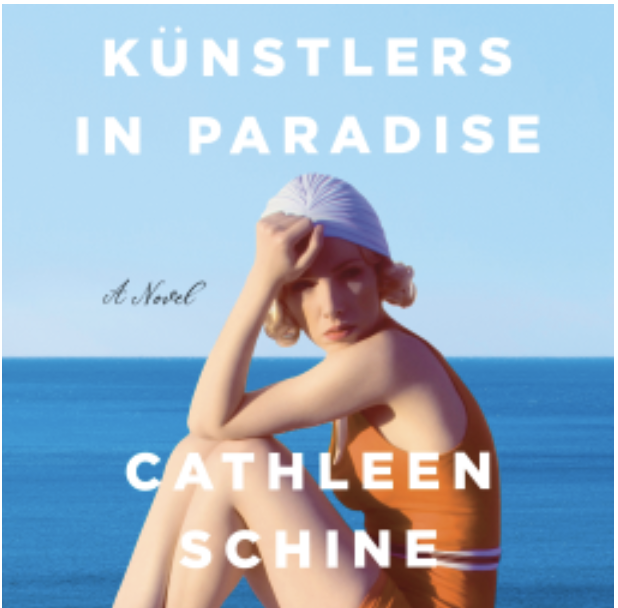
Kunstlers in Paradise by Cathleen Schine (Literary Fiction / Audio book)

Twenty-something Julian Kunstler — somewhat ineffective in his attempt at adulting — is sent to care for his ninety-something grandmother Mamie and her elderly dogsbody of unknown origin, Agatha, during Covid. Venice, California is a lovely place to wait out a pandemic — almost too lovely as Julian feels guilt at his own safety while others dwell in fear and panic. They pass the time with Mamie’s stories — of her own times of isolation, fear, and survivor guilt as an 11-year old Jewish emigre from Vienna who lucked into safety through the intense efforts of Hollywood’s artistic community to extract as many Jews as possible from Germany in 1939.
This was truly a wonderful book — full of stories suffused with reality and a painstakingly reconstructed sense of time and place. We hear the stories as well as the inner thoughts / reactions of both of them, giving an evolving insight into two distinct characters with wildly different contexts taking in the same information. Spectacularly presented.
With these stories, Schine manages to evoke not just the physical space of Venice Beach / Hollywood in the 40s, but the mental and cultural space as well. Music, language, philosophy, meaning, existence, and the nature of memory pervade conversations and thoughts. Music in particular suffused everything — Mamie came from the most cultured of Viennese Jews, her father a composer and mother a writer. She supported herself as a violinist, and I loved the way she took up violin as a youngster because she found the piano an oppressive instrument — as it missed all the notes in between while the violin could get them all. Many Hollywood stars of that era (mostly emigres like Mamie) feature in the stories: Greta Garbo, Arnold Schoenberg, Thomas Mann, and others. Her discussions with Schoenberg are priceless — they discuss the “emancipation of the dissonance.” (I can’t stand dissonance in my music but I sure enjoyed reading about the Schoenberg’s thoughts on the subject!). There are parallels between Mamie and Julian — the guilt of being safe while their friends and family are decidedly not, the isolation, the feeling that the world they know is collapsing — and Mamie wants to help Julian make spiritual and ethical progress in his life. To understand the need for joy and to be able to live fully.
Listening to the audio book while walking I had to stop every five minutes to write something down — I was so afraid of losing it (unfortunately, I have a crap memory). I felt like every page had a life lesson available to anyone who wanted to catch it. I would have had a lot of quotes, but could not capture them in time with the audio format. I did manage to remember one: “ Ones trauma becomes banal when it is trotted out too many times.”
Hard to believe I hadn’t heard of Catherine Schine before this. I read so much that I am literally shocked to find such an excellent writer with plenty of previous work that I don’t know. I listened to this on audio and loved it. The reader did an excellent job of portraying the voices — I sometimes found the “elderly” voice she used for Mamie to be a bit difficult to hear but I adapted.

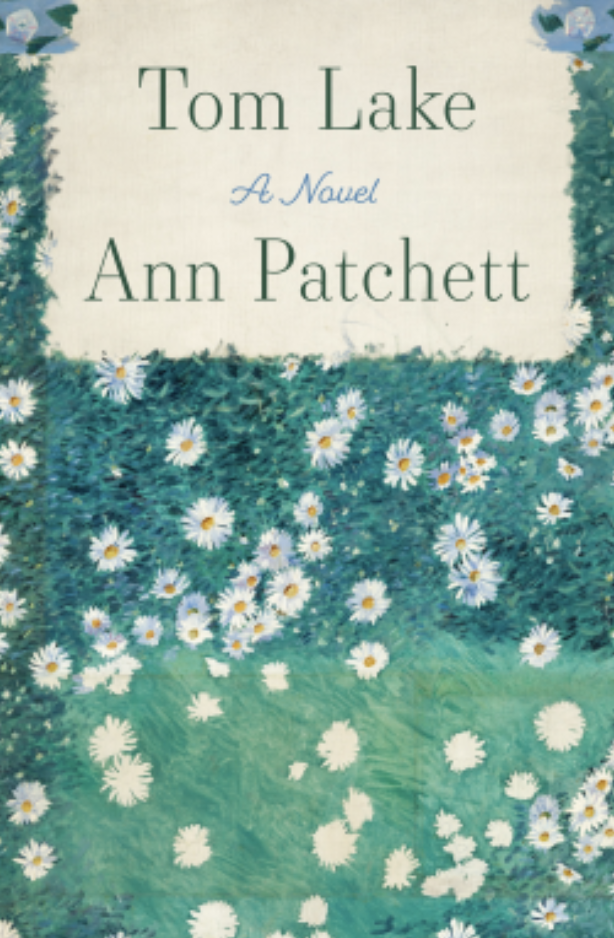
Tom Lake by Ann Patchett (Literary Fiction)

I love Ann Patchett’s books. The reflective, perfectly paced books focus on life and the intricate intersections between characters that give life its shape. This story follows Lara along a dual timeline. In the present, she is the mother of three grown daughters, each pursuing different interests — one will take over the orchard Lara and her husband run in Northern Michigan; one will be a vet; and one longs to be an actress. The narrative takes a jump backwards as she tells her daughters the story of her pre-orchard life. Some parts are stories well loved and often told, others have not been told before, and a few are only whispered in her own mind (and — obviously — to us).

This previous life features Lara the actress — once on the fast track to fame and glory. The threads come together beautifully, as always — Patchett is a master of her craft. The stories don’t really go the way you would imagine because life never does. No twisty surprises, just different paths taken, each a result of experiences and self insight. I was completely drawn in from page one and never felt like stopping. Would happily befriend her whole family.

Thank you to Harper and NetGalley for providing an advance copy of this book in exchange for my honest review. The book will be published on August 8th, 2023

We’re All damaged by Matthew Norman (Literary Fiction)

Broken wrist making reviews hard to type, but I have loved every Matthew Norman book I’ve read, and this is no exception. Humorous (very), yet deep. Wild characters (mom is a Fox News wannabe and his new friend Daisy teaches “vagina fiction” for a start). Draws you in within the first two paragraphs. Kind of a non-Jewish Jonathan Tropper (high praise for me).

Some fun quotes:
“It was our waiter. He was smiling in that maniacal way, that waiters at places, like Applebee’s smile, like they’re all doing methamphetamine back in the kitchen.”

“I’m still not used to living here. I’m not used to the crowds and the constant noise and the weird hours. I’m not sure exactly what it feels like, but it doesn’t feel like home — more like a strange, wildly, expensive Sleep away camp for pseudoadults. I step across the street and I’m nearly run down by a pack of skinny men on bicycles.”

“In all our family portraits growing up, I looked like a short, half-Jewish kid being held captive by a family of Vikings.”

“Jim is the hyper-achiever. You’re the moody one. That’s not a bad thing, by the way. Never trust someone who isn’t miserable at least half of the time. That’s my motto.”

“ ’There’s an entire genre of writing now that’s empowered women to type out their sex fantasies and publish them on the Internet. If you knew how many euphemisms for vagina I endure on a weekly basis, your little heart would break.’ I wasn’t prepared to hear the word vagina this evening. Up front at the register, Gail, apparently wasn’t, either. She clears her throat and gives us a librarian look. That’s the thing about the word vagina: it really carries in a quiet place.”

Games and Rituals by Katherine Heiny (short stories)

Kathryn Heiny is a fantastic novelist, and I requested this book thinking it was a new novel. Slightly disappointed when I realized it was a set of short stories instead, I nevertheless kept getting trapped by the prose and the characters in each story until I found I had finished the collection in record time. While a few stories left me unmoved, most kept me interested and provided human behavior insight which is my sucker-point (as in I’m a sucker for narratives that include such). From a day in the life of a driving examiner at the DMV to a woman caring for her elderly father to unintentional affairs to pandemic inspired Migraine flairs, this collection hits a lot of human experience points. Fantastic writing, too. I’m including some of her more humorous lines, but suffice it to say that I spent a lot of time snorting with laughter as I read (apologies for the visual).

Quotes:
“Your elderly father has mistaken his four-thousand-dollar hearing aid for a cashew and eaten it.“ (first line of third story)

“Your shirt is stuck to your back, your underpants feel like a piece of hot, wet, spinach, wrapped around your hips.”

“William had begun to worry that he no longer sparked joy in his wife and that she would give him to Goodwill.” (another story first line)

“Some people say time is like a river, but it’s really much more like an accordion, constantly squeezing you back to high school.”

“She resists the urge to shrug her shoulders, to flick the weight of his gaze off like confetti after a New Year’s Eve party.”

Thank you to Knopf and NetGalley for providing an advance copy of this book in exchange for my honest review. The book will be published on April 18th, 2023

Paper Names by Susie Luo (Literary Fiction)

Writing: 4.5 / 5 Characters: 5/5 Plot: 4/5
I quite enjoyed this story which weaves together three characters: Tony, a first generation Chinese immigrant who gives up a prestigious engineering career in China for the promise of more opportunity in America for his descendants; Tammy, the daughter who “gets” to live his dream for him — Harvard educated with a promising legal career in a wealthy firm; and Oliver, a wealthy (white) lawyer with a very secret past, whose path brings him close to both of them.


I don’t agree with the book blurb: “An unexpected act of violence brings together a Chinese-American family and a wealthy white lawyer in this propulsive and sweeping story of family, identity and the American experience.” IMHO the “act of violence” — which happens fairly near the end — did serve as a forcing function for some essential reflection and self-reckoning, but it didn’t bring them together and detracts from the real meat of the story which indeed was about “family, identity and the American experience.”


I quite liked the characters and found them both realistic and individualized (no stereotypes!). I enjoyed the contrast between the first generation immigrant father and the second generation immigrant daughter. I found the expression of how each felt — about his or her history, opportunities, and values as well as the complex web of feelings and attitudes about each other — to be artful, genuine, and identifiable.

The chapters alternate between perspectives of the three and jump around in time. I didn’t find it difficult to keep track of the time (very appreciative of the chapter labels!)
There are a lot of Asian immigrant stories out there — I found this one to be more reflective, less stereotyped, and less over-dramatic than most. Definitely recommend.

Thank you to Ballantine, Dell and NetGalley for providing an advance copy of this book in exchange for my honest review. The book will be published on June 6th, 2023

The Hopefuls by Jennifer Close (Literary Fiction — audio book)

Writing:5/5 Plot: 3/5 Characters: 4/5

Matt and Beth are the “Hopefuls.” A young couple — Matt a Harvard trained lawyer eager to run for office and Beth a literary type earning a pittance at various writing / editorial jobs. They move to D.C. shortly after Obama is elected, Matt having worked for the campaign and eager to get into politics full time. When their best friends (Jimmy and Ash) decide to move to Texas to run for the coveted role of Railroad commissioner (hint: apparently has very little to do with railroads!), Matt and Beth go with them, Matt running Jimmy’s campaign. Jimmy is a democrat running against a well funded Republican — in TEXAS — so to say it is hard going is a bit of an understatement.
Beth is the narrator, so the point of view is far more focused on relationships (among all four of them) than on political strategy. She is quite observant, and the unfolding story is full of the kind of nuance and detail that makes people so interesting (and irritating and in this case — a bit whiny for my taste).
The writing is excellent, the story completely believable. My big problem — I did not like any of the characters. None of them were bad people, but they were not people I would have wanted to spend any time with. None of them. Matt was super intelligent and focused but clammed up when he was frustrated, and he was frustrated a lot. Beth didn’t do anything. She was so passive that I wanted to kick her.
Listened to it on audio, and the reader was excellent. The slower pace (I read very fast) really showed off the detail that I might have missed, and the reader really “got” the emotions in the narration. But it also meant a longer time dealing with characters who were irritating me!!