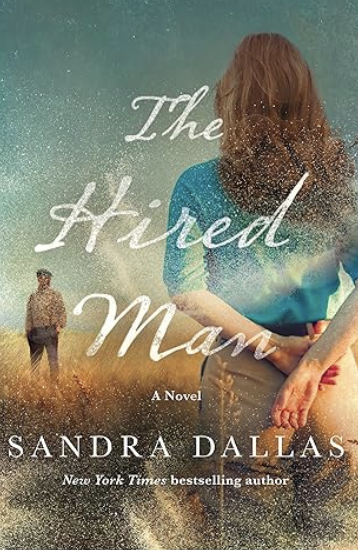
The Hired Man by Sandra Dallas (Historical Literary Fiction)

A coming-of-age story for Martha Helen, a young woman growing up in Colorado in the 1930s amid the drought, dust bowl, and an ever increasing supply of vagrants. One day, in the middle of a huge dust storm, a vagrant (Otis Hobbs) stumbles to her family’s door with a half conscious boy he found buried in the dust. He becomes a room and board only “hired man” for the family, despite the ill will of many in the town. When a young girl is found murdered much later, the town is sure Otis is the perpetrator while Martha Helen’s family staunchly defends him.

Things don’t go the way you might expect — I won’t give anything away but I was happy that there was more to this story than the obvious. It’s a true coming-of-age, so we watch Martha Helen grow as more and more of the (not always pleasant or ethical) real world makes it into her awareness and eventually the composition of her adult self. In the process she reflects on loyalties, biases, good and evil, and understanding people as individuals. The town people really fell into “good” and “bad” categories, which normally feels shallow and manipulative to me. But in this case, you could see that those in the “good” category adhered to strongly held principles, while those in the “bad” category did not, either not having principles or literally not understanding when the crossed the line. It was particularly interesting to me to watch Martha Helen shift her understanding of individuals by watching what they actually did. Martha Helen put it well:

“For better or for worse, the drought and ill winds showed what we were made of. Some folks stole and cheated and hoarded. Others rose above the hardships and displayed strength and courage, even though it threatened to destroy them. The dust bowl changed us. Mr. Hobbs did too . During the time he lived with us, I grew up. I was barely more than a girl when he joined our family. By the time everything was over I was a woman.”

Good story, great characters, a real sense of place and time, all supported by writing that is so good and unobtrusive, you forget that you’re reading at all.

Thank you to St. Martin’s Press and NetGalley for providing an advance copy of this book in exchange for my honest review. The book will be published on March 31st, 2026.
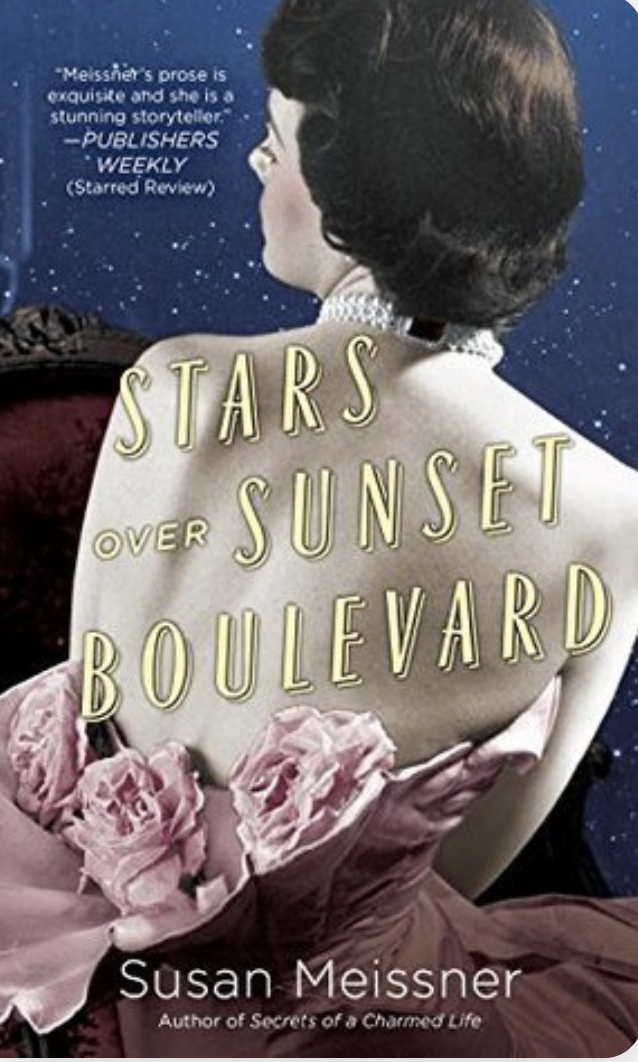
Stars Over Sunset Blvd by Susan Meissner (Historical Fiction)

This is the story of the long friendship between two very different women. Alabama born and bred Violet Mayfield, has fled from the home she loved when her dream of being a wife and mother is dashed. Audrey Duvall is desperate to restart a career that was dashed by the introduction of the talkies. They meet as secretaries on the set of Gone With the Wind in Los Angeles, 1938. The book follows the two of them to the ends of their lives, embedding the complexities of real relationships and the many emotional and moral issues that populate any thinking person’s life: honesty and fear, suspicions and jealousies, loyalty and deep connection. The audiobook reader was fine — a little too slo for my taste.

Susan Meissner is one of my favorite writers. She writes the kind of historical fiction that I love — plumped full of historical detail that awakens fascination — in this case, the movie set of Gone With the Wind. Full of every kind of detail — the technical work, the movie stars, the voice coaching (to make the British actors sound Southern), the filming of epic scenes such as the fall of Atlanta. If you’ve ever seen the movie (and if you haven’t, my goodness!) you’ll be spellbound by all that went into it. At the same time, Meissner writes the kind of human-centered novels that I like — full of thoughtful characters whose interior lives we access as they make their way through a life full of desires, setbacks, regrets, opportunities, and insights. And these are “regular” lives — no giant melodramatic events, but plenty of relatable experiences and thoughts. Her settings often include the kinds of ethical dilemmas we all face, along with the individual choices and the (often predictable and yet somehow surprising) fallout. Because that’s the thing about ethical dilemmas — there are no obviously right answers so some negative fallout is guaranteed.

On a deeper level, I initially felt a lot of judgement about one of the characters — I did not like her. Meissner managed to turn her behavior into something that could be understood (if not applauded), forgiven, and relationship deepening. It’s so easy to immediately judge and so difficult to try to understand. It was inspiring to watch the two continuing their friendship even when one or the other was feeling angry, resentful, or jealous. I was also impressed by some deeply felt and well articulated views on love and why people don’t need reasons to love someone and about recognizing the “brokenness” or maybe “incompleteness” of being young and how you choose to stay close to someone despite irritations, betrayals, and misunderstandings. That understanding, remorse, and a willingness for honesty can mend and make stronger any relationship. Surprisingly insightful.

Looking forward to Meissner’s next book (which I think is due out next March!)