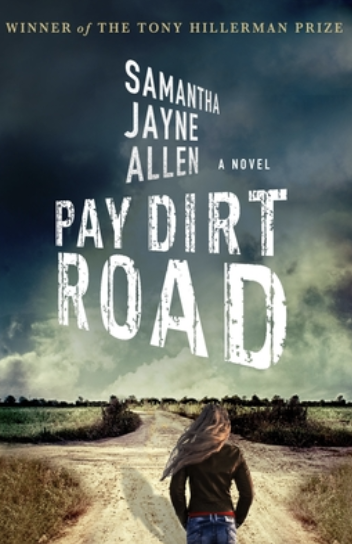
Pay Dirt Road by Samantha Jayne Allen (Mystery)

Writing: 4/5 Plot: 3.5/5 Characters: 4/5

Annie McIntyre returns home to small town Garnett, Texas with her tail between her legs, waitressing at the local cafe and wondering how she ended up back here. She slides into the family business (private investigating) with her grandfather when another waitress goes missing and is eventually found dead.

For me this was more a novel than mystery. The mystery did have a number of satisfying twists and turns with a healthy hodge-podge of possible suspects, motives, and witnesses — land grabs for oil pipelines, a nasty mother-in-law, illegals who aren’t able to testify for fear of discovery, etc. However, more of the book focussed on small town life (lots of drinking and continued high schoolish behavior by people no longer in high school) and self-discovery as Annie finds out why she wants to stay in Garnet after all and what she wants to do with her life.

Decent, entertaining, read. I did not discover an interest in visiting or living in Garnett.

Thank you to St. Martin’s Press and NetGalley for providing an advance copy of this book in exchange for my honest review. The book was published on April 19th, 2022.

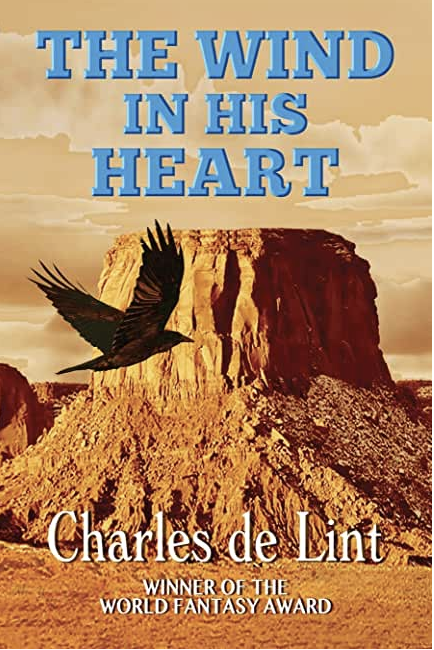
The Wind in his Heart by Charles DeLint (Urban Fantasy)

Writing: 4/5 Plot: 4/5 Characters: 5/5

A troubled 16 year old, a rock star whose death 40 years before was greatly exaggerated, a young man who can see into the spirit world, but just wants to leave the rez and see the world, and a cast of ma’inawo — the “cousins” who cross freely between the spirit world and that of the five fingered beings — these are some of the characters that populate DeLint’s delightful urban fantasy.

I love DeLint’s work — he’s written over 70 adult and young adult novels, and I’ve probably read about 40. These are NOTHING like your traditional fantasy works. They take place in the here and now (no kings, knights, or medieval settings; no long battles) and are about community, relationships, and healing. There is very little violence, and what there is is always presented in a nuanced way that seeks to understand the source and the path to healing of the person perpetrating the violence. He describes a world and community where individuals still care about trying to be good people and learning what that means for them.

DeLint has always had wonderfully balanced genders and plenty of characters who are outside any sense of a “norm” and yet are fully accepted. There is no agenda of oppression, anger, or conflict — the goal is to seek understanding, promote justice, and find a place in the world. It’s kind of the best of two of my favorite reading worlds — escape and a chance to learn more about being human.

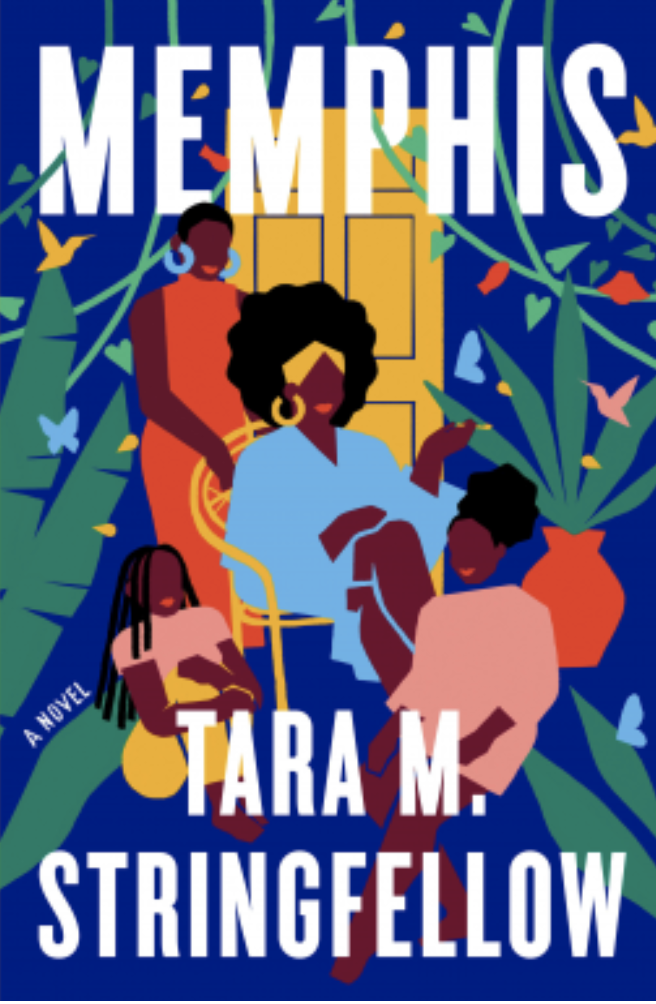
Memphis by Tara Stringfellow (Fiction / Multi-cultural interest)

Writing: 4/5 Plot: 3/5 Characters: 4.5/5

The story covers 70 years in the lives of a family in Memphis ranging from 1937 through 2001. Sisters August and Miriam, their mother Hazel, and Miriam’s daughter Joan are the voices that tell the story with date labeled chapters that jump back and forth across time (which can be confusing — I had to take careful notes). The book is written in a highly emotional style, guaranteed to make you angry at the injustice and hardships these women must suffer through.

I believe this is intended to be a positive novel about the tight knit Black community of women who pull together and give each other strength when needed — and I loved these women characters and would have loved to be a part of the community. But the other side of the coin is that the book is strongly anti-man and pretty anti-white as well. The big sign in August’s hair shop is “NO CHILDREN, NO MEN, & WE EAT WHITE FOLK HERE.” It’s not really a joke.

Through the generations, everything bad possible happens to this family including a child rape, multiple instances of domestic abuse, and lynching. It reinforces negative stereotypes of current Black culture — single mothers and abusive, violent men. The one decent man in the history was lynched, with the strong implication being that he was lynched by his white colleagues (he had made homicide detective — the first Black man in the area to do so). The author took every opportunity to blame whites or men for everything that went wrong, without considering any errors of judgement made by the women. And while she gave each of the violent black men a backstory that might explain their violence, she gave them no path to rehabilitation and completely exonerated the women who may have contributed to their “badness,” whether intentionally or not.

In summary, the story was gripping but I found the writing overly dramatic, manipulative, and full of good messages (be strong, be independent) based on the wrong (IMHO) reasoning. I’m all in favor of women being independent because everyone should be able to take care of themselves — this is not a safe or uniformly just world — but they shouldn’t need to be independent because men are uniformly violent, bad, and untrustworthy.

I know a lot of people love these emotionally heavy-handed books. For me, however, it is too easy to absorb strong, negative, messages without a more nuanced treatment. No, there is no amount of nuance that makes lynching or domestic violence OK, but there are a lot of good men (black and white) out there and lots of good white people, too. Do we really need to fan the flames of racism and sexism (in reverse) by ascribing horrible behavior to every person who appears to be male and / or white? I found the book disturbing — not just for the content (which was disturbing enough!) but for the incendiary way that Black men and all white people (except one nice Jewish store owner!) were painted as irreedemably and unquestionably bad.

Thank you to Random House Publishing and NetGalley for providing an advance copy of this book in exchange for my honest review. The book was published on March 1st, 2022.

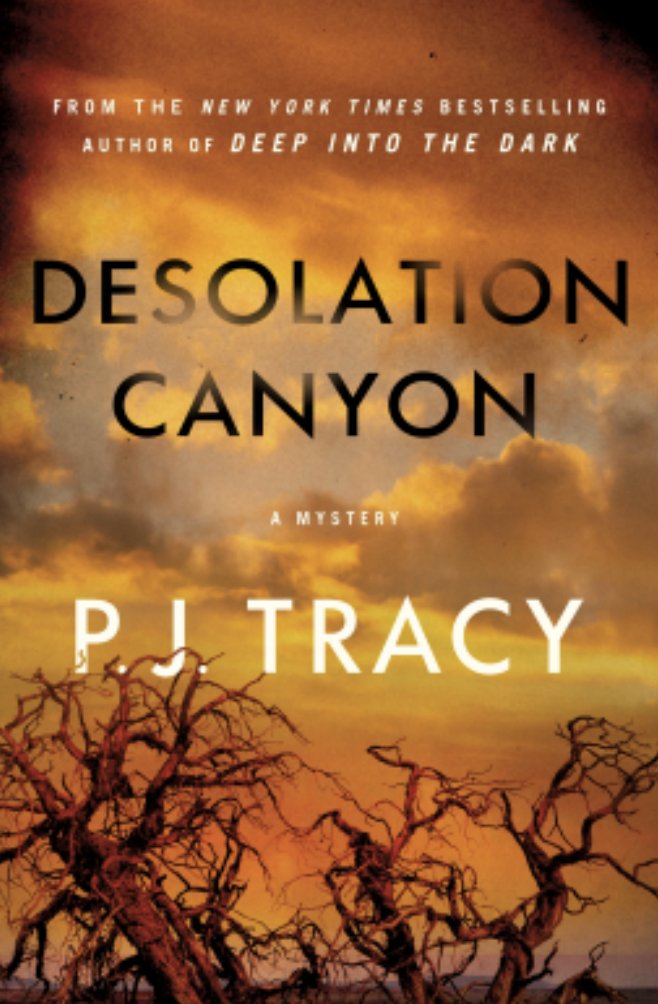
Desolation Canyon by P.J. Tracy (Mystery)

Writing: 3/5 Plot: 4/5 Characters: 4/5

This is the second book in a new series from mother-daughter writing team, “P.J. Tracy,” and my first Tracy book ever. LAPD detective Margaret Nolan is about to enter a dangerous liaison at the swanky Hotel Bel-Air bar when she discovers the body of a wealthy man just below the surface of the hotel’s Swan Lake. In the meantime, a young woman and her daughter are desperate to escape a well-heeled religious community offering redemption retreats to the rich and famous in Death Valley. These two threads slowly merge with the help of the Russian mafia, some lovely ex-cons, and a decades old adoption ring.

Fast pacing, surprising plot twists, and just enough tension to make it interesting, but not enough to stress me out (very important!). Plenty of interesting characters, one of which was the suspect (obviously cleared) from the previous novel. I liked that the bad guys had as much depth as the good guys — they were definitely bad guys but you got a sense of their motivations and emotional state.

No need to have read the first book to fully enjoy this one (although I’ll probably go back and read it now).

Thank you to St Martin’s Press and Net Galley for providing an advance copy of this book in exchange for my honest review. The book will be published on January 18th, 2022.

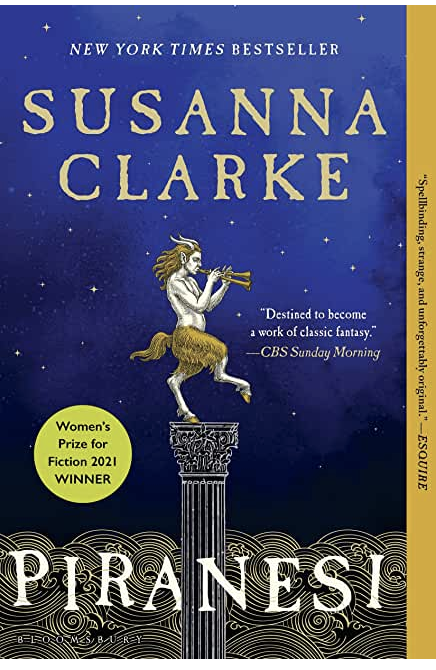
Piranesi by Susanna Clarke (speculative fiction)

Characters: 5/5 Writing: 4.5/5 Plot: 4/5
Piranesi is a simple being who lives in a massive world called The House, populated by vast quantities of Statues, one friend (The Other) and the bones of 13 others whom Piranesi has named and cares for as one would their dead. Piranesi is a rationalist and has set himself the task of documenting as much as he can about his world — the Statues, the various Halls, the incoming tides, etc, carefully logging everything in his journals with a special cross reference index. Whenever he is troubled, he remembers that he is a Beloved Child of the House. Until one day, something triggers him to look into some of the older journals…

This book is a kind of Robinson Crusoe of the mind, full of philosophy, madness, and surprising resolution. It is a fascinating possible answer to the question “What happens to old ideas as they leave the world?” The start was a bit slow for me but I finally got into the rhythm of the book and finished it in almost a single sitting. (To be fair, it is a relatively short book at 245 pages, and I am home, sick). The ending was thought provoking and a little bittersweet. Definitely worth a read.

Bitter by Akwaeke Emezi (YA / speculative fiction)

Writing: 4.5/5 Plot: 3.5/5 Characters: 5/5

Bitter is a quiet, wary, girl who has found a haven in Eucalyptus — a school for artists that is safe from the violence that pervades the town of Lucille. After a harrowing childhood spent in horrific foster homes, Bitter needs this feeling of safety to be able to function. Many of her friends are part of Assata, a group that is willing to use violent means to finally bring justice to Lucille. She is afraid to join, but also feels guilty that she cannot. After one of her close friends is intentionally maimed during a protest, her anger rises and she intentionally uses her blood to call forth a creature she has painted with the intent of Vengeance.

This is a prequel to her last book, Pet, telling the story of Bitter’s first discovery that she can call forth “Angels” from her paintings to help combat the “Monsters” that live in the town of Lucille. In the last book, it is Bitter’s daughter, Jam, who bring the picture to life. You can see my review of that book here: https://bibliobloggityboo.com/2019/08/19/pet-by-akwaeke-emezi-ya/.

Emezi’s writing is always hypnotic — her characters, surroundings, and passion are completely gripping. This book is more political than her last book, and I have a small problem with some of it. She includes the requisite LGBQT characters and does a good job of blending everyone together into a “no big deal” community; she also has a character in a wheelchair who turns down an offer of healing because he already knows he is “whole.” However, I’m not thrilled at her overly simplistic portrayal of all “rich” people being the “monsters,” and Assata feels like a thinly disguised Antifa to me (I am not a fan). Given that the book is geared towards young people who don’t yet have a lot of experience in the world, I would prefer a more balanced depiction of the world with a set of more specific injustices against which they are fighting.

Thank you to Random House Children’s and NetGalley for providing an advance copy of this book in exchange for my honest review. The book will be published on February 15th, 2022.

A Line to Kill by Anthony Horowitz (Mystery)

In this third episode of ex-detective Hawthorne and his amanuensis (non other than the author himself), the two have been invited to a (quite small) literary festival in Alderney, one of the Channel islands. There is a murder — Charles le Mesurier — a thoroughly unpleasant, wealthy man who made his fortune in online gambling sites. In an Agatha Christie style locked-room murder, the festival guests — a bestselling children’s author, a blind psychic, a French poet, and a TV chef — are prime suspects.

Unfortunately this was just so-so. Decently entertaining — Horowitz always writes well — but the gimmick of writing himself into the book as a sort of sniveling, bumbling, Watson to Hawthorne’s Holmes has gotten old and somewhat annoying. I’m a big fan of Horowitz’ work, and I believe I would enjoy meeting him in real life but not if he were the person depicted in these pages! Additionally, this is one of those books where the detective just “figures it out” at the end and we only sort of had the clues that might have helped. All in all, I read it quickly. It would make a good beach / plane read, but I’m not sure I’ll bother with the next one.

Her Honor by LaDoris Hazzard Cordell (audio book)

Fantastic book and great on audio (read by author)!

Cordell was the first female African American judge in Northern California, but frankly, that has nothing to do with why this was a good book. Cordell takes us through her time on the bench — each chapter covering a segment of her career, including in-depth case analysis with relevant case law and background, as well as insight into how she made her decisions. She often illustrated the difference in law and policies across states which I found both fascinating and surprising. The book covers her time in criminal, marriage and family, and juvenile courts as well as her experiences with plea bargaining, hot button issues such as DUIs, the three strikes law, judicial misconduct, and the whole process of appointing or electing judges (beyond fascinating and completely new information to me).

The concluding chapter lists a set of ten “broken” aspects of our judicial system and her recommendations for fixes. By then we are familiar with those opinions as they had come up in situ during the varied experiences, so it was easy to follow. I can’t stress enough how clearly she described the mandatory vs discretionary parts of a judge’s position. One very interesting (to me) story was about the recall of Judge Persky, who had given a too-short sentence (as perceived by the public) to the Stanford swimmer convicted of sexual assault on an unconscious girl. Despite the fact that the judge had only followed the sentencing guidelines and had done absolutely nothing wrong (no accusation of malfeasance), he was booted off the bench in an effort led by two Stanford law professors (who really should have known better). CA changed the law that allowed judge recall to require some kind of malfeasance as a result of that case. Personally, my opinion of Stanford law professors took a nosedive. I hate anything that puts politics and / or popular sentiment above the law.

This book was about what Judge Cordell thought and did and had little or no discussion of how being black impacted her career; however, she was very explicit about the races of people involved in certain cases (if relevant) and provided a lot of information about race and bias in the courtroom, including studies and statistics of the variability of convictions, sentencing, and plea bargains based on race. She did a superb job of describing principles, problems, solutions, and what stands in the way without resorting to inane, politically correct memes with nothing of substance behind them.

I loved it.

Thank you to Macmillan audio and NetGalley for providing an advance copy of this book in exchange for my honest review. The book will be published on October 26th, 2021 — Today!

Maud’s line by Margaret Verble (Literary Fiction)

Writing: 4.5/5 Plot: 4/5 Characters: 5/5

This is a beautifully written, character-driven story of Maud, a young woman coming of age in Eastern Oklahoma in 1926 on an allotment parceled out to the Cherokee when their land was confiscated for Oklahoma statehood. It is a hard life, filled with violence, dirt, and hardship but also with family and love. When she meets a white peddler whose cart is full of (among other things) books, she sees a chance to escape her lot.

I love the characters in this book — Maud, her sensitive brother Lovely, and her bundles of relatives — all working to survive in this hardscrabble land. Maud’s voice is clear, compelling, and foreign. This chronicle of life is eye-opening and feels utterly real. There are no ridiculous plot devices and no political agenda — just a richly depicted existence with all the nooks and crannies of both an internal life lived among external circumstances.

This was a finalist for the Pulitzer in 2016 (The Sympathizer by Viet Thanh Nguyen won). While I have not read the winner, I would have been very happy to see Maud’s Line win.

Some quotes:

Quotes:
“She liked books, learning, and clean things. She liked folks being nice to one another. But most of all, she wanted to live in a place where people died of natural causes when they were old and were dressed up in suits and laud down in wooden boxes.”

“Maud began to feel a growing hatred for who she was and where she lived. She was sick to death of dirt, sick of dead bodies gnawed by animals. Her only chance for escape had been that bright blue canvas rocking hr way. She cursed Booker out loud. “

“She felt comfortable with her body taking its pleasure and giving it back. And she discovered right there next to the porch that her pleasure was in her own control and not entirely linked to a man who had up and left her with no warning.”

“Yes, Cherokee women have high standards. We only marry into whites to keep y’all from killing us off.”

“Maud thought those kinds of questions were worth asking, but she never came to the same conclusions her friends did. She thought God, if there was one, didn’t give a shiny penny for what they were doing or what happened to them. And he seemed particularly unpartial toward Indians.”

Booth by Karen Joy Fowler (Fictionalized History)

Writing: 4/5 Characters: 4.5/5 Plot: 4/5

What an unusual book. It is a fictionalized history of the Booth family from 1822 to 1865 when its most infamous member — John Wilkes — shot Abraham Lincoln. John Wilkes is kept as an important but minor character throughout until his action at the end tears everything apart. The story is told from the perspective of three of his siblings: “poor” Rosalie, the eldest daughter who remains a spinster family caretaker for life; Edwin, who becomes the leading tragedian of the 19th century; and Asia, the youngest daughter and eventual poet and writer.

Fowler is a fantastic writer — every book she writes is completely different and spans topics and genres easily. In this — her first fictionalized history — she brings the place and time to life in incredible physical, political, and every day life detail. Following their lives in rural Maryland, Baltimore, and later Philadelphia, New York, and then California (including a harrowing description of the trip across the 40-mile Panamanian isthmus, pre-canal) we are immersed in the attitudes and experiences of a very different time.

Fowler doesn’t modernize sentiments — we are treated to multiple attitudes towards women, immigrants, and slavery. Having read a lot about the time period, I found them to be accurate and comprehensive. As examples, the family’s patriarch — Junius Brutus Booth (a famous Shakespearean actor of the time) — didn’t like slavery but had two slaves; John Wilkes declaimed frequently on the value of slavery and the tyranny of the North; and various speeches (including Lincoln’s, Douglas’ and others) offer additional viewpoints.

I had to keep remembering I was reading a book which while novel-like had to adhere to actual history so while some details seemed extraneous to the plot, they were not extraneous to the lives of those living through them. For me it was a bit of a slow start — I let myself be unhappy that I was having to read a book about someone I did not want to know more about and of course, knowing what happens at the end, I had a kind of dread creeping up on me. However, if you can avoid the kinds of destructive thoughts I was having, it really is gripping reading, and the assassination and aftermath actually takes up a very small part of the end of the book.

Thank you to Penguin Group Putnam and NetGalley for providing an advance copy of this book in exchange for my honest review. The book will be published on March 8th, 2022.