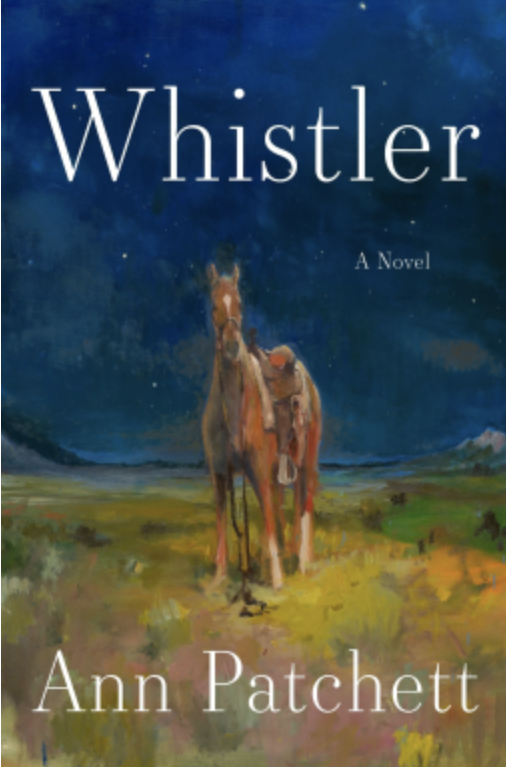
Whistler by Ann Patchett (Literary Fiction)

The key to my love for all Ann Patchett novels is the depth and intricacies of her characters. There is no other writer that I know of who consistently imbues her characters with the level of introspection and thirst for personal knowledge that her characters have — or at least the ones that I relate to! Having read many of her essays, I think the secret is the profundity with which Patchett gets to know people in real life — and I mean any and all of the people she comes into contact with. Not many of us are blessed with the ability to know too many others at this level, and this wide ranging understanding of the varying types of human experience makes for characters who feel real and complex. The fact that Patchett is also an incredible storyteller, with ideal pacing and consistently enlightening disclosures, does not hurt!

So. Our deep and complex characters are launched in this story by a chance encounter between Daphne (our protagonist) and her (first and quite beloved) stepfather — the one who disappeared from her life abruptly after a traumatic car accident when she was nine (she is now 53). Through a set of discussions, connections, and events (celebrations, get-togethers, random walks), we get to unravel the very components that go into telling anyone’s personal story — the different pathways that lead to the person one becomes over time. The story (for me) was one touching moment after another, and I promise that none were of the overly schmalzified Hallmark variety. These are the moments that mark our lives, that matter, and that cause the shifts in our understanding of the world and ourselves.

I loved Daphne’s sister, the best friend and therapist; I loved her (older) husband Jonathan, who is unraveling a family mess of his own (a now deceased mother whose each element of hoarding precipitates a cornucopia of overwhelming memories); I especially loved Eddie, the newly discovered, now-ex stepfather. We see him skillfully through the eyes of the once and current Daphne, whose life experiences only slightly shade perceptions gained as a child during some intensely pivotal moments. The narrative reminded me of how different we are in each dynamic relationship with another.

There are LOTS of (really good) literary references and asides — Eddie is in publishing, Daphne writes, and let’s face it — Patchett knows a thing or two about the business! Themes include the impact of childhood experiences, mistakes and missed opportunities, the contemplation of life and death, human connection, and what it means to show up — really show up — for the people you love. The biggies! I couldn’t put it down.

Thank you to Harper and NetGalley for providing an advance copy of this book in exchange for my honest review. The book will be published on June 2nd, 2026.
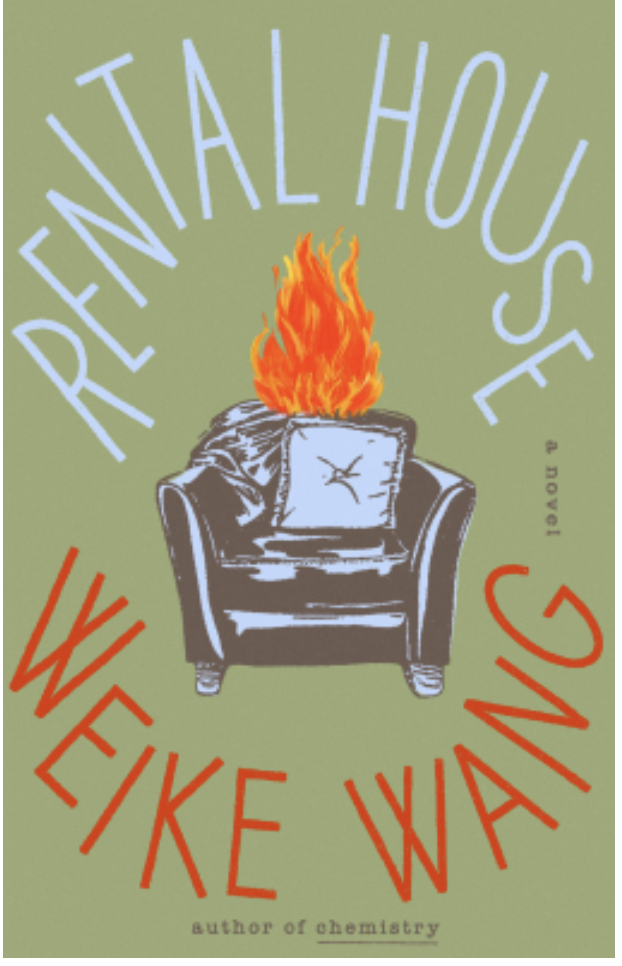
Rental House by Weike Wang (Literary Fiction)

Two vacations five years apart. A married couple from (very) different backgrounds invite their parents to join them for vacation number one.. Keru’s Chinese immigrant parents are post-Covid germaphobes with a suffering-suffused view of life, while Nate’s are outwardly friendly xenophobes from rural Appalachia. On vacation number two, nobody is invited … but some interesting people show up anyway. The whole thing is an incredibly perceptive description of what happens when people of multiple (and often conflicting) worldviews come together.

I read this shortly after reading Tamim Ansary’s “The Invention of Yesterday,” a book blaming most of history on the clashing of misunderstood worldviews (he’s not wrong). Rental House looks at this same problem at the personal level — clashing individual worldviews and the resulting problems and miscommunications. Keru’s observations and incisive analysis gets to the root of how we understand (or don’t) each other — what each person values, perceives, prioritizes and feels entitled to — things people often don’t take the time to understand even about themselves.

I found this to be a remarkably non judgmental book. The clashes developed across the board — political affiliations, race, socioeconomic class, choice of profession, and family expectations — but each person had both different opinions and different levels of investment in those opinions. Did the clash cause mild irritation or offend deeply held principles? Did one person try to understand another, or just get upset at how stubborn the other person was? Keru applied her analytic blade to herself just as often, noting when she may have overreacted to perceived slights, as an example. I appreciated the analytic vs emotional drive for understanding. Reading through someone’s pain allows an empathetic connection for the reader, but doesn’t teach anything about understanding why that someone is in pain, or how he or she (or the reader) might prevent similar pain in the future.

I like Wang’s writing style — clear, insightful, wry, and thought provoking. I also appreciate how thoroughly drawn her characters are — I feel I understand these people in ways that would take years in real life.

Just a few quotes — don’t want to give too many away :
“… An exercise that was like, shoving a square peg into a round hole, but with enough force, and with every neuron dedicated to the problem, he could smash the square peg through.”

“and this led to a heated discussion that characterized the early years of their dating – the aggressive comparison of their worldviews, which ultimately led to clarifications in their basic English vocabularies. Expats left wealthy nations to humble themselves at the altar of the world, immigrants escaped poorer nations to be the workforce of the rich. “

“…because suffering is required. To suffer is to strive and to set a bar so high that one never becomes an obstacle a a complacent. to become complacent is to become lazy and to lose one’s spirit to fight, and to lose one’s spirit to fight is to die. So, to suffer is to live. “

“Then his father chirped back a safe retort, next his mother, and Keru wondered if all white families in public acted like a set of affable birds.”

Thank you to Riverhead Books and NetGalley for providing an advance copy of this book in exchange for my honest review. The book was published on December 3rd, 2024.

Sandwich by Catherine Newman (Literary Fiction — Humor)

Writing: 5/5 Characters: 5/5 Plot: 4/5 Humor: 5++/5

Ok, this book is just flat out funny. I snorted, giggled, and guffawed my way through it with only occasional pauses. But while it gets top top grades for humor, it has plenty of depth, too. Ostensibly about a week at the beach with an extended (and all adult) family, it’s a study of functional (as opposed to dysfunctional) family dynamics. Many readers seem to want intense drama, with earth shattering impact, but I love these close looks at how real people work and learn and connect. The themes are family, love, and life with plenty of personality, philosophy, and interaction thrown in and a strong focus on parenting, pregnancy, and reproduction. Also the (new to me) phrase “anticipatory grief.” Wow — I should have learned that one a long time ago…

I loved the characters and the way they interacted. Our first person narrator is Rocky (Rachel) — a mother so full of emotion and worry and menopausal heat she is constantly threatening to (metaphorically) explode. I liked the way husband Nick — even as told through her eyes — is depicted so completely and not just a bit player in Rocky’s drama. Without giving anything away, I thought he was masterfully written. I loved the multifaceted views of all of the characters — both as themselves and also as they were in relationship with each other. I also appreciated the way Newman dealt with daughter Willa — the requisite lesbian through whom plenty of social commentary on LGBTQ+ issues was included in a nice relaxed, off key way that both made me laugh and made me think.

I also loved the dialog — it was written the way I wish people would speak — fast, humorous, and with a high signal to noise ratio. General banter and friendly family squabbling throughout but always overlaid on clear, honest, and trusting communication. I could be laughing at the (over-the-top-of the-top menopause complaints and then be tearing up at the essential humanity and love concisely tucked into an honest exchange. Kind of a combination of Nora Ephron (humor), Matthew Norman (human exchange), and Anne Lamott (parenting and reflection).

I will say that the inside of Rocky’s head is a fun, but very tiring place to be and I’m glad I don’t live there permanently.

Quotes:

“Ugh, my voice! You can actually hear the estrogen plummeting inside my larynx.”

“… I say quietly, but my veins are flooded with the lava that’s spewing our of my bad-mood volcano. If menopause were an actual substance, it would be spraying from my eyeballs, searing the word ugh across Nick’s cute face.”

“People who insist that you should be grateful instead of complaining? They maybe don’t understand how much gratitude one might feel about the opportunity to complain.”

“I’m always Sherlock Holmesing around them all with my emotional magnifying glass, trying to figure out if anybody has any actual feelings and what those might be.”

“Also he will get out the innocuous-sounding foam roller that is actually a complex pain device designed by people who hate everybody. I’ve seen enough videos of cats terrorized by cucumbers to know what my face looks like when I suddenly see the foam roller.”

“Nick’s curiosity about feelings and the people who have them is fleeting at best.”

“Forty percent of my waking thoughts were about the children dying — the other sixty about sleep. I was ashamed of this demented pie chart.”

“A conversation like this might be a wolf in clown’s clothing, and he knows it. My rage is like a pen leaking in his pocket, and before long there will be ink on his hands, his lips.”

“I mince down the spiral staircase in my memory-foam slippers, all of my joints clacking like the witch in a marionette performance of Hansel and Gretel.”

“All of the names of everything have oozed out and away from the drainage holes menopause has punched into my memory storage.”

“My ancient father actually swimming in the ocean feels like a bridge too far in terms of what I can handle fretting about.”

Thank you to Harper and NetGalley for providing an advance copy of this book in exchange for my honest review. The book will be published on June 18th, 2024.

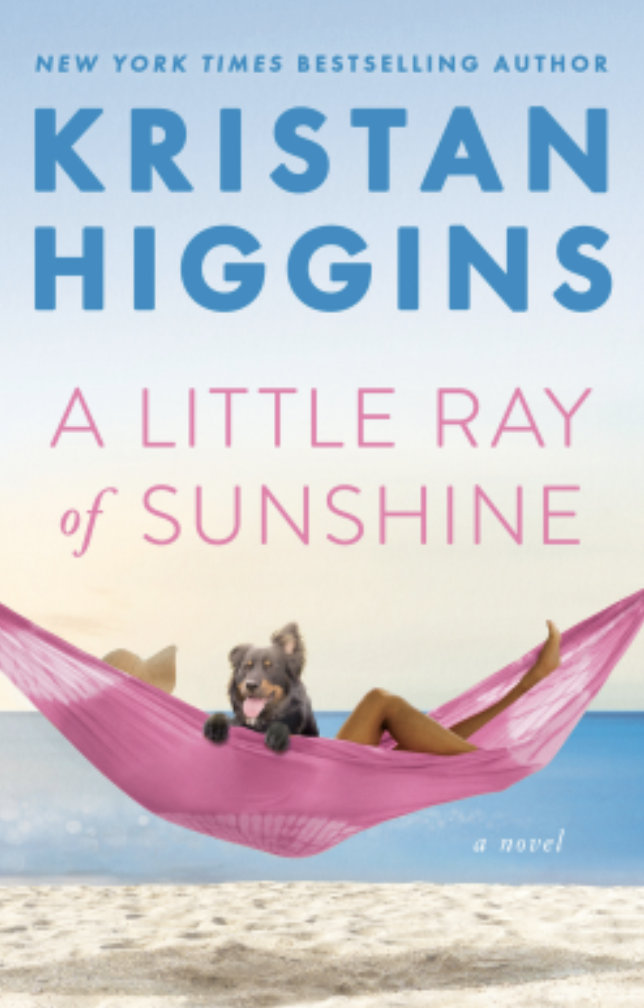
A Little Ray of Sunshine by Kristan Higgins (Women’s Fiction)

I don’t read the Women’s Fiction genre as a rule, but I make an exception for Kristen Higgins. I love the way she writes families and best friends. She writes the world I wish I lived in and while not shying away from deep and sometimes painful feelings, always manages to infuse a sense of humor into most scenes.

This particular book is all about adoption — exploring it from every perspective: the adopted child, adopting family, and the birth mother and father. While the main storyline concerns a woman who gave up her baby at 17 and gets a (sudden) chance to meet him 18 years later, several other characters have different adoption experiences which are shared.

Our main character (Harlow, the birth mother) is part owner of a book store on Cape Cod; her gummy imbibing grandfather is losing his marbles in a somehow adorable way (he may be the best character in the book); and both the birth and adoptive families are replete with interesting siblings, cousins, etc. A strong message of (sexual) diversity and acceptance is transmitted via the requisite lesbian couple, transsexual employee, and a pretty hysterical speed dating event with no gender boundaries.

A few parts felt a little repetitive to me (but then we do tend to let our brains perseverate over issues important and / or painful to ourselves) but overall enjoyed as much as usual with Higgins’ books.

Thank you to Berkley and NetGalley for providing an advance copy of this book in exchange for my honest review. The book will be published on June 6th, 2023

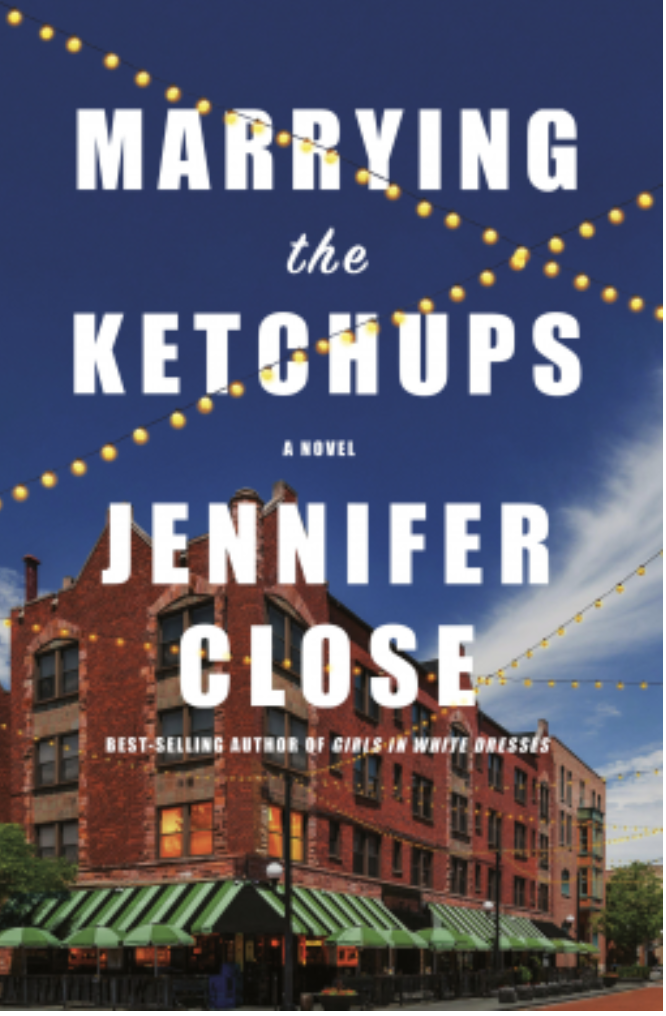
Marrying the Ketchups by Jennifer Close (Fiction)


Writing: 4/5 Plot: 4/5 Characters: 4/5

Cousins Teddy, Gretchen, and Jane alternate perspectives on their not-quite-mid life crises in Chicago as Trump wins the election and the Cubs finally win the World Series just weeks after their biggest fan — famed restaurateur Bud Sullivan — passes away. His eponymous restaurant is the center of most of the action as Teddy struggles with an affair with his recently-ex, not engaged boyfriend, Gretchen is forced to leave her band, pondering her “failed experiment with adulthood,” and Jane uses a cheating husband to examine what she wants in life (hint: it turns out not to be him).

It’s a fun story with a decent amount of insight as characters figure out how to keep going in a world that seems to be falling apart. Great family dynamics and social commentary.

Thank you to Knopf Doubleday and Custom House and NetGalley for providing an advance copy of this book in exchange for my honest review. The book will be published on April 26th, 2021.

A Place for Us by Fatima Farheen Mirza (Literary Fiction)

Writing: 5/5 Characters: 5.5/5 Plot: 4.5/5

I loved this book — far more than I expected to. It’s an intimate story about the intra- and inter-personal dynamics of an Indian-American, Muslim family living in Northern California. It opens at the wedding of the eldest daughter to a man she has picked for herself. In attendance, her brother is clearly estranged from the family. From there the narrative is subsumed by a sea of unordered memory snapshots that help establish how the family arrived at this place. I liked the collection of non-linear memories — far from being confusing, it felt the way memories of life always feel — holistic and relevant to the current thought or moment.

The prose is beautiful and the self awareness of the characters and relationships between them are complex, subtle, and both well observed and absorbing. While I’m not religious and generally don’t enjoy reading religious novels (and really have very little exposure to the Muslim religion in particular), I found the descriptions of the role of Islam in each of their lives to be pure poetry. I appreciated the thoughtful descriptions of the different characters’ choices with respect to their religion — what restrictions they perceived, what remained important to them, and how their choices changed the relationships they had with each other and the community. The multi-perspective insights were incredibly valuable to me.

The deep connection I felt to the characters and the poignancy of their thoughts and actions brought me to tears several times. The novel was an honest portrait of an actual family — it’s rare that a set of characters feels this real to me. If this continues to be the quality of book from SJP for Hogarth (this is the first book from that imprint), I will be a huge and loyal fan 🙂

One note: For some reason, the opening pages of this book just didn’t do it for me. I kept starting it and putting it back down. There was nothing wrong or poorly done with the opening, it simply didn’t grab my interest. If you have the same initial reaction, please keep reading! It doesn’t take long before you’ll be swept in.

Some great quotes:

“It was a strange time in their lives: the children like paper boats they were releasing into the water and watching float away.”

“Asfoos was the word in Urdu. There was no equivalent in English. It was a specific kind of regret — not wishing he had acted differently, but a helpless sadness at the situation as it was, a sense that it could not have been a different way.”

“It was an absurd expectation placed on women: that they agree to marriage without appearing as though they wanted it. That they at least display innocence.”

“Loving Amira was not just loving a young woman. It was loving a whole world. She was of the same world he had been born into but had only ever felt himself outside of, and sitting by her was the closest he came to feeling harmony with his own home.”

“Right and wrong, halal and haram — it was her father’s only way of experiencing the world.”