Line of Descent by Adam Oyebanji (Science Fiction)

An engaging space opera serving as a prequel to Oyebanji’s last book — Breaking Day. The action opens in the ~100th year of a 130 year voyage — humanity’s first bid for the stars. The inhabitants are Generation 5 of a carefully controlled population program, and tensions around whose “lines of descent” will be propagated are high. Reproductive rights, privacy, surveillance, and secrecy are some of the issues that have caused serious rifts in the population, leading to strong feelings and increasingly dangerous actions. And now the Captain is nearing his termination date and a vicious battle between the two candidates for the position will remind most of us of our own recent electoral “conflict.”

I like Oyebanji’s writing — it is clean and accessible, and encompasses technical detail, action, and cultural norms with equal fluidity (and equal time). The idea of a “generation” ship evolving different customs, conventions, and beliefs is not a new one, but I enjoyed his take on where the fracture points might occur and what issues could lead to polarization and rupture … and how the “government” might tackle an attempt at reconciliation given the limitations of a truly isolated environment. Plenty of obvious parallels to issues today.

Interesting and relatable characters and faction / hierarchical relationships; good world-building including mechanisms of recycling, decay, and the impact of unavoidable accidents in such a removed environment; and a plot equally comfortable with action and personality. This is Oyebanji’s 5th book in as many years, and I have enjoyed all but one of them (not sure what happened with that one!).

I appreciated Oyebanji’s bio, which you can find on his webpage — adamoyebanji.com — shows his humor and his interesting background!

Thank you to DAW and NetGalley for providing an advance copy of this book in exchange for my honest review. The book will be published on November 17th, 2026.

Under Story by Chloe Benjamin (speculative fiction)

Writing: 4/5 Plot: 3.5/5 Characters: 4/5

Laurel Salter, a distinguished biologist focussed on trees and fungi has run away from grief to Antarctica’s McMurdo Station — as a dishwasher. While there she is captivated by a strange phenomenon that has the research physicists both excited and perplexed — the Arc, a strange light appearing over the ice. When her ex-husband, himself a renowned physicist, appears at the station to study it, she persuades him to join her on an expedition to what she posits will be an anti-universe (where time moves backwards) enabling them to correct a grievous error.

I have mixed feelings about this book — there are parts I loved, and other parts I found a bit facile and / or too drawn out. I loved the world-building involved in the anti-universe. A lot of thought went into what it would really mean for time to run backwards (from our perspective) and what that would look like in terms of birth, death, parenting, schooling, etc. Benjamin’s depiction of such a “place” was detailed, persuasive, and pretty thorough. I particularly liked that it wasn’t simply a “roll the camera backwards” mimicry of the parts of life Laurel had already lived in her own universe. While the opportunities were there (e.g. a past boyfriend in our world made advances in the mirror universe but she was able to deflect them), she had autonomy to behave as she liked. Friendships with people she had known in our universe were the same, but different, and I found the exploration of connection with the “same” people in a different context and with a different past, well done and believable. I liked some (but not all) of the scientific descriptions of physics (including quantum entanglement, one of my favorite concepts), biology, and the nature of consciousness that were brought into the story. I also loved the first part about life at McMurdo. I would have been quite happy to have the whole novel take place there.

On the other hand, I do think the book was too long (500 pages) for the content, with too much repetition (especially around some of the relationships) and too much elaboration around the theories behind the (often made-up) science. I found myself bogged down at times, and was able to skim sections without losing any appreciable context or information. While the speculative nature of the story was well thought out and described, I would have liked a little more character depth and development. I had a hard time understanding why Laurel did some of the things that she did, and didn’t really take to her (which could say more about me than the character!).

Overall, I enjoyed reading the book (especially allowing judicious skimming as needed). Multiple themes pervade the narrative — ecology and the planet, human connection and the lengths we will go to maintain it, and the nature of time and consciousness. The ending was a bit unexpectedly bizarre, but decent. The book has a ton of advance praise from a veritable who’s who of literary talent. So!

Thank you to G.P. Putnam’s Sons and NetGalley for providing an advance copy of this book in exchange for my honest review. The book will be published on September 1st, 2026.

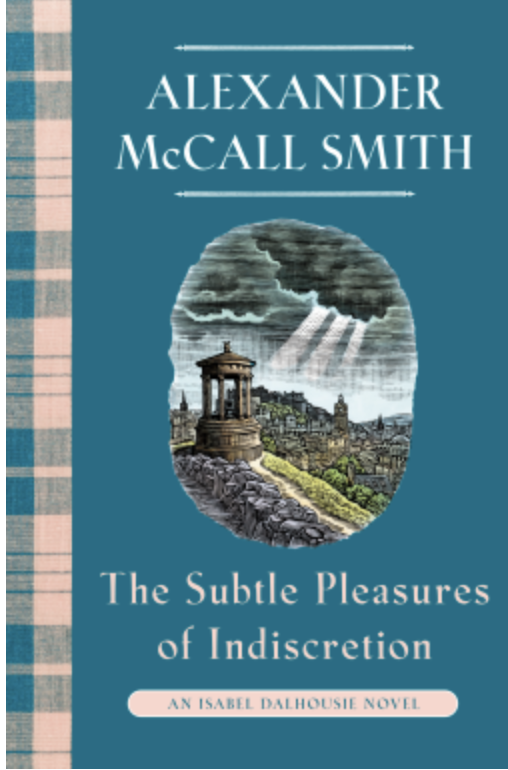
The Subtle Pleasures of Indiscretion by Alexander McCall Smith (Literary Fiction)

Hard to believe, but this is book 16 of my favorite McCall Smith series based on Isabel Dalhousie. Isabel is a philosopher who is editor (and now owner) of the Review of Applied Ethics, and each novel sees her living her life in Edinburgh, doing her job, contemplating moral issues in the world around her (which I admit is my number one hobby) and solving problems that people seem to bring to her.

This book opens with a delightful exchange on biting and socialization (the biter being Isabel’s younger son, Magnus). What follows delves into plot elements to do with surprising DNA results, the occult, and some nasty (and typical?) academic jockeying. But on the way — and this is the best part of these books — there are thoughts and discussions on the difference between treating people with decency vs respect, censorship, the temporary beauty of making music, how to define a “real” man by a definition of masculinity, how to really define selfishness, John Rawls theory of justice (look it up — it’s simple and fascinating), etc. I’ll include a few quotes, but suffice it to say that I enjoy the depth of moral discussion which the author keeps complex but also accessible. I have no appetite for dry philosophy journals, but morality is a subject that everyone has the capacity to consider, but which needs to go beyond the shallow slogans that permeate our current political life.

Every one of these books is a treat for me.

Some quotes:
“Making music was so much of an effort, and when you get to the final bar, it all fadd away; silence had been temporarily replaced by something beautiful and harmonious, but only for a few precious minutes. That was all that art did. For a moment, it made beautiful the space it occupied, giving a vision of something sublime, something that made sense. But then we turned away, and we had to start all over again.”

“We all have to do what we can, every single day, to ensure that the faults in our character do not derail our attempts to improve — to become more morally aware. It was exhausting, and so she sighed, and wondered whether she should stop thinking about it. Did we really have to expend so much energy on the development of our moral character? We could never be perfect. It was legitimate, surely to look after our own interests and the interests of those who were closest to us —family and friends most of all. That meant that there were limits to what we could do for others — and limits, too, to how much time we could spend on personal moral improvement. We cannot all be saints.”

“She thought of beauty, and the part that it played in our lives. We sought it out, whether or not we were aware of what we were doing. We looked for it in things, in people, in places, because beauty was something that was resolved and complete. And yet beauty itself was never enough: If you loved others for their beauty alone, then you were destined for disappointment. Beauty was no more than an invitation to contemplate something that lay before one: resolution, harmony, peace — there were many desiderata that beauty might promise, but not provide.”

Thank you to Pantheon and NetGalley for providing an advance copy of this book in exchange for my honest review. The book will be published on July 21st, 2026.
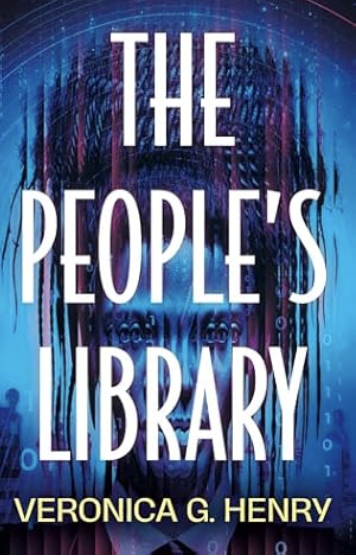

The People’s Library by Veronica G. Henry (speculative Fiction)

Writing: 3.5/5 Plot: 4/5 Characters: 4.5/5

An ambitious, somewhat dystopic, but certainly thought-provoking piece of speculative fiction, The People’s Library follows Echo London, a dedicated librarian whose job, like many others, has been replaced with AI. She’s lucky, though — she has been given a position in a virtual library where people check out virtual replicas of great minds to converse with, rather than books to read. Once that would have been anathema to London, but she finds herself drawn to the “virtus” as they are called, and becomes far more involved with them than with the flesh and blood people in her community. The action becomes intense with anti-tech rebels attacking the library, invisible puppet masters trying to bring about the next evolutionary step for humanity, and virtual AI beings that appear to have the capacity to suffer. This brings up many ethical dilemmas, and I admit that it wasn’t always obvious to me what the right answers should be, or even what the author thought the right answers should be.

The book explores some of my favorite science fiction questions: the nature of consciousness, the possibility of human-AI pairing, the evolution of the human species. While I’ve read quite a few stories that dabble in these areas, I did think this one captured more of a modern sensibility. The author is known for her African American fantasy, and I liked the African and African American slant the book took in its characters, designs, and references to Black history (e.g. one of the virtual beings was Jesse Cooper, one of the first Black enlisted men who were admitted to Naval officer training in 1944). Also some great Black literary references such as Helen Oyemi’s Icarus girl. I didn’t particularly enjoy some of the plot devices used — I never like plots that depend on one super-powerful and manipulative “bad guy,” and I didn’t really grok the mechanism that allowed the good guys to get out of a bad situation, but I did think the teaser at the end was a good way to leave us thinking about the book rather than simply feeling good about closure. Trying not to give away any of the plot and still let you know what you’re in for!

Worth reading.

The Tenant of Wildfell Hall by Anne Bronte (Literary Classic)

This is one of two novels written by Anne Bronte (sister to the somewhat better known Emily and Charlotte) before her death at 29. It is known as one of the first feminist novels as it features a woman — Helen — fleeing an abusive husband and aiming to support herself and her son. This in an era when women had few, if any, rights and children literally belonged to the husband

While I can’t say that I enjoyed reading the book — it was long, somewhat repetitive, and a depressingly perfect depiction of an evolving and utterly miserable life — I did learn quite a bit from it, and I am glad to have read it.

While certainly a book of its time, the messages and situations are easily translated to modernity. Helen is a young woman with neither the experience nor the training to know how to judge a man. The point is made that society at the time kept young women “innocent” in this way, leaving them ill-prepared for making decisions about marriage. They become easy marks for men with smooth manners, handsome faces, and a decent income. Societal expectations (and their religious backings) emphasize support and happiness for husbands, while the wives are expected to be virtuous, good, and obedient. This was both a feminist novel and a morality play — all the dissolute characters end badly, and the men that behave well, or are compelled through the actions of a virtuous women to reform, end well.

There were some interesting surprises for me. For example, the importance Helen put on not allowing her son to be influenced by the dissolute father. She goes so far as to introduce him to alcohol chased by an emetic such that the very smell of alcohol makes him ill. I also enjoyed the slow realization — on the parts of men and women — as to what really is important is selecting a spouse — and it wasn’t solely the physical attraction or purse of either.

The style of the book was a bit difficult to me. The central — and longest — portion of the book is the diary Helen kept throughout her marriage. It is this diary that she gives to Gilbert, a young man in the village she has escaped to who has become besotted with her and doesn’t understand her reluctance to engage (given her stated widowhood and pseudonym). The surrounding chapters are literally one or more extremely long letters that Gilbert is writing to Halford, his brother-in-law. The timeline of this letter is unclear, as is the position of “Halford” in his life. This makes things a bit confusing — I found a character list on wikipedia to be quite helpful in providing enough context to have the book make sense.

Overall worth reading. There is nothing like a classic to really immerse you in a time and place, completely devoid of modern interpretation.

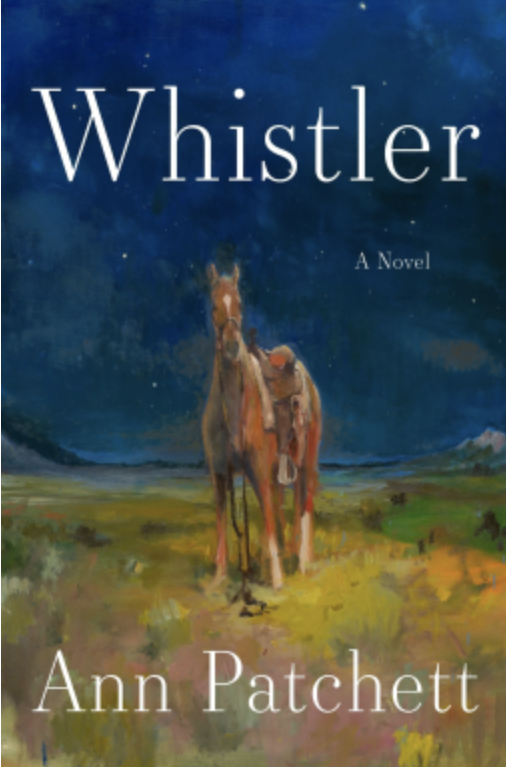
Whistler by Ann Patchett (Literary Fiction)

The key to my love for all Ann Patchett novels is the depth and intricacies of her characters. There is no other writer that I know of who consistently imbues her characters with the level of introspection and thirst for personal knowledge that her characters have — or at least the ones that I relate to! Having read many of her essays, I think the secret is the profundity with which Patchett gets to know people in real life — and I mean any and all of the people she comes into contact with. Not many of us are blessed with the ability to know too many others at this level, and this wide ranging understanding of the varying types of human experience makes for characters who feel real and complex. The fact that Patchett is also an incredible storyteller, with ideal pacing and consistently enlightening disclosures, does not hurt!

So. Our deep and complex characters are launched in this story by a chance encounter between Daphne (our protagonist) and her (first and quite beloved) stepfather — the one who disappeared from her life abruptly after a traumatic car accident when she was nine (she is now 53). Through a set of discussions, connections, and events (celebrations, get-togethers, random walks), we get to unravel the very components that go into telling anyone’s personal story — the different pathways that lead to the person one becomes over time. The story (for me) was one touching moment after another, and I promise that none were of the overly schmalzified Hallmark variety. These are the moments that mark our lives, that matter, and that cause the shifts in our understanding of the world and ourselves.

I loved Daphne’s sister, the best friend and therapist; I loved her (older) husband Jonathan, who is unraveling a family mess of his own (a now deceased mother whose each element of hoarding precipitates a cornucopia of overwhelming memories); I especially loved Eddie, the newly discovered, now-ex stepfather. We see him skillfully through the eyes of the once and current Daphne, whose life experiences only slightly shade perceptions gained as a child during some intensely pivotal moments. The narrative reminded me of how different we are in each dynamic relationship with another.

There are LOTS of (really good) literary references and asides — Eddie is in publishing, Daphne writes, and let’s face it — Patchett knows a thing or two about the business! Themes include the impact of childhood experiences, mistakes and missed opportunities, the contemplation of life and death, human connection, and what it means to show up — really show up — for the people you love. The biggies! I couldn’t put it down.

Thank you to Harper and NetGalley for providing an advance copy of this book in exchange for my honest review. The book will be published on June 2nd, 2026.

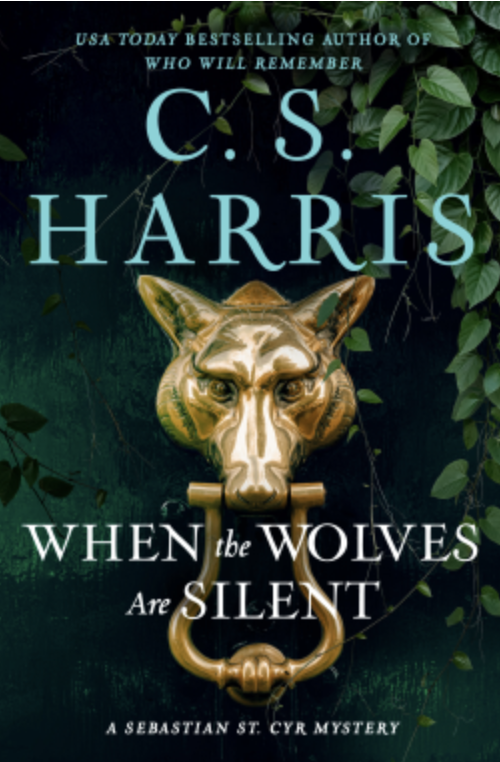
When the Wolves are Silent by C. S. Harris (Historical Mystery)

Number 21 in the Sebastian St. Cyr historical mystery series. Regency period — 1816 — London and environs. This was the “year without a summer” due to the eruption of Mount Tambora in 1815.

Sebastian — son and heir to an Earl — has a habit of involving himself in bringing justice to murder victims, regardless of their class. In this episode, first one and then another of a group of high born friends is murdered — one found in the river and the other burned to death. One of the group is Sebastian’s nephew Bayard. The entire group — Bayard definitely included — is what are known as “bad ton” where “ton” refers to the state of being fashionable and high society. The men in this group feel they are above any law or sense of human decency.

In solving the evolving mystery (more bodies turn up) there is reference to the American wars, the slave trade, ancient Celtic practices including human sacrifice, and potential Druid revivals. I always thought of Celts as ancient Britons but learned recently that in fact Celtic tribes were roaming around Central Europe as early as 1200 BCE. and as for Druids, I found this note in the book interesting: “Actually as far as we can tell, the Druids were more like what we might call the intellectual class of the ancient celts. The poets, historians, musicians, physicians, and astronomers of their day and advisors to Kings.”

The writing is decent, the characters (from the high to the medium and low) have evolved over time and have depth, and the mystery was quite convoluted, but completely consistent and engaging. The historical setting is excellent.

As an aside, the author’s note at the end of these books is always illuminating as she clearly delineates the fact from the fiction. I was particularly interested in a “real” character — German chemist Friedrich Accum who, among his other many accomplishments, was one of the first to draw attention to the danger of food additives and was involved in gaining acceptance for beet sugar, which was notable for not being derived from slave-driven sugar production from cane.

Thank you to Berkley House and NetGalley for providing an advance copy of this book in exchange for my honest review. The book will be published on April 14th, 2026.

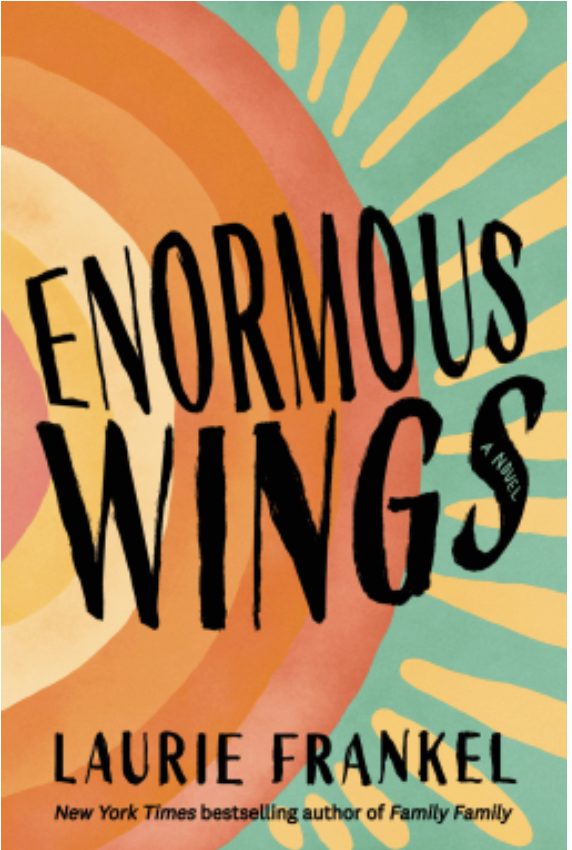
Enormous Wings by Laurie Frankel (Literary Fiction)

I wanted to like this book — Laurie Frankel is a fun and sharp writer and I loved Family, Family. She excels at writing families who are faced with every permutation of reproductive drama — unwanted pregnancies, adoptions, abortions, you name it — and who deal with them in an abundance of creative ways. This book’s discombobulating surprise? Pepper Mills — a 77-year old woman recently shunted to an old age home by her well-meaning but (in her opinion) overly controlling children — finds herself … pregnant! A bizarre situation by any standard but in this case, she also happens to live in Texas — home of some of the most “innovative” no-abortions-allowed legislation. (To be fair, we do get an explanation later in the book that does make this pregnancy more plausible than it first appears).

I loved the humor which is wry, supported by a fair amount of carefully launched sarcasm, and reminiscent of the Jewish family I always wished I lived in. I also loved the discussions, the ethical (and bizarre) questions, and every single one of the primary characters including a great set of “oldies” at the Home, and the myriad children and grandchildren who all add their personal (and multi-generational) slant to the events. I really loved the many one liners that had me laughing out loud — this woman can write! And how can you not love Pepper? Her thoughts, irritations, and love for each individual she connected with are coupled with her absolute insistence on good grammar! I’m not actually very good with grammar myself, but I really appreciate those who are.

My only complaint — and it was big enough to warrant my dropping the rating a point — is that the book was too long and spent much of that excess length on a long pro-choice / anti-Texan rant lecture. I am, and always have been, pro-choice, and I think the recent anti-abortion laws in Texas are wrong in so many ways — but I still resent the incredibly heavy handed depiction of people in Texas (including doctors) who are two-dimensionally mean and manipulative with their only goal appearing to be keeping women under control. It’s a long-standing technique in the world of fiction to make the bad guys really, obviously, Bad. It makes it easier to hate them and side with the author’s idea of the “good” people. But in our era of extreme polarization and encouraged hate, I’m pretty sick of it. I’m sure I’m overreacting here, but it really spoiled the book for me. Too much pounding of the message, even though the message was well-established from the first pages and anyone who was reading this probably already in agreement.

So — fun to read if you can ignore the stereotyped baddies and skim a bit at the end…

Thank you to Henry Holt & Co. and NetGalley for providing an advance copy of this book in exchange for my honest review. The book will be published on May 5th, 2025.

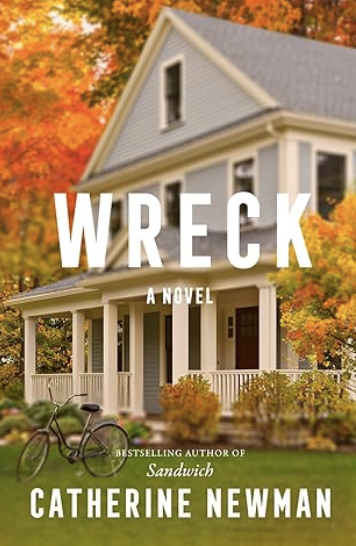
Wreck by Catherine Newman (Literary Fiction)

If you liked Newman’s Sandwich (I loved it), you’ll like Wreck as well. The same intense (and ultra neurotic) narrator Rocky, her amiable (but richly written) husband Nick, son Jamie (now a New York City based management consultant who sheepishly admits he likes making money), and daughter Willa (vegetarian lesbian with heavy duty anxiety issues) — with the new addition of Rocky’s 92-year old father, cohabiting in the wake of his wife’s death the year before.

As with Sandwich, this book is deftly written and laugh-out-loud funny. Some of my favorite scenes include an array of bizarre cat behavior, taking her elderly father to a juice bar for his confusing introduction to “superfoods,” the kind of items being “gifted” on Buy Nothing, and joking with the phlebotomist while waiting for potentially terrifying results. Her incisive (and insightful) wit is applied equally to social commentary, family interactions, and her own “doomsday imagination” inner spiraling. Kind of a recombinant mix of Anne Lamott and Nora Ephron.

The “plot” comprises two ongoing storylines wending their way through family scenes and discussions. Story line one weaves through Rocky’s enigmatic health condition — beginning as an innocent looking rash or two and developing into a confusing set of interrelated symptoms. Rocky navigates the utterly irrational medical system “aided” by her overactive imagination and internal doom scrolling. At the same time, an accidental train collision has claimed the life of a young man known tangentially to Rocky’s family. Rocky and her equally obsessive daughter can’t help but be tormented by the event when it appears that corporate malfeasance may have played a role. Worse still, it may be Jamie’s consulting company that did the risk assessment number crunching which could be blamed. This ethical dilemma interested me as Rocky was happy to lay the blame at the door of a faceless corporate entity, stereotypically blind to all but pure greedy profit, but when her affable and highly moral son was involved, she was willing to look further into the situation and admit to some nuance in blame and understanding.

Loved the dialog, the thickness of familial feeling, the ethical questions, and the exposed hilarity of the human condition. Newman is one of those writers who always finds the exact phrase needed to describe a hopelessly complicated set of feelings, intentions or reactions. There are only a few writers who can do that, and I love them.

Thank you to Harper and NetGalley for providing an advance copy of this book in exchange for my honest review. The book will be published on October 28th, 2025.

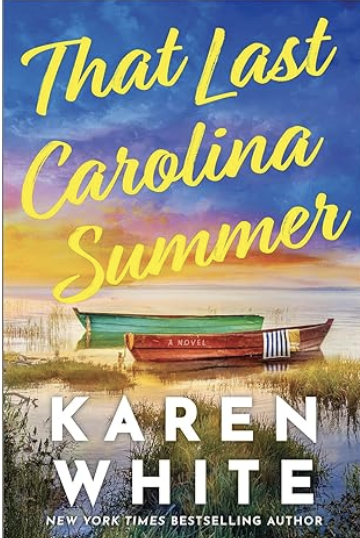
That Last Carolina Summer by Karen White (Literary Fiction)

Phoebe Manigault is called home to the South Carolina Low Country when her none-too-stable sister says she can’t handle their aging mother on her own. Phoebe has moved as far away as she can (Bend, Oregon) and is none too thrilled to be drawn back to a place that holds quite a few bad memories for her, including the fact that she barely survived being struck by lightning 20 years earlier, and has “enjoyed” strange premonitions ever since. What follows is a story of finding love, dealing with your demons, charting the narrows of dementia, and the Power of Place. And discovering the dark secret that underlies most of the pain of the last decades.

What could have been a simple (and pleasant) piece of women’s fiction quickly reveals itself to be a wonderfully insightful piece of literary fiction. The characters are deeply drawn with realistic confusions, longings, protections and vulnerabilities. They make mistakes, lose their way (and sometimes their cool), and general act like people, but they also push through bad habits, fears, and habitual suspicions and make their way forward — which is critical for me. The story was dramatic without going overboard into melodrama — I was gripped from page one yet never felt manipulated, never cringed from ridiculous coincidences, and could find myself relating to situations that were alien to me. The writing was so good that I even enjoyed the descriptions of the place (which I usually skip over, not being a great visualizer). She brought it to life for me by describing the place through the narrator’s eyes (and other senses and emotions). I should add that while the book dives deep into topics that can be very painful, I found it uplifting overall as intentional resolution led to closure. Lastly, lots of fascinating bits about birds — I’m no twitcher (love the word!), but I loved the bird facts peppered about and the ornithological epigraphs at the beginning of each chapter that often related bird behavior to aspects of people — all spot on.

I’m a big fan of Karen White’s Charleston-based Tradd Street series (and her newer New Orleans-based Royal Street series), but for me this book is in a class of its own.

Thank you to Park Row and NetGalley for providing an advance copy of this book in exchange for my honest review. The book was published on July 22nd, 2025.