
The Heart of Everything by Marc Levy (Literary Fiction)

I loved this book — it was funny, sweet, and poignant. Always enjoyable with plenty of insight on the “big questions” and peppered with little surprises that evoke the individuality of each character, rather than serving as plot devices. I both laughed out loud and teared up frequently.

Thomas — a concert pianist in Paris — is surprised when his father (now dead for five years) appears in his apartment to beg him for one last favor — to reunite him with his long lost love in San Francisco. Not your typical ghost story, the long journey provides the vehicle for a chance for a father and son to have the kind of reconciliation one always hopes for after a death. I could not have predicted the level of insight, sweetness, and hidden delight from the plot description alone. The bantering style between the two often made me laugh out loud, but also clearly had that bittersweet feeling of two people who love each other but have never really been able to express that love directly. Teasing, at times acerbic, direct and simultaneously avoidant. What would you say to your deceased parent if you suddenly had just a few extra days with him or her? I liked being given the opportunity to think about just that. As an extra, I very much enjoyed Thomas’ musical references and his experiences as a performer. They had real depth and were not simply window dressing on a character.

I loved the writing style. Understated, lovely, and clean. The words don’t draw attention to themselves, but each one appears precisely chosen to impart exactly the meaning the author intended. I am embarrassed to admit that I had not previously heard of Marc Levy, who is apparently a bestselling French author and wrote the novel on which the movie “Just Like Heaven” was based. According to the Amazon page, “Le Figaro newspaper recently commissioned a nationwide poll asking the French to rank their favorite author: Marc Levy and Victor Hugo were #1.” I’ll certainly be investigating his backlist!

Thank you to Amazon Crossing and NetGalley for providing an advance copy of this book in exchange for my honest review. The book was published on January 1st, 2026.
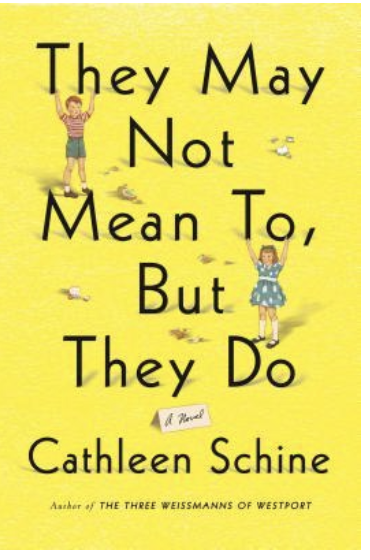
They May Not Mean To, But They Do by Cathleen Schine (Audio Book – Literary Fiction)

Writing: 5+/5 Story: 4.5/5 Characters: 5/5

I love Schine’s books. She is better able to get into the head of wildly different people than almost anyone I can think of. This book is a story about aging and the multiple familial pressures and experiences that are inextricably linked to the process. Joy is the octagenarian matriarch of a New York Jewish family whose husband is ever more rapidly sinking into dementia. When he dies about half way through the book, her children are anxious to solve her loneliness and despair but she is equally anxious to mourn in the way she chooses and to maintain her own life, rather than be absorbed into one of theirs (or, God forbid, be stuffed into an assisted living facility).

I loved so much about this book which was brought to life magnificently by the narrator who has the NY Jewish grandma voice down cold. The ongoing reflection about her own aging; her deep mourning for her far-less-than-perfect husband who she had nevertheless loved completely; her equally deep love for her children coupled with an outrageously growing irritation at their increasing need to boss her around and intrude on her own life plans; the search for belonging when a long term spouse dies — it’s all there and wrapped beautifully in the every day experiences of herself, her children, and her grandchildren. Joy has a wicked sense of humor, a realistic handle on what is happening, and an old flame perking up the picture, so this is by no means a depressing book. Just completely insightful. While the other characters — her two children, her daughter’s wife, all three grandchildren — were fleshed out fully, it was clearly Joy that I resonated with (despite her annoying lack of organizational skills and the fact that I am almost 30 years younger!)

I listened to this on audio so I don’t have captured quotes, but here are some of the concepts I just loved reading about: Joy thinks of her own mother and how she (Joy) could not understand her (the mother) the way she had needed to be understood when she (the mother) was aging. Joy begins to feel there is another person in the apartment and it was she. She had to constantly watch “it” to make sure it took its pills and didn’t fall etc. She doesn’t want to be a burden, but if she is one, she wishes others could carry her with more grace.

One more note — the title comes from the Philip Larkin poem “This Be The Verse.” It’s quite apt.