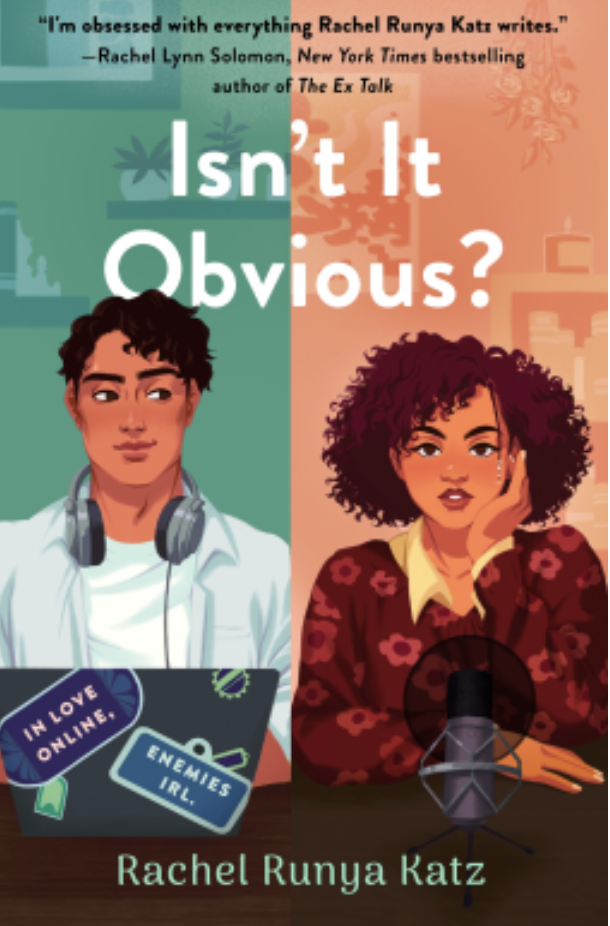
Yael: public school librarian, runs a queer teen book club, podcasts on books that should be banned (she is highly opinionated), searches for the right antipsychotic. Ravi: part-Trinidadian social media designer and tech wizard who uprooted his life to help his brother care for his young daughter. The opening scene in the book? Where the two “sort of” meet? Masterfully done and priceless.
It’s a mix of “you’ve got mail” and “enemies to lover” tropes immersed in a multi-racial, queer, social media saturated situation. Great dialog, fun epistolary (email based) segments that perfectly recreate the excitement of slowly emerging emotions, interesting characters who are both completely foreign to me and surprisingly relatable and likable. I enjoyed getting to know them, though I doubt I would have had any opportunity to do so in real life.
I liked that the book felt like a story, not an agenda. The characters spent more time trying to make things better and not being confrontational and argumentative (although snide comments were obviously both allowed and encouraged). I liked the phrase “competency crush,” which I hadn’t heard before (but which I have a lot of). I generally enjoyed it and picked up several new ways of looking at things.
BUT — some bizarre (to me) nasty asides about a couple of my favorites. Ray Bradbury racist and homophobic? I’ve read everything the man has ever written and can’t think of anything that would earn him those epithets. The author of the Five Love Languages? The ONLY self-help book I’ve found illuminating and helpful? Katz writes: “the guy who wrote the love languages book is actually an intensely conservative Christian, who basically thinks the solution to all marital problems is to conform to gender roles.” I have no idea about Chapman’s background or opinions of gender roles, but there is nothing in the book that suggests Katz’ opinion. For me this smacks of labeling anyone negatively if they don’t completely adhere to your way of thought. Still enjoyed the book, but those barbs hurt and made me wonder at a generation so willing to toss aside a whole person’s work because someone tossed an unpopular label on them.
Thank you to St. Martin’s Griffin and NetGalley for providing an advance copy of this book in exchange for my honest review. The book will be published on October 21st, 2025.
 Books to look forward to ...