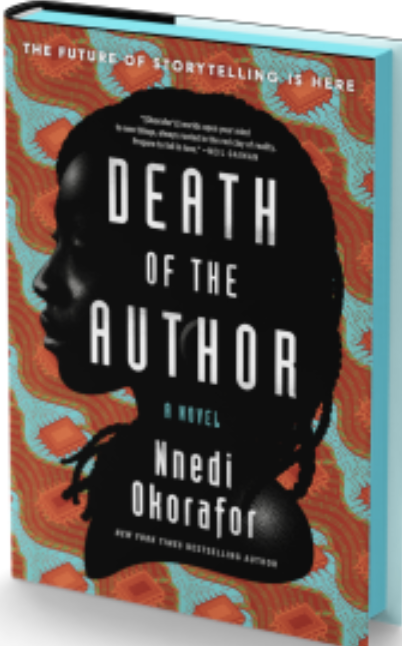
A captivating book about Zelu — a disabled Nigerian American author (unpublished) and teacher who gets cancelled (and fired) due to her insensitivity (really deeply provoked impatience!) with her more irritating students. It’s also about the new book she writes — Rusted Robots — which becomes an overnight sensation. A post-apocalyptic story where robots and AI are at war over the tattered remains of human civilization, Rusted Robots brings her fame, fortune, some wild, tech-based opportunities, and a whole lot of people who suddenly feel entitled to tell her exactly what to do.
There are so many intellectually interesting and intersecting threads in this story — AI and automation, family, gender roles, African culture, authorial creativity and control, fame, freedom vs safety, disabilities, and the balance between individual and society — but the overarching theme is one of my favorites: the place of narrative and story in human culture. After all, I read fiction because I seek understanding, not just information.
Okorafor manages to blend multiple genres brilliantly, and since I am a fan of both literary and speculative fiction, I was riveted from start to finish. The characters were drawn so deeply — like all of my favorite people, they seemed to be compelling, annoying, loud, supportive, controlling, and caring all at once. I appreciated the fact that while most of the characters were Black (with the exception of the “wealthy white dudes” who keep finding her), there was no antipathy towards white people, just more of a lack of interest.
The big twist at the end absolutely blew me away. And a last little make-me-happy tidbit? She included a call out to one of my favorite (and fairly obscure for the U.S.) books — So Long A Letter by Mariamba Ba.
In my Top Reads of the Year list.
Quotes:
“The rusted robots in the story were a metaphor for wisdom, patina, acceptance, embracing that which was you, scars, pain, malfunctions, needed replacements, mistakes. What you were given. The finite. Rusted robots did not die in the way that humans did, but they celebrated mortality. Oh, she loved this story and how true it felt.”
“The capitalism machine had used her book, her attempt at shouting into the void, to make visual comfort food for drowsy minds.”
“She thought about Rusted Robots and the main character, who understood deep in her circuits that true power was in the harnessing of it, not the possessing of it. And when you were aware of the moment you harnessed power, that was when it was most difficult to navigate.“
“Narrative is one of the key ways automation defines the world. We Humes have always been clear about this fact. Stories are what holds all things together. They make things matter, they make all things be, exist. Our codes are written in a linear fashion. Our protocols are meant to be carried out with beginnings, middles, ends. Look at how I have been built. My operating system is Ankara themed, my body etched with geometric Ankara designs. I’m the embodiment of a human story. But true storytelling has always been one of the few great things humanity could produce that no automation could. Stories were prizes to be collected, shared, protected, and experienced”
Thank you to William Morrow and NetGalley for providing an advance copy of this book in exchange for my honest review. The book will be published on January 14th, 2025.
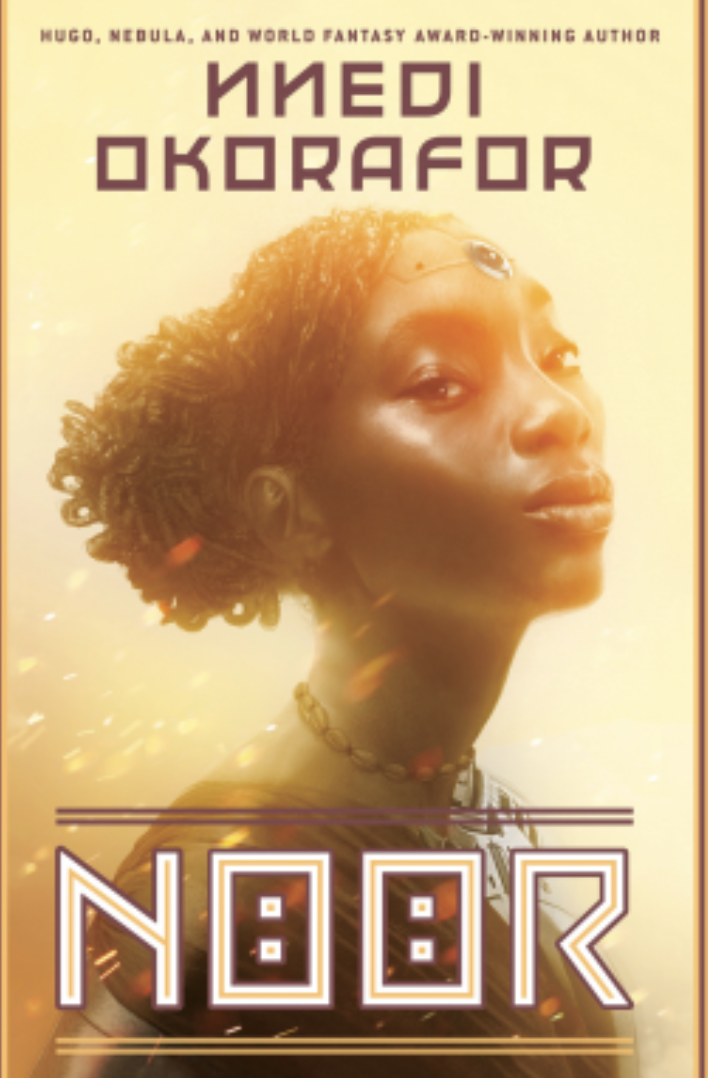
 Books to look forward to ...