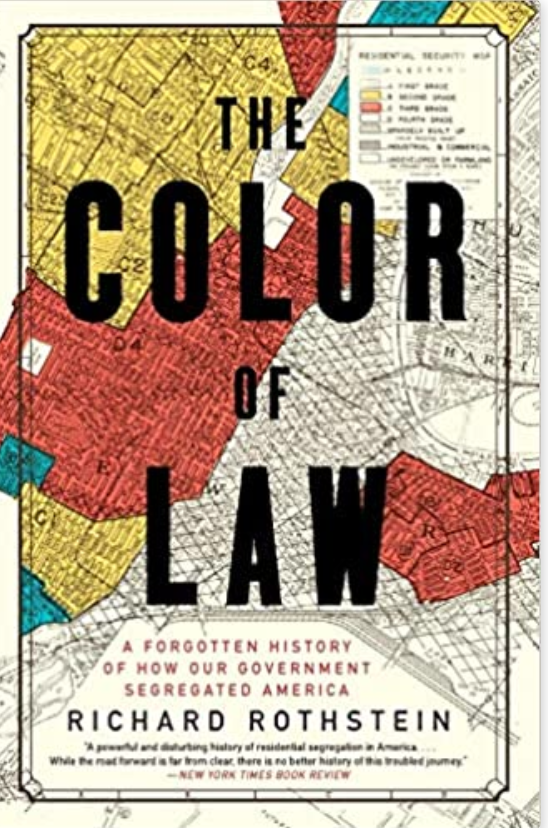
The List of Suspicious Things by Jennie Godfrey (Literary Fiction / Mystery)

A coming-of-age story told by a precocious 12-year old set in the time of the Yorkshire Ripper (late 70s). Miv and her best friend Sharon decide to find the Ripper themselves when their world starts falling apart due to the constant threat. They start by compiling a list of suspicious things about the people around them, and as they pursue investigations on multiple fronts, they learn a great deal about life. The unfolding stories of various people in their community are always instructive — some in bad ways and others in good. Miv learns about bullies, racism, grief, and even domestic abuse, but also about the importance of standing up for yourself and others, doing the right thing, tolerance, curiosity, friendship and love.

I liked the writing a great deal — Miv’s voice is unique, appealing, often humorous, and a good deal more exposed than an actual person might agree to. Never overdone or overly dramatic, but also never, ever vapid. I loved the way we got to know characters who appeared one way but easily morphed into a more complex (and much more likable) person with a little time and exposure. The ending was a real surprise, but well done and thought provoking.

Thank you to Sourcebooks Landmark and NetGalley for providing an advance copy of this book in exchange for my honest review. The book will be published on December 2nd, 2025.

Behind You Is the Sea by Susan Muaddi Darraj (Literary Fiction)

Writing: 5/5 Characters: 5/5 Plot: 4.5/5

This is a beautifully written novel composed of interlinking stories about characters in a Palestinian-American community in Baltimore. Most are members of three families: the Baladis, Salamehs, and Ammars. The stories move linearly forward in time, while bouncing between different individuals and their points of view. This means that the narrative slowly moves from first generation immigrants to younger family members born in the U.S. Influences from their ethnic heritage and the American culture surrounding them drift downward through the generations, melding uniquely in each individual making for nuanced, discrete characters. This creates a kind of narrative arc through the stories so that it did feel novelistic despite the clear boundaries of the stories.

I enjoyed the diversity of the characters — more akin to the everyday “diversity” of different human beings than to the diversity of skin color or ethnicity since (almost) all the characters were Christian Palestinian-Americans. Some wealthier, some poorer, some professionals, some working class, from real estate moguls to housekeepers. Many stories dealt with some aspect of being a woman within this culture, ranging from pregnancies to divorce to education — basically different ways that women might make decisions that did not align as well with family expectations as some families might expect. However, family reactions were not all the same — sometimes the father would be unhappy (to various extents), sometimes the mother (or the aunt, siblings, etc). Sometimes things escalated badly, and in others acceptance and adaptation was the name of the game. Real people — all in the same “place,” all with different stories. Topics run the gamut include generation conflicts, teenage afflictions, racism (in multiple directions), domestic abuse, cultural misrepresentation, etc. From minor issues to major. Some sweet and uplifting, and some not, but all moving towards understanding and growth.

Beautifully written, wonderful characters, little or no political statements — see some quotes below.

Quotes:
“The day he dies, Baba looks skinny and surprised. When he sucks in the last breath, his mouth opens in an O, like America has shocked him at last, and freezes there. It’s like he finally understood he was never meant to win here.”

“Americans like to talk about everything, I know. They like to share their feelings, like purging old clothing, or dumping clutter. But when you’re like us, you purge nothing. You recycle or repurpose every damn thing. Nothing is clutter.”

“Arabs are ridiculous; even if they live a dream life, they want to star in some tragedy. If there is no tragedy, they imagine one.”

”Sometimes I think that is why I like science. Science doesn’t mind when you make a mistake. Instead, science gets kind of excited.”

“No, with the baby, with Baba fading, with ever-present work stress, now is a time to lie in the weak surface of water, to trust that its fragility could nevertheless keep her afloat. It could even, despite its transparency, carry her great distances.”

“Marcus realized then that, while some people talked about growing up poor, his parents had been a whole different level of poor. Barefoot poor. Starving poor. Babies dying from diarrhea poor, like Mama’s little sister, Amal, who had died before she was a year old. Sleep on rooftops in the summer poor. Go to mass at two different times so your siblings can share the good shoes poor. Boil weeds to make tea poor.”

“Americans like to talk about everything, I know. They like to share their feelings, like purging old clothing, or dumping clutter. But when you’re like us, you purge nothing. You recycle or repurpose every damn thing. Nothing is clutter.”

“Arabs are ridiculous; even if they live a dream life, they want to star in some tragedy. If there is no tragedy, they imagine one.”

”Sometimes I think that is why I like science. Science doesn’t mind when you make a mistake. Instead, science gets kind of excited.”

“No, with the baby, with Baba fading, with ever-present work stress, now is a time to lie in the weak surface of water, to trust that its fragility could nevertheless keep her afloat. It could even, despite its transparency, carry her great distances.”

“Marcus realized then that, while some people talked about growing up poor, his parents had been a whole different level of poor. Barefoot poor. Starving poor. Babies dying from diarrhea poor, like Mama’s little sister, Amal, who had died before she was a year old. Sleep on rooftops in the summer poor. Go to mass at two different times so your siblings can share the good shoes poor. Boil weeds to make tea poor.”

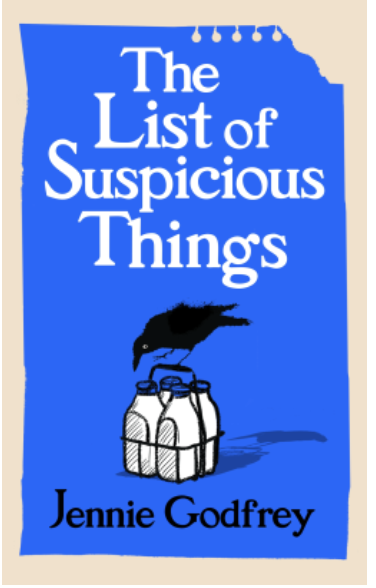
The Color of Law: A Forgotten History of How Our Government Segregated America by Richard Rothstein (Non-fiction)

This is a thought-provoking, though somewhat rambling, overview of the impact of systemic racism in U.S. housing policy on African Americans. To be clear (because systemic racism has become an almost meaningless phrase thrown at everything), Rothstein documents the laws and policies — federal, state, and local — that explicitly made it illegal to sell real-estate to non-whites, give mortgages to non-whites, or offer certain kinds of tax-breaks to non-whites. These laws and policies were in action just as the suburban lifestyle took center stage with new housing developments supported by transportation networks optimized for suburb to city commutes. Subsequent chapters followed the resulting situations as housing prices outstripped wage gains and tax policies swerved to benefit home owners over city renters, etc.

While Rothstein’s extended research is accurate (and horrifying) it is anecdotal and not comprehensive. In other words, we hear about all of the racist laws, the long court battles trying to change them thus upholding the 14th amendment, and the many workarounds people used to avoid repercussions for ignoring court decisions — but we don’t really get to understand how prevalent this behavior was. I’m guessing it was quite prevalent, but I can’t actually tell from reading this book.

I’m also not thrilled by his conclusions — he constantly conflates race and class and often leaps straight from terrible situations to unsupported causal connections. For example, in one part he goes from housing unfairness to gangs in four sentences without considering any other possible explanations. Similarly, in a discussion of income mobility, the data showed African Americans had less income mobility than whites — but not as much less as one might expect under the circumstances. This he explained with a wave of hands suggesting that African Americans had worked twice as hard and / or that affirmative action was “working.” Lastly, despite the title, this book focussed only on the aspect of law that relates to housing and not to the many other aspects of law that could be shown to support racist policies.

Still — incredible eye-opening descriptions of what was done by the government to treat African Americans unfairly and the lengthy and complicated process required to make changes. If you can find someone to give a good summary, that might be preferable to actually reading the book which is a bit of a slog.

Good Talk by Mira Jacob (Memoir / Graphic Novel)

A memoir in graphic novel form. I had read a great review which never even mentioned that it was a graphic novel — so it was a big surprise to me when I got it from the library! I’m not generally a graphic novel fan — I like language — but I found it to be an excellent medium for this book. Most of the content is in the form of conversations between the author and her son, her husband, her parents, her in-laws, and her friends — punctuated by the occasional “letter” or statement. The artwork provides the context which allow for the content to be more pithy — highlighting the essence in a way that is difficult to do with too many words.

The author is East Indian and is married to a Jewish man. Much (most) of the book is about her experience as a person of color, extending from childhood, through 9/11, and to the current Trump era. The opening chapter features a conversation with her six-year old son about Michael Jackson — whom he loves — and whether Michael is black, brown, or white and which of the three he liked best. A brilliant opening. The closing is a kind of letter to her son about the man she hopes he can become given the current political climate.

For me, her descriptions of bigotry and racism as she struggled to explain them to her curious son were both fascinating and educational. The word “racism” is thrown around a lot these days, and her definition (supplemented by some google searching) helped me understand the difference between them in a way I hadn’t previously. I appreciated the many different examples of stereotyping and the confusion that ensues even when people want to treat others the “right” way. In her life, her own extended family in India found her “too dark” to ever be attractive to a good candidate husband; she stumbles over what to say to the first lesbian she meets; and is given a particular job because the wealthy white woman hiring knows they will have a lot in common because she (the white woman) likes yoga and is spiritual. The author has to explain to her son that sometimes Indian people can be mean to others on the basis of race also, which saddens him because he wanted to be one of the “good guys”.

This is a riveting, well-written exploration of one woman’s experience as a person of color and — due to the graphic format — a pretty fast read!

My Year in the Middle by Lila Quintero Weaver

Writing: 5 Plot: 4.5 Characters: 5

Thank you to Candlewick Press and NetGalley for an early review copy of My Year in the Middle by Lila Quintero Weaver, which will publish July 10, 2018.  All thoughts are my own.

Excellent middle grade level story about racial tensions in Red Hook, Alabama, on the eve of the gubernatorial election of 1970 (hint: George Wallace wins). Lu Olivera is a fabulous character — she is the quiet and unassuming daughter of Argentinian immigrants who finds her own voice and moral compass as racial tensions manifest in her town and her school.
Lu is one of the few kids who “sits in the middle” in the classroom, with the black kids on one side and the white kids on the other. She finds a talent and passion for running and a new best friend — who happens to be black — to go along with it. As events transpire, and things occur which she knows are wrong, she wants to speak up, but running through her head is always her parent’s refrain: “We’re foreigners. We’re not supposed to get involved.” It’s both a history lesson and a lesson on the perils of conformity, being delivered to just the right age audience.
The characters are real and absorbing, and the plot keeps you on your toes and is appropriate for the middle school audience. The characters are portrayed skillfully as kids who would rather focus on family and friends (and in Lu’s case – boys) than politics but who are reluctantly drawn into these issues nonetheless.
Great book!