
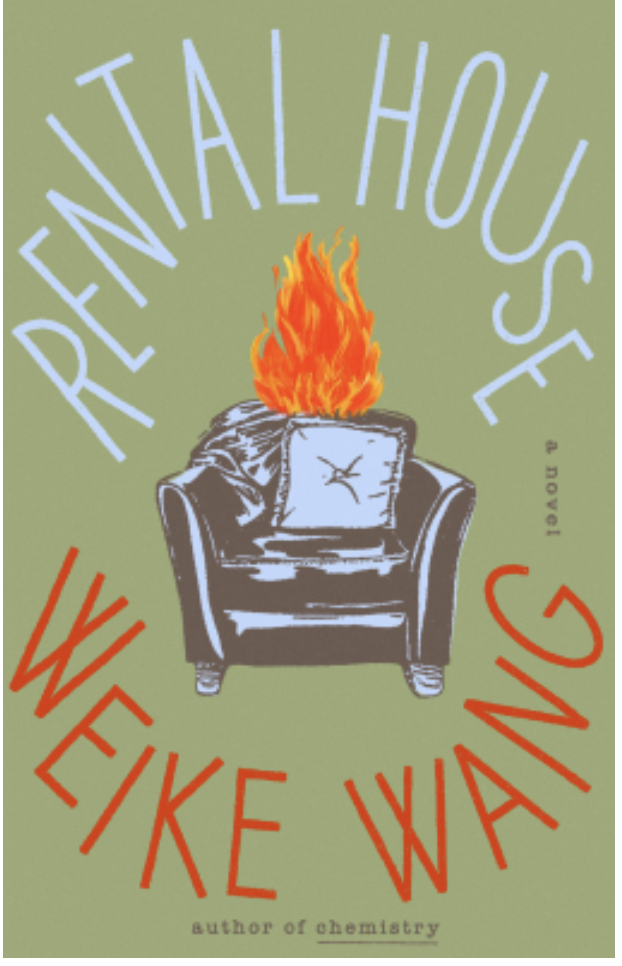
Rental House by Weike Wang (Literary Fiction)

Two vacations five years apart. A married couple from (very) different backgrounds invite their parents to join them for vacation number one.. Keru’s Chinese immigrant parents are post-Covid germaphobes with a suffering-suffused view of life, while Nate’s are outwardly friendly xenophobes from rural Appalachia. On vacation number two, nobody is invited … but some interesting people show up anyway. The whole thing is an incredibly perceptive description of what happens when people of multiple (and often conflicting) worldviews come together.

I read this shortly after reading Tamim Ansary’s “The Invention of Yesterday,” a book blaming most of history on the clashing of misunderstood worldviews (he’s not wrong). Rental House looks at this same problem at the personal level — clashing individual worldviews and the resulting problems and miscommunications. Keru’s observations and incisive analysis gets to the root of how we understand (or don’t) each other — what each person values, perceives, prioritizes and feels entitled to — things people often don’t take the time to understand even about themselves.

I found this to be a remarkably non judgmental book. The clashes developed across the board — political affiliations, race, socioeconomic class, choice of profession, and family expectations — but each person had both different opinions and different levels of investment in those opinions. Did the clash cause mild irritation or offend deeply held principles? Did one person try to understand another, or just get upset at how stubborn the other person was? Keru applied her analytic blade to herself just as often, noting when she may have overreacted to perceived slights, as an example. I appreciated the analytic vs emotional drive for understanding. Reading through someone’s pain allows an empathetic connection for the reader, but doesn’t teach anything about understanding why that someone is in pain, or how he or she (or the reader) might prevent similar pain in the future.

I like Wang’s writing style — clear, insightful, wry, and thought provoking. I also appreciate how thoroughly drawn her characters are — I feel I understand these people in ways that would take years in real life.

Just a few quotes — don’t want to give too many away :
“… An exercise that was like, shoving a square peg into a round hole, but with enough force, and with every neuron dedicated to the problem, he could smash the square peg through.”

“and this led to a heated discussion that characterized the early years of their dating – the aggressive comparison of their worldviews, which ultimately led to clarifications in their basic English vocabularies. Expats left wealthy nations to humble themselves at the altar of the world, immigrants escaped poorer nations to be the workforce of the rich. “

“…because suffering is required. To suffer is to strive and to set a bar so high that one never becomes an obstacle a a complacent. to become complacent is to become lazy and to lose one’s spirit to fight, and to lose one’s spirit to fight is to die. So, to suffer is to live. “

“Then his father chirped back a safe retort, next his mother, and Keru wondered if all white families in public acted like a set of affable birds.”

Thank you to Riverhead Books and NetGalley for providing an advance copy of this book in exchange for my honest review. The book was published on December 3rd, 2024.
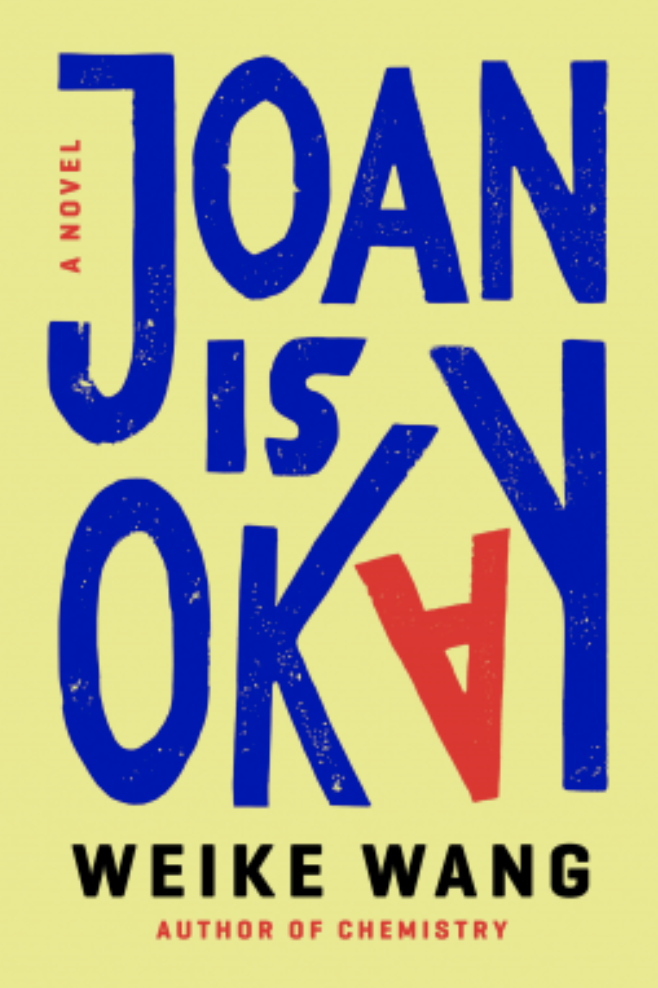
Joan is OK by Weike Wang (Literary / Multi-cultural Fiction

Writing: 4.5/5 Plot: 4/5 Characters: 4.5/5

Joan is a Chinese-American ICU doctor in New York City on the eve of what would become a devastating pandemic. She loves to work and is confused by inane HR department pronouncements insisting that she work less. She is the daughter of immigrant parents who packed up and returned to a better lifestyle in China once she had been fully launched. She is also the younger sister of a brother who has a very different idea of what it means to be a success. As Joan’s mother is visiting when the pandemic hits and is trapped in the US, we are treated to a stereotype-busting combination of Chinese vs American perspectives on life as the pandemic unfurls across the globe.

This is the second memoir-style story by Weike Wang. It is told in a dry, literal, unemotional, yet highly introspective style that I really enjoy. I love being treated to the inside story of what is going on in someone’s head — especially someone as different from me as Joan.

Let me be clear that this is not a story about the pandemic — the first inklings don’t even appear until half way through the book. Instead, it’s the story of Joan’s life as she struggles to figure out her place in the world. While never explicitly stated, Joan will appear to many as being on the spectrum — she is literal, she doesn’t have typical relationships, and she has intense focus — whether she is or not doesn’t matter to me. She is an interesting individual with her own ways of perceiving and handling the world around her and the author does an amazing job of detailing these perceptions and thought processes throughout the story.

Some excellent quotes:

“I listened. I smiled. I felt my teeth get cold from not being able to recede back into my mouth.”

“Relieved of any expectation to respond, I could simply listen and fun-sway along in my head. My on-service brain was the trenches, but my off-service one was a meadow.”

“Everything about him was average: five nine, 167 pounds, a face like most faces, like mine, situated somewhere between striking and hideous.”

“The surgical ICU had its surgeons and anesthesiologists, doctors who wrote the shortest and most indecipherable notes. The notes reminded me of haikus, and because I wasn’t a literary person, I called my time in this unit difficult poetry.”

“I had forgotten about crowds in China, that being in a crowd here was like being lost at sea, and for airports, train stations — for any transportation hub, any city really — for all the tourist sites… the phrase ren hai exists or “people sea”.

“The lobe of rage burst in my head like a polyp. I could feel a liquid temper seeping out of my pores.”

“Neither could imagine having wasted another person’s time or consuming every square inch of air in a room. Because Room People were full of themselves. They believed their own perspectives reigned supreme.”

“I hope you’re making some money at least, she pressed on. Because in China, a doctor makes the same salary as a public school teacher. There’s no difference in status or prestige between the two roles and the work-life balance is, of course, much better for the teacher.”

“… though his reproductive window was much longer. Did it make sense to call it a window, if after puberty it was flung open for the rest of his life?”

Thank you to Random House and NetGalley for providing an advance copy of this book in exchange for my honest review. The book will be published on January 18th, 2022.

Chemistry by Weike Wang

Writing: 4/5 Characters: 4/5 Plot: 4/5 background: 5/5

A belated (she’s in her 20s) coming-of-age story about a young, Chinese-American woman in the midst of capsizing both her Chemistry PhD and long-term relationship. We view the process of life dismantling and reconstruction from within her own mind through her unique, first-person voice.

The writing style is spare and humorous, comprised of short 1-3 page segments bundled into two large “parts.” Tidbits of chemistry, science, Chinese history, culture, and parenting are brought in as elements of the crucible which forged her personality. We never learn her name — the narrative is all 1st person — and only one character — the man she lives with — is given a name (Eric). Everyone else is referred to by label: the best friend, the lab mate, the dog, her mother, her father, the math student, the husband (of the best friend), and the Chinese roommate.

While some of the characters (her emotionless, overbearing, push to succeed parents for example) might appear to be stereotypes, they are completely personalized in backstories told through her memories. They appear quite real. One day our narrator sees a flyer in the park written by someone named “Peggy” that says: “The way you talk to your human children becomes their inner voice.” She rails at this: “Who is Peggy? I ask the other dog owners. And does she have a PhD to back up such claims?” I love this short scene because clearly her upbringing has been condensed into the inner voice that constantly plagues her.

I had a hard time reading this at first — I found the narrator to be self-absorbed and that is not a characteristic I favor in my book-friends. I felt sorry for the boyfriend who had no flaws, was very good to her, and who proposed marriage in chapter one. However, as I continued reading, it became clear that she was literally unable to cope with the life she was living and was going through the necessary steps to create a life that she could live — and voila — the story!

Very well-written, entertaining, and insightful.