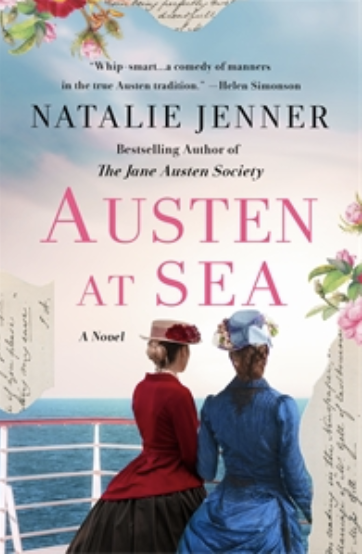
Austen at Sea by Natalie Jenner — Read by Rupert Graves (Historical Fiction)

An enthusiastic five stars for this marvelously fulfilling piece of historical fiction. The story manages to be both intellectually rich and emotionally pleasing. My perfect blend! In 1865, two daughters of the long-widowed Massachusetts Supreme Court Justice pen a daring request to the only surviving brother of their favorite author — Jane Austen. Meanwhile, two Philadelphia book collectors have similarly engaged with Admiral Austen about Austen memorabilia and editions. On the side, the Justices of the Massachusetts Supreme Court have elected to read and discuss the entire Austen oeuvre over the very summer break that sees the four correspondents heading off to England. Their discussions are completely engrossing, putting into dialog multiple well crafted opinions and surprising me with their depth. The story itself takes the reader from Boston, across to the sea to Hampshire, and concludes with a courtroom drama spectacular spanning both countries.

On the surface, this could pleasurably be read as an engaging comedy of manners a la Austen herself, with the delightful development of surprising relationships etc. But under the tip of the romantic iceberg lies the depth, thoroughness, and insight of the literary, political, legal, and economic contexts of the time period. Equality, justice, freedom — these are topics on everyone’s tongues during the post-Civil War recovery period, the still relative newness of the United States, and the current battles in both locations for various forms of women’s rights (including, but not limited to, women’s suffrage). These issues are brought out with a number of different techniques. Those discussing Austen’s works have literary discussions about her characters, their roles, purposes, desires, and life lessons. Women’s rights are addressed (and argued) through a fascinating panoply of laws, Acts, and jurisdictions — exemplified by the situations and experiences of the various characters. It’s obvious to us today (I hope!) that women should have rights equal to those of men, but to hear the completely sensical arguments and rebuttals on both sides of the issue during that time period by people who were not inherently “evil,” was deeply interesting.

I both read and listened to this book. I actually preferred the audio in this case. It slowed me down enough to actually listen to different viewpoints and consider them carefully — I usually read too fast and often miss important details. Rupert Graves is the reader — a wonderful actor with a beautiful reading voice. I learned a lot about Austen’s life and her works (despite the fact that I’ve read each multiple times) and enjoyed a wide array of references from that time period — including Louisa May Alcott who appeared in a delightful cameo role. The cast of characters at the start of the book is quite helpful.

Highly recommended.

Thank you to St. Martin’s Press, Macmillan Audio, and NetGalley for providing an advance copy of this book in exchange for my honest review. The book will be published on May 6th, 2025.
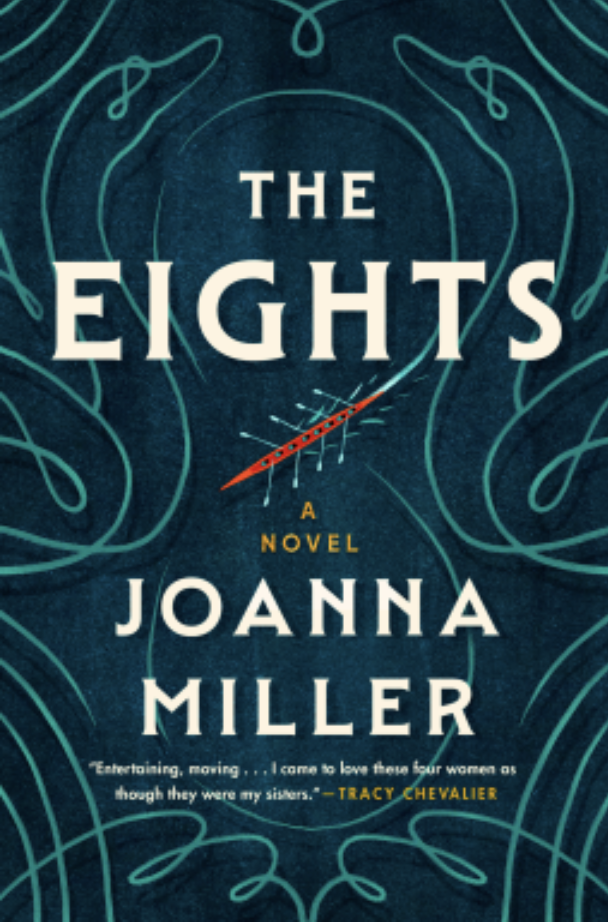
The Eights by Joanna Miller (Historical Fiction)

Historical fiction at its best! Four women are part of the historic 1920 matriculation of women to Oxford — the first in over 1,000 years. Roomed together in “corridor eight,” this is the story of their first year, with several flashbacks to flesh out their personal context. Beatrice Sparks — almost 6 feet tall, daughter of a famous (and vigorous!) suffragette, with an appetite for politics; Marianne Gray — the motherless daughter of an English vicar; Dora Greenwood — beautiful and still grieving for the brother and fiancee who died in the war; and Ottoline Wallace-Kerr — wealthy and at odds with her family’s expectations, who keeps herself calm with mathematics. There are some secrets and some surprises — all quite realistic and perfectly embedded in the well-drawn context of the time. And for the girls, a discovery of unexpected, but deeply felt, friendship.

I say this is historical fiction at its best because it finds the right balance between the extremes of dull, historic, facts and overly sensationalized (and manipulatively emotional) story telling with a minimum of historic accuracy. There are no modern sensibilities sneaking in — but plenty of individual reactions and experiences nestled in the very real context of the day. The country had just emerged from WWI, (some) women had just gotten the vote, and now — Oxford was open to women who wanted to pursue a more intellectual path through life. I loved the many small details that peppered the prose: a new mystery author — Agatha Christie — who was set the challenge to write a novel where it was impossible to guess who did it — and succeeded; the introduction of ouija boards; stories of the Bodlein library and how the rare books were protected during the war; the second wave of influenza; the origin of Chequers (home to Britain’s prime ministers); practice trenches in the countryside; suffragette pennies, etc. A pretty interesting Oxford-style debate on whether or not women should be at Oxford at all. I loved the bits of discussions on various studied subjects. The secondary impact of the war on various people after the war was over was equally interesting — more personal, individualized, and detailed. Philosophical and ethical issues pervaded the experiences because how could they not?

I like historical fiction because, when done well, you learn about what history might have meant to the people who lived through it. The author’s note delineates fact from fiction as well as describes inspirations — with a nice bibliography on relevant sources. Also — there is a glossary at the end that I really wish I had known about before I finished! Plenty of period specific slang was used that I had to constantly look up or guess at. Now you know!

Thank you to G. P. Putnam’s Sons and NetGalley for providing an advance copy of this book in exchange for my honest review. The book will be published on April 15th, 2025.

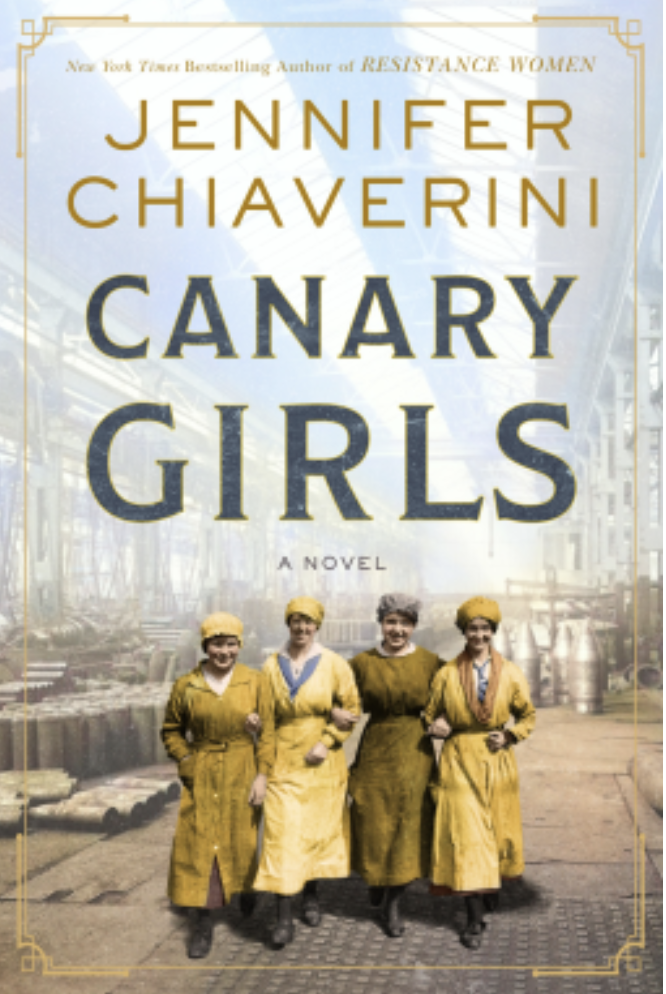
Canary girls by Jennifer Chiaverini (Historical Fiction)

Writing: 4/5 Characters: 4.5/5 Plot: 5/5

A story about Britain’s World War One “munitionettes” — women who answered the call of duty and worked in round-the-clock shifts to produce the much needed munitions for the war arsenal. The label referred to a specific group of munitionettes who worked with the (very poisonous) trinitrotoluene (TNT) which over a short period of time, turned their skin, bleached their hair (green for brunettes and white for blondes), and brought on plenty of health problems, some fatal. The story follows three women from just before war breaks out until it is over: Lucy, married to a professional footballer (that’s soccer to us) and architect; Helen, daughter of an Oxford professor whose husband runs one of the biggest munitions plants; and April, a girl sent into service at 15, who leaves for a better paying, more meaningful job in munitions once the call for women goes out.

Chiaverini’s last book (Switchboard Soldiers) focused on the female Telephone Operators who managed the switchboards in France during WWI (at a time when every single call was connected manually). She brings the same attention to historical detail to this book managing to cover a panoply of issues from the perspective of multiple women who are driving or affected by them . These include women’s suffrage which was put on hold during the war with promises made for after; women’s football, which took off during the war and was brutally shut down by the men’s league until 1971; the massive propaganda techniques used to make men enlist; the pressure on male footballers to enlist when no such pressure was applied to the more elite leagues (golfers, cricketers, and polo players); the impact on British citizens of German heritage, the many fatal accidents at munitions plants; the hunger resulting from German blockades; the posters for “surplus women” to migrate out of country; and the Swiss Medical Mission prisoner exchange (to name just a few!)

I was in awe of her ability to weave in so much about life for these women in that time period in such a meaningful, genuine, and never heavy handed way. Could not put it down. If you haven’t read Switchboard Soldiers, go back and read that one, too.

Great bibliography!

Thank you to William Morrow and NetGalley for providing an advance copy of this book in exchange for my honest review. The book will be published on August 8th, 2023.

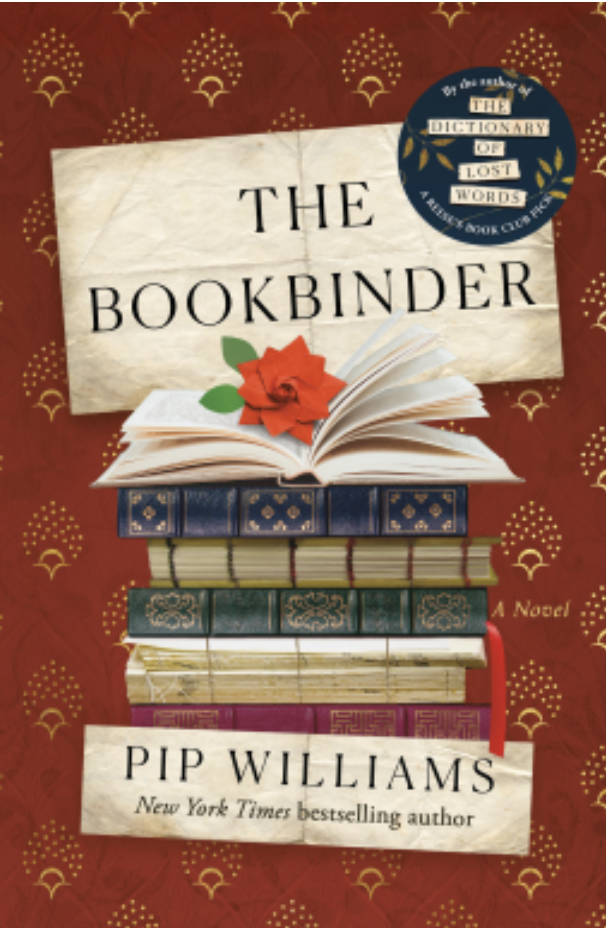
The Bookbinder by Pip Williams (Historical Fiction)

Writing: 4/5 Plot: 4/5 Characters: 5/5

Another book by Pip Williams — author of The Dictionary of Lost Words — about an element of The Oxford University Press (aka Clarendon Press) during the early 1900s. While Dictionary focused on those working to compile the OED, Bookbinder focuses on those working in the physical production of the books.

The eponymous bookbinder is Peggy Jones — a young woman who is working in the “Bindery” — the all-female component of the Press, which focussed on folding and preparing the pages of books. There is an absolutely fascinating 1925 silent video titled “Oxford University Press and the Making of a Book” which really helped me visualize Peggy’s work.

Peggy has been working at the Press with her neurodivergent (my term, not the way it is described in the book) twin sister since the age of 12 (they are now ~22). She has always wanted more — she longs for an education, longs to read and have opinions on the books she is folding — but feels that is impossible for someone of her background. She reads bits as she folds (watch the video — you’ll see how difficult that is), and the canal boat they live in is literally papered with scraps of books that did not meet quality requirements, but certainly meet hers.

The time period covered spans WWI — from 1914 to 1918 — with Peggy’s quest for “more” tied in with opportunities at the Press, the fight for women’s suffrage, and her volunteering with recuperating soldiers and Belgian refugees — all arisising from the upheaval of everyday life. Williams did an excellent job of bringing this time period to life, I was able to feel all the complex emotions of that insane time in a manner that felt very time appropriate.

I found the beginning a little muddy and confusing, but once I got into it, I very much enjoyed the story — particularly the vibrant and believable characters: the twin sister, some of the refugees, the canal community, and various suffragists, librarians, and female students. Every one was drawn deeply and was a person I would want to know. I also loved the details of how the Press was run, women’s colleges (which at the time were not allowed to confer degrees), access to libraries, and classical study. And of course, the ultimately successful effort of a woman from the “wrong side of the tracks” to attain an education and make more of herself.

Two interesting quotes:
“When we bound these books, I thought, they were identical. But I realised they couldn’t stay that way. As soon as someone cracks the spine, a book develops a character all its own. What impresses or concerns one reader is never the same as what impresses or concerns all others. So, each book, once read, will fall open at a different place.”

“The words used to describe us define our value to society and determine our capacity to contribute. They also … tell others how to feel about us, how to judge us.”

Thank you to Ballantine Books and NetGalley for providing an advance copy of this book in exchange for my honest review. The book will be published on August 1st, 2023

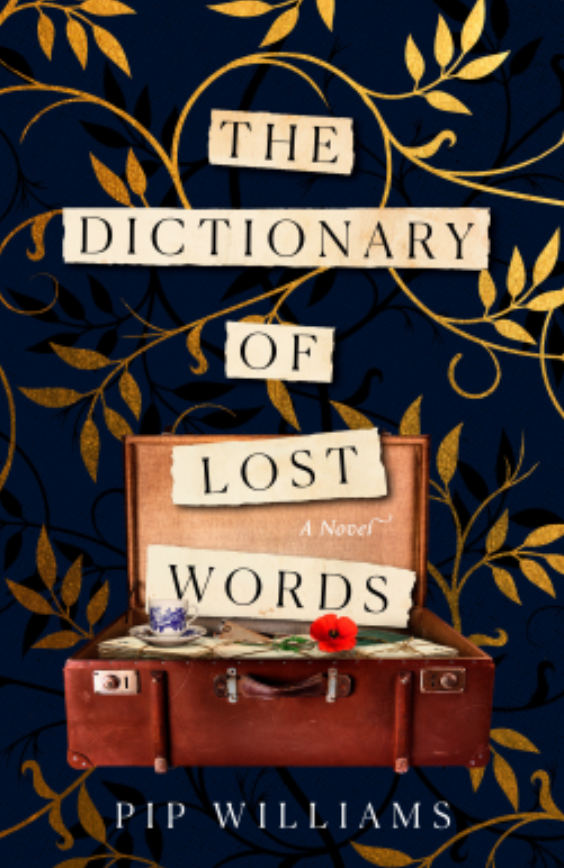
Dictionary of Lost Words by Pip Williams

Loved this book! Motherless Esme grows up in the Scriptorium — OED prime editor James Murray’s repurposed garden shed — playing under the table as her father and other lexicographers labor over entries for the decades long effort that will result in the magnificent Oxford English Dictionary.

As she grows older and becomes more involved in the work, Esme begins to notice patterns in the words that are excluded and the definitions that lean away from certain interpretations. She begins to collect words — women’s words, bawdy words, words spoken but never written from the poor and illiterate. Her awakening to the world around her via the medium of the constituent pieces of the English is simultaneously subtle and stunning. Spanning and encompassing the women’s suffrage movement and World War I, it is a phenomenal coming-of-age story with intellectual and emotional growth circumscribed on the story.

Excellent writing with detailed and fascinating descriptions of the process of compiling a dictionary from scratch including solicitation, editing, typesetting, and printing. Wonderful characters including Esme, her Da, the individual lexicographers, her Godmother Edith (also a contributor / editor), and the Murray’s maid Lizzie who serves as a kind of mother figure. While Esme is fictional, many of the other named characters are not, and Williams does a skilled job at weaving Esme and her ideas into an historically accurate narrative.

Highly recommended.

Thank you to Ballantine Books and NetGalley for providing an advance copy of this book in exchange for my honest review. The book will be published on April 6th, 2021.