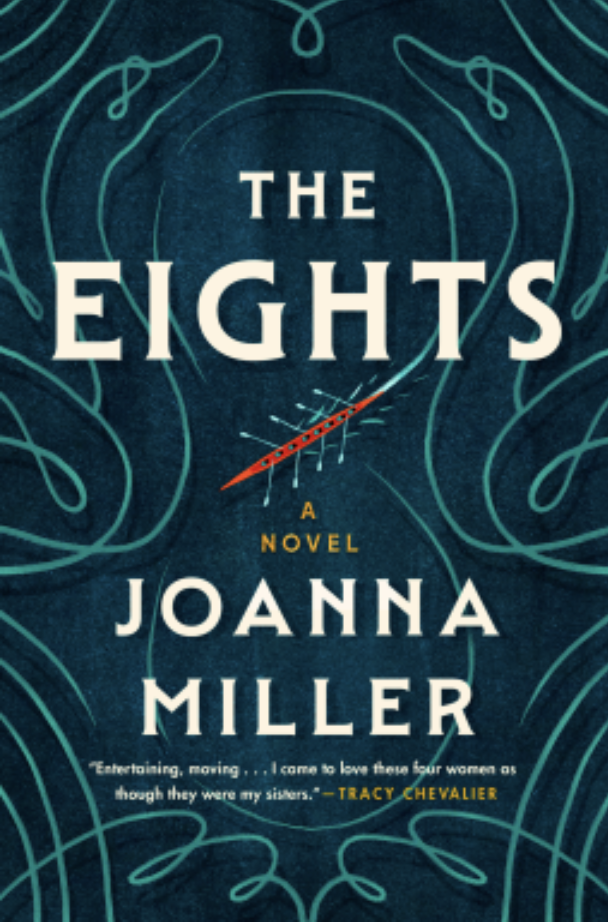
The Eights by Joanna Miller (Historical Fiction)

Historical fiction at its best! Four women are part of the historic 1920 matriculation of women to Oxford — the first in over 1,000 years. Roomed together in “corridor eight,” this is the story of their first year, with several flashbacks to flesh out their personal context. Beatrice Sparks — almost 6 feet tall, daughter of a famous (and vigorous!) suffragette, with an appetite for politics; Marianne Gray — the motherless daughter of an English vicar; Dora Greenwood — beautiful and still grieving for the brother and fiancee who died in the war; and Ottoline Wallace-Kerr — wealthy and at odds with her family’s expectations, who keeps herself calm with mathematics. There are some secrets and some surprises — all quite realistic and perfectly embedded in the well-drawn context of the time. And for the girls, a discovery of unexpected, but deeply felt, friendship.

I say this is historical fiction at its best because it finds the right balance between the extremes of dull, historic, facts and overly sensationalized (and manipulatively emotional) story telling with a minimum of historic accuracy. There are no modern sensibilities sneaking in — but plenty of individual reactions and experiences nestled in the very real context of the day. The country had just emerged from WWI, (some) women had just gotten the vote, and now — Oxford was open to women who wanted to pursue a more intellectual path through life. I loved the many small details that peppered the prose: a new mystery author — Agatha Christie — who was set the challenge to write a novel where it was impossible to guess who did it — and succeeded; the introduction of ouija boards; stories of the Bodlein library and how the rare books were protected during the war; the second wave of influenza; the origin of Chequers (home to Britain’s prime ministers); practice trenches in the countryside; suffragette pennies, etc. A pretty interesting Oxford-style debate on whether or not women should be at Oxford at all. I loved the bits of discussions on various studied subjects. The secondary impact of the war on various people after the war was over was equally interesting — more personal, individualized, and detailed. Philosophical and ethical issues pervaded the experiences because how could they not?

I like historical fiction because, when done well, you learn about what history might have meant to the people who lived through it. The author’s note delineates fact from fiction as well as describes inspirations — with a nice bibliography on relevant sources. Also — there is a glossary at the end that I really wish I had known about before I finished! Plenty of period specific slang was used that I had to constantly look up or guess at. Now you know!

Thank you to G. P. Putnam’s Sons and NetGalley for providing an advance copy of this book in exchange for my honest review. The book will be published on April 15th, 2025.
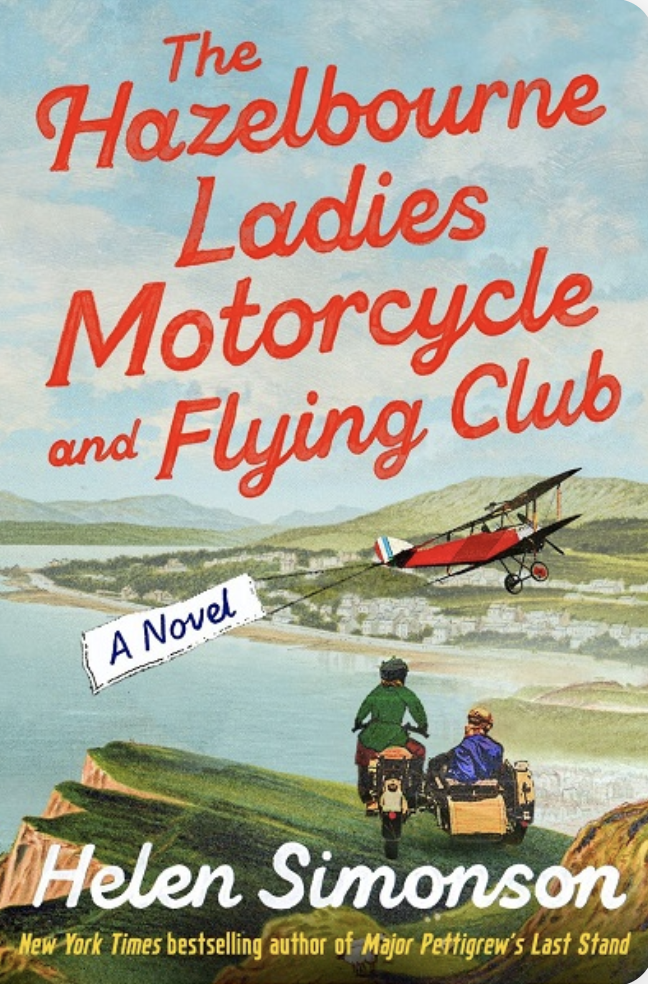
The Hazelbourne Ladies Motorcycle and Flying Club by Helen Simonson (Historical Fiction)

Writing: 4.5/5 Characters: 5/5 Plot: 4/5

Constance Haverhill is a girl with few prospects. 1919 finds her spending a summer as companion to an elderly lady at a posh hotel at the seaside with an unpleasant future looming before her. The Pre-War Practices Act of 1919 gave returning soldiers their pre-war jobs back and forbade women from holding jobs in Covered Occupations. While Constance is pondering her (limited) options, she meets and is befriended by Poppy Wirrall, a local baronet’s daughter and proprietor of the fledgling women’s motorcycle-based taxi service which she hopes to expand to flying lessons for women. Poppy’s primary goal is to keep women employed and progressing while the government and local councils work equally hard to send the women back to homes and domestic service.

The book is beautifully written with a cast of compelling characters set in a very realistic post-war environment. Each person represents a kind of cohort of the day — women facing the loss of their livelihood and an (extremely) limited supply of potential husbands, wounded soldiers returning to a population that doesn’t want to be reminded of the war, those of the wealthy class still scheming for good matches at the expense of ethics and friendship, foreign born naturalized citizens who had been detained during the war and relegated to low status jobs, and even a mysterious Indian national whose character brings to light the treatment of Indians in Britain and the under-appreciated contribution of Indian men in the war. Simonson writes with intricate detail about the inner thoughts and struggles of several characters as well as painting a comprehensive picture of life in that era. It’s an Austen-style novel of manners combined with a feminist look at post-war lives in Britain with a little romance tossed in.

My only complaint might be that certain “types” of people were not given interior lives but were presented as pure negative stereotypes — mostly people of the monied class and one horribly stereotyped American. I’m sure there were plenty of Americans at the time who really were that unpleasant, but being an American myself I would have enjoyed having at least one “decent” American included 🙂

Thank you to The Dial Press and NetGalley for providing an advance copy of this book in exchange for my honest review. The book will be published on May 7th, 2024.

Canary girls by Jennifer Chiaverini (Historical Fiction)

Writing: 4/5 Characters: 4.5/5 Plot: 5/5

A story about Britain’s World War One “munitionettes” — women who answered the call of duty and worked in round-the-clock shifts to produce the much needed munitions for the war arsenal. The label referred to a specific group of munitionettes who worked with the (very poisonous) trinitrotoluene (TNT) which over a short period of time, turned their skin, bleached their hair (green for brunettes and white for blondes), and brought on plenty of health problems, some fatal. The story follows three women from just before war breaks out until it is over: Lucy, married to a professional footballer (that’s soccer to us) and architect; Helen, daughter of an Oxford professor whose husband runs one of the biggest munitions plants; and April, a girl sent into service at 15, who leaves for a better paying, more meaningful job in munitions once the call for women goes out.

Chiaverini’s last book (Switchboard Soldiers) focused on the female Telephone Operators who managed the switchboards in France during WWI (at a time when every single call was connected manually). She brings the same attention to historical detail to this book managing to cover a panoply of issues from the perspective of multiple women who are driving or affected by them . These include women’s suffrage which was put on hold during the war with promises made for after; women’s football, which took off during the war and was brutally shut down by the men’s league until 1971; the massive propaganda techniques used to make men enlist; the pressure on male footballers to enlist when no such pressure was applied to the more elite leagues (golfers, cricketers, and polo players); the impact on British citizens of German heritage, the many fatal accidents at munitions plants; the hunger resulting from German blockades; the posters for “surplus women” to migrate out of country; and the Swiss Medical Mission prisoner exchange (to name just a few!)

I was in awe of her ability to weave in so much about life for these women in that time period in such a meaningful, genuine, and never heavy handed way. Could not put it down. If you haven’t read Switchboard Soldiers, go back and read that one, too.

Great bibliography!

Thank you to William Morrow and NetGalley for providing an advance copy of this book in exchange for my honest review. The book will be published on August 8th, 2023.

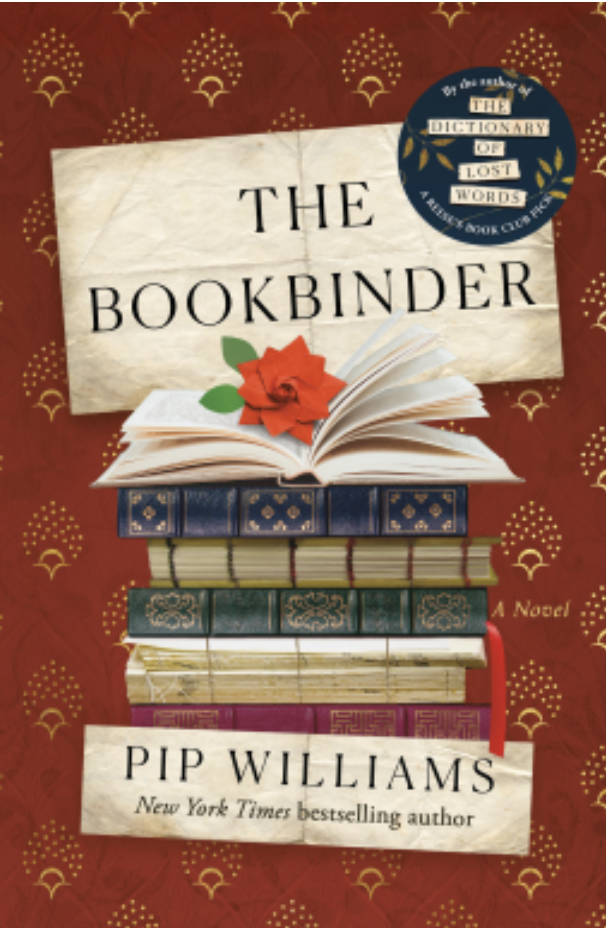
The Bookbinder by Pip Williams (Historical Fiction)

Writing: 4/5 Plot: 4/5 Characters: 5/5

Another book by Pip Williams — author of The Dictionary of Lost Words — about an element of The Oxford University Press (aka Clarendon Press) during the early 1900s. While Dictionary focused on those working to compile the OED, Bookbinder focuses on those working in the physical production of the books.

The eponymous bookbinder is Peggy Jones — a young woman who is working in the “Bindery” — the all-female component of the Press, which focussed on folding and preparing the pages of books. There is an absolutely fascinating 1925 silent video titled “Oxford University Press and the Making of a Book” which really helped me visualize Peggy’s work.

Peggy has been working at the Press with her neurodivergent (my term, not the way it is described in the book) twin sister since the age of 12 (they are now ~22). She has always wanted more — she longs for an education, longs to read and have opinions on the books she is folding — but feels that is impossible for someone of her background. She reads bits as she folds (watch the video — you’ll see how difficult that is), and the canal boat they live in is literally papered with scraps of books that did not meet quality requirements, but certainly meet hers.

The time period covered spans WWI — from 1914 to 1918 — with Peggy’s quest for “more” tied in with opportunities at the Press, the fight for women’s suffrage, and her volunteering with recuperating soldiers and Belgian refugees — all arisising from the upheaval of everyday life. Williams did an excellent job of bringing this time period to life, I was able to feel all the complex emotions of that insane time in a manner that felt very time appropriate.

I found the beginning a little muddy and confusing, but once I got into it, I very much enjoyed the story — particularly the vibrant and believable characters: the twin sister, some of the refugees, the canal community, and various suffragists, librarians, and female students. Every one was drawn deeply and was a person I would want to know. I also loved the details of how the Press was run, women’s colleges (which at the time were not allowed to confer degrees), access to libraries, and classical study. And of course, the ultimately successful effort of a woman from the “wrong side of the tracks” to attain an education and make more of herself.

Two interesting quotes:
“When we bound these books, I thought, they were identical. But I realised they couldn’t stay that way. As soon as someone cracks the spine, a book develops a character all its own. What impresses or concerns one reader is never the same as what impresses or concerns all others. So, each book, once read, will fall open at a different place.”

“The words used to describe us define our value to society and determine our capacity to contribute. They also … tell others how to feel about us, how to judge us.”

Thank you to Ballantine Books and NetGalley for providing an advance copy of this book in exchange for my honest review. The book will be published on August 1st, 2023

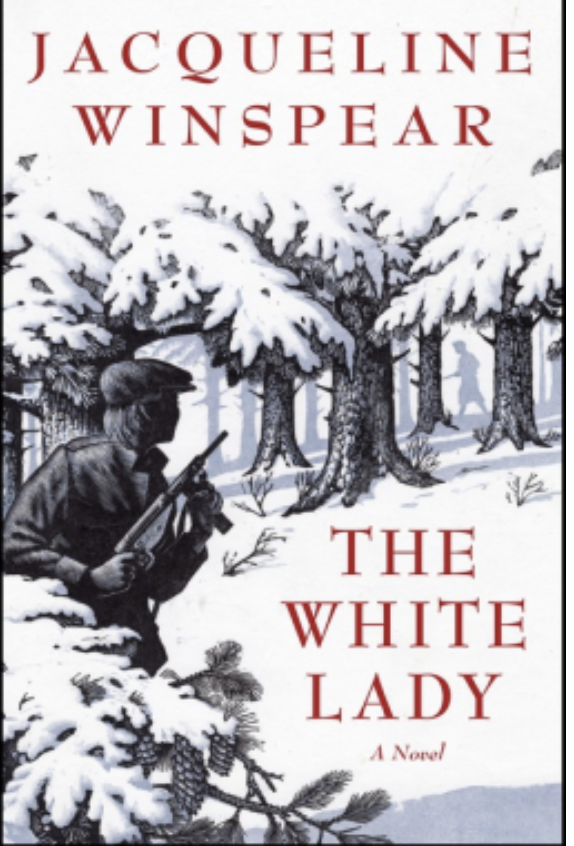
The White Lady by Jacqueline Winspear (Historical Fiction)

Writing: 3/5 Plot: 4/5 Characters: 4/5
Elinor White has been trained to be a predator rather than prey which served her well during WWI when her home in Brussels was occupied by Nazis. It also served her well during WWII as she worked to protect her adopted country (England). But exercising those skills left their mark, and she finds herself torn between protecting those who can’t protect themselves and letting go of the violence that continues to haunt her.

A standalone (or possible new series beginning?) from the author of the Maisie Dobbs series, this book is kind of a mix between an historical novel and a mystery, with an emphasis on the former. It had a bit of a slow start but I was drawn in and found myself caring very much about the characters. I’m a big Winspear / Maisie Dobbs fan. I wouldn’t mind finding out more about Elinor White if this turns into a series…

Thank you to Harper and NetGalley for providing an advance copy of this book in exchange for my honest review. The book will be published on March 21st, 2023

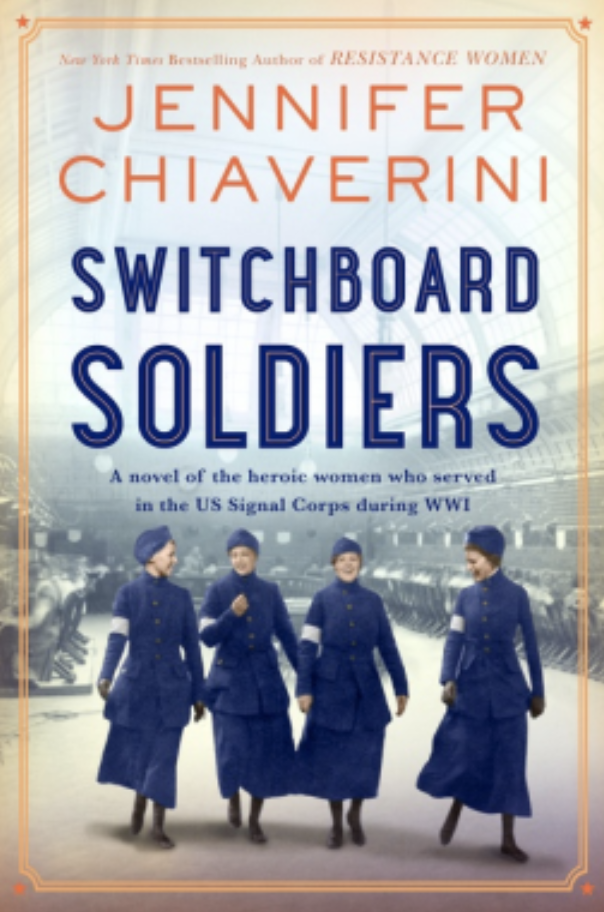
Switchboard Soldiers by Jennifer Chiaverini (Fictionalized History)

I absolutely loved this book — one of the best pieces of fictionalized history I’ve read in a long time. The subject is the recruitment of female Telephone Operators to manage the switchboards in France during WWI as part of the Signal Corps.

Few people alive today can remember a time when every single call made using a telephone had to go through an actual person to be connected. And physical lines had to be in place for any call to be connected. Now picture the war torn fields of France during WWI — physical lines had to be laid and relaid to remote and exposed pieces of war terrain, and operators had to be in place in multiple locations to connect calls to send out new orders, to get reports, to contact other units and allies. It is estimated that during the two years the 223 bilingual women were in place, they connected over 26 million calls.

In this book, the history IS the story, not the backdrop for a romance or a mystery, and the story is rich and full of historical, technical, and personal detail. Characters — both real and fictional — are true to the time as they reflect on their roles, worries, and hopes. We get all the details of their lives: training, required uniforms, wildly varying accommodations, gas mask training, the conditions of the locals, the camaraderie they develop, and the respect and appreciation they slowly earn from the initially skeptical men. Also, the strong patriotism each of them feels — true to the time, patriotism is not the dirty word it appears to have become today. This book is well researched (an excellent and long bibliography available at the back) and does not sink into melodrama — there are no broken hearts, gratuitous sobbing, or overwhelming romances. These women were competent, had an important purpose, and thrived in an environment of hard work, pressure, and real need. It wasn’t all rosy — after the war they were treated as volunteers and were discharged without proper veterans benefits. This was not rectified until 1977 when only 50 of the women were still alive.

The narrative follows three women (one real, two fictional) as they go through the process from recruitment shortly after the U.S. enters the war through the Versailles Peace Talks: Grace Banker of New Jersey (who later received the Distinguished Service Medal), Marie Miossec (a Frenchwoman and aspiring opera singer), and Belgian born Valerie DeSmedt (whose widowed mother ran a boarding house in Los Angeles).

Highly recommended.

Thank you to William Morrow and NetGalley for providing an advance copy of this book in exchange for my honest review. The book will be published on July 19th, 2022.

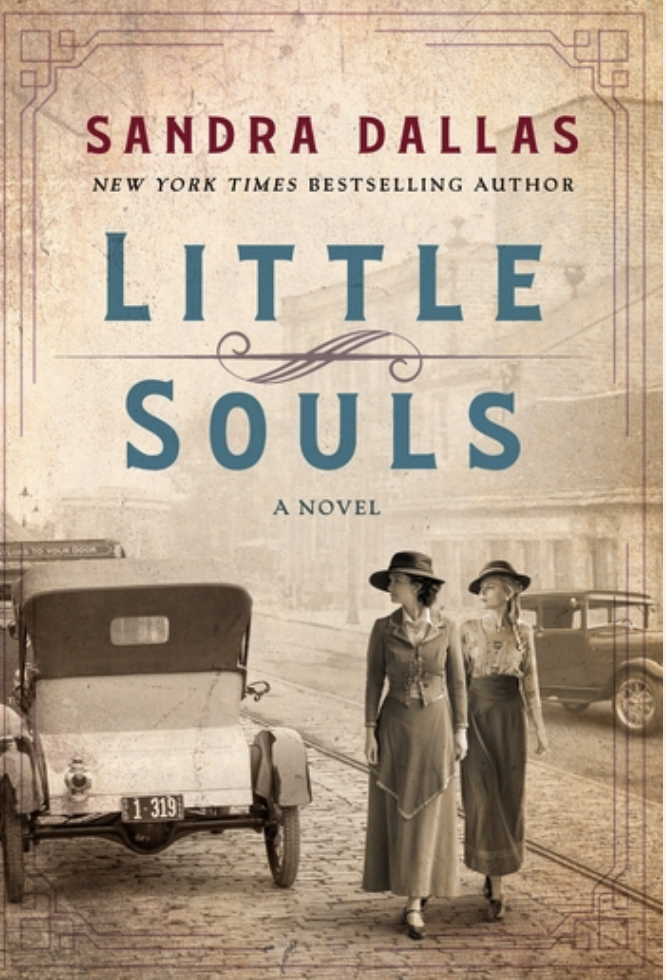
Little Souls by Sandra Dallas (Historical Fiction)

Plot: 4.5/5 Characters: 4/5 Writing: 4/5

Little Souls takes place in Denver, 1918. The Influenza has hit the population badly, and the men are still away at war. At 19, Lutie Hite is a carefree artist working in advertising for the local department store; her older, more careworn, sister Helen is a nurse. Through an interesting set of events they become responsible for Dorothy, the ten-year old daughter of their now deceased tenant. From these beginnings follows a fairly wild, often heartbreaking, but ultimately heartwarming ride.

I’m a big Sandra Dallas fan. Dallas writes Western historical fiction about strong women making it through adversity with fortitude, intelligence, and the help of their community. She always brings in the small details of life in that particular time and place to make everything ring true.

Her stories tend to the dramatic, but never go over the top and feel quite realistic for their time. She is even-handed about how people thought and behaved at the time — different characters have different opinions on everything from mask-wearing (ha!) to personal morality, and no opinion is presented as obviously better than the others. Religious feeling and participation was a big part of life in that place and time, and I liked how she treated it. While this in no way dominates the book, there were some beautiful passages about how individual characters felt about God that moved me, despite my not being religious myself.

This is a real page-turner — I’m afraid I annoyed my husband by reading on into the night…

Thank you to St. Martin’s Press and NetGalley for providing an advance copy of this book in exchange for my honest review. The book will be published on April 26th, 2022.

The War That Ended Peace by Margaret MacMillan (Non-fiction)

I was surprised at how much I loved this book. I’m a fiction reader and get easily bored (or horrified) by drawn out descriptions of battles, strategies, and political maneuvers. This book was fantastic because it focused on the “why.” The eponymous war (World War I) is literally the epilogue of this book. The first 600+ pages is on what happened in the 30+ years before that made the war possible … though not inevitable.

That is what really fascinated me about the story. MacMillan brings out the details of the individuals involved, the context of the time, the recent events, and the crises averted, to show that so many small things — had they gone just a little differently — might have averted the war that cost 8.5 million lives, with 8 million others missing, and 21 million wounded. Her style is ideal — every detail relevant, a cohesive structure that brings elements to light at the right time and a narrative style that brings the details together to make a coherent story. And no rambling! I don’t know why, but so many non-fiction writers seem to ramble endlessly!

In many places, the book read like a giant game of Risk. Large empires — some new (e.g. Germany had just unified in 1871), some dying (e.g. the Ottoman empire), some struggling to maintain the status quo (e.g. Austria Hungary) — each vying for status in the International community (largely by bickering over colonies and building up impressive militaries) while simultaneously dealing with internal strife in the form of nationalist movements from conquered peoples and new socialist / workers parties demanding rights. Philosophically, social Darwinism concepts had been introduced. Conrad, Austria Hungary’s chief of staff had the core belief (as did many others) that “existence was about struggle and that nations rose and fell depending on their ability to adapt.” MacMillan presents in-depth and well-documented character studies of all the players from the volatile and unpredictable Kaiser Wilhelm II, to his cousins, Britain’s Edward VII and the weak and unprepared Tsar Nicholas II (and his wife Alexandra — “a will of iron linked to not much brain and no knowledge”) to the spartan Franz Joseph of Austria Hungary as well as a panoply of prime ministers, ambassadors, military personnel and socialist leaders.

But my favorite line of all: “Finally…we should never underestimate the part played in human affairs by mistakes, muddles, or simply poor timing.”

As I read I kept having what I call my Gone With the Wind moments — I knew what was going to happen but I somehow kept hoping it would work out differently. With only verified quotes and actual events as material, MacMillan manages to convey the absolute desperation of many as the world drew closer and closer to war and the slow unraveling of the Concert of Europe. The description of this was chilling — rail and telegraph lines were cut, bank reserves were frozen, currency exchange stopped, trade stopped. “The lamps are going out all over Europe; we shall not see them lit again in our life.” (attributed to Sir Edward Grey, Britain Foreign Secretary in 1914). Although written in 2013 (pre-Trump), she often draws unnerving parallels between the situations in 1914 and those of our current time.

Some advice for reading — if you’re like me and find 600 pages of dense history overwhelming and off putting — read one chapter at a time and take as long as you like. The contents are so memorable that you can pick it up days later and not have forgotten a thing.

When I was Yours by Lizzie Page (historical fiction)

Writing: 3 Plot: 3 Characters: 2.5

I loved the beginning of this book — tight prose, humorous, great writing, and the promise of a story that spanned two world wars (as told in alternating chapter time periods). In 1914, Vivi Mudie-Coates is the young, beautiful, and conventional British woman who wants nothing more than to marry Edmund, the handsome, upper crust friend of her cousin Richard. In 1939, she is indeed married to Edmund, but is anything but happy. When the children begin to be evacuated from London, the childless couple are given Pearl, somewhat against Edmund’s wishes.

The parallel stories wander through all the standard places — nursing on the continent during the Great War, the bombing of Britain in WWII, the evacuation of London children, driving ambulances, friends and relatives killed… There is a theme of casual anti-semitism threaded throughout that becomes more personal to Vivi as the story evolves. This book has all the elements of a great story but it just didn’t work for me. The plot was dragged out, so what started as a tight beginning just went on and on without any of the depth that would make the time spent feel worthwhile. Instead, it veered into pure melodrama with increased bombing deaths, close calls, suicides, and missed opportunities for true love. Even worse (for me), I found the main character to be shallow and kind of stupid. She did not behave in a way that I found at all believable. I never warmed to her, and even towards the end — when she finally started to do the right thing — she did it in a petulant, selfish manner that I found quite off-putting.

This is possibly the first book I’ve reviewed that kept me going to the end because I wanted to know what happened, but that I really disliked. I hate to be so negative — I tend to only review books that I like because I don’t bother finishing the others but …

Thank you to Bookouture and NetGalley for providing an advance copy of this book in exchange for my honest review. The book will be published on April 16th, 2019.