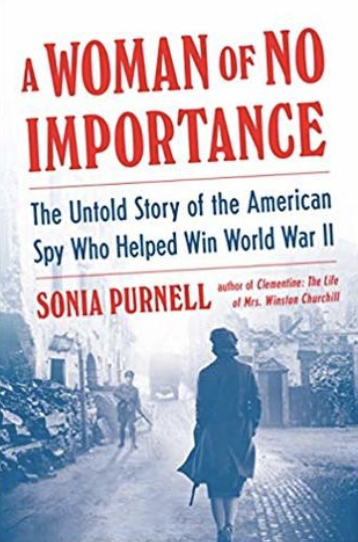
A Woman of no Importance by Sonia Purnell (Non fiction — History)

This is the story, compiled and abstracted from scores of historical documents, of Virginia Hall, the only woman to have earned her own section in the CIA Museum catalog (the other four being men who became directors of the CIA). Her role in supporting and mobilizing the French resistance over the years of Nazi occupation resulting in the successful liberation of France was eventually hailed with accolades from high and low … many, many years later. However, during her lifetime she spent most of her time wanting to be useful and consistently relegated to low level desk jobs despite her incredible success as an agent on the ground.

I’m not much of a history buff, but I found this story deeply compelling, both in terms of the actual work she did (described at a whole new level of detail than anything I had read before about this particular time and place) and the mechanics and psychology of war work and the place of women in it at the time. The narrative covers the truly incompetent beginnings of the British SOE and American OSS; the turmoil brought to experienced military types having to succumb to “modern” warfare, including the “immoral” use of spies; the creative ways the resistance engaged in harassment and sabotage and rescue operations; the various factions working against each other, rather than against the nazis when liberation drew near, to the brave and somewhat crazy Maquis; and the innate nastiness of more of the French people than I would expected — I guess severe deprivation and fear can bring out the worst in people.

Virginia was really like the James Bond of the WWII French Theater (minus the womanizing, obviously, although the number of male agents who caused great damage through casual pillow talk was horrifying). I had trouble at times keeping track of who was who but it kind of didn’t matter as long as you could easily keep track of her role. An impressive piece of work that neither undersold, nor oversold, her story. Highly recommended.
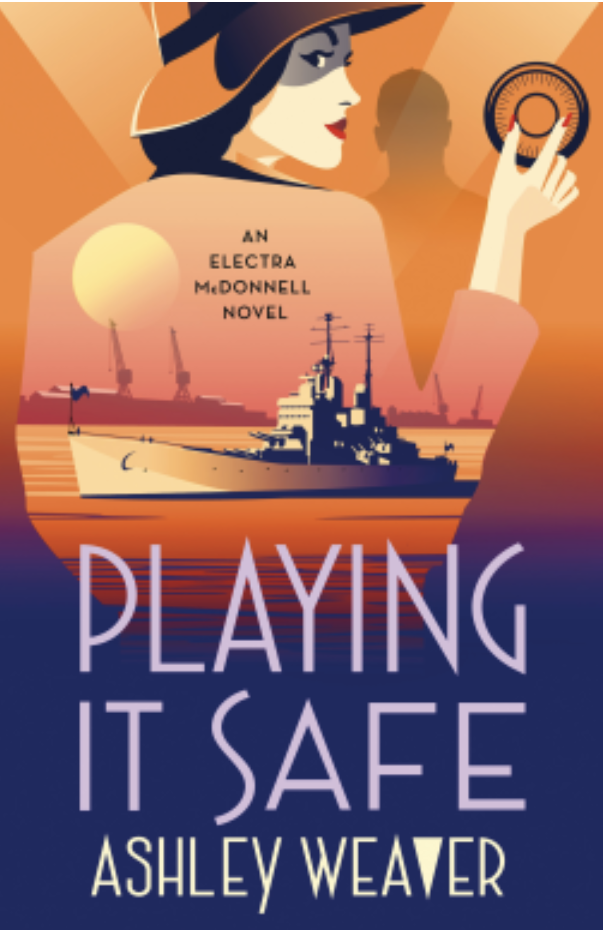
Playing it Safe by Ashley Weaver (Historical Mystery)

A light, historical, cozy with likable characters, this is just what I needed to cleanse the palate from all the dystopic SciFi I’m in the middle of.

Book two in the Electra McDonnell series taking place in England (London and Sunderland in this episode) in late 1940. Electra (Ellie) is the (young, pretty) safe cracker / thief who has turned her skill to serve King and country, working with the tough-as-nails (but also handsome with undertones of patrician) Major Ramsey. A possible Nazi counterfeiting ring, a few unnatural deaths, and a focus on bird watching pepper this episode.

Intelligent, stubborn, and delightfully non-conformist, Ellie is fun to accompany on this adventure. Major Ramsey is a bit of a stereotype, but a very enjoyable one: heroic and competent with “an aristocratic heritage underneath the military bearing.” Weaver includes just the right amount of romancy bits between the two (how could you not?) but doesn’t overdo it (need to leave something for future installments!)

My favorite part: Ellie goes to the movies in chapter one and sees “Bachelor Mother” with Ginger Rogers — one of my favorite movies and not very well-known. I got a real kick out of that. If you’ve never seen it, stream it!

Thank you to Minotaur Books and NetGalley for providing an advance copy of this book in exchange for my honest review. The book was just published on May 9th, 2023

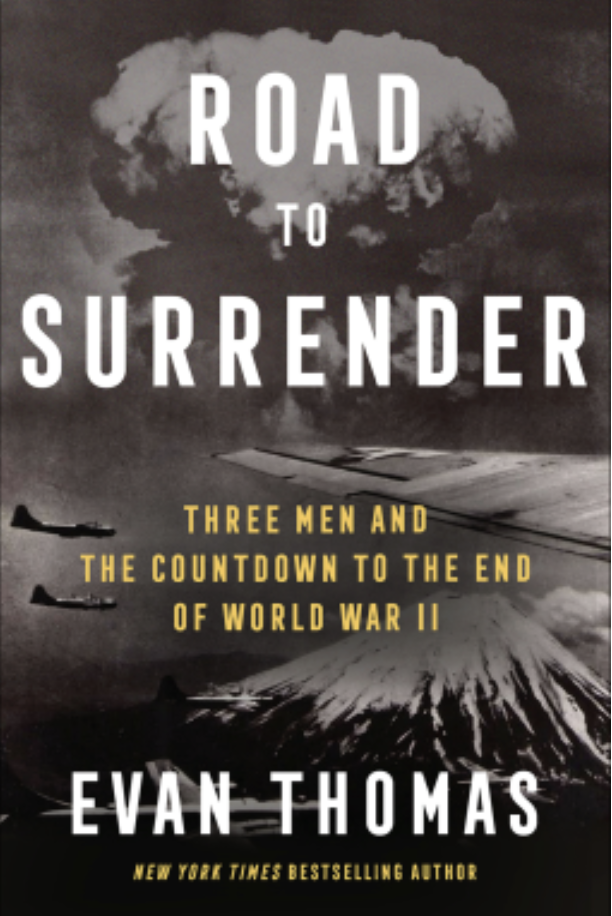
Road to Surrender by Evan Thomas (Non-Fiction — History)

Writing: 5/5 Topic Coverage: 5/5 References: 5/5

My favorite kind of non-fiction — all well-referenced facts, with details of people’s thoughts, motivations, and actions as captured at the time through records, diaries, and notes. The book covers the day-to-day (and sometime minute-to-minute) events pertaining to the dropping of two nuclear bombs on Hiroshima and Nagasaki — not the development of the bombs which is well covered elsewhere, but everything to do with the (somewhat chaotic) logistics, strategy, political machinations, and even the evolution of revisionist history to do with the use of the bombs. Drawing heavily from memoirs of several of the key players, including Japanese foreign minister Togo, we are treated to the decision making process with all of the attendant, intermingled motivations and fears of the time.

The writing was superb — clean, clear, and detailed, but never rambling. I don’t tend to read non-fiction unless it’s like this (and very few books are!). The action ranges from March – August 1945, with a well-summarized epilogue that followed some of the main characters (Stimson, Togo, Spaatz) to the end of their lives amidst shifting popular perceptions of the war and the US role in ending it. In many ways, I found this chapter the most interesting — watching the way history gets retold when the stress of an uncontrollable situation is gone and the pontificators get to revise strategy with the benefit of 20-20 hindsight. Towards the end of this period, there is also the scepter of the Russians — allies at the time, but allies who are starting to behave in a not-so-collegial fashion. To trust or not to trust? (I think the answer to this one is now pretty clear).

Of the many character portraits painted, three stood out: Henry Stimson — Secretary of War whose ongoing worry was that “man’s technical capacity to do evil will outrun man’s human capacity to do good;” Carl “Tooey” Spaatz — the Commander of the Strategic Air Forces who insisted on written orders to deploy the bomb(s) and carried the orders around in his pocket; and Shigenori Togo —the only Japanese Cabinet member to oppose the war (and the only one not executed as a War Criminal). I loved the peek into the minds of the men (yes, they were all men) making the decisions — what they worried about, what information they had at their disposal, and how their insights and opinions were informed by their individual backgrounds and levels of idealism and pragmatism.

A significant portion of the book exposed the (wildly different) decision making process in Japan, which resulted in the much delayed surrender. The emperor was largely a prisoner of an increasingly fanatic military and rarely challenged their usually unanimous recommendations. Additionally, the Japanese culture at the time valued consensus and information transmission that is expected to be implicit, rather than explicit, greatly hampering any kind of rapid and rational decision making. Ultimately Emperor Hirohito did issue a proclamation of surrender, but even that was almost quashed through a last minute and desperate coup. Honestly, it reads like absolute insanity, which I’m sure it was.

I honestly couldn’t stop reading. The last paragraph summed it up nicely: “It is hard to imagine the pressure that these men faced in the spring and summer of 1945. The surrender of Japan came at a high cost. Decision makers on both sides engaged in wishful thinking and psychological denial, and peace of mind was hard for the victors to find. But Japan did surrender before hundreds of thousands — possibly millions — more lives were lost. Stimson, Spaatz, and Togo gave mightily of themselves to bring peace, and at last they succeeded.”

Thank you to Random House and NetGalley for providing an advance copy of this book in exchange for my honest review. The book will be published on May 16th, 2023

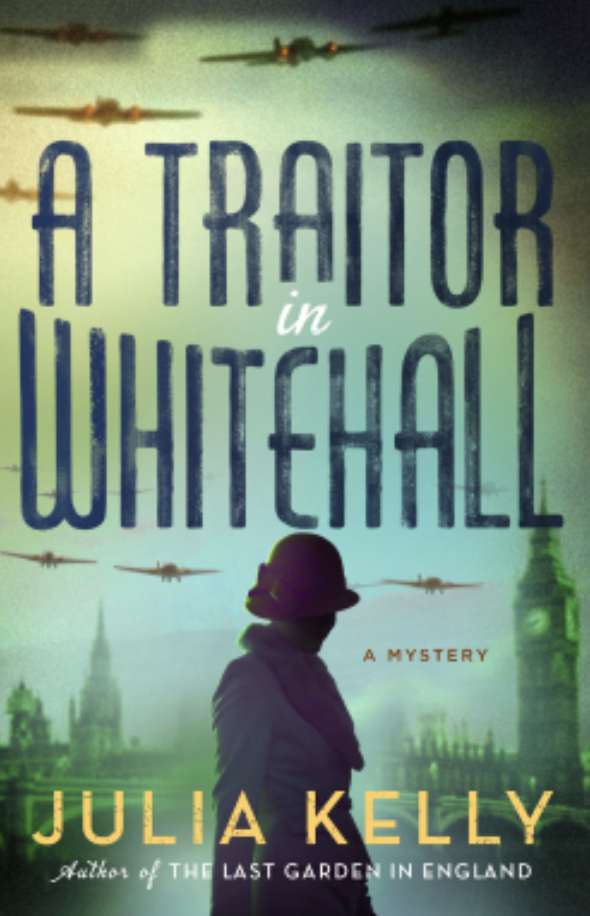
A Traitor in Whitehall by Julia Kelly (Historical Mystery)

Writing: 3.5/5 Characters: 4/5 Plot: 4.5/5 Enjoyment: 5/5

The start of a new mystery series (and her first stab at the mystery genre, no pun intended) by one of my favorite historical fiction writers — Julia Kelly. WWII – London – 1940. There is a body, there is a mole in Whitehall, and there is a smart, sharp heroine who insists on equal billing with the agent assigned to ferret out the answers. Best of all — the action takes place in the Churchill War Rooms with a detailed and accurate (as far as my two fascinating visits to the place informs) depiction of the environment and activities within. As always, she really brings it all to life! A nice complicated plot, characters with good backstories, and of course, a time period and place that is rife with opportunities for mystery.

Thank you to Random House and NetGalley for providing an advance copy of this book in exchange for my honest review. The book will be published on October 3rd, 2023

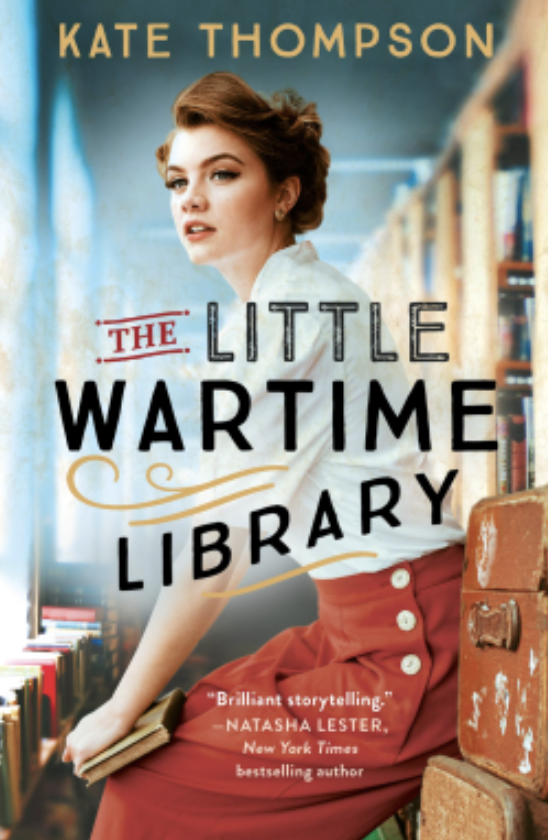
The Little Wartime Library by Kate Thompson (Historical Fiction)

Writing: 3.5/5 Characters: 4/5 Plot: 4/5

This is a fictionalized history of the Bethnal Green (at the time) unfinished tube stop in East London during WWII.  This book focuses on the library that was moved to the station when the above ground version was bombed, but there was a veritable city created in the stop and (unused) tunnels, with triple bunks for 5,000 people, a nursery, cafe, and the as-always top notch administration by locals.  I don’t like reading books about war, but I’m always drawn to books about how civilians create on the fly systems to help them survive.  The addendum explains the actual history more fully, making clear what part of the book was fiction vs fact, though I found that pretty obvious anyway.

It’s March 1944. Clara Button is the 25-year old childless widow who is “temporarily” put in charge of the library, with the help of the irrepressible library assistant Ruby Munro.  A well-detailed set of characters ranging across age and socio-economic levels populate the library, all with inspiring and heart-breaking stories.  Thompson does a good job of bringing these characters to life.  An engaging story — I could pick apart aspects of the plot if I were in a snippy mood, but overall I quite enjoyed it.  It spoke well to the value of books and reading in all circumstances which means that it spoke very well to me!

This book would make a great movie — I hope it gets optioned!  

Thank you to Forever Publishing and NetGalley for providing an advance copy of this book in exchange for my honest review. The book will be published on February 21st, 2023

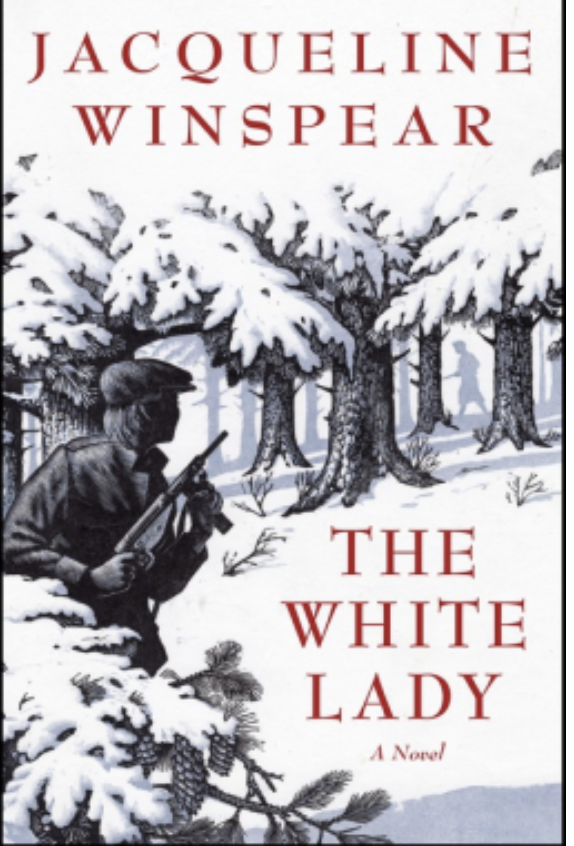
The White Lady by Jacqueline Winspear (Historical Fiction)

Writing: 3/5 Plot: 4/5 Characters: 4/5
Elinor White has been trained to be a predator rather than prey which served her well during WWI when her home in Brussels was occupied by Nazis. It also served her well during WWII as she worked to protect her adopted country (England). But exercising those skills left their mark, and she finds herself torn between protecting those who can’t protect themselves and letting go of the violence that continues to haunt her.

A standalone (or possible new series beginning?) from the author of the Maisie Dobbs series, this book is kind of a mix between an historical novel and a mystery, with an emphasis on the former. It had a bit of a slow start but I was drawn in and found myself caring very much about the characters. I’m a big Winspear / Maisie Dobbs fan. I wouldn’t mind finding out more about Elinor White if this turns into a series…

Thank you to Harper and NetGalley for providing an advance copy of this book in exchange for my honest review. The book will be published on March 21st, 2023

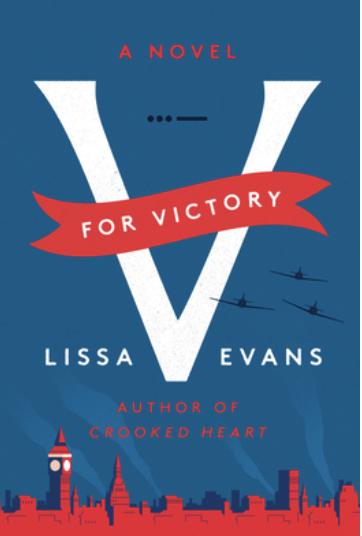
V for Victory by Lissa Evans (Fiction)

Completely heartwarming novel about London in the latter stages of WWII (taking over where Crooked Heart left off). Noel Bostock (15) and his “pretend” Aunt (Vee) are living in the large house Noel inherited from his “pretend” godmother, the famous suffragette Mattie Simpkin. It has become a boarding house where boarders pay rent in both cash and tutoring for Noel. When a room becomes vacant, they search for a boarder with specific knowledge to impart. Noel is the most wonderful character — smart, capable, kind, and curious about absolutely everything. Mr. Reddish teaches him math while quoting his own rather bad poetry; Dr. Parry-Jones teaches science (giving him a dissectible rat for his birthday); the one-eared Mr. Jepson teaches him Latin; and Miss Appleby mixes her French lessons with more personal lessons about the heart (her heart to be precise).

In the odd way different lives seem to come together haphazardly, an American GI drives a lorry on the wrong side of the road, the more fashionable (and obnoxious) twin of an air-raid warden writes a surprising novel about her sister, and Noel’s origin story comes out of hiding.

I really like her writing — some nice quotes below:

“He didn’t have a family tree, he had a Venn diagram, in which none of the circles overlapped.”

“Impossible to explain Vee’s myriad antipathies, her constantly updated list of prejudices and judgements.”

“She had fallen for Romeo and now found herself padlocked to the editor of Modern Homes and Gardens.”

“Since the end, just a year ago, of his own, terrible marriage he found himself studying other couples, like someone conning an aircraft recognition chart — spotting those tics and phrases that signaled contempt or boredom or fear, and when he saw those, he wanted to take one or other of the pair aside, and say, ‘Finish it now.’

“Jepson was present but unlit, so that in the dining room he was more furniture than inhabitant, talked around and over, but never to. But in lessons there were glimmers — he had seized Noel’s first essay and pushed the words around the page like backgammon counters, showing him how to introduce a subject, how to make a neat and satisfying ending, how to prune, and rearrange the content.”

“It was so easy, she thought, as he led her towards the music; he was so easy — a printed postcard, when every other man she’d ever known was a sealed letter filled with blank pages or mystifying codes”

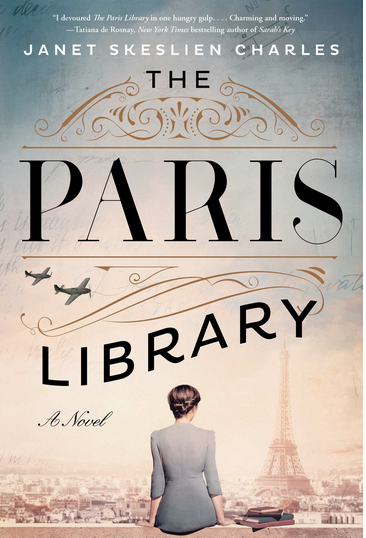
The Paris Library by Janet Skeslien Charles (Historical Fiction)

Writing: 4/5 Plot: 3/5 Characters: 4/5

I’m conflicted about this book — on the one hand a good, engrossing story with an array of interesting characters; but on the other hand I found it utterly depressing (in the last third of the book) and developed a real dislike for the main character (which I don’t think was the author’s goal!).

The story primarily takes place in Paris just before and during the Nazi occupation, with occasional interleaving chapters 40 years later in a small, Montana town. Odile is the young, naive, book loving girl in Paris who gets her dream job at the American Library in Paris with the formidable Miss Reeder. The library is full of wonderful characters — many of them real figures of history (such as Miss Reeder and Boris, the head librarian, in Paris having fled the Russian revolution).

Paris declares itself a “Quiet City” so that the Nazis are allowed to occupy without bloodshed. And as they occupy they plunder libraries (trying to “eradicate the cultures of certain countries, in a methodical confiscation of their works of science, literature, and philosophy”), arrest people for being enemy aliens (e.g. British), and begin the persecution of local Jews. It’s the same old story but this time the Parisians cooperate with the nasty “crow letters” — voluntary letters denouncing their neighbors for rule breaking — all of which the local constabulary is obligated to investigate. Shades of the French revolution, this made me feel sick.

In the Montana timeline, a young girl who loses her mother befriends an older Odile who is able to help Lily not make the same mistakes we slowly find out she made back in Paris. Structurally, the book is well-paced and there are good messages that come out of the story, but it took me (the emotional sponge that I am) a full day to get over feeling utterly depressed by the whole thing.

I will say that I appreciated that the book was not melodramatic — the times were full of drama and the story itself was dramatic enough without embellishment. I thought the book was well-written, and I did like the well-drawn characters — I just don’t feel the need to be this depressed about something I’ve already spent enough time being depressed about.

A few good quotes:
“Of course he knew something was wrong, he was a librarian — part psychologist, bartender, bouncer, and detective.”

“After three months of no rest, Eleanor yawned constantly, no longer a perky parakeet, but a plump pigeon that waddled from the crib to the rocking chair.”

“Books the fresh air breathed in to keep the heart beating, to keep the brain imagining, to keep hope alive.”

“The French language was a nasal bog that she had to wade through in the shops, the hairdressers, and the bakery.”

“The best thing about Paris? It’s a city of readers,” our neighbor said.

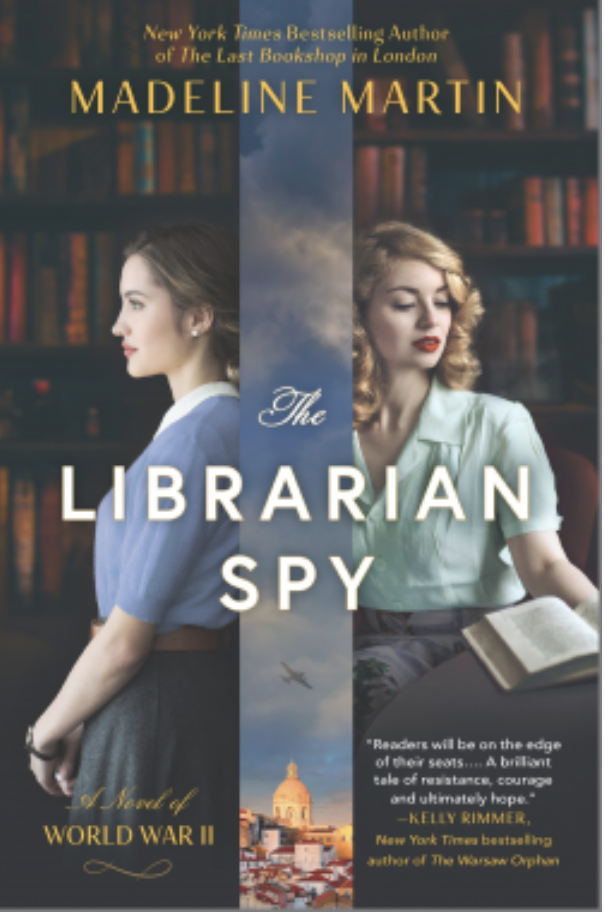
The Librarian Spy by Madeline Martin (Historical Fiction)

Writing: 2.5/5 Plot: 4/5 Characters: 3.5/5
The story of two brave women during WWII — Ava Harper, a Library of Congress rare book librarian, recruited to spy in Lisbon, and Helene Belanger, a determined member of the French Resistance in Lyon — conspire to make at least one happy ending in a world that is utterly falling apart.

There were some very interesting aspects of this book: I’m a sucker for stories about books, librarians, and the printed word — and these all figured prominently. The author included a lot of accurate details about the processes (think bureaucracy and visas), technologies (Roneo machines!), and cultural practices of the time and place. The focus on both the French Resistance and “neutral” Portugal covered aspects of WWII that I haven’t read much about previously and were interesting, accurate, and detailed.

On the other hand, this book is really perfect for the kind of person who loves drama and appreciates how well the horror of war is depicted in the suffering of individuals — and I am not that person! The characters definitely draw you in, and I found myself crying frequently throughout because it would be impossible not to. But in truth, I found this book to be overwrought, consistently cliched, and far more melodramatic than I like which is disappointing because I very much liked Martin’s previous novel The Last Bookshop in London. It’s almost as though it were written by another writer.

Some of the writing actually made me cringe — “The Nazis had hovered over Lyon since the occupation, but now their breath whispered hot and fetid at the neck of the Resistance network.” And Ava’s behavior — while exemplary — did not in any way earn the incredible accolades that were awarded to her, giving the book more of an unrealistic Romance kind of feel, rather than historical fiction with a serious theme.

Still — plenty of action and drama, and I’m sure there are those for whom it will be a good reading experience. Bring plenty of Kleenex, and park your sunny disposition in the closet. It won’t be needed.

Thank you to Harlequin Trade Publishing and NetGalley for providing an advance copy of this book in exchange for my honest review. The book was published on July 26th, 2022.

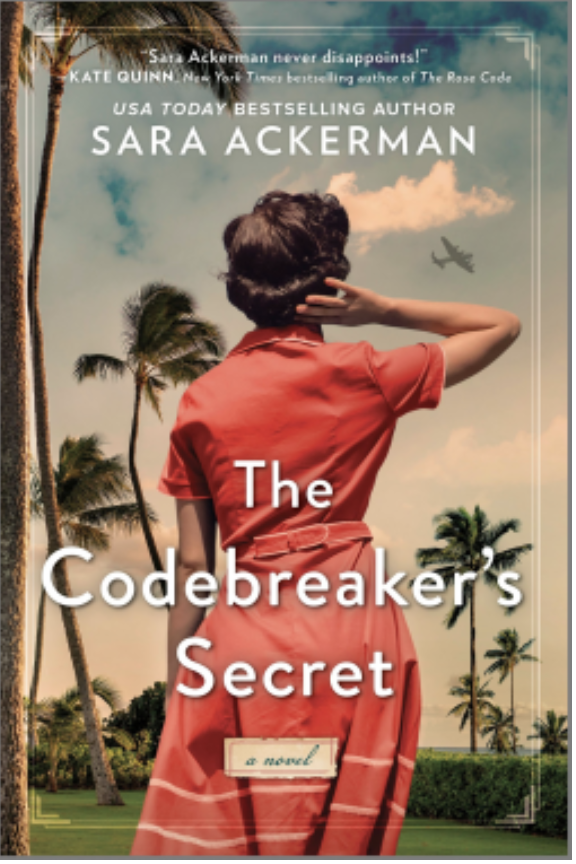
The Codebreaker’s Secret by Sara Ackerman (Historical Fiction)

Writing: 4/5 Plot: 3.5/5 Characters: 4/5


Very engaging story about Isabel Cooper — a crack codebreaker serving in Hawaii during WWII. While the plot is a little clunky, the writing draws you in, the characters are wonderful, and the descriptions of Hawaii, code breakers, and smart women playing chess were well done and lots of fun. I thought the author did a decent job of portraying intelligent, working women at the time: no heavy handed agenda — just women getting along as well as they could (and that was pretty well!) given their situation. Decent male characters as well. Romance and an a multi-generational mystery thrown in. Very Enjoyable.

Thank you to Harlequin Trade Publishing and NetGalley for providing an advance copy of this book in exchange for my honest review. The book will be published on August 2nd, 2022.