The Radcliffe Ladies Reading Club by Julia Bryan Thomas (Literary Fiction)

I loved this quiet, but powerful, novel about a group of four Radcliffe students who join a book club devoted to discussing the classics — particularly those focused on the roles, experiences, and opportunities for women. Set in 1955, the discussions of historical classics such as Jane Eyre, The Age of Innocence, A Room of One’s Own, Anna Karenina, and others are superimposed on each girl’s individual background, goals, and experiences. This leads to some well written dialog, reflection (always my favorite), and action, all revolving around the evolution and personal impact of social norms for women. I’m not introducing the four girls here, as I like the way author introduced each. I’m also not describing some of the events that took place — they are important, but best left unintroduced IMHO.

The writing is straightforward, but never simplistic. For me personally, being only one generation behind the students in the book, the stark contrast between the lives and opportunities for the women in the book club selections, the 1955 Radcliffe students, and myself was illuminating. Social norms are embedded in us at an early age, and it is sometimes difficult to have an awareness of how our thoughts and beliefs are forged before we aware of the process. As an aside, I was impressed by how the various male characters were portrayed. The narrative was never strident, and the men ran the gamut from pretty awful to quite decent. It became clear to me that the men, too, were a product of the expectations of the time — not as an excuse for any behavior, but as an understanding of how it might have evolved. The whole thing was fascinating and (for me) never dipped into cliche or melodrama. It simply focussed on the life each girl chose, why she chose it, and how she made it happen.
For the younger among you, Radcliffe was a woman’s liberal arts college in Cambridge founded in 1879 and absorbed into Harvard in 1999.

Some great quotes — some from the classics the girls read:

From the discussion of Anna Karenina: “She had more temptations than an ordinary girl would have had. A handsome count was never going to fall in love with someone less beautiful and exciting than Anna. Which makes me think it wasn’t her fault as much as some might think.” I never thought about it that way.

From Virginia Woolf’s Orlando: ”As long as she thinks of a man, nobody objects to a woman thinking.” Ha!
“Jane Eyre was meant to be read at all stages of life, and each reader must glean what she could from her own study of the book.“

“Ah, but you see, there are no right or wrong answers in book club. It’s all about how a book affects you and how it makes you feel.”

From Virginia Woolf’s Orlando: ”As long as she thinks of a man, nobody objects to a woman thinking.” Ha!
“Jane Eyre was meant to be read at all stages of life, and each reader must glean what she could from her own study of the book.“

“Ah, but you see, there are no right or wrong answers in book club. It’s all about how a book affects you and how it makes you feel.”

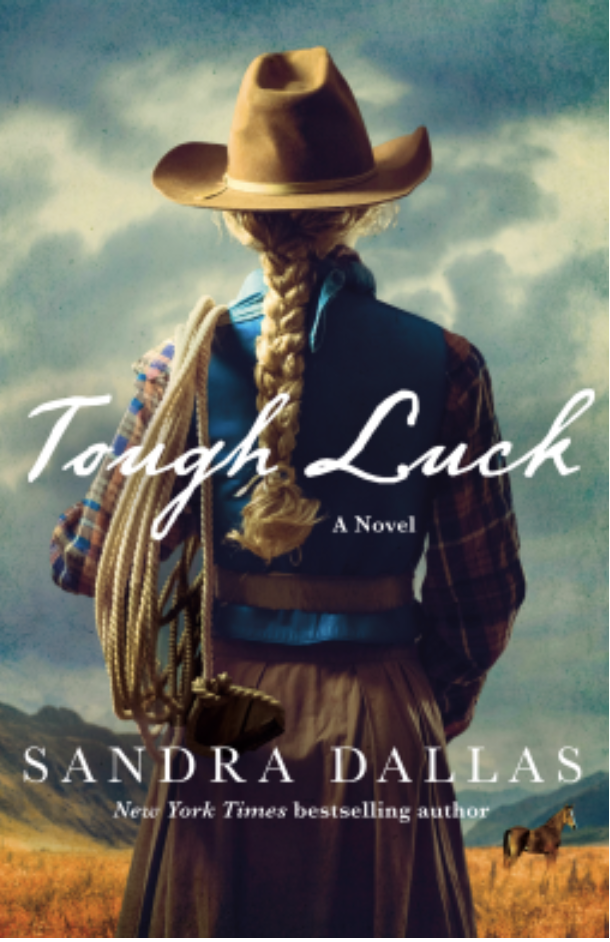
Tough Luck by Sandra Dallas (Historical Fiction)

Writing: 4/5 Characters: 5/5 Plot: 4.5/5

I’ve been reading Sandra Dallas’ books since 1998 and have read (and loved!) all of them. This one is already one of my favorites — captivating characters, wild adventures, and a full sense of the time (1863) and place (Western territories).

Dumped in an orphanage by their elder brother once their mother died, Haidie (14) and Boots (10) Richards manage to escape, taking one of the more reluctant caretaker nuns with them. They head West in search of their long missing father whose last reported location was a mining town past Denver.

Diving into some fantastic storytelling, we join them on an adventure laden trip, sharing the camaraderie of a slew of characters who are as realistic as they are individualistic, intriguing, and somewhat morally curvaceous. The feel of the time and place is intensely real, with the focus on how these people are making their way through the harsh realities of the time. It’s the characters who make it for me — card sharks, con men, mule packers, members of the clergy, and (my favorite) a pair of “old maid” sisters (at the ancient ages of 27 and 29!). I love the way they are each making his or her own way in a harsh world following individual definitions of what it takes to survive in an acceptable fashion. I love the way Dallas’ books tend to include people aggregating into tight knit groups bonded by their experiences. It’s a part of human nature that I genuinely enjoy.

Gobbled this up in one session. Hope the author’s book tour lands in my town because I would dearly like to meet her.

Good for fans of Paulette Giles (though Dallas has been at it longer!)

Thank you to St. Martin’s Press and NetGalley for providing an advance copy of this book in exchange for my honest review. The book will be published on April 29th, 2025.

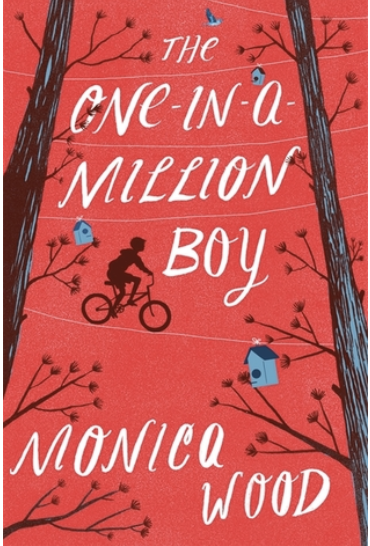
The One-in-a-Million Boy by Monica Wood (Literary Fiction)

Writing: 5+/5 Characters; 5/5 Plot: 5/5

This woman can write! The eponymous “one in a million” boy is dead (at the age of eleven) before the story starts. In fact, we never even know his name — he is always “the boy.” But we learn about him extensively — his (odd) mannerisms, his fascinations, his earnestness — through the effect he has had on a number of characters: his grief-stricken mother Belle; his father Quinn, twice-divorced from his mother, and a complicated presence (or absence) in the boy’s life; and his new friend Ona, the 104-year old woman who is a service target of his boy scout troop. The boy is the only scout Ona has ever allowed to help her for long. He is different. She trusts him and he has managed to extract from her stories, thoughts, and even some fluency in the language of her birth (Lithuanian) — a language she has never knowingly spoken. Most importantly, he has elicited some enthusiasm on her part for a goal for her remaining (!) years. Well versed in the Guinness World Records and utterly enthralled with the possibilities, he believes she has a shot — with his help — at attaining more than one age-related record for the Guinness record keepers.

The book moves on — exploring the characters, their memories, their confusion, sadness, remorse, and regrets, and ultimately their ability to patch the holes in their souls and move forward. The narrative is so real — full of thoughtful characters reflecting on life intelligently with the latent understanding that comes with time; relationships that grow; and characters whose ability to have good relationships keep growing. It’s a bit of a celebration of the utter uniqueness of individual people. I just read David Brooks’ book “How to Know a Person,” but honestly I learn more about how to know a person by reading books like this. Good fiction always feels more truthful to me than the best non-fiction when it comes to people.


At the moment, Monica Wood is my (newly discovered) favorite author. So many possible quotes on this one — I’m probably including too many but I already pruned the list so much! FYI, I absolutely loved the end. I would love to include the whole section but that would just be cheating:

“To Quinn, for whom alcohol was a touchy simile, the truth was this: playing guitar was the single occasion in his slight and baffling life when he had the power to deliver exactly the thing another human being wanted.”

“They stood together in the dripping world, sizing each other up, the boy appearing to marvel at the weight of a century-plus, Ona wondering how in hell she’d unearthed two unrelated words in a tongue she couldn’t remember ever speaking.”

“He enunciated beautifully, though his diction contained barely perceptible pauses in the wrong places, as if he were a foreigner, or short of breath.”

“Normally, Scouts bored her, with their Game Boy stats and soccer scores and lazy, shortcutting ways. This one, though, brought a literal sense of second childhood: she felt as if she were speaking to a child she might have known when she herself was eleven. How easily she placed him at McGovern’s, installed at the white marble soda fountain, sipping a chocolate phosphate. She could see him amid the white-shirted boys playing stickball on Wald Street, tagging the door of Jose Preble’s black REO. There was something vaguely wrong with him that made him seem like a visitor from another time and place.”

“He reminded her that she’d once found people fascinating. That she’d lived more than one life.”

“Ona loved English from the get-go and paid strict attention, noting the cause-effect of language: her parents’ syntactical shipwrecks, the tin peddler’s casual profanity, Maud-Lucy’s pristine enunciations. Style could move listeners to pity, to reverence, to the purchase of a stewpot they didn’t need. Maud-Lucy taught Ona to compose a sentence with intention, and eventually she chose for herself a high-low hybrid that matched her ambivalence toward humankind.”

“Belle managed something like a laugh despite her sorrow, for the boy’s syntactical oddities had always pleased her. He’d read obsessively — instruction manuals, record books, novels far too old for him — picking up linguistic baubles like a crow mining a roadside.”

“I’m good at secrets,” the boy said, studying her so intently now that she began to feel stripped after all — in a good way, stripped of decrepitude and shame.”

“He did wait, observing in silence as Amy padded back and forth with an array of cleaning supplies. From their mother, the Cosgrove girls had learned to scrub their way out of despair. There was no detergent in existence for what ailed them now, but Amy heaved into the old standby nonetheless, with an alacrity bordering on violence, much sloshing and clanging coming from the adjoining rooms. He listened to these sounds — like an animal crying hard, he thought — until she appeared again, hands red and raw.”

“As she opened the menu, Ona felt momentarily unborn, as if her long life had been a warm-up for the real show, on which the curtain was about to rise. She ordered a grilled cheese and a strawberry shortcake, expecting to eat it all.”

“How could it be that Ona Vitkus after so many years alone, had been netted by the maneuverings of lovers and interlopers, tangled into their grief and envy and clumsy efforts at peace? And oh, weren’t they a show: their puzzling wants, their cross-purposes, their own mundane, ticking-down minutes.”

“She looked small and translucent, like a baby turtle from a nature documentary. He fought an impulse to pick her up and carry her to safer ground, As she stood there, fading before his eyes, he extracted the details as if through an old telegraph, dots and dashes that he gathered into a story.”

“He loved that they loved him. He loved the hollow he filled. It was the boy who’d understood this. The boy, whose lists and lists filled his own hollow, the one his father had left behind. A loosening in his chest, like sliding rocks, took him so abruptly that he doubled over, trying to hold it in.”

Last House by Jessica Shattuck (Literary Fiction)

Writing: 5/5 Plot: 5/5 Characters: 5/5

This is a brilliant epic of a book. It spans a period of 90 years (~1950 to 2040) via the trajectories of a single family — each member ensconced in his or her own cultural context while engaging with the others who are firmly planted in their own contemporaneous but often dissonant contexts. The story begins with Nick and Bet Taylor — he a junior lawyer attached to an American oil team negotiating deals in the Middle East and she a WWII cryptographer who gave up her dreams of a PhD to become a wife and mother (as women did in the 50s). From this stability and cultural conformity came two children — Katherine and Harry — who grow up in a clash between the middle class values of their parents and the anger and rhetoric of the 60s, complete with Marxist hyperbole and anger-fueled violence in the name of peace and justice. Decades later, by the time the third generation comes of age, their social cohort is beset by the overwhelming angst from the imminent collapse of society from climate change, war, and shifting values.

What impresses me about this book is how well Shattuck captures the feelings of the time(s) from so many different perspectives. Anger, fear, bewilderment, passion. Sometimes it was hard to read because she captured it so well; other times it was chilling to read because the activism of the 60s (the good, the bad, and the ugly) is blatantly mirrored in what is happening today. She must have finished writing this book before the Israel / Hamas war began and yet she captured the mix of intentions, propaganda and stupidity of the current situation perfectly.

I loved that the multiple viewpoints were captured via highly reflective characters — their feelings of joy, frustration, rage, and angst appearing in response to a rapidly shifting cultural landscape. I love that they pondered, each in his or her own way, the responsibilities that are incurred simply by being alive. The pages are full of insight with regard to parenting, political attitudes, alliances, friendship, and familial support.

I was (pleasantly) surprised by the lack of cliche and manipulation in the narrative. If the author has a strong opinion on climate change, greed, politics, democracy, or activism, I couldn’t tell you what it was. She covered several competing thoughts on how a person chooses to live in the world as it is. One of my favorite parts (towards the end) was a 2-3 page summary of an optimistic and pessimistic view of the same world. Perfectly crystalized (IMHO) into personal attitudes and interpretations. This book could have been depressing but came off to me as more wistful — the wistfulness that always accompanies the passage of time, regardless of how sweet that passing is.

Some good quotes:

“That’s what civilization is,” Brent said. “Living with people outside your tribe. All those rules and norms and structures that allow you to coexist. Right? Without those, we’re just – cave dwellers, protecting our own turf. You escape civilization, you escape back into your tribe. “

“The Weather Underground had gone off the deep end. They had aligned themselves with history’s most violent killers, people who thought the righteousness of their cause gave them the right to make decisions about life and death: Hitler, Stalin, Charles Manson. In the name of justice, how could you choose that?”

“Still, Katherine‘s knee jerk cynicism, annoyed him. She had never even been to the Middle East. She knew nothing about Iran. She knew nothing about the oil industry or the complicated politics of resource distribution. She had never even taken an economics class. She did not grasp that she was on the top floor of a great complicated structure with her lofty ideals while he was in the basement, stoking the boiler, making sure she would not freeze to death. Her generation took so much for granted! All the peace and plenty they had grown up with wasn’t given — it was protected by a sheath of young men’s bones strewn across Europe and the Pacific“

“How will it work when everyone is exactly equal?” my mother wanted to know. “Is there enough, really, to go around?” I was appalled by this sentiment, so chauvinist, racist, survivalist. I railed at her about the capitalist racket, the smallness of her Depression-era mindset (“But I don’t have a mindset,” she protested. “I have questions”). She was a good sport about it, really, mild-mannered in the face of my patronizing. But she persisted: Wouldn’t there always be some way people sorted themselves? If it wasn’t race or gender or class, would it be intelligence? Physical strength? Blood type? Weren’t there always bound to be haves and have-nots on account of finite resources? The constraints of weather and geography, for instance? Who got the high ground with fertile soil versus who got the desert?”

“My father wanted calm and safety, not emotion. Everything in their life was set. That was her generation, I guess. Their households clean, tidy, and immobile, built to last. So, too, was their concept of the relationships of the people who populated it: mother, daughter, neighbor, housecleaner — these were static entities. I can see now that for my father, this was vital, the best protection he knew against all that was ugly, tangled, and difficult. My mother, though, longed for something different. She was forty-seven years old, and she’d been living the same life since she was twenty-three.”

“Conflict avoidance is a luxury of the bourgeoisie,” I said as if this were a well-known quote. Maybe it was. My head was awash in edict and directives and liberal platitudes.

“The idea disturbed him. They were raising a daughter who felt free to be unpleasant when she was unhappy? He would have been caned by his father if he’d ever been ‘unpleasant.’ ”

Thank you to William Morrow and NetGalley for providing an advance copy of this book in exchange for my honest review. The book will be published on May 14th, 2024.

Lucky by Jane Smiley (Literary Fiction — Audio Book)

Ostensibly the story of a Jodie Rattler — from childhood until her 80s — who achieved moderate fame as a folk/rock singer/composer and, due to some clever investing of the money she had, was able to live her life and create her music without having to make herself a slave of the music industry. I never get the impression that she has any particular plans or goals. Instead she does what she wants to at the time, gathering (and enjoying) experiences that she often embeds into her music. This takes us from her birthplace in St. Louis to England, to recording studios, to tropical beaches, to New York City, and often back home to St. Louis. It takes us through her 25 lovers and their stories. The book is highly reflective with Jodie clearly describing her experiences, her feelings at the time and upon later reflection, and her thoughtful musings on life as a result. It’s really a personal voyage of self-discovery and ongoing development but without the cataclysmic events that often send people into these states. While it sometimes felt a bit slow moving (especially as the audio book reader spoke at a measured pace) I found myself consistently interested. By the end I felt like I knew what it was like to be Jodie. At the same time, I didn’t resonate with her — we are very different kinds of people — which made it even more interesting to be her for the duration.

There is a theme throughout the book where she reflects on how lucky she is every step of the way — chance meetings, being seen by a promoter etc. Hence the title. There is a lot of interesting detail on how she writes her songs, where her ideas come from, how she develops them, and what kind of experimentation she does to get a particular sound — all of which was completely accessible to me as a non-musician. Because the book spans about 80 years (from 1955 – 2030), we also get to watch (through her eyes) the evolution of the music industry, the political scene, and the planet. The worries about climate change and political instability float about the book, settling into something more solid by the end of the book as Jodi ages.

Now — I very much enjoyed listening to this book and thought the end was reasonable. But. I hated the epilog and I would honestly suggest you just don’t read it. It’s short and has a very interesting twist to it (and a tie in to the name of the book), but it has a complete downer of a future prediction that honestly has nothing at all to do with the story and just left me in the worst mood for no good reason! I don’t want to include a spoiler so I’ll say no more except that I really found it both emotionally draining and literarily gratuitous.

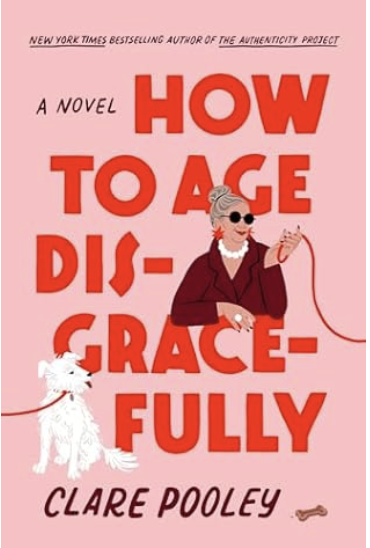
How to Age Disgracefully by Clare Pooley (Fiction)

I loved this book. It was hysterically funny and I found myself laughing out loud on almost every page, multiple times on some. I definitely got some looks on the subway.

A community center housing a senior citizens social club and a daycare is threatened with closure when the board gets greedy for development money rather than making the effort to fundraise for repairs. But the senior citizens (and one desperate teen father) will do anything to keep that from happening and come up with some pretty interesting long shot ideas. FYI these are not senior citizens living up to society’s (pallid) expectations! We’ve got the larger than life Daphne whose future is bleak but whose past was “extraordinarily colorful;” Art, the actor who specializes in playing dead bodies while managing a small kleptomania problem; Ruby, the Banksy of knitting; Anna, the ex-trucker with quite a number of dead husbands to her credit; and William, the retired Paparazzo who puts his (IMHO sleazy) skills into useful practice. All supposedly organized by the 50 something Lydia, whose life has been drained of purpose but filled by an utter a*hole of a hubby. There is something very appealing about old cranky people getting a new lease on life, and this intensely uplifting book has that in spades.

I loved the characters (a teen father? how often does that happen?), loved the humor and excellent writing, and loved the random thoughts on aging — like how to take advantage of the apparent invisibility of the aged for your personal aging benefit. I loved the author’s note where she claimed she still did not feel like a “grown up” despite her “advanced” age — I so relate to that! Lastly, I loved the reference to the Dylan Thomas poem “Do not go gently into that good night.” How many times have I heard of that poem without ever bothering to actually read it and think about what it means? Here are the first lines:

Do not go gentle into that good night 
Old age should burn and rave at close of day;
Rage, rage against the dying of the light.

There is more — it is good — go read it if you haven’t …

Some great quotes — only a tiny fraction!
“She appeared to have jumped out of the frying pan of sexism and into the fire of ageism. The final frontier of isms.“

“There was nothing better than listening to someone else’s guilty conscience being offloaded.”

“Her comfort zone was exceedingly spacious, but this experience lay well outside of it.”

“She needed to turn over a new leaf. Become an entirely new plant, even.”

“Despite her age, Daphne seemed to have the hearing of an adolescent bat.”

“Why on earth, when there were so many more important things they could be teaching their children, would parents waste their time reading stories about an insect with a dysfunctional relationship with food?” (about the Hungry Caterpillar)

“Daphne wrote texts, he’d discovered, just the way she spoke in proper full sentences and with perfect grammar and an under current of condescension.”

“She leaned forward and gave the man she was with a peck on the cheek, an incidental comma nestling up to a bold exclamation mark.”

“Art had tried to call his new pet Maggie, as instructed by Lydia, but her surname lurked in the ensuing pause like toxic waste.” (pet’s full name was Margaret Thatcher)

Thank you to Pamela Dorman Books and NetGalley for providing an advance copy of this book in exchange for my honest review. The book will be published on June 11th, 2024.

How to Read a Book by Monica Wood (Literary Fiction)

Writing: 4/5 Plot: 4.5 / 5 Characters: 5+/5

Violet, a young woman released from jail after serving 22 months for manslaughter for driving while intoxicated and killing an elementary school teacher; Harriet, a retired librarian who runs the best book group in the world (IMHO) at the local prison where Violet has been incarcerated; and Frank, the retired tool & die guy whose wife was the one killed. A chance meeting in the local bookstore brings these three together in a pretty wonderful way.

This book was well-written, hits the sweet spot between humorous and deep, and is overall uplifting. I love uplifting! Especially when it isn’t stupid (honestly what isn’t better when it’s not stupid?). With broad themes of forgiveness and regret along with kindness (the genuine kind, not the saccharine type which is far more focused on the person being kind than the person in need of kindness), the book is full of dynamic dialog, slowly gained self-understanding, and relationships — the good, the bad, and the ugly types. Also some capital F fun-to-read sections that aren’t essential to the plot but are engrossing and plot-supporting. For example, Violet ends up with a job supporting a crazy / crotchety professor studying the higher cognitive abilities of African Parrots (based on the real life research of Dr. Irene Pepperberg (www.alexfoundation.com). Absolutely fascinating. I also LOVED every scene concerning the book club at the prison. From Harriet’s planning and selection process to the questions she asked and the way the (female) inmates responded to the emerging personality of the club itself. Some questions she asks: If you were God, would you alter the facts for these characters? Do books change, depending on when and where we read them? Why do people tell stories? Or more specifically, if Gatsby had a brother like Ethan Frome, would he have made the same mistakes?

While probably not the primary purpose of the book, it did make me consider the (always muddied) purpose of our justice system. I wish we had a better understanding of the goals of prison: Punishment? Deterrence? Rehabilitation? Safety (in case of recidivism) of the public? Sometimes sentences just don’t seem to make sense. I’ll leave you to draw your own conclusions after reading.

Lastly, though there is little in common in terms of messaging or plot, the style and tone reminded me of Lessons in Chemistry. Really enjoyed this book.

Quotes:
“From her years in the classroom, Harriet understood that any group, no matter how diverse, eventually acquired a personality; Book Club had decided they were misunderstood souls born to the wrong era, and William Butler Yeats was their proof.”

“… the days when the place feels not like a dementia unit on Mars, but like an animal shelter filled with calm dogs. I can almost see them, our Reasons, small smoky thicknesses in the air. Like guardian angels, in a way. Guarding our memory of them. They float among us, quiet and uncomplaining, and they refuse to disappear.”

“Lorraine fell for Frank the defensive lineman, but he was a team chaplain at heart. He’d given her love, patience, stability, and her only child. These gifts had turned out to be the wrong gifts.”

“But these kids, who had acres of poetry committed to memory and the mechanical skills of an aardvark, they needed him.”

“Was Baker shucking the chains of patriarchy, or emulating a pop singer? Harriet genuinely wanted to know.”

“The youngster had a cuddly laugh; if hamsters could laugh, they would sound this way.”

“She’d begun their marriage as lead, soft and pliable, elastic and forgiving, but over the years she’d transformed herself into a high-carbon steel, strong and hard and resistant to wear.”

“They remained in this magical silence for a little while, as their separate pasts floated harmlessly between them”

“Retired people were often thought to be lonely, but it wasn’t that. It was the feeling of uselessness, of being done with it all.”

Thank you to Mariner Books and NetGalley for providing an advance copy of this book in exchange for my honest review. The book will be published on May 7th, 2024.

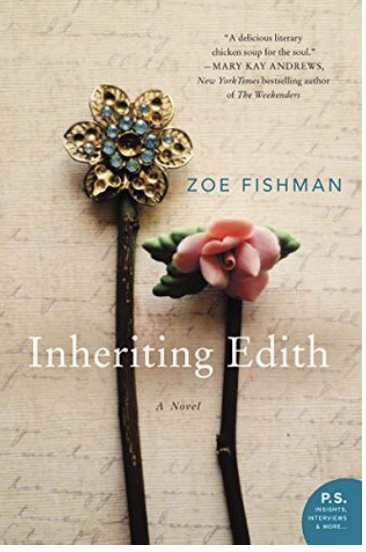
Inheriting Edith by Zoe Fishman (Literary Fiction –audio book)

Writing: 4.5/5 Characters: 5/5 Plot: 4/5
Single mother Maggie — a college graduate who drifted into house cleaning — is bequeathed a beautiful house in Sag Harbor by Liza — a previously good friend with whom she had had a falling out years before. The only catch? The house comes with an inhabitant — Liza’s 82-year old crotchety mother, complete with recent Alzheimer’s diagnosis.

Maggie and her two-year old daughter, Lucy, move in, and what follows is a beautiful, slow-moving but deeply felt novel of two women coming to terms with who they are, who they were, and what kind of closure they need before moving forward. Liza was a suicide — a best selling author who did not leave a suicide note. And so part of work both Maggie and Edith have to do is to try to understand why, what they could have done, and what it means for them going forward.

Excellent dialog — full of the clear, deescalating interactions we all wish we could do on demand. Also some wonderful supporting characters: Edith’s oldest and best friend Esther — they were Broadway dancers together way back when; Sam — single dad, philosopher and now owner of a popular toy store; and two-year old Lucy who is as charming and off-the-charts annoying as any toddler could be. Lots of reflection and the gaining of self-knowledge; lots of discussion of depression, guilt, best effort, and second chances. Really nice relationships. Brought me to tears several times.

I liked the audio book reader — her “Esther” voice was my favorite. Reminded me of my grandma 🙂

Sandwich by Catherine Newman (Literary Fiction — Humor)

Writing: 5/5 Characters: 5/5 Plot: 4/5 Humor: 5++/5

Ok, this book is just flat out funny. I snorted, giggled, and guffawed my way through it with only occasional pauses. But while it gets top top grades for humor, it has plenty of depth, too. Ostensibly about a week at the beach with an extended (and all adult) family, it’s a study of functional (as opposed to dysfunctional) family dynamics. Many readers seem to want intense drama, with earth shattering impact, but I love these close looks at how real people work and learn and connect. The themes are family, love, and life with plenty of personality, philosophy, and interaction thrown in and a strong focus on parenting, pregnancy, and reproduction. Also the (new to me) phrase “anticipatory grief.” Wow — I should have learned that one a long time ago…

I loved the characters and the way they interacted. Our first person narrator is Rocky (Rachel) — a mother so full of emotion and worry and menopausal heat she is constantly threatening to (metaphorically) explode. I liked the way husband Nick — even as told through her eyes — is depicted so completely and not just a bit player in Rocky’s drama. Without giving anything away, I thought he was masterfully written. I loved the multifaceted views of all of the characters — both as themselves and also as they were in relationship with each other. I also appreciated the way Newman dealt with daughter Willa — the requisite lesbian through whom plenty of social commentary on LGBTQ+ issues was included in a nice relaxed, off key way that both made me laugh and made me think.

I also loved the dialog — it was written the way I wish people would speak — fast, humorous, and with a high signal to noise ratio. General banter and friendly family squabbling throughout but always overlaid on clear, honest, and trusting communication. I could be laughing at the (over-the-top-of the-top menopause complaints and then be tearing up at the essential humanity and love concisely tucked into an honest exchange. Kind of a combination of Nora Ephron (humor), Matthew Norman (human exchange), and Anne Lamott (parenting and reflection).

I will say that the inside of Rocky’s head is a fun, but very tiring place to be and I’m glad I don’t live there permanently.

Quotes:

“Ugh, my voice! You can actually hear the estrogen plummeting inside my larynx.”

“… I say quietly, but my veins are flooded with the lava that’s spewing our of my bad-mood volcano. If menopause were an actual substance, it would be spraying from my eyeballs, searing the word ugh across Nick’s cute face.”

“People who insist that you should be grateful instead of complaining? They maybe don’t understand how much gratitude one might feel about the opportunity to complain.”

“I’m always Sherlock Holmesing around them all with my emotional magnifying glass, trying to figure out if anybody has any actual feelings and what those might be.”

“Also he will get out the innocuous-sounding foam roller that is actually a complex pain device designed by people who hate everybody. I’ve seen enough videos of cats terrorized by cucumbers to know what my face looks like when I suddenly see the foam roller.”

“Nick’s curiosity about feelings and the people who have them is fleeting at best.”

“Forty percent of my waking thoughts were about the children dying — the other sixty about sleep. I was ashamed of this demented pie chart.”

“A conversation like this might be a wolf in clown’s clothing, and he knows it. My rage is like a pen leaking in his pocket, and before long there will be ink on his hands, his lips.”

“I mince down the spiral staircase in my memory-foam slippers, all of my joints clacking like the witch in a marionette performance of Hansel and Gretel.”

“All of the names of everything have oozed out and away from the drainage holes menopause has punched into my memory storage.”

“My ancient father actually swimming in the ocean feels like a bridge too far in terms of what I can handle fretting about.”

Thank you to Harper and NetGalley for providing an advance copy of this book in exchange for my honest review. The book will be published on June 18th, 2024.

Rabbit Cake by Annie Hartnett (Fiction — audio book)

Writing: 5/5 Characters: 5+/5 Plot: 5/5

Loved this book and absolutely loved the audio book reader (Katie Schorr) who added an extra authenticity in her outstanding rendition.

Freedom, Alabama. Ten-year old Elvis (a girl, named after Presley) is working her way through the 18 months of grief as defined by the school guidance counselor after the “accidental” death of her sleepwalking mother. In the meantime, her older sister Lizzie (15) has begun her own escalating experiences with sleepwalking which is (understandably) terrifying the family.

Despite the subject matter, this was in no way a depressing book. It’s an odd coming of age story of an unusual but absolutely relatable (to me) girl who loves her family, has no friends, is whip smart, and whose main objective (at this point) is to find out what really happened to her mother and to finish her mother’s book on the sleep patterns in animals. Think Flavia DeLuce.

The 10 (and later 11) year old voice is utterly believable and the portrait of the other characters — in particular the deceased mother — as seen only through a child’s perspective is startling in that the reader is faced with the stark notion that we are all interpreted differently depending on the interpreter! While I am focusing on Elvis, all of the characters were well-drawn, interesting, and didn’t have a stereotyped trait within 50 miles of their personalities. There was also a non traditional exploration of what constitutes mental illness — and how to make it through life in light of what is thrown at you — uncontrollable events, intractable people, or your own genetic predispositions.

This book reminded me of how much I like Southern Fiction — the quirkiness coupled with individualistic depth, utter nonconformity of thought, and the uniqueness of each family.