There are Rivers in the Sky by Elif Shafak (Literary Fiction)

Writing: 4.5/5 Characters: 5/5 Plot: 4/5

A long and highly complex book following three elaborate storylines, all influenced in some way by the Epic of Gilgamesh — the epic Babylonian poem from about 2000 BC. Arthur Smythe — also known as King Arthur of the Sewers and Slum — is born into abject poverty but has an extraordinarily keen mind, an eidetic memory, and an absorbing passion for the artifacts in the British Museum. His story runs from his birth in 1840 to his death 36 years later in Iraq. Zaleekhah is a passionate researcher who focusses on the study and conservation of the Earth’s water in 2018 — focused on theories that would earn her derision were she to try to publish. She is also is pulled in to a fascination with the region through her own Iraqi heritage and feels a despair at the state of the Earth, both politically and environmentally. Narin is a nine-year old Yazidi girl whose village is to be subsumed from flood waters once a new, large dam is completed. A trip to Iraq in 2014 before they must leave the area exposes her to the cruelty of ISIS. Woven throughout the story are themes and entangled details about Mesopotamian history, antiquity looting, modern ISIS, grand scale pollution, language processing and the underpinnings of water throughout.

Shafak’s brain is many orders of magnitude more erudite and complex than mine. The way she can pull together an apparently disjointed collection of data points, commentary, and occurrences and create an interconnected narrative of great scope is inspiring. Her facility with language is impressive — she has a lyrical style that nevertheless manages to convey real content. An example of a one sentence physical description that manages to combine visual depiction, origin, and impact: “… neither grey nor white, the air is a soupy ochre that glows green in places. Particles of soot and ash float above, as domestic coal fires and factory chimneys belch sulfur-laden smoke, clogging the lungs of Londoners, breath by breath.”

I have mixed feelings about how much I enjoyed reading this book. I loved all the detail — giving great depth to so many aspects of the world and bringing so many pieces of information — that could have easily remained hidden — to the surface. These days it feels like we have access to so much information, we are forced to have strong opinions based on a very shallow understanding of the topic, so I appreciated the deep dives on … everything. I loved all the unusual minutiae that came into the story — underground lost rivers, Ashurbanipal’s lost library, a tattooist who works only in cuneiform. However, a real sense of impending doom suffused the pages, and that only got worse at the story went on. It’s hard not to feel as though the world were hopelessly hurtling towards a bad end, with genocidal maniacs (real ones, not Israel, and if you don’t know the difference do some research), environmental disasters, and a generous helping of greed, power-hunger, cruelty, cynicism, and general disregard pervading the text. I freely acknowledge that the world has many, many, problems, but I prefer to read about the many ways we continue to try to improve the many problems and not to succumb to melancholy and hand wringing. I also had a real problem with the ethical dilemma presented at the end. I felt the character’s resolution (clearly representing the author’s opinion) was surprisingly poorly thought out given the depths of her big picture thinking through the rest of the book.

So — if you can read for the history, the beautiful prose, the increased awareness of the interconnectedness of the Earth and the people running mad upon it, you will probably love this book. If your mood is one that is highly influenced by what you’re reading, you might want to pop a Prozac or two before diving in.

Thank you to Knopf and NetGalley for providing an advance copy of this book in exchange for my honest review. The book will be published on August 20th, 2024.

The Radcliffe Ladies Reading Club by Julia Bryan Thomas (Literary Fiction)

I loved this quiet, but powerful, novel about a group of four Radcliffe students who join a book club devoted to discussing the classics — particularly those focused on the roles, experiences, and opportunities for women. Set in 1955, the discussions of historical classics such as Jane Eyre, The Age of Innocence, A Room of One’s Own, Anna Karenina, and others are superimposed on each girl’s individual background, goals, and experiences. This leads to some well written dialog, reflection (always my favorite), and action, all revolving around the evolution and personal impact of social norms for women. I’m not introducing the four girls here, as I like the way author introduced each. I’m also not describing some of the events that took place — they are important, but best left unintroduced IMHO.

The writing is straightforward, but never simplistic. For me personally, being only one generation behind the students in the book, the stark contrast between the lives and opportunities for the women in the book club selections, the 1955 Radcliffe students, and myself was illuminating. Social norms are embedded in us at an early age, and it is sometimes difficult to have an awareness of how our thoughts and beliefs are forged before we aware of the process. As an aside, I was impressed by how the various male characters were portrayed. The narrative was never strident, and the men ran the gamut from pretty awful to quite decent. It became clear to me that the men, too, were a product of the expectations of the time — not as an excuse for any behavior, but as an understanding of how it might have evolved. The whole thing was fascinating and (for me) never dipped into cliche or melodrama. It simply focussed on the life each girl chose, why she chose it, and how she made it happen.
For the younger among you, Radcliffe was a woman’s liberal arts college in Cambridge founded in 1879 and absorbed into Harvard in 1999.

Some great quotes — some from the classics the girls read:

From the discussion of Anna Karenina: “She had more temptations than an ordinary girl would have had. A handsome count was never going to fall in love with someone less beautiful and exciting than Anna. Which makes me think it wasn’t her fault as much as some might think.” I never thought about it that way.

From Virginia Woolf’s Orlando: ”As long as she thinks of a man, nobody objects to a woman thinking.” Ha!
“Jane Eyre was meant to be read at all stages of life, and each reader must glean what she could from her own study of the book.“

“Ah, but you see, there are no right or wrong answers in book club. It’s all about how a book affects you and how it makes you feel.”

From Virginia Woolf’s Orlando: ”As long as she thinks of a man, nobody objects to a woman thinking.” Ha!
“Jane Eyre was meant to be read at all stages of life, and each reader must glean what she could from her own study of the book.“

“Ah, but you see, there are no right or wrong answers in book club. It’s all about how a book affects you and how it makes you feel.”

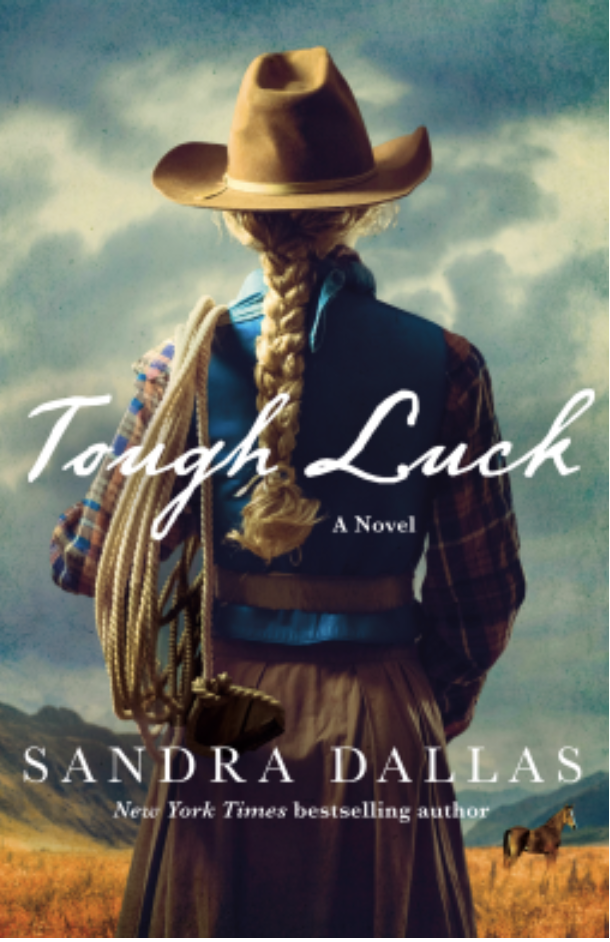
Tough Luck by Sandra Dallas (Historical Fiction)

Writing: 4/5 Characters: 5/5 Plot: 4.5/5

I’ve been reading Sandra Dallas’ books since 1998 and have read (and loved!) all of them. This one is already one of my favorites — captivating characters, wild adventures, and a full sense of the time (1863) and place (Western territories).

Dumped in an orphanage by their elder brother once their mother died, Haidie (14) and Boots (10) Richards manage to escape, taking one of the more reluctant caretaker nuns with them. They head West in search of their long missing father whose last reported location was a mining town past Denver.

Diving into some fantastic storytelling, we join them on an adventure laden trip, sharing the camaraderie of a slew of characters who are as realistic as they are individualistic, intriguing, and somewhat morally curvaceous. The feel of the time and place is intensely real, with the focus on how these people are making their way through the harsh realities of the time. It’s the characters who make it for me — card sharks, con men, mule packers, members of the clergy, and (my favorite) a pair of “old maid” sisters (at the ancient ages of 27 and 29!). I love the way they are each making his or her own way in a harsh world following individual definitions of what it takes to survive in an acceptable fashion. I love the way Dallas’ books tend to include people aggregating into tight knit groups bonded by their experiences. It’s a part of human nature that I genuinely enjoy.

Gobbled this up in one session. Hope the author’s book tour lands in my town because I would dearly like to meet her.

Good for fans of Paulette Giles (though Dallas has been at it longer!)

Thank you to St. Martin’s Press and NetGalley for providing an advance copy of this book in exchange for my honest review. The book will be published on April 29th, 2025.

Last House by Jessica Shattuck (Literary Fiction)

Writing: 5/5 Plot: 5/5 Characters: 5/5

This is a brilliant epic of a book. It spans a period of 90 years (~1950 to 2040) via the trajectories of a single family — each member ensconced in his or her own cultural context while engaging with the others who are firmly planted in their own contemporaneous but often dissonant contexts. The story begins with Nick and Bet Taylor — he a junior lawyer attached to an American oil team negotiating deals in the Middle East and she a WWII cryptographer who gave up her dreams of a PhD to become a wife and mother (as women did in the 50s). From this stability and cultural conformity came two children — Katherine and Harry — who grow up in a clash between the middle class values of their parents and the anger and rhetoric of the 60s, complete with Marxist hyperbole and anger-fueled violence in the name of peace and justice. Decades later, by the time the third generation comes of age, their social cohort is beset by the overwhelming angst from the imminent collapse of society from climate change, war, and shifting values.

What impresses me about this book is how well Shattuck captures the feelings of the time(s) from so many different perspectives. Anger, fear, bewilderment, passion. Sometimes it was hard to read because she captured it so well; other times it was chilling to read because the activism of the 60s (the good, the bad, and the ugly) is blatantly mirrored in what is happening today. She must have finished writing this book before the Israel / Hamas war began and yet she captured the mix of intentions, propaganda and stupidity of the current situation perfectly.

I loved that the multiple viewpoints were captured via highly reflective characters — their feelings of joy, frustration, rage, and angst appearing in response to a rapidly shifting cultural landscape. I love that they pondered, each in his or her own way, the responsibilities that are incurred simply by being alive. The pages are full of insight with regard to parenting, political attitudes, alliances, friendship, and familial support.

I was (pleasantly) surprised by the lack of cliche and manipulation in the narrative. If the author has a strong opinion on climate change, greed, politics, democracy, or activism, I couldn’t tell you what it was. She covered several competing thoughts on how a person chooses to live in the world as it is. One of my favorite parts (towards the end) was a 2-3 page summary of an optimistic and pessimistic view of the same world. Perfectly crystalized (IMHO) into personal attitudes and interpretations. This book could have been depressing but came off to me as more wistful — the wistfulness that always accompanies the passage of time, regardless of how sweet that passing is.

Some good quotes:

“That’s what civilization is,” Brent said. “Living with people outside your tribe. All those rules and norms and structures that allow you to coexist. Right? Without those, we’re just – cave dwellers, protecting our own turf. You escape civilization, you escape back into your tribe. “

“The Weather Underground had gone off the deep end. They had aligned themselves with history’s most violent killers, people who thought the righteousness of their cause gave them the right to make decisions about life and death: Hitler, Stalin, Charles Manson. In the name of justice, how could you choose that?”

“Still, Katherine‘s knee jerk cynicism, annoyed him. She had never even been to the Middle East. She knew nothing about Iran. She knew nothing about the oil industry or the complicated politics of resource distribution. She had never even taken an economics class. She did not grasp that she was on the top floor of a great complicated structure with her lofty ideals while he was in the basement, stoking the boiler, making sure she would not freeze to death. Her generation took so much for granted! All the peace and plenty they had grown up with wasn’t given — it was protected by a sheath of young men’s bones strewn across Europe and the Pacific“

“How will it work when everyone is exactly equal?” my mother wanted to know. “Is there enough, really, to go around?” I was appalled by this sentiment, so chauvinist, racist, survivalist. I railed at her about the capitalist racket, the smallness of her Depression-era mindset (“But I don’t have a mindset,” she protested. “I have questions”). She was a good sport about it, really, mild-mannered in the face of my patronizing. But she persisted: Wouldn’t there always be some way people sorted themselves? If it wasn’t race or gender or class, would it be intelligence? Physical strength? Blood type? Weren’t there always bound to be haves and have-nots on account of finite resources? The constraints of weather and geography, for instance? Who got the high ground with fertile soil versus who got the desert?”

“My father wanted calm and safety, not emotion. Everything in their life was set. That was her generation, I guess. Their households clean, tidy, and immobile, built to last. So, too, was their concept of the relationships of the people who populated it: mother, daughter, neighbor, housecleaner — these were static entities. I can see now that for my father, this was vital, the best protection he knew against all that was ugly, tangled, and difficult. My mother, though, longed for something different. She was forty-seven years old, and she’d been living the same life since she was twenty-three.”

“Conflict avoidance is a luxury of the bourgeoisie,” I said as if this were a well-known quote. Maybe it was. My head was awash in edict and directives and liberal platitudes.

“The idea disturbed him. They were raising a daughter who felt free to be unpleasant when she was unhappy? He would have been caned by his father if he’d ever been ‘unpleasant.’ ”

Thank you to William Morrow and NetGalley for providing an advance copy of this book in exchange for my honest review. The book will be published on May 14th, 2024.

Lucky by Jane Smiley (Literary Fiction — Audio Book)

Ostensibly the story of a Jodie Rattler — from childhood until her 80s — who achieved moderate fame as a folk/rock singer/composer and, due to some clever investing of the money she had, was able to live her life and create her music without having to make herself a slave of the music industry. I never get the impression that she has any particular plans or goals. Instead she does what she wants to at the time, gathering (and enjoying) experiences that she often embeds into her music. This takes us from her birthplace in St. Louis to England, to recording studios, to tropical beaches, to New York City, and often back home to St. Louis. It takes us through her 25 lovers and their stories. The book is highly reflective with Jodie clearly describing her experiences, her feelings at the time and upon later reflection, and her thoughtful musings on life as a result. It’s really a personal voyage of self-discovery and ongoing development but without the cataclysmic events that often send people into these states. While it sometimes felt a bit slow moving (especially as the audio book reader spoke at a measured pace) I found myself consistently interested. By the end I felt like I knew what it was like to be Jodie. At the same time, I didn’t resonate with her — we are very different kinds of people — which made it even more interesting to be her for the duration.

There is a theme throughout the book where she reflects on how lucky she is every step of the way — chance meetings, being seen by a promoter etc. Hence the title. There is a lot of interesting detail on how she writes her songs, where her ideas come from, how she develops them, and what kind of experimentation she does to get a particular sound — all of which was completely accessible to me as a non-musician. Because the book spans about 80 years (from 1955 – 2030), we also get to watch (through her eyes) the evolution of the music industry, the political scene, and the planet. The worries about climate change and political instability float about the book, settling into something more solid by the end of the book as Jodi ages.

Now — I very much enjoyed listening to this book and thought the end was reasonable. But. I hated the epilog and I would honestly suggest you just don’t read it. It’s short and has a very interesting twist to it (and a tie in to the name of the book), but it has a complete downer of a future prediction that honestly has nothing at all to do with the story and just left me in the worst mood for no good reason! I don’t want to include a spoiler so I’ll say no more except that I really found it both emotionally draining and literarily gratuitous.

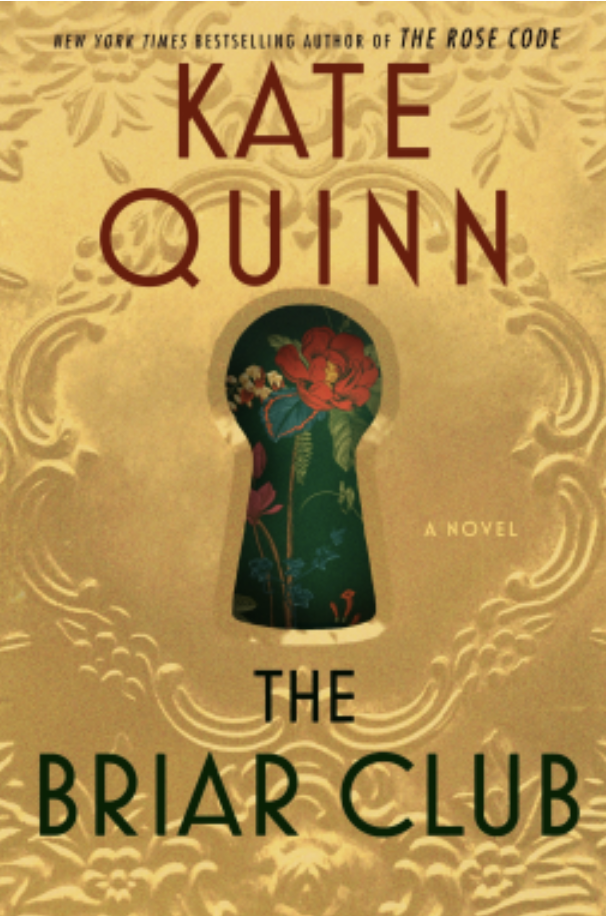
The Briar Club by Kate Quinn (Historical Fiction)

Writing: 5/5 Characters: 5/5 Plot: 5/5

Thanksgiving 1954. Washington, DC. A women’s boarding house. A body. And blood — lots of blood. That’s how Kate Quinn’s latest book gets started. And yes, once I started, I never put it down as per usual with her books. She can really write!

Backing up from the Thanksgiving turmoil, the book starts in June 1950 and shifts the POV from boarder to boarder as the timeline makes its inexorable crawl towards the “exciting” date. This is an excellent device as not only do we get the events leading up to the end from different perspectives, we also get the stories of the women — all from different backgrounds and with different goals which together comprise a compendium of women’s lives at that time. An injured female baseball player from the short-lived women’s leagues; an older immigrant from Hungary; a young mother whose doctor husband has been overseas for two years; a secretary for the (real life) female Maine senator who goes up against McCarthy when nobody else has the guts; a secretary for HUAC (House Un-American Activities Committee); a woman working for the National Archives in love with a gangster despite her best intentions; and the elusive Grace Marsh who brings them all together. These are just hints! Quinn does meticulous research and is able to bring so much of the McCarthy era to the surface — especially around the societal expectations of women. It felt like I was living it.

The book is non-stop action — but — I realized it is the kind of action I care about. Things change, people and their prejudices, fears, and disappointments have to be dealt with and some individuals actually use their experiences to shift their perspectives. Opportunities come up and people learn about themselves (for better and worse) when they choose a reaction. Action does not have to be long (and very dull) car chase scenes or long battles of any kind. Epiphany! Absolutely captivating characters — a couple of “bad men” with no real depth but plenty of men and women (and kids) who are each real in their own way. FYI two of the (fictional) characters were named after people who won the “name-a-character” raffle — what fun! Some impressive twists — do not read the end or the notes first. In addition to being a gripping read, I’m still thinking about it many days later. Always a good sign.

Highly recommended.

Thank you to William Morrow and NetGalley for providing an advance copy of this book in exchange for my honest review. The book will be published on July 9th, 2024.

The Glassmaker by Tracy Chevalier (Historical Fiction)

Writing: 3.5/5 Plot: 4/5 Characters: 4.5/5

A chronicle of glass making in Murano (still known as the center of glass!) as told through the life of Orsola Rosso — the eldest daughter of a glass blowing family. Orsola wants to work with glass herself, but it’s 1486 and the Renaissance hasn’t quite reached the stage of promoting social changes for women. The story uses the (very) unusual contrivance of allowing Orsola and those in her immediate orbit to age slowly while time for the world at large gallops by. While the “action” starts in 1486 and ends in the present day, Orsola only ages from nine to her late sixties. While this device is explained (poetically) in the prolog, I didn’t really get it so I’m hoping that I can help you avoid bafflement by stating it here with less skill but more clarity 🙂

Orsola’s life embodies the personal (love, marriage, and children in a large extended family rife with personalities), the political (Venice shifting from commercial center to Austrian occupied territory to part of a United Italy to tourist center) , and the business (Guild control to competitive pressures to tourist-driven). She and her family go through the Plague (and later Covid!), two world wars, and the changing mores of an evolving Europe as the Renaissance gave way to the Age of Enlightenment followed by whatever our current age is destined to be called. I learned a lot about Italian history — details that I had learned in the past now integrated and brought to life in this story of artisans buffeted by the constantly shifting trends over time. The history became so much more real to me told through the lens of this particular family.

I give this a four star rating because for my taste there was a little more description than I like, though that same description may fascinate others.

Thank you to Viking and NetGalley for providing an advance copy of this book in exchange for my honest review. The book will be published on June 18th, 2024.

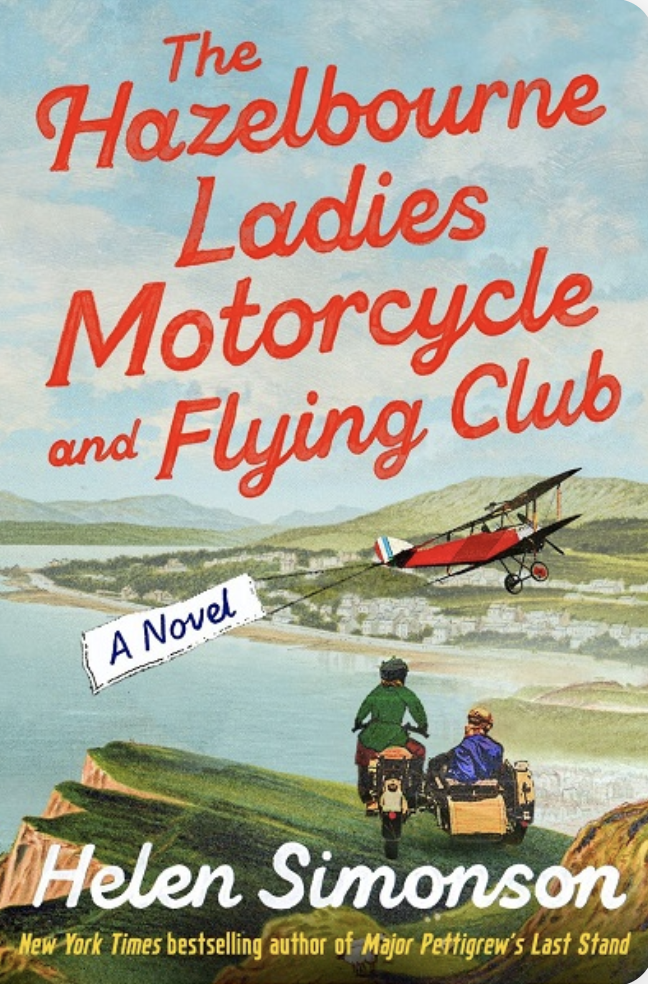
The Hazelbourne Ladies Motorcycle and Flying Club by Helen Simonson (Historical Fiction)

Writing: 4.5/5 Characters: 5/5 Plot: 4/5

Constance Haverhill is a girl with few prospects. 1919 finds her spending a summer as companion to an elderly lady at a posh hotel at the seaside with an unpleasant future looming before her. The Pre-War Practices Act of 1919 gave returning soldiers their pre-war jobs back and forbade women from holding jobs in Covered Occupations. While Constance is pondering her (limited) options, she meets and is befriended by Poppy Wirrall, a local baronet’s daughter and proprietor of the fledgling women’s motorcycle-based taxi service which she hopes to expand to flying lessons for women. Poppy’s primary goal is to keep women employed and progressing while the government and local councils work equally hard to send the women back to homes and domestic service.

The book is beautifully written with a cast of compelling characters set in a very realistic post-war environment. Each person represents a kind of cohort of the day — women facing the loss of their livelihood and an (extremely) limited supply of potential husbands, wounded soldiers returning to a population that doesn’t want to be reminded of the war, those of the wealthy class still scheming for good matches at the expense of ethics and friendship, foreign born naturalized citizens who had been detained during the war and relegated to low status jobs, and even a mysterious Indian national whose character brings to light the treatment of Indians in Britain and the under-appreciated contribution of Indian men in the war. Simonson writes with intricate detail about the inner thoughts and struggles of several characters as well as painting a comprehensive picture of life in that era. It’s an Austen-style novel of manners combined with a feminist look at post-war lives in Britain with a little romance tossed in.

My only complaint might be that certain “types” of people were not given interior lives but were presented as pure negative stereotypes — mostly people of the monied class and one horribly stereotyped American. I’m sure there were plenty of Americans at the time who really were that unpleasant, but being an American myself I would have enjoyed having at least one “decent” American included 🙂

Thank you to The Dial Press and NetGalley for providing an advance copy of this book in exchange for my honest review. The book will be published on May 7th, 2024.

The Huntress by Kate Quinn (Historical Fiction)

Another powerhouse from Kate Quinn — propulsive (my new favorite word for books like this where one page practically forces you to turn to the next quickly) and intriguing at multiple levels. Parenthetically, I listened to this on audio and cannot stress enough how fantastic the reader (Saskia Maarleveld) was. I generally prefer reading to listening, but I’m fairly certain that her reading made this book significantly better than it would have been without (and that starts from a high rating to begin with!)

Three intertwined timelines racing towards the identification, location, and capture of the Nazi war criminal called die Jagerin — the Huntress. This is the woman who engaged in murder as Nazi sport, including the killing of children in cold blood towards the end of the war. The timelines: 1946 — Jordan — a 17-year old girl who passionately wants to be a photojournalist a la Margaret Bourke-White; 1950 — Ian Graham — world-weary British war correspondent turned Nazi hunter with an almost desperate need to see die Jagerin caught and tried; 1941 — Nina Markova — born in the frozen wastelands of Siberia whose sheer force of will gets her into the legendary (and historically accurate) Night Witches — an all female bomber squad that marked the beginning of Soviet acceptance of women in combat.

The writing is excellent, with perfect pacing. The characters are detailed and completely believable (to me). Tons of little details that make me feel as though I really know these people and made me miss them when the story was over. Plenty of reflection on life for each of the characters — threads of trust, context, truth without sensationalism (always my favorite), what it means to find a community, the importance of friendship and of having a purpose, and how someone can both love another person and be horrified by them at the same time. Additional details about groups as well — attitudes toward the war and the criminals it produced five years later. I really couldn’t stop reading (listening).

My only negatives — it felt just a little too long — especially listening to an audio book; and I had a hard time knowing who die Jagerin was (this is pretty obvious to the reader from the beginning) but I had to watch the characters NOT FIGURE IT OUT FAST ENOUGH FOR ME!

Highly recommended — especially the audio book.

The Phoenix Crown by Kate Quinn and Janie Chang (Historical Fiction)

Writing: 4/5 Characters: 5/5 Plot: 4/5

Two determined women, a wealthy, charming, but deeply dangerous man, and a precipitous event come together in this propulsive novel by Kate Quinn and Janie Chang. I’ve read most of Quinn’s novels; I’m planning to read my first Chang shortly because it looks fascinating!

Gemma Garland comes to San Francisco to meet up with the Met traveling group to join the chorus when a current singer chooses to leave. Garland is a gorgeous soprano who is prevented from singing leading roles due to debilitating migraines she can’t control. Feng Suling is a (very) talented seamstress who is desperate to escape the arranged marriage her uncle is forcing on her to escape his (massive) gambling debts after her parents died. Mr. Thornton — a wealthy and ambitious patron of the arts — is in a position to help them both and yet… he is not necessarily what he seems to be. It is early April in 1906 and the infamous San Francisco earthquake is less than two weeks away.

Good writing encompassing plenty of richly detailed history. Real characters such as Enrico Caruso (famous tenor — I’m guessing most of you know this!), Martin Beck (the founder of the Orpheum theater), and Alice Eastwood (the curator of Botany at the California Academy of Sciences) are inserted into the plot without betraying their actual character or actions (at least not too much). Fascinating details about Asian art, including the Phoenix Crown (real and stunning), an exquisite Dragon Robe, and multiple object d’art are included — both in description and in terms of how they are made. A full description of Chinatown and the various laws, policies, and practices around Chinese immigrants at the time is provided with depth and nuance.

A powerful narrative with a real punch. Plenty of opportunity to perch on the edge of your seat and bite a nail or two.

Thank you to William Morrow Paperbacks and NetGalley for providing an advance copy of this book in exchange for my honest review. The book will be published on February 13th, 2024.