The Samurai’s Garden by Gail Tsukinaya (Historical Literary Fiction)

A quiet, thoughtful, and utterly absorbing book about a young man from Hong Kong sent to a small, Japanese fishing village to recover from tuberculosis on the eve of the second Sino-Japanese war (Fall, 1937). Twenty-year old Stephen is a student and a painter. The year he spends in Tarumi is told through a set of journal entries which are equal parts descriptive and reflective. There is the distant war, with the radio intoning massive Chinese casualties along side propagandist calls for the enemy to “simply surrender to the kindness of the Japanese army, and all will be well.” There is the slow unraveling of his parent’s marriage as his father’s business interests keep him in Japan. And there is the burgeoning friendship with the older Matsu — caretaker and master gardener — and Sachi — whose life was abruptly shattered when leprosy swept the village decades before. Throughout the year, Stephen — feeling deeply but never loudly or dramatically — is slowly developing his own philosophy of living based on the lessons the world is teaching him.

The writing is exquisite — shifting between culture, character, and the natural (and unnatural) world. There is a recurring theme of beauty — sometimes found in the most unlikely places — and yet, once found, inevitable rather than surprising. Throughout all — war, destruction, disease, grief, and the ever tragic profusion of human contradictions — the focus is always on how to move forward — recognizing the fragility of life and finding your own peace and contentment within it. I liked the way the author made it clear that this was not an easy task. And I loved the fact that throughout this story teeming with essential truths, there was neither a cliche nor a saccharine sentiment to be found anywhere in the pages. Some beautiful descriptions of gardens and natural landscapes along with an artist’s way of engaging with the world as well.

Highly recommended.

Quotes:
“ It’s harder than I imagined, to be alone. I suppose I might get used to it, like an empty canvas, you slowly begin to fill.”

“All over Japan they were celebrating the dead, even as more and more Chinese were being slaughtered. There would be no one left to celebrate them. I looked around at all the smiling faces, at Matsu and Fumiko who moved slowly beside me, and wished that one of them could explain to me what was going to happen.”

“Ever since I had come to Tarumi, I’d seen more deaths than in all of my life in Hong Kong. Everything before me was changing. I knew I would never be able to step back into my comfortable past, Ahead of me lurked the violent prospect of war, perhaps bringing the deaths of people I knew and loved, along with the end of my parent’s marriage. These were the terrors I’d somehow escaped until now. And as I sat among the white deutzia blossoms, I felt a strange sensation of growing pains surge through my body, the dull ache of being pulled in other directions.”

“I’ve tried to capture this ghostly beauty on canvas, but like anything too beautiful, it becomes hard to re-create its reality. There’s something about being too perfect, that, even this, which at times appears stiff, almost boring. I finally gave up after several tries.”

“She wasn’t beautiful, not in the way that Tomoko must’ve been, nor did she have the roughness of Matsu. Her attraction wasn’t in the form of perfect features, but from the deep, wrinkles, age spots, and eyes that have seen much of what life has to offer. Fumiko had a face that had been enriched through time.”

“I was old enough to understand everything he said, but as his mouth softly formed the words, I knew the sense of integrity I had long admired in him had died, and then I was already grieving for its loss.”

“He learns how to do art with the stones in her garden: it was a strange feeling, much different from working with the fluidity of brush and paint, or water and earth. The weight of the stones pulled against each stroke and left a distinct feeling of strength and permanence.”

The Diamond Eye by Kate Quinn (Historical Fiction — audio book)

Writing: 5 /5 Characters: 5/5 Plot: 5/5
    Kate Quinn can write! This is the third book of hers that I’ve read (in this case, listened to — excellent reader.) Every one grips you completely from beginning to end. This is the story of Mila Pavlichenko — the history student who becomes Russia’s deadliest sniper when the Germans invade Ukraine in 1937. Based on the real person’s memoir, it takes us through her war: from enlistment, to finally getting a weapon, to becoming a sniper (with 309 certified kills), to her participation in the American goodwill tour (where she is befriended by Eleanor Roosevelt) designed to get the US into the war on a second front.
    The primary characters — Mila, her sniper partner Kostya, her should be ex-husband Alexei, and her lover Lionya — were incredible. Full of depth and reflection and firmly placed in the context of their time and place. I loved the depiction of relationships during wartime — the development, the tightness, and sometimes the loss — which often brought tears to my eyes. I also loved Mila’s sense of droll humor — not a characteristic much valued in the Soviet Komsomol. Perhaps this is part of why I felt connected almost instantly, even though Mila’s life was about as far as you could get from my own.
   There is plenty of action and drama in this story, but nothing is “over dramatized.” There is plenty to feel from the factual story itself without needing the embellishment of extra heartstring tugging prose. And the action — which typically bores me — is so personal that is interesting. There are strong feminist themes throughout the book. The Soviets were the only army at the time that allowed women to fight, and yet women were still subjected to expectations of sexual favors, lack of promotion, and plenty of ill will from their male comrades-in-arms. On the US goodwill tour, Mila was subjected to absurd questions such as her skin care regime and lipstick choices on the front as well as the color of her preferred underwear. Her answers were worth the entire price of admission. I particularly appreciated what felt like genuine attitudes toward the Soviet Union from the woman who lived there — there was no smacking of modern or US based sensibilities sneaking into the text.
    As always, Quinn is meticulous in documenting which parts of the novel are fiction and which are based on documented fact. I am quite impressed with both the integration of the two and the clean lines between them, making it easy to enjoy and yet distinguish between, a documentation of a real life and an electrifying story layered on top without disturbing the base.
    Highly recommended (and now I need to go read the rest of her books — my TBR pile is long past the toppling stage…)

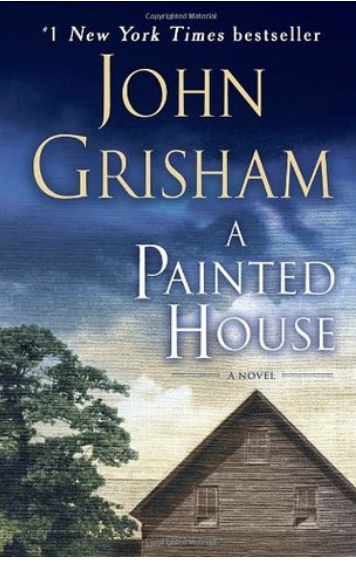
A Painted House by John Grisham (Historical Fiction — audio book)

Writing: 5/5 Characters: 5/5 Plot: 4/5
This book is unlike any other book Grisham has written — no courtrooms, not a lot of official justice, and not a thriller — but I found it utterly enthralling. It drew me into a world I knew nothing about and brought it to full sensory life. At least part of this was due to the audio book reader (David Lansbury) who captured the mood perfectly with his tone, pacing, and wide range of voices. Not every book (IMHO) is improved by listening to it — but this one certainly was.

The story is apparently somewhat autobiographical and takes us through one picking season on an Arkansas Delta cotton farm in 1952. Told from the perspective of seven year old Luke Chandler, the clarity of his reflections as he learns about life, morality, and people during this period is priceless. The family hires itinerant help in the form of ten Mexicans and a family of hill people. As with most farmers of the time, they are in debt from one season to the next, on the edge of ruin with every storm, flood, broken truck, or the transitory nature of picking labor. Luke is part of it all — the picking, the worrying, and the witnessing. He becomes the holder of too many secrets, and we feel the potential bursting and sickness he takes on with the keeping.

I’d forgotten how good Grisham’s writing is because I’m not that interested in legal thrillers but I was rapt throughout. His characters are such real people — each struggling in his or her own way with constant questions of both survival and morality. Making do in a rough world with little in the way of legal support — people have to figure out how to handle their own problems. Bittersweet and poignant, the narrative spans the Korean war, the movies of the day, the newness (and rareness) of television sets, flooding and tornados, farming economics, and the tension between the old ways and new possibilities.

Loved it.

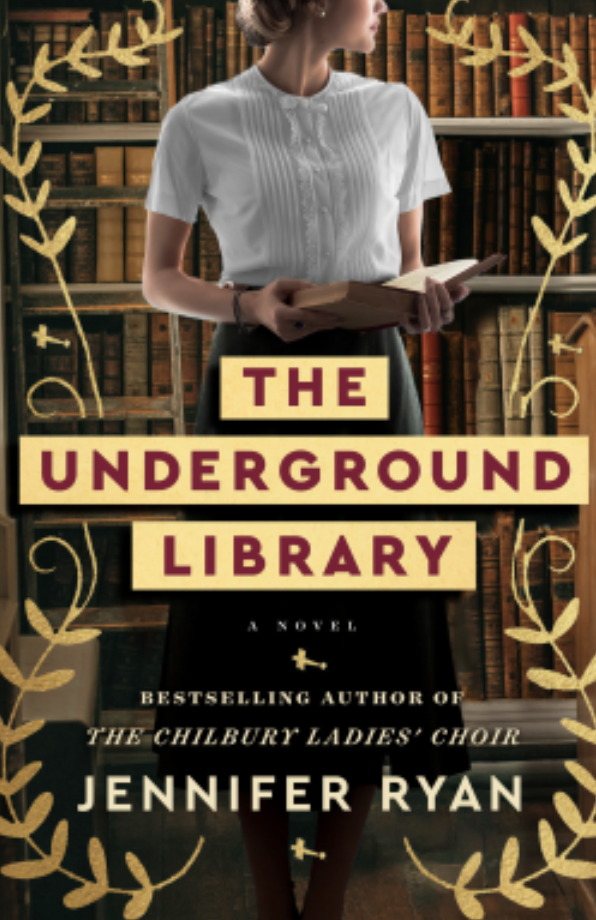
The Underground Library by Jennifer Ryan

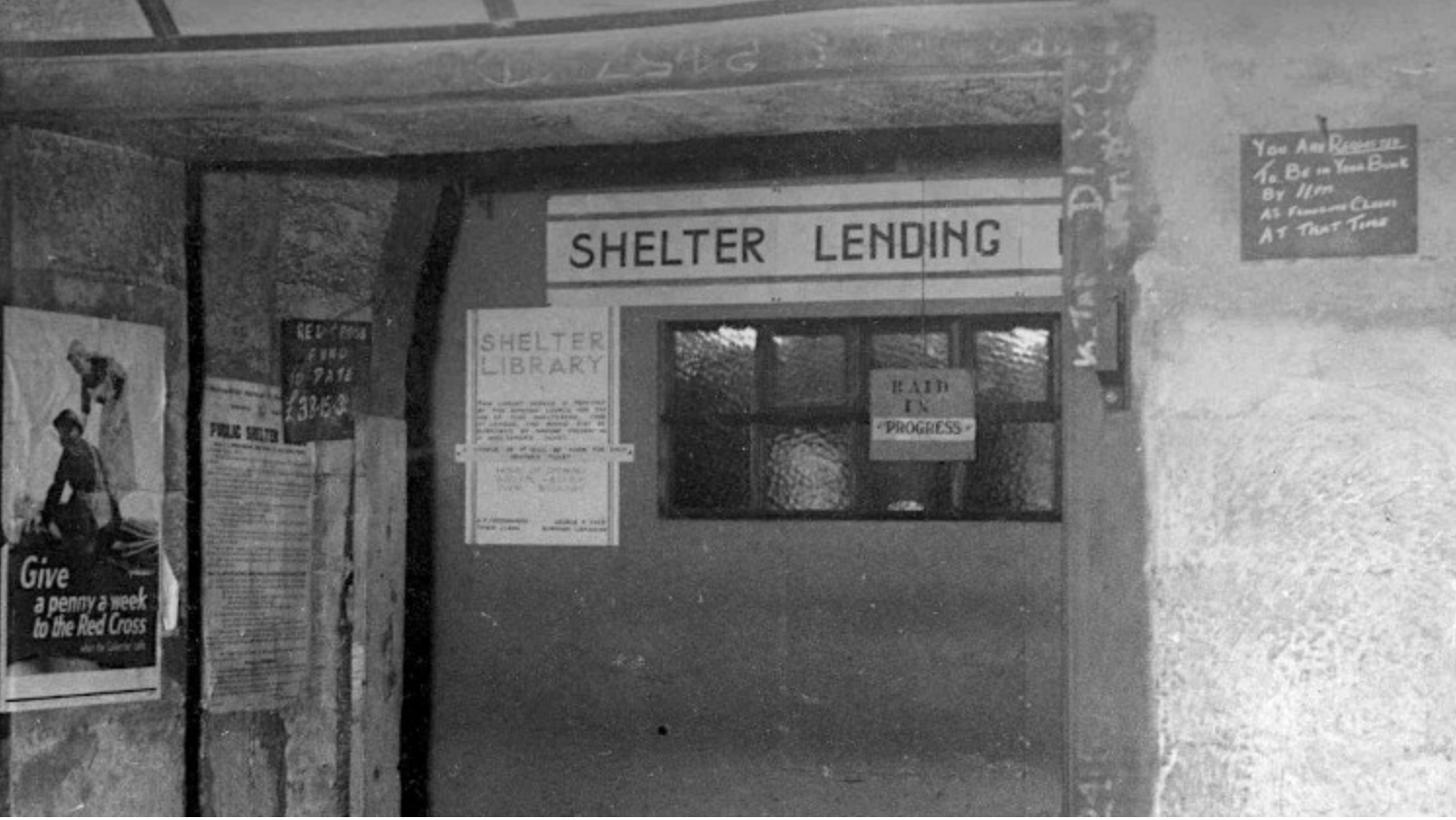
I thoroughly enjoyed this fictionalized history of the underground library at Bethnal Green tube station in London during WWII. The story follows three women during the early stages of WWII (~1940). Near the beginning of the London Blitz, the German bombs destroyed the large and beautiful Bethnal Green Library, necessitating its relocation underground.

Juliet Lansdown has just taken the role of Assistant Librarian, a role usually reserved for men (who were of course in short supply). Jewish Sofie Baumann has managed to obtain a visa to leave Berlin for London as a household servant — also in short supply and one of the few ways Jews could still get out of Germany and go to the relatively safe shores of England. Katie Upwood, a library assistant, finds out she is pregnant shortly after hearing that her beau is missing in action, presumed dead. Together these women, and the growing community taking to the tube station for nightly shelter, form a support system for the predominantly female cast of The Underground Library.

Jennifer Ryan always gives her characters a happily-ever-after which made it easier for me to read of a harrowing time without too much additional stress which I greatly appreciate. I loved the attention to historically accurate details of the age — the big hotels fixing up their cellars for dancing, the women in internment camps on the Isle of Man teaching each other skills, the treatment of unwed mothers, deserters, efforts at Jewish reunification, and the fact that universities, rather than close, started opening up to women while the men were away — Margaret Thatcher got her 1943 Chemistry degree from Oxford! I also always love Ryan’s characters and the way they work to make the best of whatever situation they find themselves in — usually through some wonderful friendships. All learning to take whatever joy is available to them and cherish it.

Ryan does differentiate where her fiction veers off from fact in the afterward, and she covered (almost) all of the points that I had noticed being off while reading. However, one thing that does slightly irritate me is that in addition to making a woman the heroine of making the library happen, she also makes the male head librarian someone who tries very hard to get in the way of it being a success, except when Juliet flatters him and basically offers to give him all the credit. In fact (according to wikipedia) it was a male librarian and his male assistant who worked hard to get the library moved underground and kept it going! I don’t mind her making the characters female, but I think it’s sad to make the male character a “bad guy” when he wasn’t (I don’t see the need to empower women at the expense of men). It could be that Ryan has more information than I do, but I wasn’t able to to find it.

If the story sounds familiar, that may be because this is the second book to fictionalize this WWII underground library this year. The Little Wartime Library by Kate Thompson covers the later years of the war and was also very enjoyable. For those interested in the real story, here is a somewhat personal accounting: https://www.historic-uk.com/HistoryUK/HistoryofBritain/Bethnal-Green-Tube-Disaster/. I’ve embedded a couple of photos in this post.

Thank you to Ballantine Books and NetGalley for providing an advance copy of this book in exchange for my honest review. The book will be published on March 12th, 2023.

The Museum of Lost Quilts by Jennifer Chiaverini

I tend to think of Chiaverini’s “Quilt Books” as generic uplifting women’s fiction, but coming to this latest installment after reading her fantastic WWI historical fiction — Switchboard Soldiers and Canary Girls — I now recognize all of the deeply interesting history embedding in the Quilt books. Specifically history focusing on the often hidden contributions made by women. The plot of this book focuses on the fundraising for an historical building restoration to save it from a (somewhat two dimensional) greedy developer by collecting and curating a set of beautiful old quilts with strong ties to local history. It is the story of the individual quilts and the research process for tracking down and understanding their history that made it so interesting to me. Plenty of individual stories and the unearthing of historical context that made those stories possible. While the plot was fairly predictable, it was pleasant and entertaining, and the historical bits really kept my interest.

Thank you to William Morrow and NetGalley for providing an advance copy of this book in exchange for my honest review. The book will be published on April 30th, 2024.

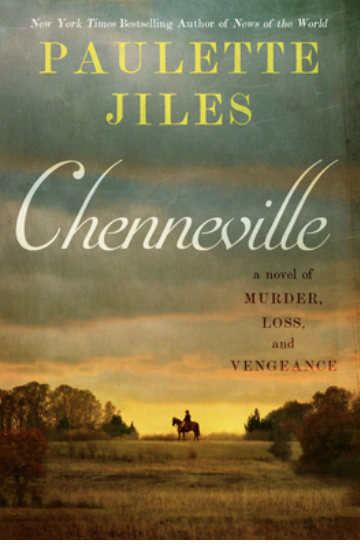
Chenneville by Paulette Giles (Historical Fiction)

Writing: 5/5 Characters: 4/5 Plot: 3.5/5

A beautifully written book that fits into the same post Civil War world as her News of the World and Simon the Fiddler. Jean-Louis Chenneville — once a successful farmer and gentleman — returns from the war a broken man having spent a year in the hospital in a semi-coma. He awakens to a dark world of ruin — Lincoln had been assassinated, Lee had surrendered, and the Gray Union army had gone home. His body and mind are slowly healing — his memory has wide gaps.

When he does finally get home, he gets worse news — news that sends him off on a long, single-minded journey to right a terrible wrong. Giles excels at bringing a place and time to life — in this case I almost wish she was a little less skilled. It is a depressing time — full of chaos, corruption, and despair. The war is over but things have not returned to any kind of normal — there is little stability in the South, with deep-seated hatreds and little consistent law enforcement.

The story is slow paced with characters — some unpleasant but many good people just trying to make things work again — introduced as part of his heroic journey. Each character had a unique backstory that highlighted all the different people who found themselves in this difficult time and place from a wide variety of starting points. My favorite part had to do with the telegraph operators that he met and the sub community they formed (with details completely and accurately belonging to the time period). There were definitely times that I wished we could have a little less atmosphere and more plot. The book was thick with description and I don’t visualize from textual description very well, which made some of the (albeit exquisitely depicted) passages tedious for me. I was happy with the ending, but until then it was a bit of a depressing read — depressing because of how hard that time really was, not because someone put a bunch of dramatic events to force readers into heavy emotions. I’m very glad I read it, but I wasn’t super cheerful during that week …

Some quotes:
“The clippers ran like teeth over the long scar. John shut his hands together with tense precision as if pain were a mathematical problem, as if he had just solved it and the solution did not include making a noise if he could help it. Sweat ran down his face.”

“The Ohio steamboat was better because the only movement was the unhinged, sliding feel of a vessel with a shallow keel as it moved across the water.”

“He tried to get a grip on himself. This was no way to live, in this messy chaos of despair.”

“People were draining south like wintertime migratory birds.”

“Every word seemed some strange phrase of dejection and unhappiness.”

Thank you to William Morrow and NetGalley for providing an advance copy of this book in exchange for my honest review. The book was published on September 12th, 2023

The Personal Librarian by Marie Benedict and Victoria Christopher Murray

Writing: 3/5 Characters: 4/5 Plot: 3.5/5

I disliked this book and eventually gave up reading it when I got about 2/3 of the way through. It is the fictionalized history of Belle da Costa Greene — JP Morgan’s personal librarian — but the richly populated details of her personal and inner life seemed far more related to Benedict’s idea of how Greene would feel (or maybe how she imagined her readers would like to think Greene would feel) and not to the way all the available data about Greene would lead one to believe.

The real Belle lived her whole life as white, despite being born to colored parents and having a “C” for colored on her birth certificate. Her secret was only discovered posthumously. She burned all of her personal papers before her death, so the only information on her must be gleaned from her letters to others, her professional papers, and any news coverage of her at the time. She was in her 20s when J.P. Morgan plucked her from her job at Princeton and made her his personal librarian where she managed and grew a multi-million dollar collection. A rare-book and illuminated manuscript expert at a time when the field was almost exclusively men, she was known as stylish, clever, and determined. The early part of the book was very engaging — I loved hearing about the auctions, and the masterpieces, and the collectors she met. But it kind of went downhill (IMHO) from there as she entered into an affair with a married man which launched a set of other events which seemed to impact her heavily.

I haven’t read the personal letters that apparently “hint” at some of these things (they are not available online yet) so I can’t say how on target the fictionalization is, but from everything that I have read about Greene, the novel ascribes far more base emotionality than she possessed. Not every woman is a mass of anxiety and insecurities inside, or ready to liquefy into a puddle when a handsome man tells her he loves her. From all accounts, Greene was a truly extraordinary woman — especially for her time — and I don’t see why we would want to distract from her knowledge and accomplishments with overwrought behavior when there is no evidence at all that she ever felt or behaved that way!

I know a lot of people who absolutely love everything Benedict writes, so this is probably a minority opinion — but it is mine! By the way, the Morgan Library and Museum is opening a Belle da Costa Greene Exhibition in Fall 2024! That I would be interested in seeing.

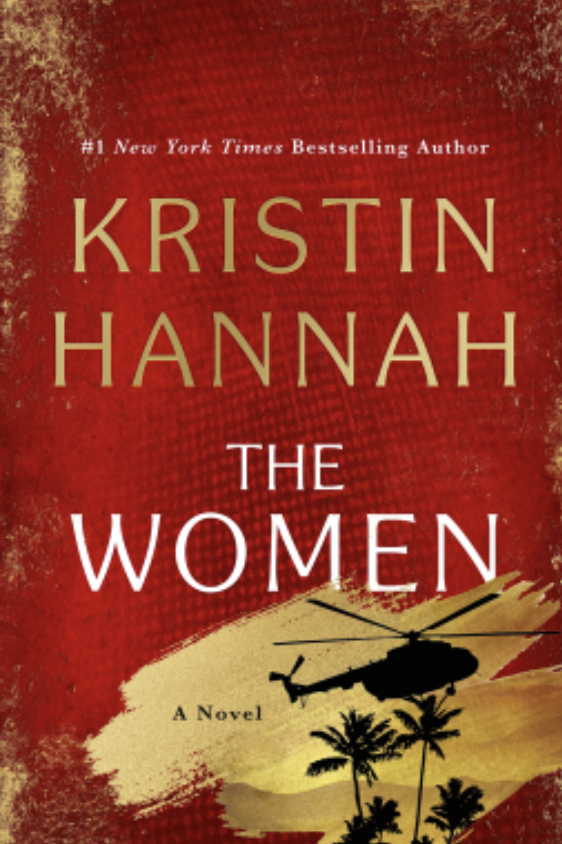
The Women by Kristin Hannah (Historical Fiction)

Writing: 4.5/5 Characters: 5/5 Plot: 4/5

In 1966, freshly minted nurse Frances “Frankie” McGrath joins the Army to be sent to Vietnam in order to be in country with her brother and earn a spot of the family’s “wall of heroes.” The story follows Frankie through nursing on the front lines, returning two years later to a country that (literally) spits on her for her service, and her reliance on alcohol and pills to get through the day. She has a need to be recognized as a veteran when everyone knows there were “no women in Vietnam.” Her life is heavily influenced by the trends of the day: the wide availability of “mother’s little helpers,” the burgeoning awareness of PTSD, and the shocking lies about the War that start coming to light.

The writing is good, and the characters are appealing and have depth. I thought she captured the times and various scenarios well — front line nursing environment (far worse than on MASH!), the reception she received back in Coronado (island community outside San Diego) when she got home, the Veterans administration, and others. I loved the friendships she depicted. Hannah is overly dramatic for my taste — though I think that is exactly why she is such a popular author.   For me the story has plenty of innate drama without loading it down with coincidences and a focus of every possible “bad thing” happening to one person. However, I thought the book did a credible job of explaining exactly how a young, well-off woman could form this track through life and how she could finally turn things around.  I also couldn’t stop reading so the writing was certainly effective!

The author’s stated goal was to bring to light the (whole) story of the women who were in the Vietnam War and she did that admirably. A very good piece of historical fiction with detailed and accurate surroundings and fully embedded characters.

Thank you to St. Martin’s Press and NetGalley for providing an advance copy of this book in exchange for my honest review. The book will be published on February 6th, 2024.

Canary girls by Jennifer Chiaverini (Historical Fiction)

Writing: 4/5 Characters: 4.5/5 Plot: 5/5

A story about Britain’s World War One “munitionettes” — women who answered the call of duty and worked in round-the-clock shifts to produce the much needed munitions for the war arsenal. The label referred to a specific group of munitionettes who worked with the (very poisonous) trinitrotoluene (TNT) which over a short period of time, turned their skin, bleached their hair (green for brunettes and white for blondes), and brought on plenty of health problems, some fatal. The story follows three women from just before war breaks out until it is over: Lucy, married to a professional footballer (that’s soccer to us) and architect; Helen, daughter of an Oxford professor whose husband runs one of the biggest munitions plants; and April, a girl sent into service at 15, who leaves for a better paying, more meaningful job in munitions once the call for women goes out.

Chiaverini’s last book (Switchboard Soldiers) focused on the female Telephone Operators who managed the switchboards in France during WWI (at a time when every single call was connected manually). She brings the same attention to historical detail to this book managing to cover a panoply of issues from the perspective of multiple women who are driving or affected by them . These include women’s suffrage which was put on hold during the war with promises made for after; women’s football, which took off during the war and was brutally shut down by the men’s league until 1971; the massive propaganda techniques used to make men enlist; the pressure on male footballers to enlist when no such pressure was applied to the more elite leagues (golfers, cricketers, and polo players); the impact on British citizens of German heritage, the many fatal accidents at munitions plants; the hunger resulting from German blockades; the posters for “surplus women” to migrate out of country; and the Swiss Medical Mission prisoner exchange (to name just a few!)

I was in awe of her ability to weave in so much about life for these women in that time period in such a meaningful, genuine, and never heavy handed way. Could not put it down. If you haven’t read Switchboard Soldiers, go back and read that one, too.

Great bibliography!

Thank you to William Morrow and NetGalley for providing an advance copy of this book in exchange for my honest review. The book will be published on August 8th, 2023.

Fair Rosaline by Natasha Solomons (Historical Fiction)

Writing: 4/5 Plot: 3.5/5 Characters: 4/5

A retelling of Romeo and Juliet that cleverly keeps every element of the plot of Shakespeare’s opus while completely shifting the meaning of each scene. This is achieved by making one, rather gigantic change — Romeo is a bad guy. A really bad guy.

The story is told from the perspective of Rosaline — the character with whom Romeo is besotted at the start of the play. In the play neither the audience nor Romeo ever gets to meet her, but she serves as a reference point for Romeo’s unrequited affections and is the reason he shows up at the party where he first sees Juliet. In Solomons’ book, that is all changed because as I said — Romeo is a really bad guy.

The book is very well written. The characters are well drawn, the setting is evoked vibrantly, the plot is gripping, and we get exposed to the hard truths of being a woman in the time period — exposed to all the usual plagues and pestilence while simultaneously having literally no say in any aspect of her life (lots of discussion about nunneries with some interesting surprises). However, I really can’t forgive Solomons for making Romeo into the character she does, and her claims (in the appendix) that her Romeo is more realistic than Shakespeare’s are frankly bizarre. By attributing rapacious intent and a complete disinterest in resulting traumas and hurt to a character who was written to be noble, honorable, idealistic, and passionate — it feels like libel. I don’t honestly understand why she felt the need to do this. The story would have been much more enjoyable (to me) if it weren’t obsessed with rewriting a classic into something that wanted to point the finger to the inherent evil of men. Not to mention the fact that I still had to read through all the tragic events that I knew were coming! So overall, a well-written book, but one that left me unhappy, rather than cheered by the clever way Rosaline “makes everything OK.” Really struggling to not provide spoilers here!

Thank you to Sourcebooks Landmark and NetGalley for providing an advance copy of this book in exchange for my honest review. The book will be published on September 12th, 2023.