The Museum of Lost Quilts by Jennifer Chiaverini

I tend to think of Chiaverini’s “Quilt Books” as generic uplifting women’s fiction, but coming to this latest installment after reading her fantastic WWI historical fiction — Switchboard Soldiers and Canary Girls — I now recognize all of the deeply interesting history embedding in the Quilt books. Specifically history focusing on the often hidden contributions made by women. The plot of this book focuses on the fundraising for an historical building restoration to save it from a (somewhat two dimensional) greedy developer by collecting and curating a set of beautiful old quilts with strong ties to local history. It is the story of the individual quilts and the research process for tracking down and understanding their history that made it so interesting to me. Plenty of individual stories and the unearthing of historical context that made those stories possible. While the plot was fairly predictable, it was pleasant and entertaining, and the historical bits really kept my interest.

Thank you to William Morrow and NetGalley for providing an advance copy of this book in exchange for my honest review. The book will be published on April 30th, 2024.

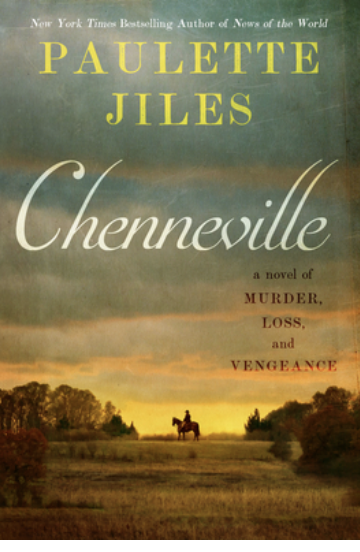
Chenneville by Paulette Giles (Historical Fiction)

Writing: 5/5 Characters: 4/5 Plot: 3.5/5

A beautifully written book that fits into the same post Civil War world as her News of the World and Simon the Fiddler. Jean-Louis Chenneville — once a successful farmer and gentleman — returns from the war a broken man having spent a year in the hospital in a semi-coma. He awakens to a dark world of ruin — Lincoln had been assassinated, Lee had surrendered, and the Gray Union army had gone home. His body and mind are slowly healing — his memory has wide gaps.

When he does finally get home, he gets worse news — news that sends him off on a long, single-minded journey to right a terrible wrong. Giles excels at bringing a place and time to life — in this case I almost wish she was a little less skilled. It is a depressing time — full of chaos, corruption, and despair. The war is over but things have not returned to any kind of normal — there is little stability in the South, with deep-seated hatreds and little consistent law enforcement.

The story is slow paced with characters — some unpleasant but many good people just trying to make things work again — introduced as part of his heroic journey. Each character had a unique backstory that highlighted all the different people who found themselves in this difficult time and place from a wide variety of starting points. My favorite part had to do with the telegraph operators that he met and the sub community they formed (with details completely and accurately belonging to the time period). There were definitely times that I wished we could have a little less atmosphere and more plot. The book was thick with description and I don’t visualize from textual description very well, which made some of the (albeit exquisitely depicted) passages tedious for me. I was happy with the ending, but until then it was a bit of a depressing read — depressing because of how hard that time really was, not because someone put a bunch of dramatic events to force readers into heavy emotions. I’m very glad I read it, but I wasn’t super cheerful during that week …

Some quotes:
“The clippers ran like teeth over the long scar. John shut his hands together with tense precision as if pain were a mathematical problem, as if he had just solved it and the solution did not include making a noise if he could help it. Sweat ran down his face.”

“The Ohio steamboat was better because the only movement was the unhinged, sliding feel of a vessel with a shallow keel as it moved across the water.”

“He tried to get a grip on himself. This was no way to live, in this messy chaos of despair.”

“People were draining south like wintertime migratory birds.”

“Every word seemed some strange phrase of dejection and unhappiness.”

Thank you to William Morrow and NetGalley for providing an advance copy of this book in exchange for my honest review. The book was published on September 12th, 2023

The Personal Librarian by Marie Benedict and Victoria Christopher Murray

Writing: 3/5 Characters: 4/5 Plot: 3.5/5

I disliked this book and eventually gave up reading it when I got about 2/3 of the way through. It is the fictionalized history of Belle da Costa Greene — JP Morgan’s personal librarian — but the richly populated details of her personal and inner life seemed far more related to Benedict’s idea of how Greene would feel (or maybe how she imagined her readers would like to think Greene would feel) and not to the way all the available data about Greene would lead one to believe.

The real Belle lived her whole life as white, despite being born to colored parents and having a “C” for colored on her birth certificate. Her secret was only discovered posthumously. She burned all of her personal papers before her death, so the only information on her must be gleaned from her letters to others, her professional papers, and any news coverage of her at the time. She was in her 20s when J.P. Morgan plucked her from her job at Princeton and made her his personal librarian where she managed and grew a multi-million dollar collection. A rare-book and illuminated manuscript expert at a time when the field was almost exclusively men, she was known as stylish, clever, and determined. The early part of the book was very engaging — I loved hearing about the auctions, and the masterpieces, and the collectors she met. But it kind of went downhill (IMHO) from there as she entered into an affair with a married man which launched a set of other events which seemed to impact her heavily.

I haven’t read the personal letters that apparently “hint” at some of these things (they are not available online yet) so I can’t say how on target the fictionalization is, but from everything that I have read about Greene, the novel ascribes far more base emotionality than she possessed. Not every woman is a mass of anxiety and insecurities inside, or ready to liquefy into a puddle when a handsome man tells her he loves her. From all accounts, Greene was a truly extraordinary woman — especially for her time — and I don’t see why we would want to distract from her knowledge and accomplishments with overwrought behavior when there is no evidence at all that she ever felt or behaved that way!

I know a lot of people who absolutely love everything Benedict writes, so this is probably a minority opinion — but it is mine! By the way, the Morgan Library and Museum is opening a Belle da Costa Greene Exhibition in Fall 2024! That I would be interested in seeing.

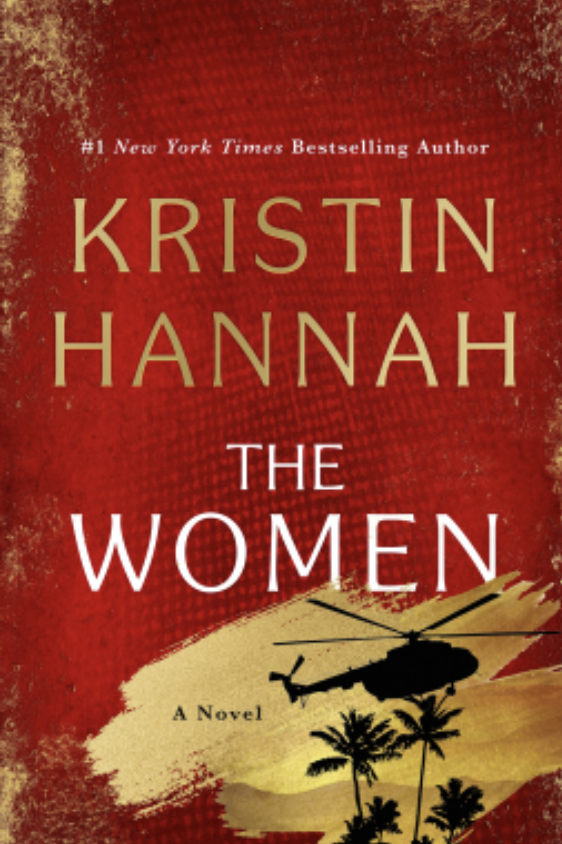
The Women by Kristin Hannah (Historical Fiction)

Writing: 4.5/5 Characters: 5/5 Plot: 4/5

In 1966, freshly minted nurse Frances “Frankie” McGrath joins the Army to be sent to Vietnam in order to be in country with her brother and earn a spot of the family’s “wall of heroes.” The story follows Frankie through nursing on the front lines, returning two years later to a country that (literally) spits on her for her service, and her reliance on alcohol and pills to get through the day. She has a need to be recognized as a veteran when everyone knows there were “no women in Vietnam.” Her life is heavily influenced by the trends of the day: the wide availability of “mother’s little helpers,” the burgeoning awareness of PTSD, and the shocking lies about the War that start coming to light.

The writing is good, and the characters are appealing and have depth. I thought she captured the times and various scenarios well — front line nursing environment (far worse than on MASH!), the reception she received back in Coronado (island community outside San Diego) when she got home, the Veterans administration, and others. I loved the friendships she depicted. Hannah is overly dramatic for my taste — though I think that is exactly why she is such a popular author.   For me the story has plenty of innate drama without loading it down with coincidences and a focus of every possible “bad thing” happening to one person. However, I thought the book did a credible job of explaining exactly how a young, well-off woman could form this track through life and how she could finally turn things around.  I also couldn’t stop reading so the writing was certainly effective!

The author’s stated goal was to bring to light the (whole) story of the women who were in the Vietnam War and she did that admirably. A very good piece of historical fiction with detailed and accurate surroundings and fully embedded characters.

Thank you to St. Martin’s Press and NetGalley for providing an advance copy of this book in exchange for my honest review. The book will be published on February 6th, 2024.

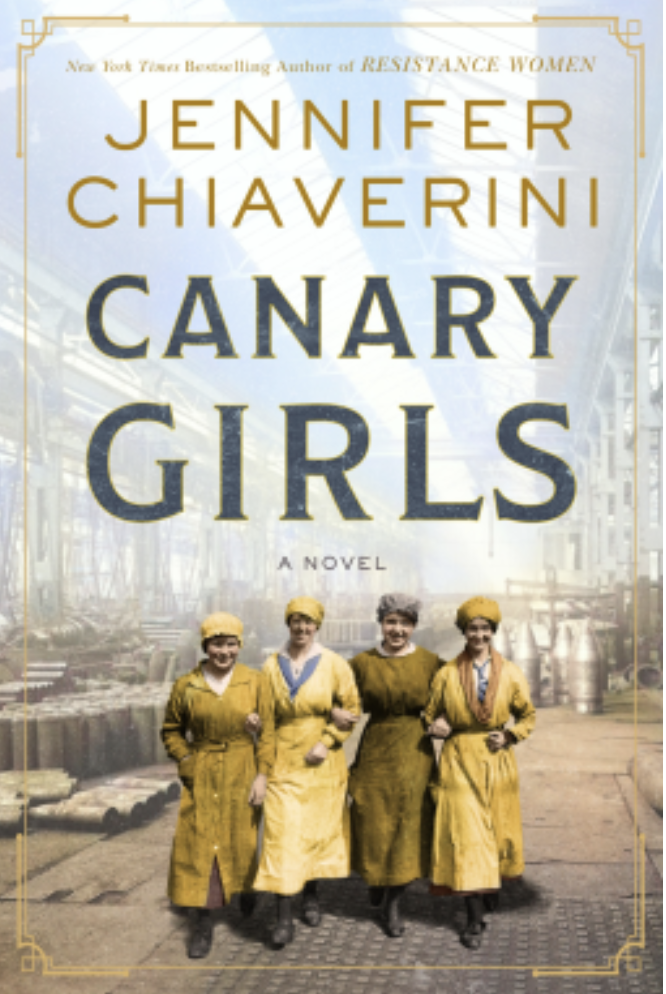
Canary girls by Jennifer Chiaverini (Historical Fiction)

Writing: 4/5 Characters: 4.5/5 Plot: 5/5

A story about Britain’s World War One “munitionettes” — women who answered the call of duty and worked in round-the-clock shifts to produce the much needed munitions for the war arsenal. The label referred to a specific group of munitionettes who worked with the (very poisonous) trinitrotoluene (TNT) which over a short period of time, turned their skin, bleached their hair (green for brunettes and white for blondes), and brought on plenty of health problems, some fatal. The story follows three women from just before war breaks out until it is over: Lucy, married to a professional footballer (that’s soccer to us) and architect; Helen, daughter of an Oxford professor whose husband runs one of the biggest munitions plants; and April, a girl sent into service at 15, who leaves for a better paying, more meaningful job in munitions once the call for women goes out.

Chiaverini’s last book (Switchboard Soldiers) focused on the female Telephone Operators who managed the switchboards in France during WWI (at a time when every single call was connected manually). She brings the same attention to historical detail to this book managing to cover a panoply of issues from the perspective of multiple women who are driving or affected by them . These include women’s suffrage which was put on hold during the war with promises made for after; women’s football, which took off during the war and was brutally shut down by the men’s league until 1971; the massive propaganda techniques used to make men enlist; the pressure on male footballers to enlist when no such pressure was applied to the more elite leagues (golfers, cricketers, and polo players); the impact on British citizens of German heritage, the many fatal accidents at munitions plants; the hunger resulting from German blockades; the posters for “surplus women” to migrate out of country; and the Swiss Medical Mission prisoner exchange (to name just a few!)

I was in awe of her ability to weave in so much about life for these women in that time period in such a meaningful, genuine, and never heavy handed way. Could not put it down. If you haven’t read Switchboard Soldiers, go back and read that one, too.

Great bibliography!

Thank you to William Morrow and NetGalley for providing an advance copy of this book in exchange for my honest review. The book will be published on August 8th, 2023.

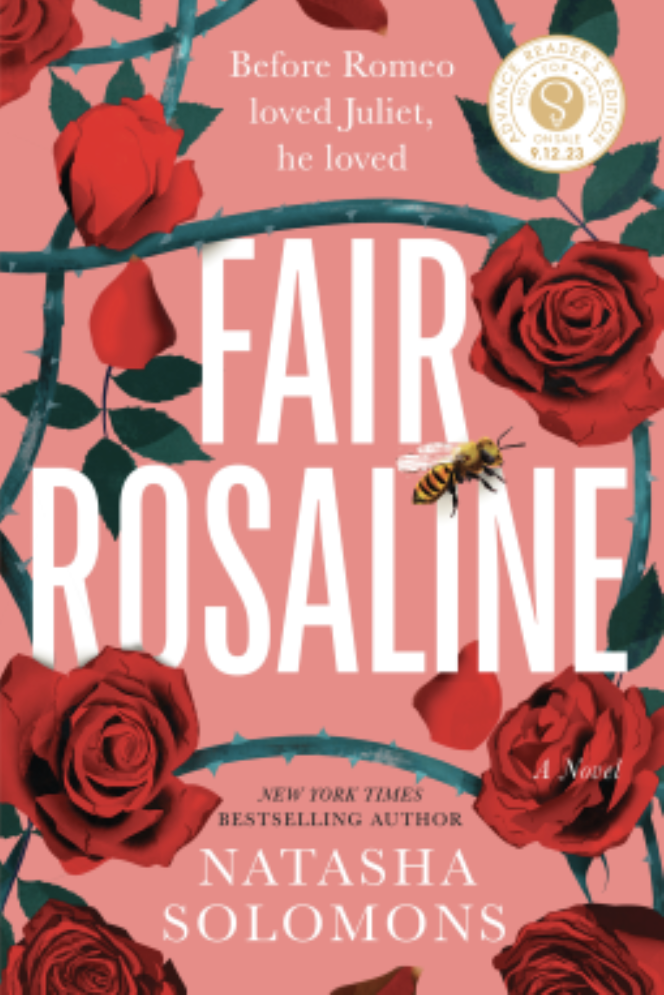
Fair Rosaline by Natasha Solomons (Historical Fiction)

Writing: 4/5 Plot: 3.5/5 Characters: 4/5

A retelling of Romeo and Juliet that cleverly keeps every element of the plot of Shakespeare’s opus while completely shifting the meaning of each scene. This is achieved by making one, rather gigantic change — Romeo is a bad guy. A really bad guy.

The story is told from the perspective of Rosaline — the character with whom Romeo is besotted at the start of the play. In the play neither the audience nor Romeo ever gets to meet her, but she serves as a reference point for Romeo’s unrequited affections and is the reason he shows up at the party where he first sees Juliet. In Solomons’ book, that is all changed because as I said — Romeo is a really bad guy.

The book is very well written. The characters are well drawn, the setting is evoked vibrantly, the plot is gripping, and we get exposed to the hard truths of being a woman in the time period — exposed to all the usual plagues and pestilence while simultaneously having literally no say in any aspect of her life (lots of discussion about nunneries with some interesting surprises). However, I really can’t forgive Solomons for making Romeo into the character she does, and her claims (in the appendix) that her Romeo is more realistic than Shakespeare’s are frankly bizarre. By attributing rapacious intent and a complete disinterest in resulting traumas and hurt to a character who was written to be noble, honorable, idealistic, and passionate — it feels like libel. I don’t honestly understand why she felt the need to do this. The story would have been much more enjoyable (to me) if it weren’t obsessed with rewriting a classic into something that wanted to point the finger to the inherent evil of men. Not to mention the fact that I still had to read through all the tragic events that I knew were coming! So overall, a well-written book, but one that left me unhappy, rather than cheered by the clever way Rosaline “makes everything OK.” Really struggling to not provide spoilers here!

Thank you to Sourcebooks Landmark and NetGalley for providing an advance copy of this book in exchange for my honest review. The book will be published on September 12th, 2023.

At the Edge of the Orchard by Tracy Chevalier (Historical Fiction — Audio Book)

Writing: 5/5 Characters: 5/5 Plot: 4.5/5

This is historical fiction at its best. Not a recounting of precipitous events, but the every day details and inner drives of a family — in this case a family trying to eke a living from an orchard / farm in the Black Swamp of Ohio. The narrative spans the late 1830s to 1856 bouncing around between times and four perspectives: James — with a love of apples and his orchard that borders on obsession; his wife Sadie — overwhelmed by the swamp, stubborn as a mule, and a mean drunk; their youngest son (of 10 children) Robert who is somewhat different from the rest; and their daughter Martha, timid, obedient, and fragile.

I listened to this as an audio book and the four voices were astonishingly good. I took a look at a physical book and think I would have loved reading the book just as much, but the audio definitely added a lot to the experience.

I loved the depictions of real people and events. There is just enough description of apple growing (told from James’ perspective) to be engrossing, but never tedious. Real historical characters pop up with intriguing detail: John Chapman (aka Johnny Appleseed) visits the farm regularly to supply apple seedlings and God Talk; William Lobb (a collector for Veitch Nurseries of Exeter who was rapidly importing all of the “new” plant life found in North America) introduces Robert to the art of plant collecting. Settings from Sacramento gold mining to Ohio camp meetings to new tourist attractions in the newly discovered Sequoia grove populate the story. I was most impressed by the array of survival tactics needed in this hugely different world. No modern sensibilities poked their noses into the narrative, and it occurred to me multiple times how hard a real hard life for some people was. It was survival in a time with little stability and absolutely no backup. Instead there was just mud, swamp fever, real hunger, and ever present danger. Not sure how many of us today would make it past our 20s.

I loved the interior worlds of the four “voices.” They made sense, even when they did things that I thought were wrong, or stupid. Their worldview was coherent and their actions made absolute sense within those worldviews. This is an extremely hard trick to pull off. Stellar writing all around — just the right amount of description — distilling thoughts / actions / scenery into their essence without a lot of extraneous verbiage — great dialog, and fully cohesive characters that are a product of the place and time.
One of my top reads of the year.

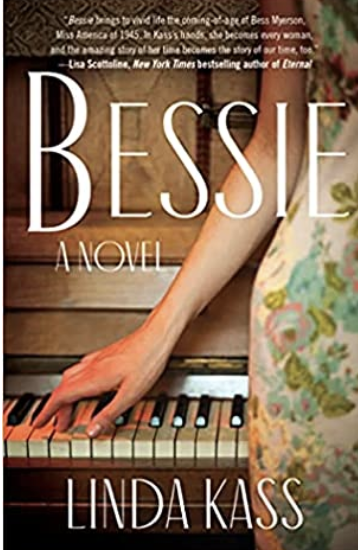
Bessie by Linda Kass (Fictionalized History)

Writing: 3.5/5 Plot: 4/5 Characters: 4/5

This is the fictionalized story of Bess Myerson — the first Jewish Miss America, winning the prize in 1945. The author chose to focus the book on her early life — her upbringing, experiences in the Bronx (where the family had moved from the Lower East side for the trees, parks, and fresh air!), and her moral development. The book follows her story in a primarily linear fashion, culminating in an appearance at Carnegie Hall at the end of her year as Miss America. The epilogue goes on to summarize the rest of her professional life on TV and in public government and her personal life (I’ll let you read that in the epilogue so I don’t spoil the story).

What I loved in the book was the description of the Jewish community life in the Sholom Aleichem Housing complex (open to Jews when most were not). Her entire extended family lived in the 200 apartments across 15 buildings. The community was full of musicians and artists and though her family was by no means well-off, she was given piano lessons from an early age and as pushed to excel. That is the Jewish culture in which I was raised — not one of religion but of art, music, and study! — and I love reading biographies and stories that percolated out of Jewish New York City in that time period (check out any Marx Brother biography for an even wilder, but somewhat similar, ride).

What I didn’t love about the book was the level of fictionalization. I’m not a fan of fictionalizing real people when dialog and thoughts are created when none actually occur. The author does a good job of summarizing what she made up vs what was real at the end of the book, but for my taste she made up too much — she added in scenes that she felt could have happened based on her deep understanding of the character and that is her prerogative, but I really like to keep my fact and fiction separated. I can honestly say that I doubt this will bother anybody else — I seem to be the only person who likes to keep the line between fact and fiction solid and thick!

Thank you to She Writes Press and NetGalley for providing an advance copy of this book in exchange for my honest review. The book will be published on September 12th, 2023

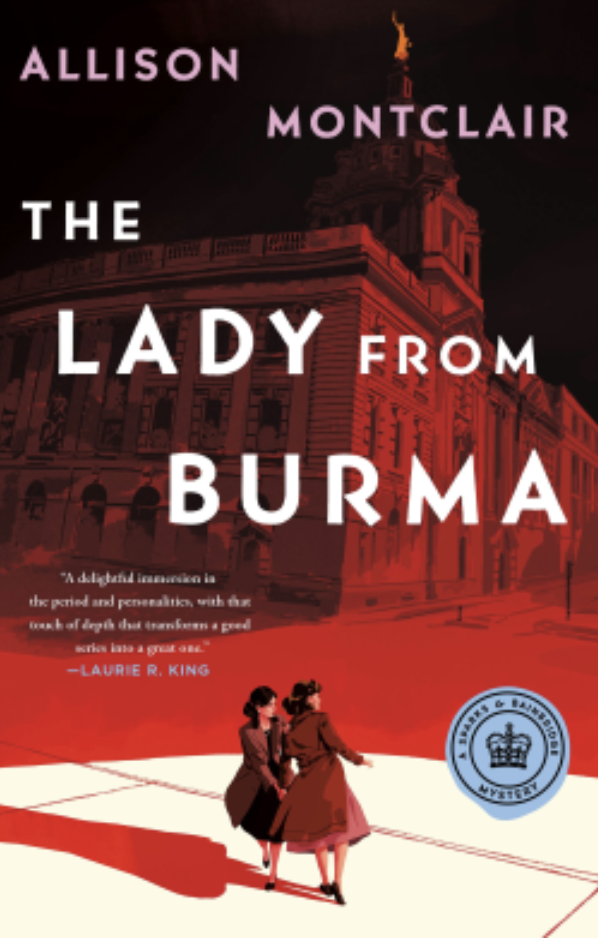
The Lady from Burma by Allison Montclair (Historical Mystery)

This is book five of the historical mystery series starring Iris Sparks (with a possible dangerous past) and Mrs. Gwendolyn Bainbridge (an aristocratic war widow with a young son who is fighting for her rights in Lunacy Court!). Together they run the Right Sort Marriage Bureau in post WWII London, but they simultaneously seem to be in just the right place to solve murders, much to the chagrin (and eventual admiration) of the local police.

While this is book five in the series, it’s book one for me. I was able to keep up just fine but I do feel a lot must have happened in the previous books. I can’t tell how much progress was made in the personal situations for both women before this story — may be better to start at book one!

In this book, they get an unusual client. A woman dying of cancer comes in to line up a wife for her husband after her passing. Unfortunately, that passing happens more quickly than expected. Simultaneously, the very conservator who has been holding Mrs. Bainbridge hostage during her fight with the Lunacy Court has also turned up dead. The body count steadily increasing only seems to stimulate the interest of the two women.

The plot kept my interest, and I enjoyed learning about various procedures / processes in that (still rather unfriendly to women) time period. The writing was a little stilted for my taste, but overall I enjoyed it.

Thank you to Minotaur Books and NetGalley for providing an advance copy of this book in exchange for my honest review. The book will be published on July 25th, 2023

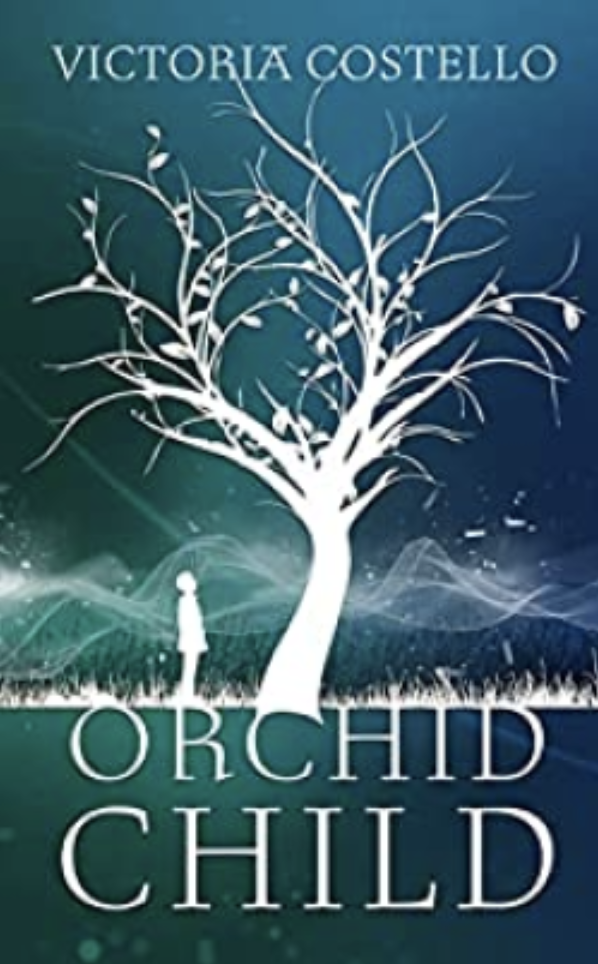
Orchid Child by Victoria Costello (Literary Fiction)

Writing: 3/5 plot: 4.5/5 characters 3.5/5

Kate is a neuroscientist, on her way to a new position in Ballymore, Ireland having been fired from her prestigious New York City based position after an ill-advised affair with her married boss. Ballymore has an historically high rate of schizophrenia, and she has been hired to work on a new followup study on the descendants of the original 1970 work. She brings along her newly adopted nephew, Teague, who is suffering from schizophrenic symptoms and whose therapeutic care is part of the new job package.

What ensues is a tangled, multi generational story (the narrative follows two timelines — Kate’s story in 2002 and the history of her family from 1920 through 1974). Between the two, we are exposed to Irish folklore, long term feuds based in the Irish “Troubles,” druids, and (most interesting to me) multiple approaches to treating and supporting schizophrenics. These approaches include support from therapists following real (I checked) research results, recommendations from “Mad Pride” activists who avoid medical intervention for mental illness, and the consideration that those who claim to hear the voices of their dead ancestors, really can.

There were enough interesting (and new to me) concepts to keep me reading to the end — I really wanted to know what happened. I thought the writing could use some editing — it was messy with a lot of rambling details and I found the dialog a bit stilted. I liked some of the characters more than others and definitely found the different attitudes towards schizophrenia fascinating. I didn’t personally like the main character, although I know I’m supposed to! Of course, I’ve never walked in her shoes (and the author’s bio suggests that she has), so I can’t really judge. My favorite part was reading about treatment modalities based on new (around the 2002 timeframe) research in neuro-epigenetics and the Orchid Child hypothesis (google it). The focus was primarily on the help people need and mostly avoided any discussion of the very real danger some mentally ill people could be to others when not adequately supervised / managed — I always wish reports and stories could be more balanced in this regard.

Some quotes, which reflect more of the plot than the writing style:

Quotes:
“In the parlance of researchers, they were the orchids, prone to dysfunction. When faced with the stressful choice of which lever to push to get their next drink of syrupy water, orchids sat and trembled with indecision. Their luckier peers, her control group, born with a longer form of the same gene, were hardy like dandelions — a group with which she wholly identified.”

“The Celts called it second sight. In our profession, we throw it all under the label of psychosis. Or we assigned patients different positions on a spectrum of abnormality.”

“You all suffer from the same wound, which festers as each generation fails to face it head on.”

“Let’s say you re-enter your body with the intention of telling the story of what happened to you today in whatever medium you choose. You can be sure that one of your ancestors is seeing and feeling that story in his on time as a powerful premonition.”

Thank you to Between the Lines Publishing and NetGalley for providing an advance copy of this book in exchange for my honest review. The book will be publlished on June 13th, 2023