Booth by Karen Joy Fowler (Fictionalized History)

Writing: 4/5 Characters: 4.5/5 Plot: 4/5

What an unusual book. It is a fictionalized history of the Booth family from 1822 to 1865 when its most infamous member — John Wilkes — shot Abraham Lincoln. John Wilkes is kept as an important but minor character throughout until his action at the end tears everything apart. The story is told from the perspective of three of his siblings: “poor” Rosalie, the eldest daughter who remains a spinster family caretaker for life; Edwin, who becomes the leading tragedian of the 19th century; and Asia, the youngest daughter and eventual poet and writer.

Fowler is a fantastic writer — every book she writes is completely different and spans topics and genres easily. In this — her first fictionalized history — she brings the place and time to life in incredible physical, political, and every day life detail. Following their lives in rural Maryland, Baltimore, and later Philadelphia, New York, and then California (including a harrowing description of the trip across the 40-mile Panamanian isthmus, pre-canal) we are immersed in the attitudes and experiences of a very different time.

Fowler doesn’t modernize sentiments — we are treated to multiple attitudes towards women, immigrants, and slavery. Having read a lot about the time period, I found them to be accurate and comprehensive. As examples, the family’s patriarch — Junius Brutus Booth (a famous Shakespearean actor of the time) — didn’t like slavery but had two slaves; John Wilkes declaimed frequently on the value of slavery and the tyranny of the North; and various speeches (including Lincoln’s, Douglas’ and others) offer additional viewpoints.

I had to keep remembering I was reading a book which while novel-like had to adhere to actual history so while some details seemed extraneous to the plot, they were not extraneous to the lives of those living through them. For me it was a bit of a slow start — I let myself be unhappy that I was having to read a book about someone I did not want to know more about and of course, knowing what happens at the end, I had a kind of dread creeping up on me. However, if you can avoid the kinds of destructive thoughts I was having, it really is gripping reading, and the assassination and aftermath actually takes up a very small part of the end of the book.

Thank you to Penguin Group Putnam and NetGalley for providing an advance copy of this book in exchange for my honest review. The book will be published on March 8th, 2022.

Lessons in Chemistry by Bonnie Garmus (Literary fiction / Historical fiction)


Writing: 4.5/5 Characters: 5/5 Plot: 5/5

I love this book — it combines the humor and non-conformity of Eleanor Oliphant with the twisted and cleverly converging plots of John Irving.

Elizabeth Zott — master chemist — trying to do science in a late 50s / early 60s world that treats women as incapable, inferior, and irrelevant. Her experiences are kind of over the top IMHO — she gets hit with every possible thing that could happen to a woman trying to succeed in a man’s world — but the real story is what she does about it, so I accepted the 2D portrayals of the really bad guys and their machinations (and to be fair she gives a lot more page attention to truly good men as well).

The characters are wonderful — both quirky and deep thinking — and include Elizabeth, her out-of-wedlock genius child, Mad, (so named as a result of a miscommunication with a cranky nurse), and a dog named six-thirty whose vocabulary is expanding at a carefully tracked rate. The story is told from each of their perspectives — yes, the dog, too.

The plot and dialog kept me constantly hooked and included plenty of twists and turns as well as interesting philosophy discussions, opportunities for characters to rethink their assumptions, and very positive messages about what is important, practical, inspiring, and possible.

Also — and this is important to me — Zott really does love chemistry and there is plenty of real science included. This isn’t one of those (very irritating) books where the main female character “loves” some kind of science / tech field but spends all her time worrying about her love interest and giggling with her friends while shopping for the perfect dress. At one point Zott is running a cooking show based equal parts on the chemistry of cooking and female empowerment and those scenes alone are worth reading the whole book.

A lot of the plot relied on the bad people doing bad manipulative things which is not a favorite plot device for me, but again I forgive it because of how much I liked the characters and what they did. Funnily, I realized that this book gave me the same feeling of pleasure that I get from old Clint Eastwood movies — when the bad guys are so very obviously bad it feels great when they are brought down (albeit in this case without violence).

Thank you to Doubleday Books and NetGalley for providing an advance copy of this book in exchange for my honest review. The book will be published on April 5th, 2022.

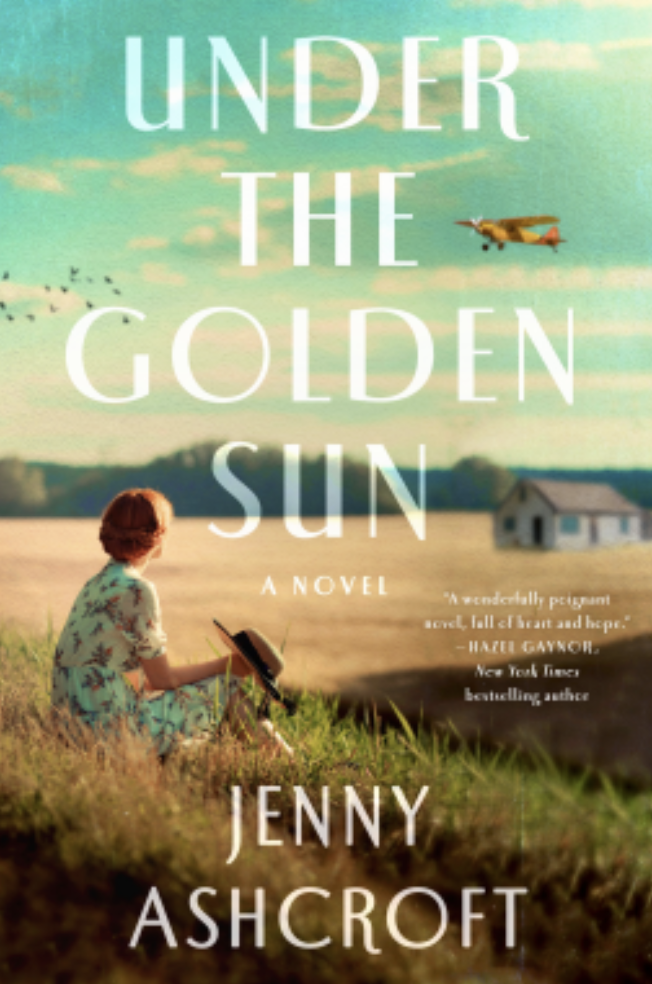
Under the Golden Sun by Jenny Ashcroft (Historical Fiction)

Writing: 4/5 Plot: 4/5 Characters: 4.5/5

It is 1941 . Rose Hamilton answers an ad to accompany Walter — a young, newly orphaned boy — to his distant family on an Australian cattle station. But Walter is not an ordinary boy, and the cattle station is not what they were led to expect. About a third of this book was a very appealing romance. The rest was fiction that depicted life during wartime — in England, during the months long journey on a not-exactly-elegant ship, and in the remote areas of Australia, a few hours from Brisbane. I learned more than I knew about Australian history — particularly about the White Australia Laws and the Chief Protector of Aborigines (FYI he was not very protective). Plenty of surprises in the plot as past events come to light, and current events continue to unfold.

This was a happy book for me — in truth it was somewhat formulaic but it was executed so beautifully and with such appealing characters and well-researched history that I didn’t mind a bit. I liked the fact that the drama was not overstated, that moral commentary was pervasive but not overwhelming, and that the main characters had far more to them than their tropes (e.g. vulnerable hero) would require.

Thank you to St. Martin’s Press and NetGalley for providing an advance copy of this book in exchange for my honest review. The book will be published on March 15th, 2022.

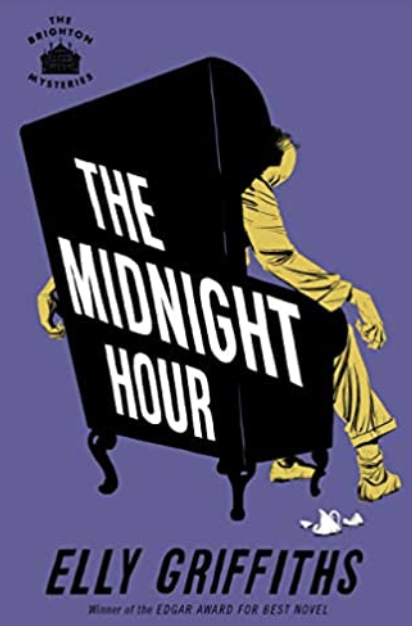
The Midnight Hour by Elly Griffiths (Historical Mystery)

Writing: 3/5 Plot: 4/5 Characters: 3.5/5
In this latest book in the (now named) Brighton Mysteries, the newly formed partnership of Emma Holmes (prior WDC and now wife of police chief) and Sam Collins (prior journalist) tackles the murder of 90-year old Bert Billingham, theater impresario and wild womanizer. They were brought into the case by his wife, the unsuitable grandma Verity Malone and star variety performer who had plenty of reasons to kill him herself. Taking place in the 60s, there are many opportunities for inserting the feminist angle — it’s only been 60 years but it’s a bit shocking to remember how things were in those days for women: Emma Holmes was forced to leave the police force when she married; women police officers (WDCs) were not allowed to drive police cars; and God forbid any male made the coffee when needed. Plenty of twists and turns, some fun characters, and a fast, fun read. I still like the Ruth Gallagher series better, but these are definitely worth reading.

Thank you to Mariner Books and NetGalley for providing an advance copy of this book in exchange for my honest review. The book will be published on December 7th, 2021.

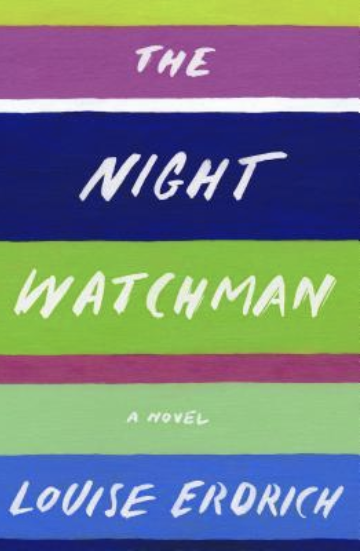
The Night Watchman by Louise Erdrich (Literary Fiction / Multi cultural)

Writing: 5/5 Characters: 5/5 Plot: 5

I’m grasping for words to express how much I loved this book but all the good words — profound, brilliant, amazing, etc. — have been rendered meaningless through overuse. So just think about what they used to mean and apply here.

The novel is based on the experiences of Erdrich’s grandfather, Patrick Gourneau, in his determined fight against the proposed termination of his Turtle Mountain Band of Chippewa named in House Concurrent Resolution 108 passed in August of 1953. Gourneau is fictionalized as Thomas Wazhashk.

While that is the overarching plot line, the story is told as a set of short chapters from various character viewpoints. While the termination fight touches everyone, much of the content covers the progression of individual lives in the community. Pixie Paranteau supports her family with earnings from a job at the new jewel bearing plant; her sister, Vera, has disappeared in the Cities and has been caught in the underbelly of the beast; Wood Mountain is becoming a top boxer, training with Barnes, a local white coach with eyes glued on Pixie; Millie Cloud is in Minneapolis and has authored a study of her father’s reservation which will be useful in the fight against termination; and Thomas spends his nights as the Night Watchman at the plant — struggling to stay awake by writing letters using the Palmer Method ingrained in him at the Indian boarding school. Other characters are ghostly visitors, Mormon missionaries, and various officials from the BIA, congress, and tribal councils.

Erdrich’s characters are wonderful — each one an individual that defies stereotype; each one full of complexities that never descend into entertaining “quirks.” In contrast, we do see the usual stereotypes through the perspective of others — in Barne’s memory of the “luscious” Indian girls depicted in ads and earnest lectures given by the missionaries, for example.

What I love most about this book is Erdrich’s articulation of the feelings, perspectives, and philosophies of the various characters. Thomas, in his desperation to leverage every possible angle available to him reads the Book of Mormon to better understand the bill’s author — Arthur V. Watkins — a staunch Mormon. He has discussions with Barnes about why Indians can’t / don’t want to become “regular” Americans and why Barnes could never “become” an Indian. He is immensely philosophical, and we are treated to his thinking, his process, and his growing understanding of life and his part of this world. Every chapter is full of enlightening description and presence.

This is the best book I’ve read in a long time and by far my favorite Erdrich book. The Pulitzer committee definitely got it right this time.

Some quotes:
“This termination bill. Arthur V. Watkins believed it was for the best. To uplift them. Even open the gates of heaven. How could Indians hold themselves apart, when the vanquishers sometimes held their arms out, to crush them to their hearts, with something like love?”

“Thomas was convinced that he’d destroyed their chances. He couldn’t point out exactly how he’d done it, but he knew. And the other thing. The senator had also asked every single Indian person who testified about their degree of Indian blood. The funny thing was, nobody knew exactly.”

“Especially Senator Watkins. The word supercilious. That was the word for every detail. Watkins’ coin-purse mouth. His self-righteous ease. The way he held himself, giving off that vibration. Filling the air with sanctimony. Another word that flung itself into her mind.”

“She was inhabited by a vengeful, roiling, even murderous spirit. The same spirit had hatched the bird that pecked Bucky’s face. When she got home, she’d clean up the sweat lodge and ask her mother to help her get rid of these thoughts.”

“All were cast together onto allotments, to break apart the earth, to learn the value of a dollar, and then how to make one dollar into many dollars and cultivate the dollar into a way of life.”

“His father was so very old now that he slept most of the day. He was ninety-four. When Thomas thought of his father, peace stole across his chest and covered him like sunlight.”

“To most of their neighbors, Indians were people who suffered and hid away in shabby dwellings or roamed the streets in flagrant drunkenness and shame. Except the good ones. There was always “a good Indian” that someone knew.”

“For days. he’d tried to make sense of the papers, to absorb their meaning. To define their unbelievable intent. Unbelievable because the unthinkable was couched in such innocuous dry language. Unbelievable because the intent was, finally, to unmake, to unrecognize. To erase as Indians him, Biboon, Rose, his children, his people, all of us invisible and as if we never were here, from the beginning, here.”

“Emancipation. This word would not stop banging around in his head. Emancipated. But they were not enslaved. Freed from being Indians was the idea. Emancipated from their land. Freed from the treaties that Thomas’s father and grandfather had signed and that were promised to last forever. So as usual, by getting rid of us, the Indian problem would be solved.”

“He wasn’t one for giving names to things. Or finding their basis. His feelings were like weather. He just suffered or enjoyed them.”

“He felt it coming. Wanted to duck. Winced. A sensation like when he was chastised at school gripped him. Like when he went into a bank or bought something expensive in an off-reservation town. Their looks pressing down on him. Their words flattening him. Their eyes squeezing him. Isey, for shame. As his mother used to say. But it was so much worse in English, the word shame.” It made him curdle inside. And the curdling became something hard in his stomach. Or a thought that stabbed so hard he might cast it out in a flare of anger. Or it might stay in there hardening even further until it flew up to his brain and killed him.”

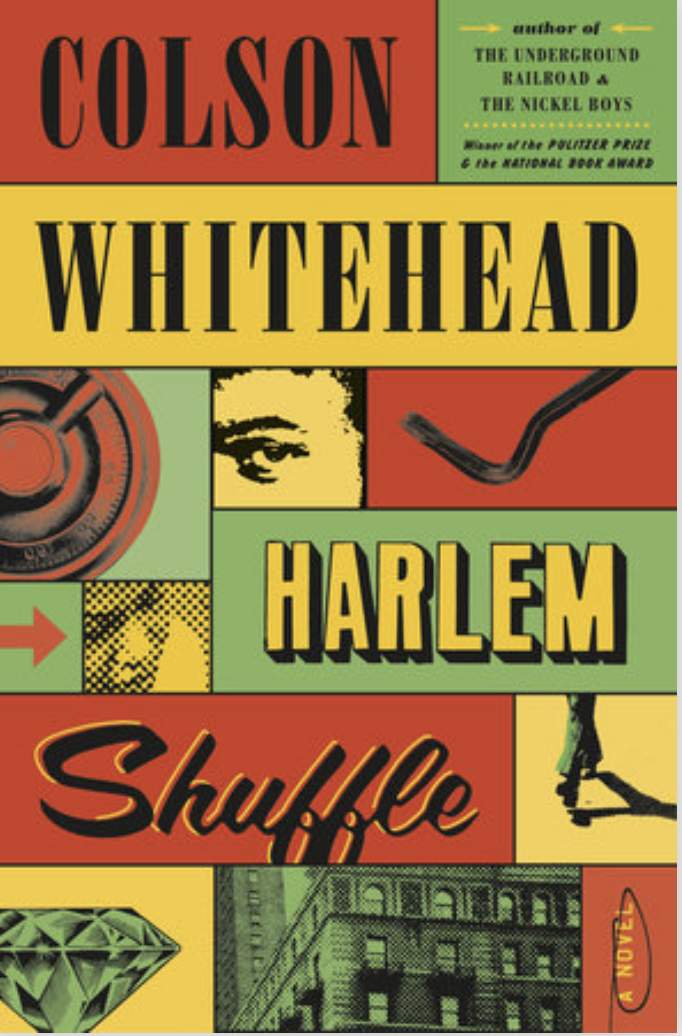
Harlem Shuffle by Colson Whitehead (Literary Fiction)

Writing: 5.5/5 Characters: 5/5 Plot: 4.5/5 (for me)

Colson Whitehead is a master of bringing a place and time to life. Harlem in the 60s — this is the story of a man who came from nothing and relentlessly made something of himself. But it’s not the typical rags to riches story with people “managing” to do this and that. This includes all the details of just what he had to do to make it in the world as it was — the pay offs (to gangsters and the police), the loyalties and trust, the “deals” made, the heists, and the constant jockeying for power, influence, and importance by the big shots while everyone else struggles to get by.

Carney is “only slightly bent when it came to being crooked”. He has principles but suspends them as necessary with full awareness. He runs a furniture store with a secret side line in low level fencing of stolen goods. He primarily manages to stay out of trouble except when his cousin Freddie pops up (Freddie’s most constant refrain — “I didn’t mean to get you in trouble”).

Fantastic scenes in Harlem — The Theresa Hotel, known as the “Waldorf of Harlem,” Striver’s Row for the African-American elite, Black Star Travel agency to help black travelers at the time make their way through parts of the US without getting lynched. Some vivid scenes from the 1964 Harlem riots, resulting from the shooting of an unarmed black teenager by a white policeman. All narrated by Carney with his somewhat cynical (and pretty realistic) worldview.

Whitehead is a fantastic writer — this had a little more focus on unsavory elements for my taste but it was very hard to put down.

A few quotes (out of many):

“Carney took the previous tenants’ busted schemes and failed dreams as a kind of fertilizer that helped his own ambitions prosper, the same way a fallen oak in its decomposition nourishes the acorn.”

“There was a hole in the air where the Ninth Avenue el used to run. That disappeared thing.”

“He reconsidered: The consequences remained, but the reasons had turned spectral, insubstantial. Harlem had rioted — for what? The boy was still dead, the grand jury cleared Lieutenant Gilligan, and black boys and girls continued to fall before the nightsticks and pistols of racist white cops. Freddie and Linus were gone, their heist unwound as if it had never happened, and Van Wyck kept throwing up buildings.”

“Death took Freddie from Carney and mourning returned to him a visitation, an invisible companion who shadowed him everywhere, tugging at his sleeve and interrupting when he least expected: Remember what my smile looked like, Remember when, remember me. Its voice grew quiet and Carney didn’t hear it for a while and then it was loud again: Remember me, This is your job now, Remember me or no one else will.”

Thank you to Doubleday Books and NetGalley for providing an advance copy of this book in exchange for my honest review. The book will be published on Sept. 14, 2021.

The Attic on Queen Street by Karen White (Fiction / Mystery)

The seventh (and possibly last) book in White’s immensely popular Tradd Street series sees family, romance and historic house restorations Charleston-style (read: expensive and persnickety) come together in this exciting story of betrayal, old and new. And did I mention Ghosts? No? They populate every corner — friendly ghosts, malevolent ghosts, and immensely sad ghosts still seeking justice after many, many, years. For those new to the series, Melanie Trenholm — star realtor, new mother, and label gun enthusiast — can see and often speak to the dead.

A nice combination of women’s fiction (relationship issues, shopping, extravagant theme parties), mystery (cold cases as presented by sad, justice-seeking ghosts), and historical fiction (plenty of interesting research into Charleston’s history as it bears on the cold case du jour). A fun mix of humor and over-the-top lifestyles with complicated plot twists, an overly dramatic research librarian, and intricate treasure hunts. You could certainly read this book on its own, but given the five months to publication, I recommend starting at the beginning with The House on Tradd Street. I’ve enjoyed every single one of the series.

Thank you to Berkley Publishing Group and NetGalley for providing an advance copy of this book in exchange for my honest review. The book will be published on Nov. 2nd, 2021.

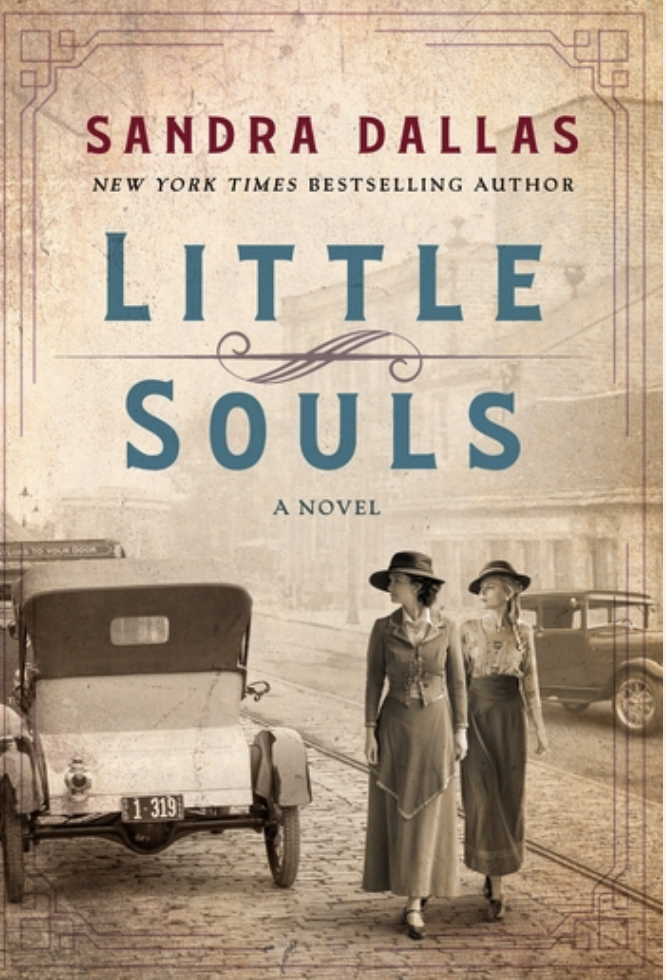
Little Souls by Sandra Dallas (Historical Fiction)

Plot: 4.5/5 Characters: 4/5 Writing: 4/5

Little Souls takes place in Denver, 1918. The Influenza has hit the population badly, and the men are still away at war. At 19, Lutie Hite is a carefree artist working in advertising for the local department store; her older, more careworn, sister Helen is a nurse. Through an interesting set of events they become responsible for Dorothy, the ten-year old daughter of their now deceased tenant. From these beginnings follows a fairly wild, often heartbreaking, but ultimately heartwarming ride.

I’m a big Sandra Dallas fan. Dallas writes Western historical fiction about strong women making it through adversity with fortitude, intelligence, and the help of their community. She always brings in the small details of life in that particular time and place to make everything ring true.

Her stories tend to the dramatic, but never go over the top and feel quite realistic for their time. She is even-handed about how people thought and behaved at the time — different characters have different opinions on everything from mask-wearing (ha!) to personal morality, and no opinion is presented as obviously better than the others. Religious feeling and participation was a big part of life in that place and time, and I liked how she treated it. While this in no way dominates the book, there were some beautiful passages about how individual characters felt about God that moved me, despite my not being religious myself.

This is a real page-turner — I’m afraid I annoyed my husband by reading on into the night…

Thank you to St. Martin’s Press and NetGalley for providing an advance copy of this book in exchange for my honest review. The book will be published on April 26th, 2022.

A Necessary Evil by Abir Muhkerjee (Historical Mystery)

Writing: 4/5 Plot: 4/5 Characters: 3.5/5

Book two in the Captain Sam Wyndham series. Sam is a white Scotland Yard Calcutta police import with a pesky Opium habit. In this book he investigates the murder of the forward thinking heir of Sambalpore — one of the Indian “native states” not formally part of British India. Accompanied by his trusty (and well-educated and far more sympathetic character) sidekick Surrender-not, they unravel the knots of displeasure that might have led to this murder (and a few others as well).

These books always include a lot of interesting history and culture focussed on lesser known parts of what after all is a huge and populous country. It’s always just enough to get me to look up additional detail. Most interesting to me in this one — the whole concept of the “native states” and the Council of Princes the Viceroy was trying to put together; Lord Jagannath, an incarnation of Lord Vishnu; and the use of elephants as a means of execution. There are also many references to the spoken and unspoken rules regarding the roles and interactions between different castes, ethnicities, and colors.

The writing is good — very crisp and clear — and I like the characters. My only complaint might be that I honestly don’t see the point of his even having an opium addiction. It doesn’t really play into the stories at all, and he doesn’t (thankfully) make stupid mistakes because of it. I believe it is to make him more human but really the story would be exactly the same without it.

The Ghost Dancers by Adrian C Louis (Literary / Multi-cultural Fiction)

Writing: 4.5/5 Characters: 4.5/5 Plot: 4.5/5

A posthumous publication by the author of Skins, this is a raw story of Indian life in late 80s / early 90s. Bean Wilson is an educated Indian — a well known poet and journalist. Born and raised a Paiute in Nevada, he now lives and works with Lakota Sioux on the Pine Ridge reservation in South Dakota. The events in the book follow Bean, his son Quanah, and his girlfriend’s son Toby. Wilson’s interior and verbalized rants permeate the pages on topics ranging from Indians (and himself in particular) being their own worst enemies to harangues on White oppression. While he tries to honor the old ways, he grapples with alcoholism and his womanizing tendencies. The writing depicts his internal struggles and the male culture in which those are common and even respected traits. This is extremely well done. It’s often crude, but feels real and does an excellent job of fleshing out each of the primary male characters — their experiences, their interactions with friends, family, and those who are “other” and the impact on their personal development. Oddly enough, while plenty of bad things happen, I didn’t find it depressing the way I do most Louise Erdrich books (for example). The tone is not as emotional, or maybe it is just more angry and less hopeless. Perhaps this is because the real focus is on men? The women characters have depth, but the real magnifying glass is on the men.

I have no insight into why this was not published when it was written — probably in the late 80s or early 90s according to the Forward. That was the only frustrating bit — the world was so well-depicted and I have no clue how things may or may not have changed since then.

The writing is powerful, insightful, and supports the complexity required of any real story. Some quotes below demonstrate both the writing and some of the rants. I loved the first line (which is also the first quote) — somehow it just completely grabbed me.

“The Cancerous burrito of Los Angeles summer seemed to have no effect upon the rambunctious innocence of yelling Chicano kids.”

“Bean looked from the two warriors in the painting to the two Pine Ridgers and repressed an urge toward epiphany.”

“America was a cannibalistic society. There was no true freedom in America. The White man thought he was free. The Black man thought he had been freed. The Indian knew he had been corn-holed.”

“…that garish monument to White greed, carved out of the mother earth, gouged out of the sacred Black Hills, and stolen from the Indians despite the treaties promising no intrusion.” (About Mount Rushmore)

“He despised the rhetoric of contrition that AA and its kindred organizations espoused. He despised the self-righteous reformed drunks who made their various programs for alcoholics a large industry on the Pine Ridge reservation.”

“It’s depressing to the max around here. I hate to say it, but you Sioux live like Black people in ghettos. No pride. No hope. Just booze, drugs, and violence. Pregnant teenagers and commodity cheese.”

“And as educated Indians, we know who our worst enemies are. Some of the worst are our own people. They must be re-educated, those that are the rip-offs. And the other bad enemy is the White liberal who lives on the reservation and purports to help our people. They are bloodsuckers. But that is a different matter.”

Thank you to University of Nevada Press and NetGalley for providing an advance copy of this book in exchange for my honest review. The book will be published on September 14th, 2021.