A Short History of Ancient Rome by Pascal Hughes (Non fiction – Audio Book)

The title doesn’t lie — the book covers about 1,000 years of Roman history (from founding to end) and is only 352 pages (or in my audio book case, about 8 1/2 hours of listening). I don’t read a lot of non-fiction, as I find most of it muddied, tedious with extraneous detail, and overly biased, BUT I found this one to be very well-organized, clear, engaging, and with plenty of reference to the (sometimes competing) sources. It also started with a quip from Monty Python which put me in the right mood!

The book was well-structured, beginning with the stories of Rome’s founding (Romulus and Remus) and traipsing through a set of chronicles garnered from pivotal points in Rome’s history including the “real” stories behind popularized versions of characters like Spartacus, Caesar, Nero, Boudicca, and Attila the Hun. Progressing through the history at a reasonable pace allows the reader to watch the evolution of culture and values, political systems, definitions of personhood, and the technical accomplishments for which the Romans are justly famous. It was a bloody and brutal story from start to finish, to be honest, but it helps put our current issues and ideas of civilization into perspective. I found listening to it (while out on walks) to be useful as I enjoyed breaks from the (mostly unpleasant) “action.” After reading, I find myself marveling at how civilized we actually are in comparison, and also how fragile civilization always is.

Thank you to Harlequin Audio and NetGalley for providing an advance copy of this book in exchange for my honest review. The book was published on November 11th, 2025.

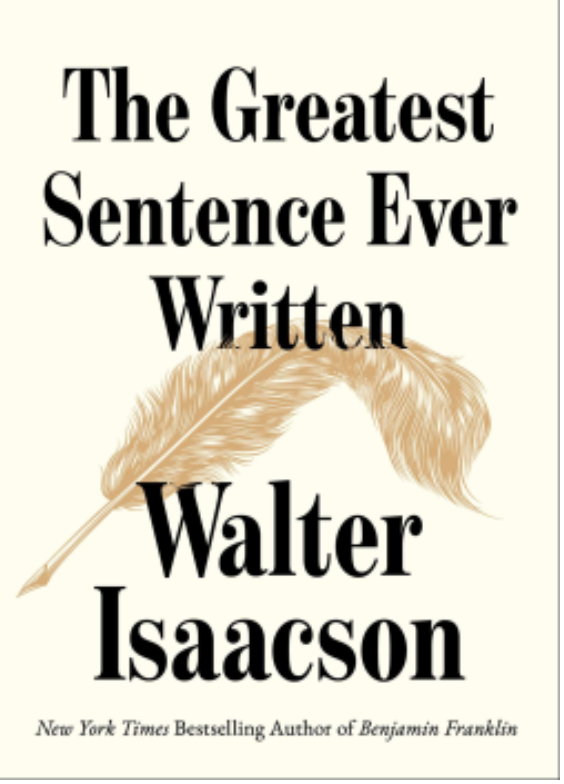
The Greatest Sentence Ever Written by Walter Isaacson (Non fiction — History / Politics)

“We hold these truths to be self-evident, that all men are created equal, that they are endowed by their Creator with certain unalienable Rights, that among these are Life, Liberty and the pursuit of Happiness.” This is the sentence — the first in paragraph two of the Declaration of Independence — to which the title refers. Isaacson breaks the sentence down, elaborating on what each word or phrase meant in the context of the times. He follows this up with concluding chapters that remind us that the principles underlying the declaration were based on the need to balance personal opportunityt with the maintenance of “the common good.” He goes on to emphasize one of the main casualties of today’s lack of balance — the American Dream. He blames this near demise on the elite meritocracy that offers opportunity only to those who acquire educational credentials, leaving the other 62% resentful and foundering.

I found the book well written, full of some interesting tidbits, and thought-provoking, but I would have preferred more depth on exactly how we define “the common good,” as that seems to be a point of some contention in our current polarized democracy. I also feel that while the “elite meritocracy” may be a contributor to our economic and cultural woes, it is overly simplistic to assume it is the whole problem — there are so many contributing factors (not to mention the fact that I know quite a few successful people without college degrees and quite a few very well-educated people who find themselves unemployed with few prospects).

I love Isaacson’s biographies — I’ve read his books on Franklin, Doudna, Musk, Jobs, and Da Vinci. Those are full of the kind of intricate details on both the subject’s accomplishments, and the inspiration and drive that powered the journey. I would have been happier had the (very complex) topics in this book had a similar amount of completeness and clarity to them.

Thank you to Simon & Schuster and NetGalley for providing an advance copy of this book in exchange for my honest review. The book will be published on November 18th, 2026.

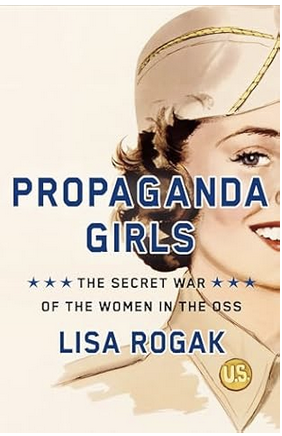
Propaganda Wars: The Secret War of the Women in the OSS by Lisa Rogak (Non Fiction — History)

Propaganda Girls follows the lives of four women who worked in WWII’s OSS spinning propaganda webs that demoralized the enemy and helped speed the war to an end. Taking place in the European theater, behind enemy lines in occupied China, and in Washington, D.C., the story follows each of the women from her recruitment, through her placements and work, through her post-war life. The women: Marlene Dietrich — well known German actress who worked non stop for the effort; Betty MacDonald (NOT of Mrs. Piggle Wiggle fame) — the women’s editor in the Oahu paper, one of the first on the ground during Pearl Harbor; Jane Smith-Hutton — wife of a Naval Attache, fluent in Japanese, and held with her family for six months in the Tokyo American embassy after Pearl Harbor; and Barbara (“Zuzka”) Lauwers, a Czech national polyglot married to an American, who worked the European theater.

Each got into the work wanting to do something more for the war — and also wanting to do all that they were capable of doing, rather than living the traditional life available for most women. The story was full of details of life in that time period, the actual strategy and implementation of a propaganda war, and the (often ignored) contributions women made.

So many details were fascinating: The weird training they went through, details on procuring the exact right kind of papers, inks, and using the current language idioms. The arrays of people who had to be recruited with special skills. One story told of an innovative propaganda delivery system — condoms born up and stuffed with a pamphlet that could float across the water. The strategy for determining targets, fake stories, and deployments. How to deal with targets who were not actually literate. Special issues in places like India with hot, ink-melting climates and irregular electricity. But my favorite was a description of the “manual” face lift Marlene Dietrich had to undergo before filming, a kind of elastic pulling of her face, bound back into her hair. Painful and not permanent!

Part personal story, part full program debrief, the book was readable, entertaining, and enlightening.

Thank you to St. Martin’s Press and NetGalley for providing an advance copy of this book in exchange for my honest review. The book was published on March 4th, 2025.

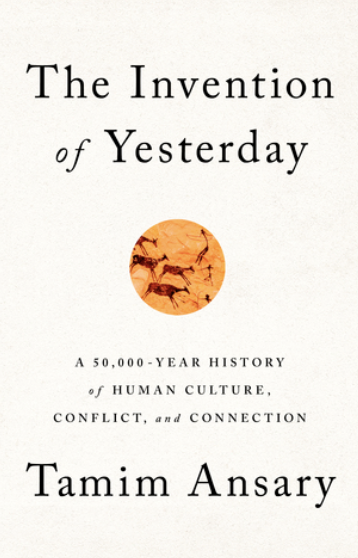
The Invention of Yesterday: A 50,000-Year History of Human Culture, Conflict, and Connection by Tamim Ansary (Non Fiction)

In this ambitious book, Ansary tackles 50,000 years (literally) of history with the thesis that pervasive narrative is the key driver of both cohesion and conflict. Narratives are the glue holding together the social constellations that give rise to culture. From stone age to digital age and beyond the singularity, he traces these narratives through giant hinge points such as the evolution of language, worldviews stemming from religion or ideologies, and methods of conquest and absorption. Why can’t we all get along? Because we are living in different worlds of meaning.

What I gained from reading this book is a much better understanding of the Islamic World, as that, of all the histories, is the one I know least about. Looking through his other books, I now wish I had read “Destiny Disrupted: A history of the world through Islamic Eyes” or “Games Without Rules,” a history of Afghanistan. His primary concept is (to me) not new, and does not really help think of solutions — I think we’ve known for a long time that we need to really understand the other in order to try to find some kind of compromise — and sometimes that is simply impossible. The way he tied global peoples and events across time was pretty interesting, though I found it often very high level.

There were a lot of small surprises (to me). Here are some of them (I have fact-checked some, but not all):
• North Americans didn’t develop the wheel because they had no tamable beasts (I don’t completely understand this since 1) a wheeled cart would be helpful to a person and 2) has anyone tried to tame a buffalo? I really don’t know.)
• Unlike the Western world, the Chinese had no tradition of jealous gods, demanding exclusive worship, so it was easier to absorb multiple narratives.
• Arabs were the (big) slave traders in East Africa, while Europeans became the traders in West Africa. Since Islam forbids enslaving Muslims, many conquered peoples decided to convert.
• Rome never fell, but did kind of get taken over by the conquered who had been given a path to citizenship through battle. More of the German tribes (German meant “barbarians who keep bugging us” — his words) ended up in leadership positions shifting things.
• Persians were OK with Islam but not with Arab superiority and so found an acceptable path by finding a Persian descendant of the Prophet leading to the Shia split.
• History of the development of the Caste system in India and description of why political fragmentation did not lead to cultural fragmentation there.
• The main Arab contribution around 800 CE was to catalog everything done elsewhere, e.g. medical knowledge. Their central project was the documentation of Sharia — the complete manual of how to be a Muslim. Meanwhile, the central project of the Western world was Science.
• Mongols brought bubonic plague to Europe from the Himalayan foot hills via fleas. In 1345 they lay siege to cities by catapulting diseased warrior corpses into the city.
• Movable type could handle the Roman alphabet better than Chinese pictographs. Arab writing also had something about it (he was vague) that made it more difficult.
• When Mongols took over China they tried to be Chinese, but their policies came from a different environment (e.g. water shortage in their home on the Steppes led to policies that discourage bathing in China)
• Systems based on patronage and relationships (Islamic world) vs commerce (western) and what that led to.
• Columbus “discovering” America led to one of the biggest hinges: — some estimates are that 90% (55 million) of people in all the Americas died — mostly of disease — after that “visit.” A catastrophe that dwarfs the Mongol hordes, the Holocaust, the Black Death, and both world wars.
• Tools and machines were as seminal as the acquisitions of language. Western social constellations could incorporate machines into their networks of meaning much more easily than the other large empires of the time.
• The Muslim narrative with its patronage networks and Sharia law did not have a way of turning inventions into products. The Chinese world with its dream of a socially cohesive centralized state operated by an all pervasive bureaucracy didn’t either. New technology had the potential for disrupting existing social arrangements, and in much of the world preserving existing social arrangements took precedence over building better stuff.
• Societies shaped by the progress narrative (ie the West) had an advantage not because of the tools, but because of the improvements and variations they kept building on the first.
• The invention explosion was the busy energy of all the entrepreneurial companies and corporations that got excited about making things happen

In summary — it was a long book and the ratio (for my personal background) of new ideas or information to number of pages was lower than I would like. However, the writing was accessible — it didn’t tend to get dragged into too much tedium — and I did learn a lot about the Muslim World. However, at this point I’m more interested in going back and reading the two books I mentioned at this beginning of this review. I did read (in 2007 so I unfortunately do not recall the details) his memoir of growing up in Afghanistan and then coming to the U.S. in high school. That was excellent!

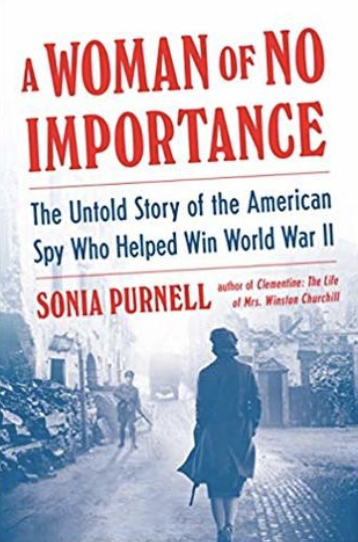
A Woman of no Importance by Sonia Purnell (Non fiction — History)

This is the story, compiled and abstracted from scores of historical documents, of Virginia Hall, the only woman to have earned her own section in the CIA Museum catalog (the other four being men who became directors of the CIA). Her role in supporting and mobilizing the French resistance over the years of Nazi occupation resulting in the successful liberation of France was eventually hailed with accolades from high and low … many, many years later. However, during her lifetime she spent most of her time wanting to be useful and consistently relegated to low level desk jobs despite her incredible success as an agent on the ground.

I’m not much of a history buff, but I found this story deeply compelling, both in terms of the actual work she did (described at a whole new level of detail than anything I had read before about this particular time and place) and the mechanics and psychology of war work and the place of women in it at the time. The narrative covers the truly incompetent beginnings of the British SOE and American OSS; the turmoil brought to experienced military types having to succumb to “modern” warfare, including the “immoral” use of spies; the creative ways the resistance engaged in harassment and sabotage and rescue operations; the various factions working against each other, rather than against the nazis when liberation drew near, to the brave and somewhat crazy Maquis; and the innate nastiness of more of the French people than I would expected — I guess severe deprivation and fear can bring out the worst in people.

Virginia was really like the James Bond of the WWII French Theater (minus the womanizing, obviously, although the number of male agents who caused great damage through casual pillow talk was horrifying). I had trouble at times keeping track of who was who but it kind of didn’t matter as long as you could easily keep track of her role. An impressive piece of work that neither undersold, nor oversold, her story. Highly recommended.

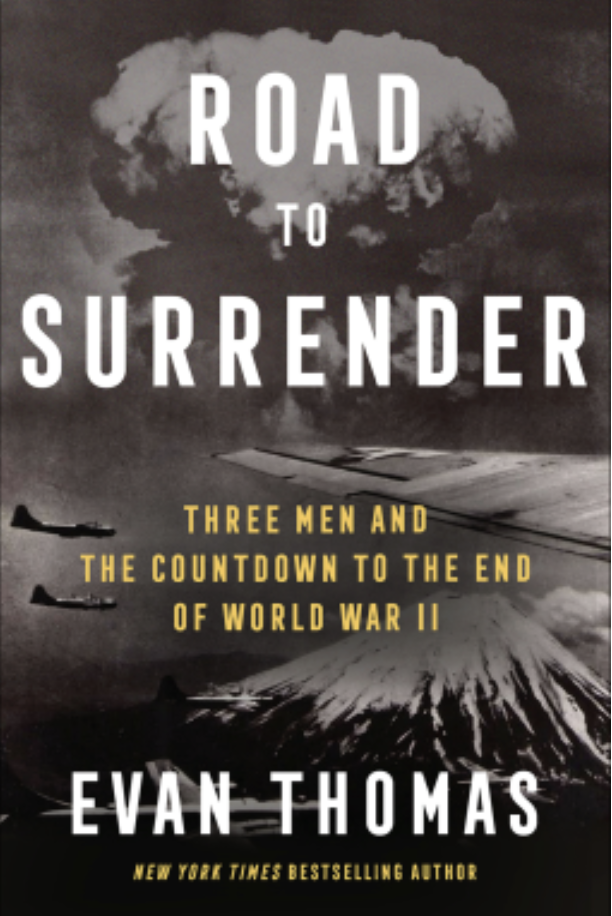
Road to Surrender by Evan Thomas (Non-Fiction — History)

Writing: 5/5 Topic Coverage: 5/5 References: 5/5

My favorite kind of non-fiction — all well-referenced facts, with details of people’s thoughts, motivations, and actions as captured at the time through records, diaries, and notes. The book covers the day-to-day (and sometime minute-to-minute) events pertaining to the dropping of two nuclear bombs on Hiroshima and Nagasaki — not the development of the bombs which is well covered elsewhere, but everything to do with the (somewhat chaotic) logistics, strategy, political machinations, and even the evolution of revisionist history to do with the use of the bombs. Drawing heavily from memoirs of several of the key players, including Japanese foreign minister Togo, we are treated to the decision making process with all of the attendant, intermingled motivations and fears of the time.

The writing was superb — clean, clear, and detailed, but never rambling. I don’t tend to read non-fiction unless it’s like this (and very few books are!). The action ranges from March – August 1945, with a well-summarized epilogue that followed some of the main characters (Stimson, Togo, Spaatz) to the end of their lives amidst shifting popular perceptions of the war and the US role in ending it. In many ways, I found this chapter the most interesting — watching the way history gets retold when the stress of an uncontrollable situation is gone and the pontificators get to revise strategy with the benefit of 20-20 hindsight. Towards the end of this period, there is also the scepter of the Russians — allies at the time, but allies who are starting to behave in a not-so-collegial fashion. To trust or not to trust? (I think the answer to this one is now pretty clear).

Of the many character portraits painted, three stood out: Henry Stimson — Secretary of War whose ongoing worry was that “man’s technical capacity to do evil will outrun man’s human capacity to do good;” Carl “Tooey” Spaatz — the Commander of the Strategic Air Forces who insisted on written orders to deploy the bomb(s) and carried the orders around in his pocket; and Shigenori Togo —the only Japanese Cabinet member to oppose the war (and the only one not executed as a War Criminal). I loved the peek into the minds of the men (yes, they were all men) making the decisions — what they worried about, what information they had at their disposal, and how their insights and opinions were informed by their individual backgrounds and levels of idealism and pragmatism.

A significant portion of the book exposed the (wildly different) decision making process in Japan, which resulted in the much delayed surrender. The emperor was largely a prisoner of an increasingly fanatic military and rarely challenged their usually unanimous recommendations. Additionally, the Japanese culture at the time valued consensus and information transmission that is expected to be implicit, rather than explicit, greatly hampering any kind of rapid and rational decision making. Ultimately Emperor Hirohito did issue a proclamation of surrender, but even that was almost quashed through a last minute and desperate coup. Honestly, it reads like absolute insanity, which I’m sure it was.

I honestly couldn’t stop reading. The last paragraph summed it up nicely: “It is hard to imagine the pressure that these men faced in the spring and summer of 1945. The surrender of Japan came at a high cost. Decision makers on both sides engaged in wishful thinking and psychological denial, and peace of mind was hard for the victors to find. But Japan did surrender before hundreds of thousands — possibly millions — more lives were lost. Stimson, Spaatz, and Togo gave mightily of themselves to bring peace, and at last they succeeded.”

Thank you to Random House and NetGalley for providing an advance copy of this book in exchange for my honest review. The book will be published on May 16th, 2023

The Sullivanians: Sex, Psychotherapy, and the Wild Life of an American Commune by Alexander Stille (Non fiction)

A comprehensive and detailed account of The Sullivan Institute — a (somewhat secret) urban commune in New York City that ran a 35 year “experiment” to reengineer family, sex, and social life.  Starting in the 50s as a combination of psychotherapy and radical politics, it evolved into an oppressive cult before finally crumbling in the early 90s (largely as a result of various salacious court cases).

Stille compiled the narrative from extensive interviews, written member accounts, and court case documentation.  He proceeds linearly through time covering various motivations and experiences as well as the long dissolution into a bit of a nightmare and the “waking up” of those who went mainstream once it all fell apart.

Begun in the 50s by avowed Marxists, the goal of the Institute was partially to bring the “human” into Marx.  The founders came to see: “the nuclear family as the basic unit of capitalist production, the means by which the system perpetuated itself to the detriment of individual growth.  Parents tamed and squelched their children’s most vital needs in order to turn them into obedient and productive citizens.”  They felt that growth could only occur only through interaction with others.  Unusually for therapy at the time, therapists encouraged complete patient dependence — telling patients what to do in every aspect of their life.  Members were forced to break all bonds with those outside the group, they were not allowed to form pair bonds, and were not allowed to raise their children, being told that they would be “poison” to those children.

What fascinated me was how the group fit into the times — starting with Marxist theories and communal living and progressing through the 70s where alternative therapies— EST, TM, rebirthing, etc. — were thriving.  And the way initial egalitarianism devolved into hierarchical conformity with a controlling personality at the top.  The pattern matches those of cults, certain religious orders (ultra-orthodox Jews, strict evangelical Christians, …), and true communist countries as a whole: impose a demanding lifestyle on members, maintain a boundary between the group and the outside, and ostracize those who want to leave.  And the people in this group were intelligent and well-educated.  In its heyday, the group boasted famous members such as Jackson Pollack, Lucinda Childs, Richard Price, members of the musical group Sha Na Na, etc.

Completely fascinating.

Thank you to Farrar, Straus and Giroux and NetGalley for providing an advance copy of this book in exchange for my honest review. The book will be published on June 20th, 2023

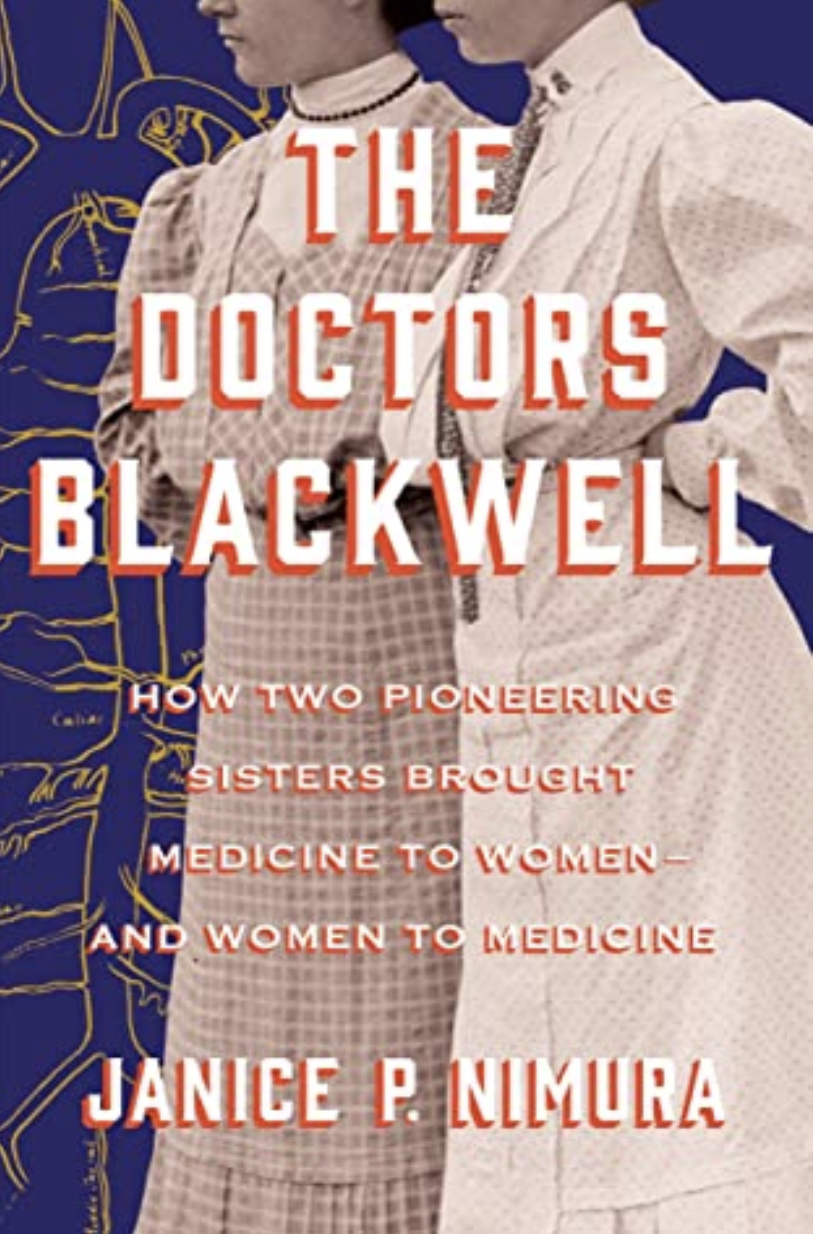
The Doctors Blackwell by Janice P. Nimura (History)

This is the story about Elizabeth and Emily Blackwell — pioneers in the efforts to bring women into medicine — and it was not what I expected (it was so much better!) The well-researched book (which includes many direct excerpts from journals and letters) is a thorough biography of both women from their immigrant childhood in Cincinnati through to the fight to be able to attend medical school (Elizabeth was the first woman in American to receive an MD in 1849) and their continuing efforts to open the field to women.

What I liked about the book is that it was no Hallmark Special. These women were motivated by female accomplishment, not by the more “womanly” desires to help and comfort. In fact, neither one had much in the way of empathy — Elizabeth was disgusted by human bodies and managed to take meticulous notes on patient’s dying agonies while Emily was attracted by the science, but not the humans. Elizabeth was also none too happy with the women’s movement, or with women in general, finding most of them “petty, trifling, priest-ridden, gossiping, stupid, and inane.” You can kind of see her point at times. As an interesting side note, none of the five Blackwell sisters ever married, and two of their brothers married suffragettes.

The other utterly fascinating thing about the book was the detail on medical practice, hygiene, and general living conditions of the time. The details of how medical schools operated, what kind of medicine was practiced (leeches, patent medicines, and an overuse of mercury based calomel), and the (lack of) hygiene in both medical and living situations was a window into another world — and a world not well represented by historical fiction which always seems to bring a modern sensibility to a few stray details from the past. I’m not a big non-fiction reader, finding most offerings full of tangents, muddied presentation and overly interpreted facts with specific agendas in mind, but this book was well-structured, full of relevant detail, and presented the main characters as real human beings who don’t necessarily match our ideals of individuals now or in the past.

A new (to me) word: valetudinarian — a person who is unduly anxious about their health. Useful!

Quotes:
“The limited goal of woman suffrage — winning the vote for women who were still enslaved by their own ignorance — was, she believed, woefully premature. What good was a vote if one didn’t know how to think independently?”

“The problem was not the tyranny of men, she wrote, but the disappointing weakness of women. ‘Women are feeble, narrow, frivolous at present, ignorant of their own capacities, and undeveloped in thought and feeling,’ she lectured her well-wisher. ‘The exclusion and constraint woman suffers, is not the result of purposed injury or premeditated insult. It has arisen naturally, without violence, simply because woman has desired nothing more.’”

“It was more important to prove the capacities of women and show them the way forward into the light, out of the shadow of their menfolk. For women, just as for the enslaved, the first step must be freedom. ‘The study and practice of medicine is in my thought but one means to a great end,’ Elizabeth wrote. Caring for suffering individuals had never been the engine that drove her. In becoming a doctor, she meant to heal humanity.”

“ ‘As I learnt to realize slavery & hate it, deeply eternally, while living amongst slaves — so I am learning to curse from the bottom of my soul this heathenish society of the nineteenth century, surrounded here by its miserable victims,’ she wrote. The conundrum of woman’s lot had never seemed clearer: women could not rise until the attitudes of their society shifted, but social mores would never change without women’s leadership, ‘so there seems to me, no opening in the circle.’ Even among the educated women of her acquaintance, few seemed formed for noble causes.”
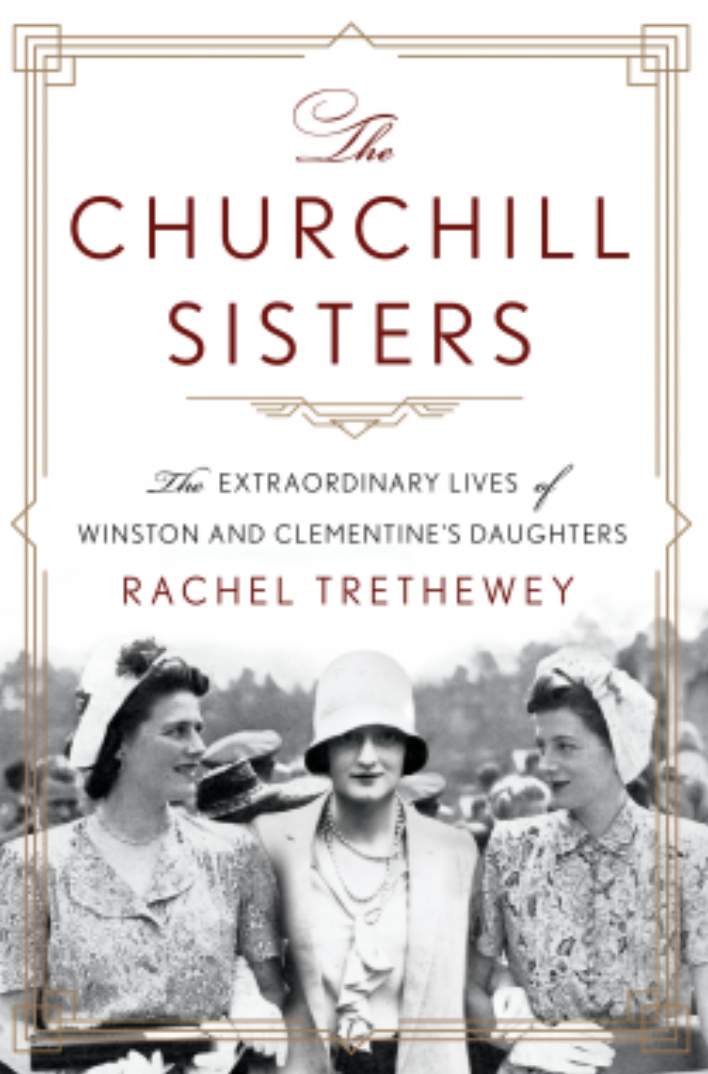
The Churchill Sisters by Dr. Rachel Trethewey (History / Biography)

Writing: 3/5 Coverage: 4/5 Accessibility: 5/5

This is the story of Winston Churchill’s three daughters: Diana, Sarah, and Mary. The author pulls together a pretty decent narrative from personal diaries, articles, and massive amounts of correspondence between family members and friends. Unlike fictionalized history (which I hate), she never pretends to know what a character is thinking or feeling, although she does occasionally opine about things that “must have been difficult” or provides context about what kind of behavior was “normal” for that time and place.

I found this easy and interesting to read. I did have to ask myself what made it interesting. While Sarah was a reasonably well known actress, neither of the other sisters accomplished anything particularly spectacular. It was kind of like watching Downton Abbey — these sisters were able to lead very interesting lives because their father was who he was and we get to live vicariously. And they were interesting lives! They each were able to travel with him (often his wife was unavailable), met many heads of state including FDR and “Uncle” Joe Stalin, and be present for some important pieces of history such as the Yalta conference.

There was plenty of discussion of psychology and the changing role for women in society. Plenty of heartbreak and insight into how the other half lived and plenty of factual tidbits that were surprising, yet not important enough to bring out in more official histories (eg the squalor including bedbugs at the Yalta conference — yuck!)

Worth reading.

Thank you to St. Martin’s Press and NetGalley for providing an advance copy of this book in exchange for my honest review. The book will be published on November 23rd, 2021.

Facing the Mountain by Daniel James Brown (Non-Fiction History)

The acclaimed author of The Boys in the Boat (which I loved) tackles Japanese Americans in WWII — both those interned in camps following FDRs Executive Order 9066 and those who served in the military’s 442nd Regimental Combat Team — the single Japanese American unit, which also happened the most highly decorated.

While dealing with — let’s face it — some deeply depressing and disturbing topics — Brown makes it clear from the start that this is the story of Victors, not Victims. And that is how the story reads. This is the story of how a diverse group of people (not everyone in a single ethnic group is the same, even as they are treated as the same!) faced adversity and made the best of it. Through extensive research and first person interviews, Brown follows three primary characters who each ended up in the 442nd: Kats Miho from Hawaii, Rudy Tokiwa from Salinas (within California’s Exclusion Zone) and Fred Shiosaki from Hillyard, WA (outside Washington’s Exclusion Zone). An additional thread follows Gordon Hirabayashi as he makes his way through the courts protesting the unconstitutionality of interning American citizens based on their ethnicity. The character set expands to include their families, friends, and comrades-at-arms while the story extends from Pearl Harbor to incarceration to military draft to battle to returns home to legislation (finally) apologizing to the community and paying (some) restitution to survivors.

It is a massive undertaking but Brown’s style makes it appear effortless (like Fred Astaire’s dancing). He gets to the essence of every thought and action. Through personal interviews and letters, we gain access to the actual (not fictionalized) thoughts, discussions, and noticed details of those involved. Often these brought tears to my eyes. Reading first-person accounts is so very different than what I or a novelist imagines in any situation. Facts and figures, as well as historical context, are inserted at just the right moments.

I found the book fascinating from start to finish. While I was aware of the broad strokes of the treatment of Japanese Americans during the war, I was not aware of the many, many, tiny strokes that comprised it. I give this book a strong five star rating and highly recommend but if I were to point out a couple of negatives (which it appears I’m about to do) it would be that he does sometimes descend into hyperbole — for example when describing a situation, such as the conditions initial Japanese immigrants found in the late 1800s, from his own perspective rather an individual’s recollection and report. He also inserts anecdotes — all but one negative — about the treatment of Japanese Americans by neighbors without including any positive anecdotes (there must be some) or giving any kind of statistics on how broad those negative behaviors actually were.

Thank you to Penguin Group Viking and NetGalley for providing an advance copy of this book in exchange for my honest review. The book will be published on May 11th, 2021.