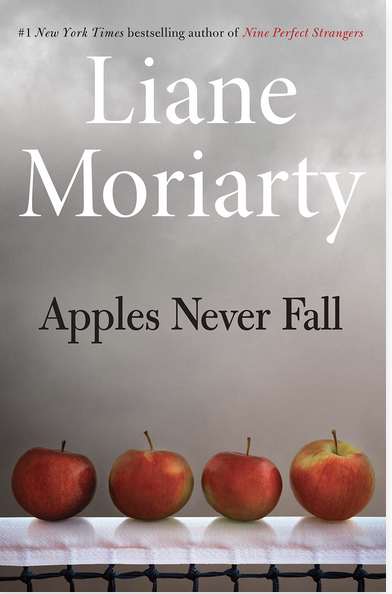
Apples Never Fall by Liane Moriarity (Australian Fiction)

Writing: 4/5 Characters: 5/5 Plot: 4/5

Impossible to put down, this is a twisted, gripping, family drama / mystery that explores the violence and cruelty as well as the compassion, kindness, and personal development of ordinary people.

Stan and Joy Delaney are tennis obsessed — champs in their youth, they ran a successful school for training and coaching tennis players, including their four tall, talented, (and now adult) tennis offspring. All appears well until one day Joy Delaney disappears, and the police turn their (frankly not so laser focused) gaze on Stan.

Let me hasten to say that this is NOT one of those tense books about false accusations and a man desperate to prove his innocence. What I just described is the structure of the story but not at all the point. The story alternates between the present day and clearly labeled time periods in the past. In Moriarity’s signature style, the plot keeps twisting, the people get more interesting, and sleep becomes impossible as you have to race to the finish. I’ve read many (most?) of Moriarity’s books. Some I like better than others — this is now one of my favorites.

Thank you to Henry Holt & Company and Net Galley for providing an advance copy of this book in exchange for my honest review. The book will be published on September 14th, 2021.

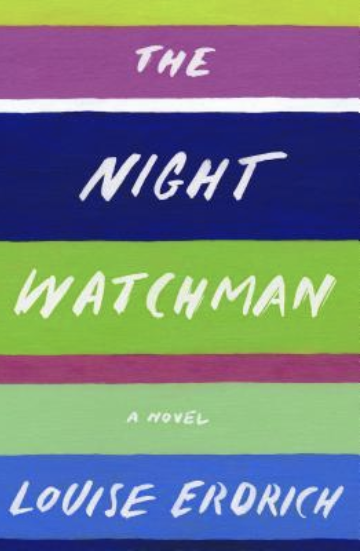
The Night Watchman by Louise Erdrich (Literary Fiction / Multi cultural)

Writing: 5/5 Characters: 5/5 Plot: 5

I’m grasping for words to express how much I loved this book but all the good words — profound, brilliant, amazing, etc. — have been rendered meaningless through overuse. So just think about what they used to mean and apply here.

The novel is based on the experiences of Erdrich’s grandfather, Patrick Gourneau, in his determined fight against the proposed termination of his Turtle Mountain Band of Chippewa named in House Concurrent Resolution 108 passed in August of 1953. Gourneau is fictionalized as Thomas Wazhashk.

While that is the overarching plot line, the story is told as a set of short chapters from various character viewpoints. While the termination fight touches everyone, much of the content covers the progression of individual lives in the community. Pixie Paranteau supports her family with earnings from a job at the new jewel bearing plant; her sister, Vera, has disappeared in the Cities and has been caught in the underbelly of the beast; Wood Mountain is becoming a top boxer, training with Barnes, a local white coach with eyes glued on Pixie; Millie Cloud is in Minneapolis and has authored a study of her father’s reservation which will be useful in the fight against termination; and Thomas spends his nights as the Night Watchman at the plant — struggling to stay awake by writing letters using the Palmer Method ingrained in him at the Indian boarding school. Other characters are ghostly visitors, Mormon missionaries, and various officials from the BIA, congress, and tribal councils.

Erdrich’s characters are wonderful — each one an individual that defies stereotype; each one full of complexities that never descend into entertaining “quirks.” In contrast, we do see the usual stereotypes through the perspective of others — in Barne’s memory of the “luscious” Indian girls depicted in ads and earnest lectures given by the missionaries, for example.

What I love most about this book is Erdrich’s articulation of the feelings, perspectives, and philosophies of the various characters. Thomas, in his desperation to leverage every possible angle available to him reads the Book of Mormon to better understand the bill’s author — Arthur V. Watkins — a staunch Mormon. He has discussions with Barnes about why Indians can’t / don’t want to become “regular” Americans and why Barnes could never “become” an Indian. He is immensely philosophical, and we are treated to his thinking, his process, and his growing understanding of life and his part of this world. Every chapter is full of enlightening description and presence.

This is the best book I’ve read in a long time and by far my favorite Erdrich book. The Pulitzer committee definitely got it right this time.

Some quotes:
“This termination bill. Arthur V. Watkins believed it was for the best. To uplift them. Even open the gates of heaven. How could Indians hold themselves apart, when the vanquishers sometimes held their arms out, to crush them to their hearts, with something like love?”

“Thomas was convinced that he’d destroyed their chances. He couldn’t point out exactly how he’d done it, but he knew. And the other thing. The senator had also asked every single Indian person who testified about their degree of Indian blood. The funny thing was, nobody knew exactly.”

“Especially Senator Watkins. The word supercilious. That was the word for every detail. Watkins’ coin-purse mouth. His self-righteous ease. The way he held himself, giving off that vibration. Filling the air with sanctimony. Another word that flung itself into her mind.”

“She was inhabited by a vengeful, roiling, even murderous spirit. The same spirit had hatched the bird that pecked Bucky’s face. When she got home, she’d clean up the sweat lodge and ask her mother to help her get rid of these thoughts.”

“All were cast together onto allotments, to break apart the earth, to learn the value of a dollar, and then how to make one dollar into many dollars and cultivate the dollar into a way of life.”

“His father was so very old now that he slept most of the day. He was ninety-four. When Thomas thought of his father, peace stole across his chest and covered him like sunlight.”

“To most of their neighbors, Indians were people who suffered and hid away in shabby dwellings or roamed the streets in flagrant drunkenness and shame. Except the good ones. There was always “a good Indian” that someone knew.”

“For days. he’d tried to make sense of the papers, to absorb their meaning. To define their unbelievable intent. Unbelievable because the unthinkable was couched in such innocuous dry language. Unbelievable because the intent was, finally, to unmake, to unrecognize. To erase as Indians him, Biboon, Rose, his children, his people, all of us invisible and as if we never were here, from the beginning, here.”

“Emancipation. This word would not stop banging around in his head. Emancipated. But they were not enslaved. Freed from being Indians was the idea. Emancipated from their land. Freed from the treaties that Thomas’s father and grandfather had signed and that were promised to last forever. So as usual, by getting rid of us, the Indian problem would be solved.”

“He wasn’t one for giving names to things. Or finding their basis. His feelings were like weather. He just suffered or enjoyed them.”

“He felt it coming. Wanted to duck. Winced. A sensation like when he was chastised at school gripped him. Like when he went into a bank or bought something expensive in an off-reservation town. Their looks pressing down on him. Their words flattening him. Their eyes squeezing him. Isey, for shame. As his mother used to say. But it was so much worse in English, the word shame.” It made him curdle inside. And the curdling became something hard in his stomach. Or a thought that stabbed so hard he might cast it out in a flare of anger. Or it might stay in there hardening even further until it flew up to his brain and killed him.”
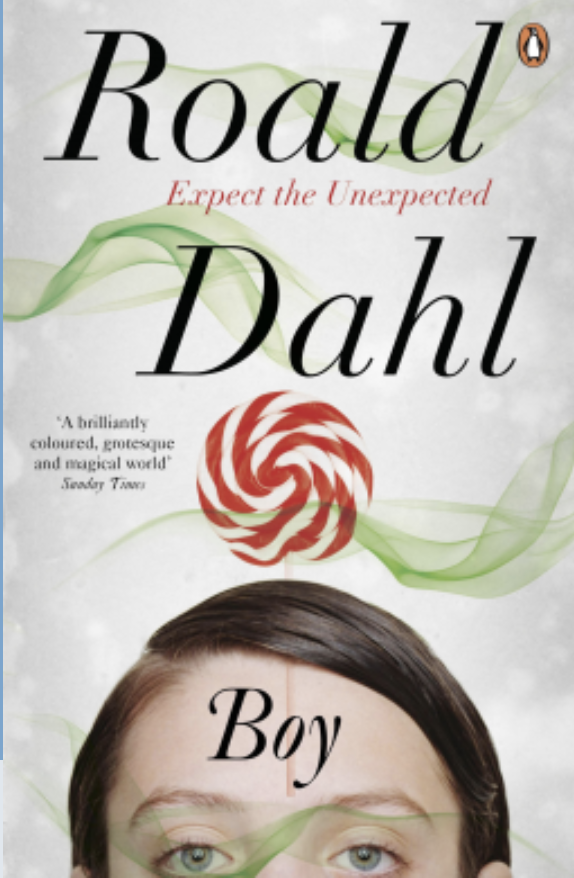
Boy by Roald Dahl (Autobiography sort of…)

Penguin Books is reissuing Roald Dahl’s “not an autobiography” memories of youth. It reads exactly like one of his fantastic children’s books, and in particular it is easy to see the inspiration for my favorite — Charlie and the Chocolate Factory — in many of the stories. It is consistently funny and engaging and fascinating in its ability to demonstrate the development of one of my favorite childhood authors. Since his childhood began in 1916, the descriptions of what life was like (operations without much anesthetic, the typical (and ridiculously cruel IMHO) boarding school experience, and complications of international travel) are plentiful and eye-opening. All in all a very fun (and fast) read.

Looking at some background on Dahl, I’m surprised at all the vitriole — he’s been accused of racism, profanity, and sexual innuendo. The examples given were ridiculous. I despair.

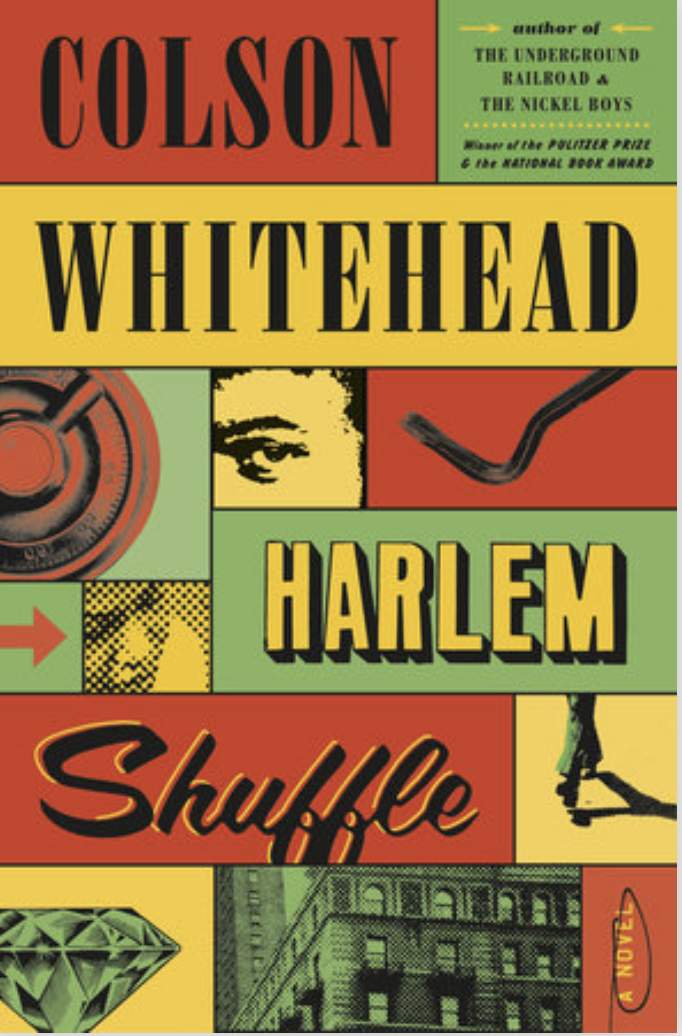
Harlem Shuffle by Colson Whitehead (Literary Fiction)

Writing: 5.5/5 Characters: 5/5 Plot: 4.5/5 (for me)

Colson Whitehead is a master of bringing a place and time to life. Harlem in the 60s — this is the story of a man who came from nothing and relentlessly made something of himself. But it’s not the typical rags to riches story with people “managing” to do this and that. This includes all the details of just what he had to do to make it in the world as it was — the pay offs (to gangsters and the police), the loyalties and trust, the “deals” made, the heists, and the constant jockeying for power, influence, and importance by the big shots while everyone else struggles to get by.

Carney is “only slightly bent when it came to being crooked”. He has principles but suspends them as necessary with full awareness. He runs a furniture store with a secret side line in low level fencing of stolen goods. He primarily manages to stay out of trouble except when his cousin Freddie pops up (Freddie’s most constant refrain — “I didn’t mean to get you in trouble”).

Fantastic scenes in Harlem — The Theresa Hotel, known as the “Waldorf of Harlem,” Striver’s Row for the African-American elite, Black Star Travel agency to help black travelers at the time make their way through parts of the US without getting lynched. Some vivid scenes from the 1964 Harlem riots, resulting from the shooting of an unarmed black teenager by a white policeman. All narrated by Carney with his somewhat cynical (and pretty realistic) worldview.

Whitehead is a fantastic writer — this had a little more focus on unsavory elements for my taste but it was very hard to put down.

A few quotes (out of many):

“Carney took the previous tenants’ busted schemes and failed dreams as a kind of fertilizer that helped his own ambitions prosper, the same way a fallen oak in its decomposition nourishes the acorn.”

“There was a hole in the air where the Ninth Avenue el used to run. That disappeared thing.”

“He reconsidered: The consequences remained, but the reasons had turned spectral, insubstantial. Harlem had rioted — for what? The boy was still dead, the grand jury cleared Lieutenant Gilligan, and black boys and girls continued to fall before the nightsticks and pistols of racist white cops. Freddie and Linus were gone, their heist unwound as if it had never happened, and Van Wyck kept throwing up buildings.”

“Death took Freddie from Carney and mourning returned to him a visitation, an invisible companion who shadowed him everywhere, tugging at his sleeve and interrupting when he least expected: Remember what my smile looked like, Remember when, remember me. Its voice grew quiet and Carney didn’t hear it for a while and then it was loud again: Remember me, This is your job now, Remember me or no one else will.”

Thank you to Doubleday Books and NetGalley for providing an advance copy of this book in exchange for my honest review. The book will be published on Sept. 14, 2021.

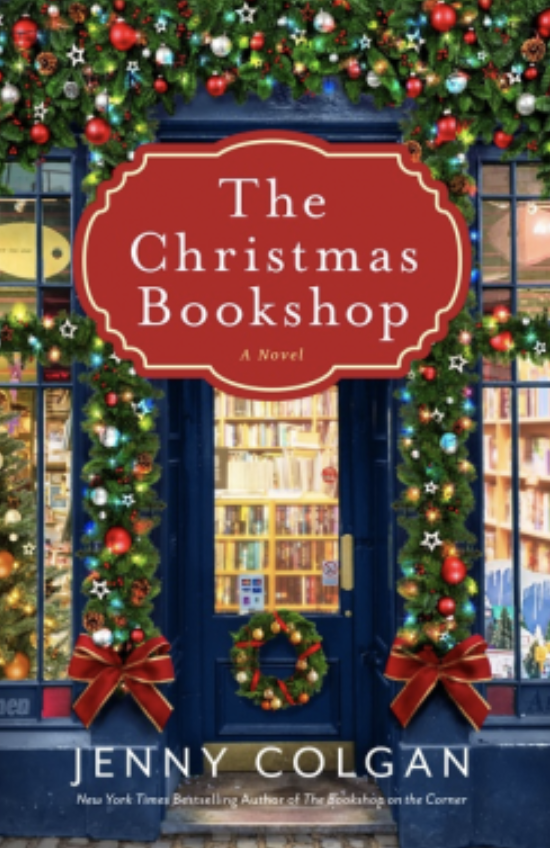
The Christmas Bookshop by Jenny Colgan (Chick Lit)

Another happy charmer from Jenny Colgan. Taking place in a dusty, largely unvisited, book store in Edinburgh, this story brings a sparkling array of oddball (not super realistic but very lovable) characters including a Quaker dendrologist from Brazil, a self-important and extremely handsome self-help author, an all-too-perfect sister (complete with unfortunately charming offspring) and an old recluse with potentially shameful secrets. Add a magic shop, the Ormiston Yew, and a terribly annoying yoga slinging blonde nanny with a nasty streak, and you have the perfect recipe for a light, fun, heartwarming read.

Thank you to William Morrow Paperbacks and NetGalley for providing an advance copy of this book in exchange for my honest review. The book will be published on Oct. 26, 2021.

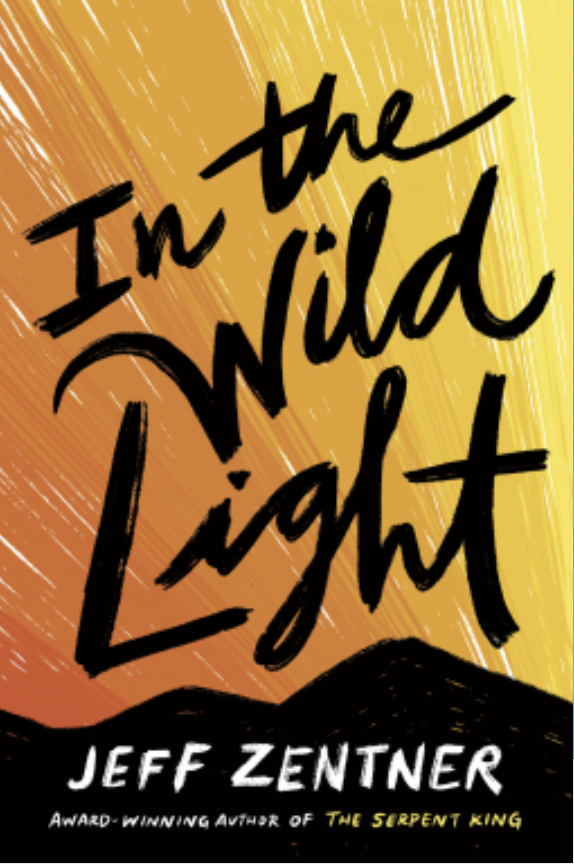
In the Wild Light by Jeff Zentner (YA)

Writing: 5/5 Characters: 4.5/5 Plot: 4/5

Delaney Doyle and Cash Pruitt are best friends. Growing up in a very poor small town in East Tennessee with a large addiction problem, both having seen their share of hardship and trauma. When Delaney manages to get both of them a scholarship to an elite private high school in Connecticut, a new (and utterly unpredictable) chapter begins for both of them.

There is a lot of depth to this book. Told from Cash’s perspective we get both typical coming-of-age experiences and some very atypical life experiences. Delaney is a gifted scientist — her talk is peppered with black holes, human wormholes, olfactory fatigue, and a theory of how humans may have descended from aquatic apes (I love this one). She sees patterns everywhere — in people as well as the natural world. Cash is sure that his only choices are a “sh**ty life or an ordinary life.” His Papaw (grandfather) is slowly sinking with emphysema back home, and Cash has the strongest feeling that he doesn’t even deserve an opportunity like this in the first place. And then, in a complete surprise to himself, he discovers the magic of poetry.

The book is very sweet and brought tears to my eyes multiple times. Themes of love, family, loneliness, being an outsider, and doing the right thing, even when it is difficult pervade. Some fascinating discussions on the similarities between the sciences and the arts in trying to understand the world we live in. I am absolutely not a poetry person, but I found the descriptions of how Cash came slowly to love both reading and writing poetry to be fascinating — an aspect of character development through passions that I don’t often see to this extent. Some of the language seemed a bit overdone at times to me, but I do find Zentner’s writing quite beautiful. The negative characters seemed kind of two dimensional to me but I’m guessing that is how they appeared to Cash so it makes sense.

Good for fans of John Green.

A few good quotes (there are many):
“Because it’s heretical. That’s how science advances and takes humanity with it. People have to be brave enough to look stupid in a field where looking stupid is the worst thing you can do.”

“I think the real problem is you feel so lucky to have survived what you did, you think you bagged your limit of luck by finishing out your childhood in a safe and loving home.”

“You’ll never regret a decision more than the one you make out of fear. Fear tells you to make your life small.”

“Life often won’t freely give you moments of joy. Sometimes you have to wrench them away and cup them in your hands, to protect them from the wind and rain. Art is a pair of cupped hands. Poetry is a pair of cupped hands.”

“It feel like he’s bequeathing me an inheritance of the only wealth he possesses — his memories, his quiet joys.”

“Being a poet takes bravery. Yes, the courage to bleed on a page. But also to bleed for the world we write poetry about.”

Thank you to Crown Books for Young Readers and NetGalley for providing an advance copy of this book in exchange for my honest review. The book will be published on August 10th, 2021.

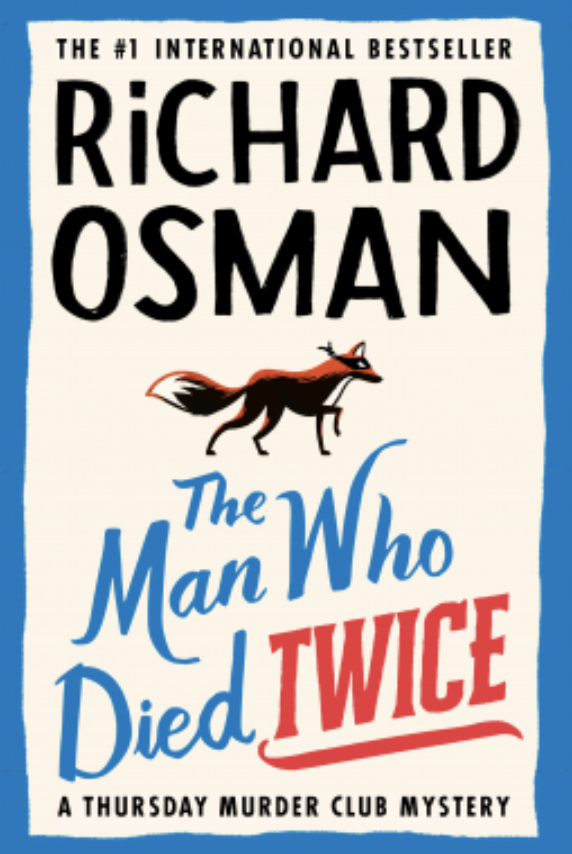
The Man Who Died Twice by Richard Osman (Fiction / Mystery / Humor)

Writing: 4.5/5 Characters 4.5/5 Plot: 4/5

Another fun title (the second) from Osman’s Thursday Murder Club series. In this episode, our four retirement village oldies take on the local drug lord, the useless baddie who attacked their most timid member, and a tangle of spies spying on spies — one of whom happens to be Elizabeth’s very-ex-husband.

A reminder on the characters from my first review: Elizabeth, with the mysterious background and friends in high and low places who all seem to owe her favors; Ibrahim, the retired psychiatrist, who pores over the cases he failed; Ron, the former trade union leader who loves a chance to get back on the stage; and Joyce, the newest addition, who has the often underappreciated skill of bringing everyone together while remaining invisible herself.

As an American, I had not heard of Richard Osman before reading the first book, but I gather he is well-known in Britain as “an English comedian, producer, television presenter, writer, and the creator and co-presenter of the BBC One television quiz show Pointless.” I like his writing a great deal — funny, wry, with characters who could appear dull on the outside but are actually intriguing on the inside (as so many people are if you take a deeper peek). His spare style distills what you need to know without muddying the waters with a lot of extraneous fluff. I gulped it in a single sitting.

BY the way, I feel like I just reviewed Osman’s first book — The Thursday Murder Club (link) but apparently that was about a year ago. Time flies when … everything is closed and you’re stuck in the house? In any case, one benefit of Covid is that every single one of my favorite authors appears to have tripled their productivity. My “to read” pile is overflowing.

Thank you to Penguin Group Viking and NetGalley for providing an advance copy of this book in exchange for my honest review. The book will be published on September 28th, 2021.

The Attic on Queen Street by Karen White (Fiction / Mystery)

The seventh (and possibly last) book in White’s immensely popular Tradd Street series sees family, romance and historic house restorations Charleston-style (read: expensive and persnickety) come together in this exciting story of betrayal, old and new. And did I mention Ghosts? No? They populate every corner — friendly ghosts, malevolent ghosts, and immensely sad ghosts still seeking justice after many, many, years. For those new to the series, Melanie Trenholm — star realtor, new mother, and label gun enthusiast — can see and often speak to the dead.

A nice combination of women’s fiction (relationship issues, shopping, extravagant theme parties), mystery (cold cases as presented by sad, justice-seeking ghosts), and historical fiction (plenty of interesting research into Charleston’s history as it bears on the cold case du jour). A fun mix of humor and over-the-top lifestyles with complicated plot twists, an overly dramatic research librarian, and intricate treasure hunts. You could certainly read this book on its own, but given the five months to publication, I recommend starting at the beginning with The House on Tradd Street. I’ve enjoyed every single one of the series.

Thank you to Berkley Publishing Group and NetGalley for providing an advance copy of this book in exchange for my honest review. The book will be published on Nov. 2nd, 2021.

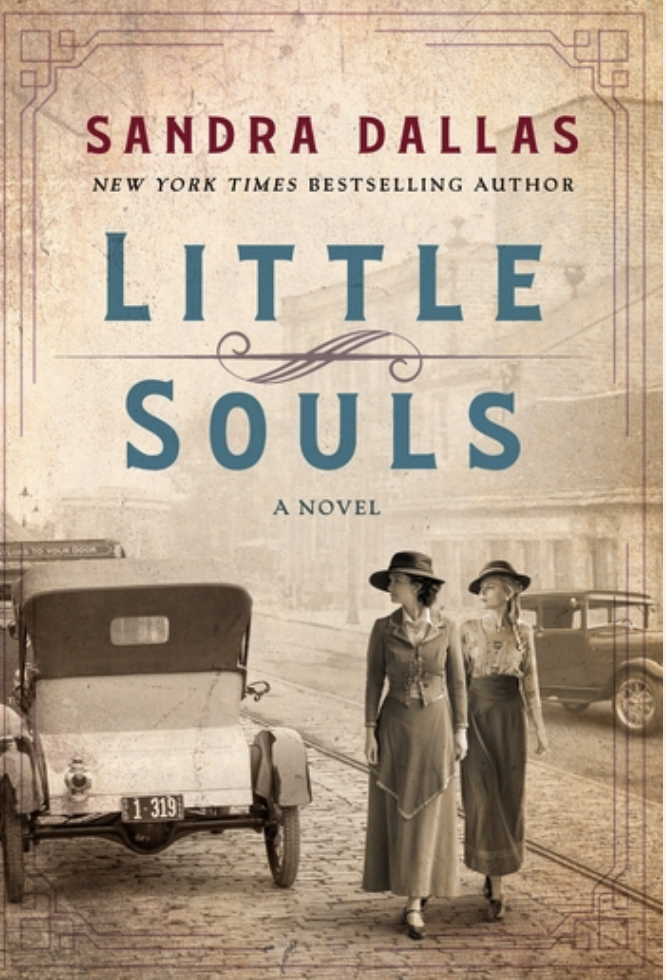
Little Souls by Sandra Dallas (Historical Fiction)

Plot: 4.5/5 Characters: 4/5 Writing: 4/5

Little Souls takes place in Denver, 1918. The Influenza has hit the population badly, and the men are still away at war. At 19, Lutie Hite is a carefree artist working in advertising for the local department store; her older, more careworn, sister Helen is a nurse. Through an interesting set of events they become responsible for Dorothy, the ten-year old daughter of their now deceased tenant. From these beginnings follows a fairly wild, often heartbreaking, but ultimately heartwarming ride.

I’m a big Sandra Dallas fan. Dallas writes Western historical fiction about strong women making it through adversity with fortitude, intelligence, and the help of their community. She always brings in the small details of life in that particular time and place to make everything ring true.

Her stories tend to the dramatic, but never go over the top and feel quite realistic for their time. She is even-handed about how people thought and behaved at the time — different characters have different opinions on everything from mask-wearing (ha!) to personal morality, and no opinion is presented as obviously better than the others. Religious feeling and participation was a big part of life in that place and time, and I liked how she treated it. While this in no way dominates the book, there were some beautiful passages about how individual characters felt about God that moved me, despite my not being religious myself.

This is a real page-turner — I’m afraid I annoyed my husband by reading on into the night…

Thank you to St. Martin’s Press and NetGalley for providing an advance copy of this book in exchange for my honest review. The book will be published on April 26th, 2022.

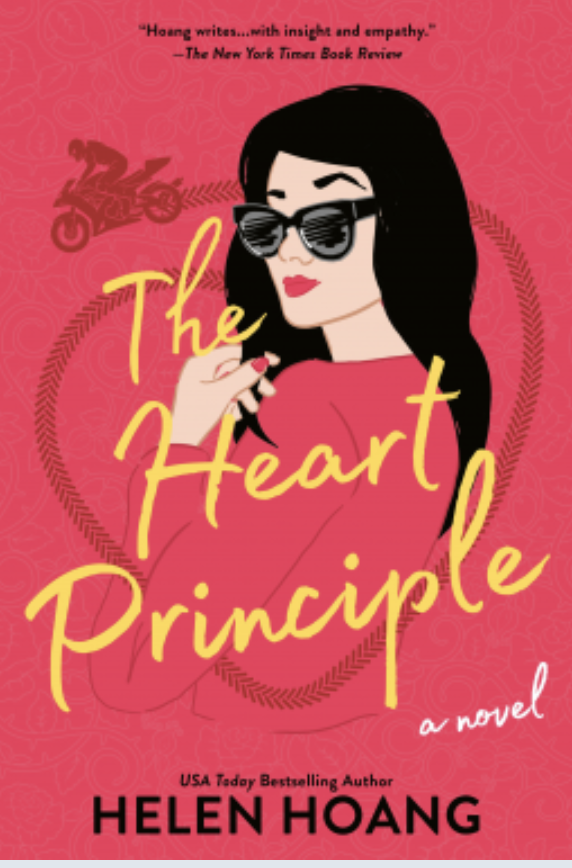
The Heart Principle by Helen Hoang (Fiction / Romance)

Plot: 4/5 Characters: 5/5 Writing: 4/5

Anna Sun — musical prodigy and dutiful daughter. Her carefully constructed facade starts to crack as the pressure gives her complete musician block and her long-term boyfriend suggests they see other people for fun. Then she gets an even bigger surprise — her (secret) therapist tells her she may be on the autism spectrum. And suddenly, everything begins to make sense. Quan Diep has fully recovered from cancer but can’t quite come to terms with the scars it left behind. When Anna and Quan meet on a hookup site they intend to have a one night stand only — but that one night keeps going wrong so they have to have another. And another. Until maybe “one night stand” isn’t the right word for what they are doing.

This is a deeply reflective novel that masquerades (well!) as a steamy romance. What I like about Hoang’s books (this is the third and the first two are also great) is that her characters spend as much time learning about themselves and how to fit into the world as they do about seeking a relationship. Also — no shopping and the relationships that develop are supportive and loving as well as physically intense. I love the process Anna goes through to understand her diagnosis, how it explains aspects of her personality that she hadn’t understood before and — most importantly — how she can move forward in the face of disbelief and unintended but deeply felt censure from her family.

There has been a spate of popular novels about people on the spectrum (eg Eleanor Oliphant, The Curious Incident of the Dog in the Night Time) but I find those entertaining rather than enlightening. These book help me understand from the inside. For me (not a professional!) what we currently label high functioning autism is more about a different brain organization than a disability and one that I often find makes more sense than the “normal”. In the current world of social manipulation and personal branding, I find the direct, literal and honest engagement depicted quite refreshing. [As an aside, I loved this description of “neurotypicals” (the “normals” I referred to) from a spectrum group: “Neurotypical syndrome is a neurobiological disorder characterised by preoccupation with social concerns, delusions of superiority, and obsession with conformity… Neurotypical individuals often assume that their experience of the world is either the only one, or the only correct one…NT is believed to be genetic in origin. Autopsies have shown the brain of the neurotypical is typically smaller than that of an autistic individual and may have overdeveloped areas related to social behaviour.” Makes you think!

If you’re looking for a romance, a positive story about relationships, or are interested in the personal development of an unusual woman who is learning about herself, you will enjoy this book.

Thank you to Berkley Publishing group and NetGalley for providing an advance copy of this book in exchange for my honest review. The book will be published on August 31st, 2021.