Some Bright Nowhere by Ann Packer (Literary Fiction)

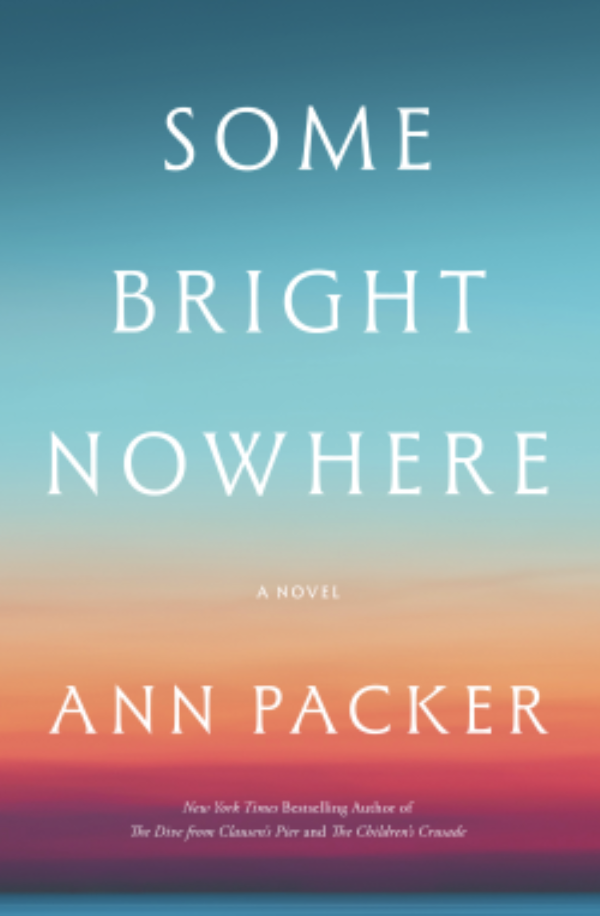
I can’t say this is a happy or uplifting book, but it is a strong, powerful, complex, and very, very real book about a strong marriage and the intricacies of how it weathers the derailers of life. On page two, Eliot and Claire say goodbye to the oncologist who has treated her breast cancer for nine years. The end is near and there is nothing more that he can do. The book takes us from this point until the end, actually, has been reached. But while I think we all feel as though we’ve read this “story” a million times, I found this version quite different.

This story is told from Eliot’s perspective. After a surprising, and somewhat heartbreaking, last request, we see Eliot’s struggle with isolation, communication, understanding, and retrospective introspection. While it is easy to read and make judgements about what people think, say, and do, I don’t think that is really the point. This is life and a marriage and a family and a circle of friends, and there is no “correct” behavior, no hard and fast guidelines to what is right. But it is all exquisitely detailed — the conflicting thoughts, the desires, the dears, the selfishness and simultaneous generosity. I’m not surprised by the quality of the writing (this book could not have been an easy thing to pull off) because it is Ann Packer — I’m pretty sure I’ve read and loved all of her books. Hard to read such a story without having a heavy heart, but it relates to a part of life that we will all experience in one way or another. The depth of insight was worth the trip.

Thank you to Harper and NetGalley for providing an advance copy of this book in exchange for my honest review. The book will be published on January 13th, 2026.

The List of Suspicious Things by Jennie Godfrey (Literary Fiction / Mystery)

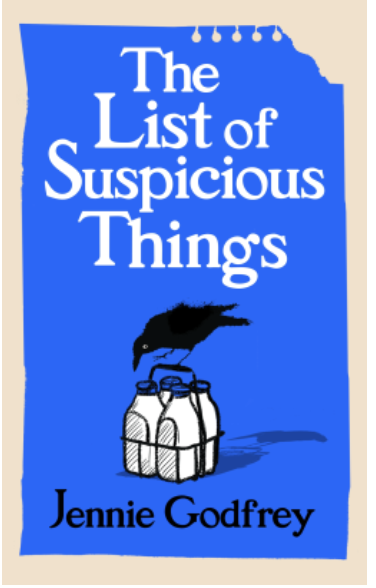
A coming-of-age story told by a precocious 12-year old set in the time of the Yorkshire Ripper (late 70s). Miv and her best friend Sharon decide to find the Ripper themselves when their world starts falling apart due to the constant threat. They start by compiling a list of suspicious things about the people around them, and as they pursue investigations on multiple fronts, they learn a great deal about life. The unfolding stories of various people in their community are always instructive — some in bad ways and others in good. Miv learns about bullies, racism, grief, and even domestic abuse, but also about the importance of standing up for yourself and others, doing the right thing, tolerance, curiosity, friendship and love.

I liked the writing a great deal — Miv’s voice is unique, appealing, often humorous, and a good deal more exposed than an actual person might agree to. Never overdone or overly dramatic, but also never, ever vapid. I loved the way we got to know characters who appeared one way but easily morphed into a more complex (and much more likable) person with a little time and exposure. The ending was a real surprise, but well done and thought provoking.

Thank you to Sourcebooks Landmark and NetGalley for providing an advance copy of this book in exchange for my honest review. The book will be published on December 2nd, 2025.

The One-in-a-Million Boy by Monica Wood (Literary Fiction)

Writing: 5+/5 Characters; 5/5 Plot: 5/5

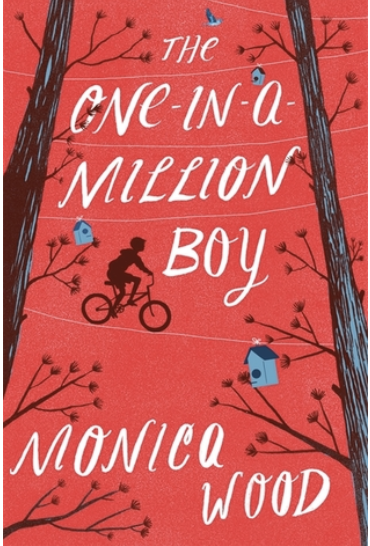
This woman can write! The eponymous “one in a million” boy is dead (at the age of eleven) before the story starts. In fact, we never even know his name — he is always “the boy.” But we learn about him extensively — his (odd) mannerisms, his fascinations, his earnestness — through the effect he has had on a number of characters: his grief-stricken mother Belle; his father Quinn, twice-divorced from his mother, and a complicated presence (or absence) in the boy’s life; and his new friend Ona, the 104-year old woman who is a service target of his boy scout troop. The boy is the only scout Ona has ever allowed to help her for long. He is different. She trusts him and he has managed to extract from her stories, thoughts, and even some fluency in the language of her birth (Lithuanian) — a language she has never knowingly spoken. Most importantly, he has elicited some enthusiasm on her part for a goal for her remaining (!) years. Well versed in the Guinness World Records and utterly enthralled with the possibilities, he believes she has a shot — with his help — at attaining more than one age-related record for the Guinness record keepers.

The book moves on — exploring the characters, their memories, their confusion, sadness, remorse, and regrets, and ultimately their ability to patch the holes in their souls and move forward. The narrative is so real — full of thoughtful characters reflecting on life intelligently with the latent understanding that comes with time; relationships that grow; and characters whose ability to have good relationships keep growing. It’s a bit of a celebration of the utter uniqueness of individual people. I just read David Brooks’ book “How to Know a Person,” but honestly I learn more about how to know a person by reading books like this. Good fiction always feels more truthful to me than the best non-fiction when it comes to people.


At the moment, Monica Wood is my (newly discovered) favorite author. So many possible quotes on this one — I’m probably including too many but I already pruned the list so much! FYI, I absolutely loved the end. I would love to include the whole section but that would just be cheating:

“To Quinn, for whom alcohol was a touchy simile, the truth was this: playing guitar was the single occasion in his slight and baffling life when he had the power to deliver exactly the thing another human being wanted.”

“They stood together in the dripping world, sizing each other up, the boy appearing to marvel at the weight of a century-plus, Ona wondering how in hell she’d unearthed two unrelated words in a tongue she couldn’t remember ever speaking.”

“He enunciated beautifully, though his diction contained barely perceptible pauses in the wrong places, as if he were a foreigner, or short of breath.”

“Normally, Scouts bored her, with their Game Boy stats and soccer scores and lazy, shortcutting ways. This one, though, brought a literal sense of second childhood: she felt as if she were speaking to a child she might have known when she herself was eleven. How easily she placed him at McGovern’s, installed at the white marble soda fountain, sipping a chocolate phosphate. She could see him amid the white-shirted boys playing stickball on Wald Street, tagging the door of Jose Preble’s black REO. There was something vaguely wrong with him that made him seem like a visitor from another time and place.”

“He reminded her that she’d once found people fascinating. That she’d lived more than one life.”

“Ona loved English from the get-go and paid strict attention, noting the cause-effect of language: her parents’ syntactical shipwrecks, the tin peddler’s casual profanity, Maud-Lucy’s pristine enunciations. Style could move listeners to pity, to reverence, to the purchase of a stewpot they didn’t need. Maud-Lucy taught Ona to compose a sentence with intention, and eventually she chose for herself a high-low hybrid that matched her ambivalence toward humankind.”

“Belle managed something like a laugh despite her sorrow, for the boy’s syntactical oddities had always pleased her. He’d read obsessively — instruction manuals, record books, novels far too old for him — picking up linguistic baubles like a crow mining a roadside.”

“I’m good at secrets,” the boy said, studying her so intently now that she began to feel stripped after all — in a good way, stripped of decrepitude and shame.”

“He did wait, observing in silence as Amy padded back and forth with an array of cleaning supplies. From their mother, the Cosgrove girls had learned to scrub their way out of despair. There was no detergent in existence for what ailed them now, but Amy heaved into the old standby nonetheless, with an alacrity bordering on violence, much sloshing and clanging coming from the adjoining rooms. He listened to these sounds — like an animal crying hard, he thought — until she appeared again, hands red and raw.”

“As she opened the menu, Ona felt momentarily unborn, as if her long life had been a warm-up for the real show, on which the curtain was about to rise. She ordered a grilled cheese and a strawberry shortcake, expecting to eat it all.”

“How could it be that Ona Vitkus after so many years alone, had been netted by the maneuverings of lovers and interlopers, tangled into their grief and envy and clumsy efforts at peace? And oh, weren’t they a show: their puzzling wants, their cross-purposes, their own mundane, ticking-down minutes.”

“She looked small and translucent, like a baby turtle from a nature documentary. He fought an impulse to pick her up and carry her to safer ground, As she stood there, fading before his eyes, he extracted the details as if through an old telegraph, dots and dashes that he gathered into a story.”

“He loved that they loved him. He loved the hollow he filled. It was the boy who’d understood this. The boy, whose lists and lists filled his own hollow, the one his father had left behind. A loosening in his chest, like sliding rocks, took him so abruptly that he doubled over, trying to hold it in.”

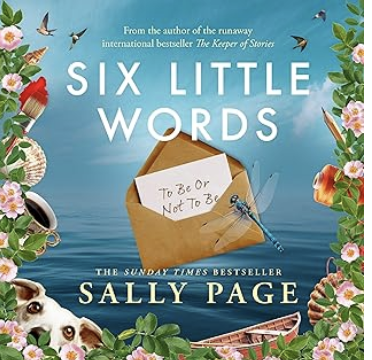
Rabbit Cake by Annie Hartnett (Fiction — audio book)

Writing: 5/5 Characters: 5+/5 Plot: 5/5

Loved this book and absolutely loved the audio book reader (Katie Schorr) who added an extra authenticity in her outstanding rendition.

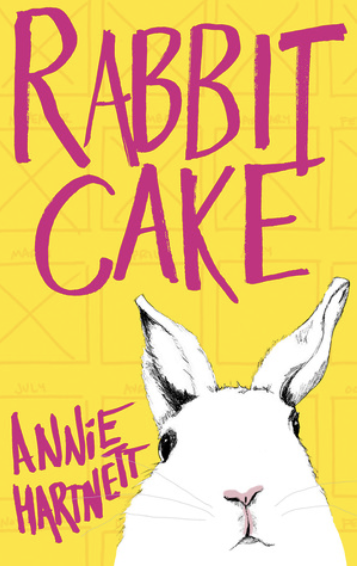
Freedom, Alabama. Ten-year old Elvis (a girl, named after Presley) is working her way through the 18 months of grief as defined by the school guidance counselor after the “accidental” death of her sleepwalking mother. In the meantime, her older sister Lizzie (15) has begun her own escalating experiences with sleepwalking which is (understandably) terrifying the family.

Despite the subject matter, this was in no way a depressing book. It’s an odd coming of age story of an unusual but absolutely relatable (to me) girl who loves her family, has no friends, is whip smart, and whose main objective (at this point) is to find out what really happened to her mother and to finish her mother’s book on the sleep patterns in animals. Think Flavia DeLuce.

The 10 (and later 11) year old voice is utterly believable and the portrait of the other characters — in particular the deceased mother — as seen only through a child’s perspective is startling in that the reader is faced with the stark notion that we are all interpreted differently depending on the interpreter! While I am focusing on Elvis, all of the characters were well-drawn, interesting, and didn’t have a stereotyped trait within 50 miles of their personalities. There was also a non traditional exploration of what constitutes mental illness — and how to make it through life in light of what is thrown at you — uncontrollable events, intractable people, or your own genetic predispositions.

This book reminded me of how much I like Southern Fiction — the quirkiness coupled with individualistic depth, utter nonconformity of thought, and the uniqueness of each family.

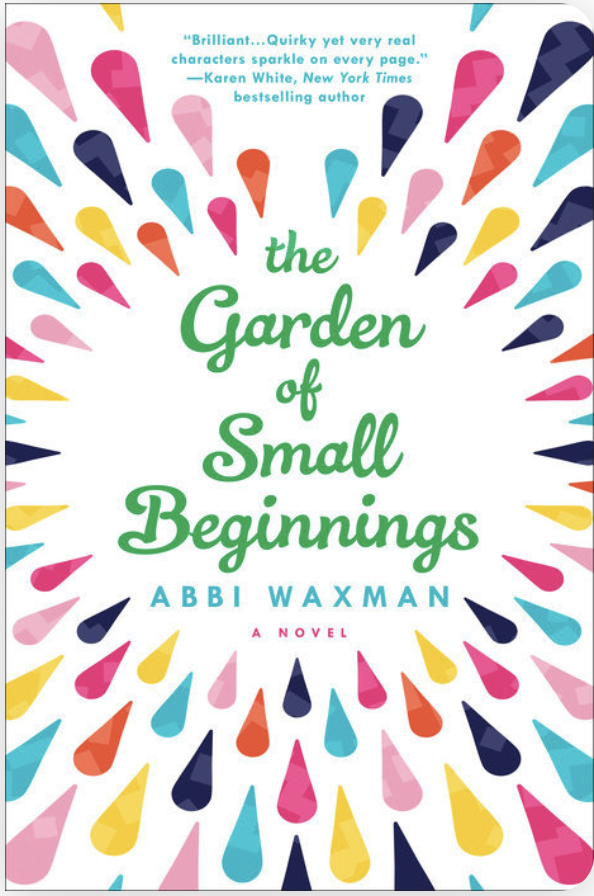
The Garden of Small Beginnings by Abbi Waxman (Audio Book)

Writing: 4.5/5 Characters: 5/5 Plot: 4/5

Four years later, Lily is just barely getting her life together and keeping the grief to a simmer after her husband is killed in a car accident mere feet from the family home. But this is honestly not a sad book (although the author does a good job of exploring how Lily does claw her way back up out of the grief trough). Instead it’s uplifting, humorous, and meaningful all at once.

An illustrator for children’s textbooks, Lily is sent off to a gardening class at the L.A. Botanical Garden to become one with the vegetables she will need to illustrate for a brand new client. She takes her two children (5 and 7) and her sister Rachael with her, and to say the class is populated with some wonderful characters is an huge understatement. The book is clever, literary, and linguistic — I love that Waxman is both a fantastic writer and chooses to write a world where bad things happen, but the individuals involved can make good things happen too. Her characters have agency. I also like the way she works with stereotypes and diversity issues — tackling the assumptions people make about each other and the surprise and follow up understanding when their assumptions are challenged. Very skillfully done.

I listened to this on audio book and the reader was fantastic. I probably would have preferred to read it in book form, though, because I like to savor Waxman’s writing and that is hard to do when you’re listening (and driving, hiking, or otherwise too busy to stop and do some kind of audio underlining). I did manage to capture a couple of lines though: “Just turn the handbag of your soul inside out, and shake it“ and “She has people skills like lions have gazelle skills.” As a bonus, there was a lot of actively good gardening instructions, given in small, digestible, pockets. Take note!

The Half-Orphan’s Handbook by Joan F Smith (Young Adult)

A well-written book about a young girl going through the grief of her father’s recent suicide. Lila is 16 and has been reluctantly cajoled into attending a grief camp for the summer. This is the story of her slow journey towards healing, including a healthy amount of new friends, a budding love interest, and that irreverent teen style that helps makes the unbearable, bearable.

The author, who went through a similar experience, does an excellent job at describing the confusion of competing feelings, the different ways grief hits you at different times, and the eventual return to the three Ls: laughing, loving, and living without guilt. I really liked all the characters, and I want to emphasize that this was not at all a depressing book — there was a lot of honest reflection, observation, and fun. Plenty of racial and sexual diversity as well as discussions of addiction, suicide, and first love.

Thank you to Children’s Publishing Group and NetGalley for providing an advance copy of this book in exchange for my honest review. The book will be published on April 6th, 2021.

A Song for Issy Bradley by Carys Bray (Literary Fiction)

Writing: 5/5 Characters: 5/5 Plot:4/5

Beautifully written story about five members of a strict Mormon family as they struggle with the death of the four-year old daughter, Issy. Extending far beyond your typical grief story, each family member wrestles with competing urges and goals — what it means to be a good person, the boundary between faith and thinking for themselves, and their relationships with each other, the community, and the church.

Ian is a bishop within the church. While I personally found him too sanctimonious for my taste, he (like most humans on this planet) is a complicated man trying to do his best — based on a firm belief in the foundations and practices of the church. Claire is a willing convert to Mormonism but is angry at God and is simply unable to keep going. Zippy (16) struggles with her attraction to a boy in light of the very strict teachings on the role for women; Alma (14) grapples with his belief and guilt over an (as yet to be detected) infraction; Jacob (7) just misses Issy and is working on using the Church’s teachings to resurrect her — confused between what is possible in religious stories and what is possible in everyday life.

For me it was not an attractive view of Mormonism, but then I am not very religious and am unhappy about people telling me what to do based on my gender :-). The characters are presented realistically, some offering comfort based on faith and others offering censure, and while I would bristle on the constraints on women, many of the characters appeared perfectly happy in their lives. Like one of my favorite books — A Place For Us — this book offers an inside view of another culture.

Some good quotes:
“I know something about being good. If you’re good and you get lost, someone you love comes and finds you.”

“It feels as if her hopes are leaking from a small perforation between her lungs, and although each escaping wish is small and ordinary — for Dad to think before he speaks, for Mum to get out of bed in the mornings, for Adam to serve a mission — the hurt as they trickle away is considerable.”

“Dad stops and she thinks she’s done enough, but he’s too wound up so intent on being right, that he’s forgetting to be kind.”

“Girls need to be careful — you like him; you love him; you let him; you lose him — that’s what happens.”

“He keeps talking but Claire can’t keep up with his words, she can’t catch them, they’re flying past her ears like tiny birds, fluttering to the open door and out into the hospital corridor. He has made Issy’s recovery contingent on her faith and she doesn’t know how she will ever forgive him.”