Inheriting Edith by Zoe Fishman (Literary Fiction –audio book)

Writing: 4.5/5 Characters: 5/5 Plot: 4/5
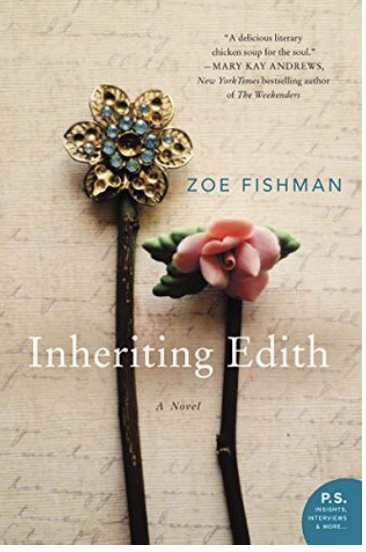
Single mother Maggie — a college graduate who drifted into house cleaning — is bequeathed a beautiful house in Sag Harbor by Liza — a previously good friend with whom she had had a falling out years before. The only catch? The house comes with an inhabitant — Liza’s 82-year old crotchety mother, complete with recent Alzheimer’s diagnosis.

Maggie and her two-year old daughter, Lucy, move in, and what follows is a beautiful, slow-moving but deeply felt novel of two women coming to terms with who they are, who they were, and what kind of closure they need before moving forward. Liza was a suicide — a best selling author who did not leave a suicide note. And so part of work both Maggie and Edith have to do is to try to understand why, what they could have done, and what it means for them going forward.

Excellent dialog — full of the clear, deescalating interactions we all wish we could do on demand. Also some wonderful supporting characters: Edith’s oldest and best friend Esther — they were Broadway dancers together way back when; Sam — single dad, philosopher and now owner of a popular toy store; and two-year old Lucy who is as charming and off-the-charts annoying as any toddler could be. Lots of reflection and the gaining of self-knowledge; lots of discussion of depression, guilt, best effort, and second chances. Really nice relationships. Brought me to tears several times.

I liked the audio book reader — her “Esther” voice was my favorite. Reminded me of my grandma 🙂

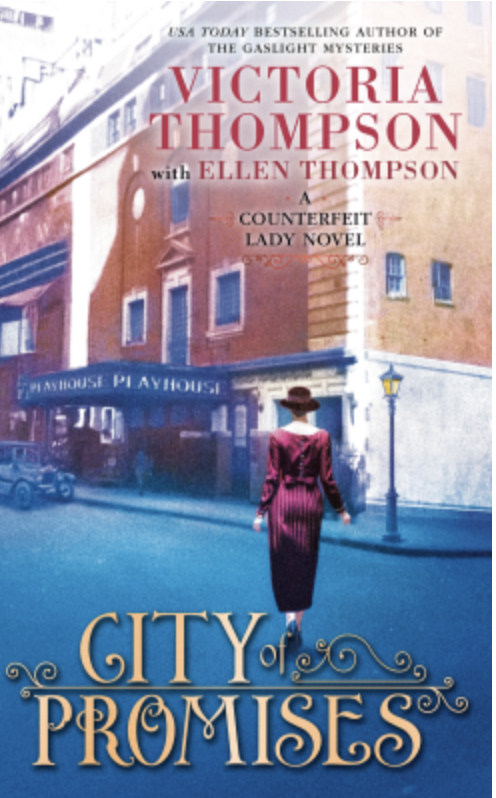
Murder in Rose Hill by Victoria Thompson (Historical Mystery)

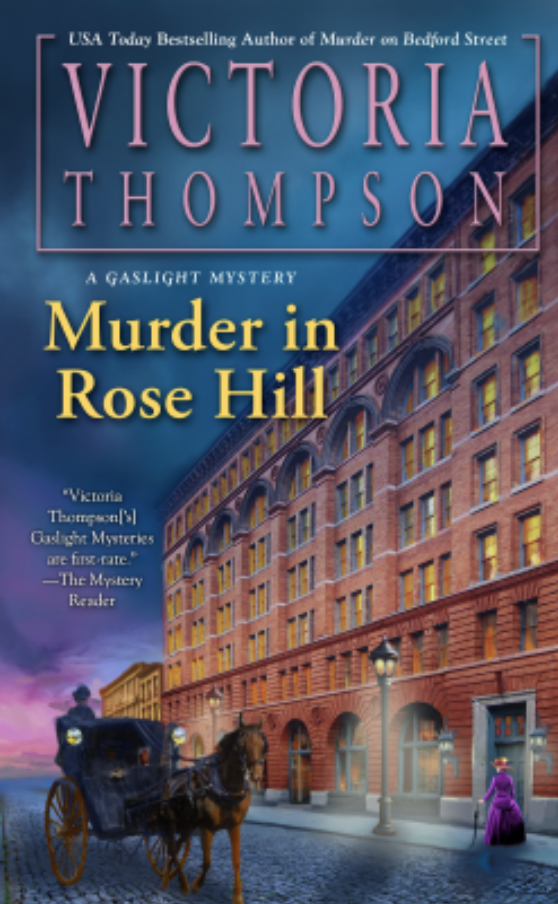
I like this late 19th/early 20th century series by Victoria Thompson starring midwife Sarah Malloy (nee Brandt) and her private detective husband Frank. The characters have continued developing at the rate of approximately one book per year since 1999 beginning with the initial meeting of the young widow and the rare, incorruptible Sergeant Frank Malloy. Thompson does an excellent job with historical detail — inserting each story in pieces of history with deftly integrated details that do not sound like a regurgitation of Wikipedia articles.

In this installment, Louise, a young woman determined to follow in muckraker Ida Tarbell’s footsteps, is digging up information to bring down the patent medicine industry which she is sure harms more people than it could possibly help. (She is clearly correct given that most potions are mixtures of alcohol, heroin, and cocaine!) When Louisa is found dead shortly after interviewing Sarah, her father comes to the Malloys asking for help in finding her killer. The story brings in the new technology of the time (electric motors! the telephone!) along with the mechanics of the police force, the (widely varying) attitudes towards women who choose education and working lives over lives as wives and mothers, and of course, the ubiquitousness and impact of patent medicines. Did you know that the word “flashlight” comes from the fact that the originals gave out only short bursts of light because batteries were weak and bulbs primitive? Pretty fascinating stuff!

The writing is fairly simple, the characters are likable, though not terribly introspective, I never do figure out whodunnit in advance, and the history illuminates the every day details of life in a completely foreign time period.

Thank you to Berkley and NetGalley for providing an advance copy of this book in exchange for my honest review. The book will be published on April 23rd, 2024.

Musical Chairs by Amy Poeppel (Romantic Comedy)

Writing: 4/5 Plot: 4/5 Characters: 4/5
I liked this fun and uplifting story about two of the members of a piano trio continually struggling to find a third to keep the gigs coming. The larger story brings in all the extended family (and almost family) with their issues, desires, and intricacies of life. Bridget, the cello player and daughter of the wealthy Edward Stratton — the pushing 90, well-known conductor; her best friend Will, piano player and arranger; her daughter Isabelle, who just quit her 80-hour/week job in Hong Kong; and her son Oscar, who arrives home having left his husband over a suspected infidelity. Plenty of other quirky characters and situations appear in this romantic comedy taking place in Bridget’s Connecticut country home making the whole thing a fun, upbeat read.

I like Poeppel’s writing a lot and I was very happy with this quick read where an upbeat ending was ensured by the implied “romantic comedy” contract. In truth I liked her later novel — The Sweet Spot — a little better as I felt like it offered some serious lessons in addition to the comedy that I didn’t really find in Musical Chairs. An added thought — I did enjoy the musical references and the details about their musical lives — I would have been happier with more depth along those lines as that is an area of interest for me, but the book probably included just enough for a seeker of comedy rather than a serious musically oriented reader like myself.

The Sweet Spot by Amy Poeppel (Literary Fiction)

Writing: 5/5 Characters: 5/5 Plot: 4/5

I enjoyed every minute reading this book. It’s one of those books that you’d turn to rather than most other activities on offer. On the surface (ie the cover) it just looks like a light hearted romantic comedy — which it sort of is — but largely due to the stellar writing it is also a set of lovable and realistic characters, great dialog, and a variety of relationship styles that bear further study.

The stated plot focuses on a baby who lands in the laps of three women — Lauren, a ceramic artist who just got her big break; Melinda, recently dumped after 30 years of marriage and raging for revenge — unfortunately applying said revenge in all the wrong places; and Olivia, the daughter of the bar owner who rents the basement of Lauren’s Greenwich Village brownstone for a song. It’s funny, full of characters who are deeply interesting rather than quirky on the surface, and steeped in New York city culture and habitats. Lots of fun — I can’t remember where I heard about it, but I’ll certainly go back and read some of her other books.

They May Not Mean To, But They Do by Cathleen Schine (Audio Book – Literary Fiction)

Writing: 5+/5 Story: 4.5/5 Characters: 5/5

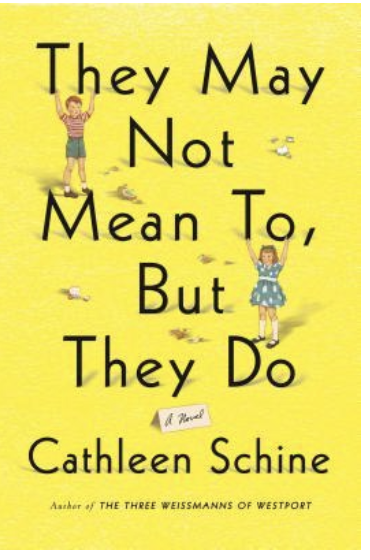
I love Schine’s books. She is better able to get into the head of wildly different people than almost anyone I can think of. This book is a story about aging and the multiple familial pressures and experiences that are inextricably linked to the process. Joy is the octagenarian matriarch of a New York Jewish family whose husband is ever more rapidly sinking into dementia. When he dies about half way through the book, her children are anxious to solve her loneliness and despair but she is equally anxious to mourn in the way she chooses and to maintain her own life, rather than be absorbed into one of theirs (or, God forbid, be stuffed into an assisted living facility).

I loved so much about this book which was brought to life magnificently by the narrator who has the NY Jewish grandma voice down cold. The ongoing reflection about her own aging; her deep mourning for her far-less-than-perfect husband who she had nevertheless loved completely; her equally deep love for her children coupled with an outrageously growing irritation at their increasing need to boss her around and intrude on her own life plans; the search for belonging when a long term spouse dies — it’s all there and wrapped beautifully in the every day experiences of herself, her children, and her grandchildren. Joy has a wicked sense of humor, a realistic handle on what is happening, and an old flame perking up the picture, so this is by no means a depressing book. Just completely insightful. While the other characters — her two children, her daughter’s wife, all three grandchildren — were fleshed out fully, it was clearly Joy that I resonated with (despite her annoying lack of organizational skills and the fact that I am almost 30 years younger!)

I listened to this on audio so I don’t have captured quotes, but here are some of the concepts I just loved reading about: Joy thinks of her own mother and how she (Joy) could not understand her (the mother) the way she had needed to be understood when she (the mother) was aging. Joy begins to feel there is another person in the apartment and it was she. She had to constantly watch “it” to make sure it took its pills and didn’t fall etc. She doesn’t want to be a burden, but if she is one, she wishes others could carry her with more grace.

One more note — the title comes from the Philip Larkin poem “This Be The Verse.” It’s quite apt.

We’re All damaged by Matthew Norman (Literary Fiction)

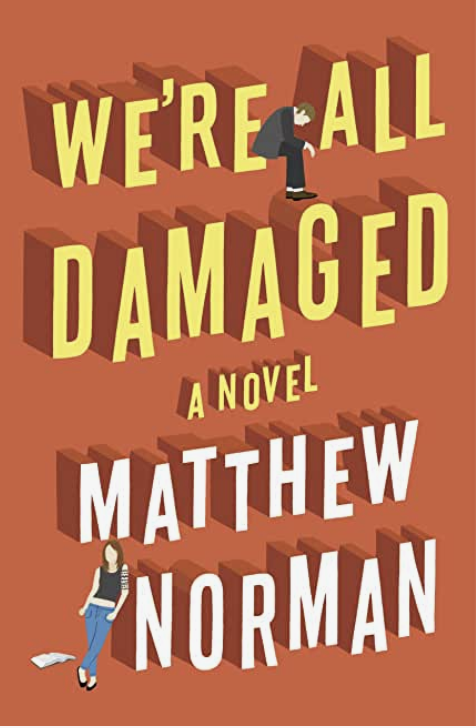
Broken wrist making reviews hard to type, but I have loved every Matthew Norman book I’ve read, and this is no exception. Humorous (very), yet deep. Wild characters (mom is a Fox News wannabe and his new friend Daisy teaches “vagina fiction” for a start). Draws you in within the first two paragraphs. Kind of a non-Jewish Jonathan Tropper (high praise for me).

Some fun quotes:
“It was our waiter. He was smiling in that maniacal way, that waiters at places, like Applebee’s smile, like they’re all doing methamphetamine back in the kitchen.”

“I’m still not used to living here. I’m not used to the crowds and the constant noise and the weird hours. I’m not sure exactly what it feels like, but it doesn’t feel like home — more like a strange, wildly, expensive Sleep away camp for pseudoadults. I step across the street and I’m nearly run down by a pack of skinny men on bicycles.”

“In all our family portraits growing up, I looked like a short, half-Jewish kid being held captive by a family of Vikings.”

“Jim is the hyper-achiever. You’re the moody one. That’s not a bad thing, by the way. Never trust someone who isn’t miserable at least half of the time. That’s my motto.”

“ ’There’s an entire genre of writing now that’s empowered women to type out their sex fantasies and publish them on the Internet. If you knew how many euphemisms for vagina I endure on a weekly basis, your little heart would break.’ I wasn’t prepared to hear the word vagina this evening. Up front at the register, Gail, apparently wasn’t, either. She clears her throat and gives us a librarian look. That’s the thing about the word vagina: it really carries in a quiet place.”

The Sullivanians: Sex, Psychotherapy, and the Wild Life of an American Commune by Alexander Stille (Non fiction)

A comprehensive and detailed account of The Sullivan Institute — a (somewhat secret) urban commune in New York City that ran a 35 year “experiment” to reengineer family, sex, and social life.  Starting in the 50s as a combination of psychotherapy and radical politics, it evolved into an oppressive cult before finally crumbling in the early 90s (largely as a result of various salacious court cases).

Stille compiled the narrative from extensive interviews, written member accounts, and court case documentation.  He proceeds linearly through time covering various motivations and experiences as well as the long dissolution into a bit of a nightmare and the “waking up” of those who went mainstream once it all fell apart.

Begun in the 50s by avowed Marxists, the goal of the Institute was partially to bring the “human” into Marx.  The founders came to see: “the nuclear family as the basic unit of capitalist production, the means by which the system perpetuated itself to the detriment of individual growth.  Parents tamed and squelched their children’s most vital needs in order to turn them into obedient and productive citizens.”  They felt that growth could only occur only through interaction with others.  Unusually for therapy at the time, therapists encouraged complete patient dependence — telling patients what to do in every aspect of their life.  Members were forced to break all bonds with those outside the group, they were not allowed to form pair bonds, and were not allowed to raise their children, being told that they would be “poison” to those children.

What fascinated me was how the group fit into the times — starting with Marxist theories and communal living and progressing through the 70s where alternative therapies— EST, TM, rebirthing, etc. — were thriving.  And the way initial egalitarianism devolved into hierarchical conformity with a controlling personality at the top.  The pattern matches those of cults, certain religious orders (ultra-orthodox Jews, strict evangelical Christians, …), and true communist countries as a whole: impose a demanding lifestyle on members, maintain a boundary between the group and the outside, and ostracize those who want to leave.  And the people in this group were intelligent and well-educated.  In its heyday, the group boasted famous members such as Jackson Pollack, Lucinda Childs, Richard Price, members of the musical group Sha Na Na, etc.

Completely fascinating.

Thank you to Farrar, Straus and Giroux and NetGalley for providing an advance copy of this book in exchange for my honest review. The book will be published on June 20th, 2023

Central Places by Delia Cai (Literary / multi-cultural fiction)

Writing: 4/5 Characters: 4/5 Plot: 3.5/5
A somewhat over-detailed but ultimately satisfying story of a young woman coming to an understanding of herself — the person she wants to be and the person she evolved from. Twenty something Audrey Zhou loves her life in New York City: her kind and conscientious NYC born and bred photojournalist boyfriend (Ben) and her job as a salesperson for a trendy NY magazine, but most of all she loves the extreme distance from her home and immigrant parents in Hickory Grove, Illinois. When her father has a potential health problem, Ben insists on accompanying Audrey home to meet her parents for the first time and learn more about her.

I was impressed by the way this book worked out — it really did focus on a single person’s experience, rather than another agenda heavy diatribe about racism in the U.S. Assumptions, biases, and exposed hypocrisies appear in multiple places, and the recognition of what part Audrey finds herself playing in all of that is worth the price of admission. The story did NOT evolve the way I expected it to, and I found I really liked the non-standard, unexpected ending. Some of the more descriptive sections contrasting her Hickory Grove memories and current experiences went on for a little longer than I needed, but I was overall quite happy with the book.

Thank you to Ballantine Books and NetGalley for providing an advance copy of this book in exchange for my honest review. The book will be published on January 31st, 2023.

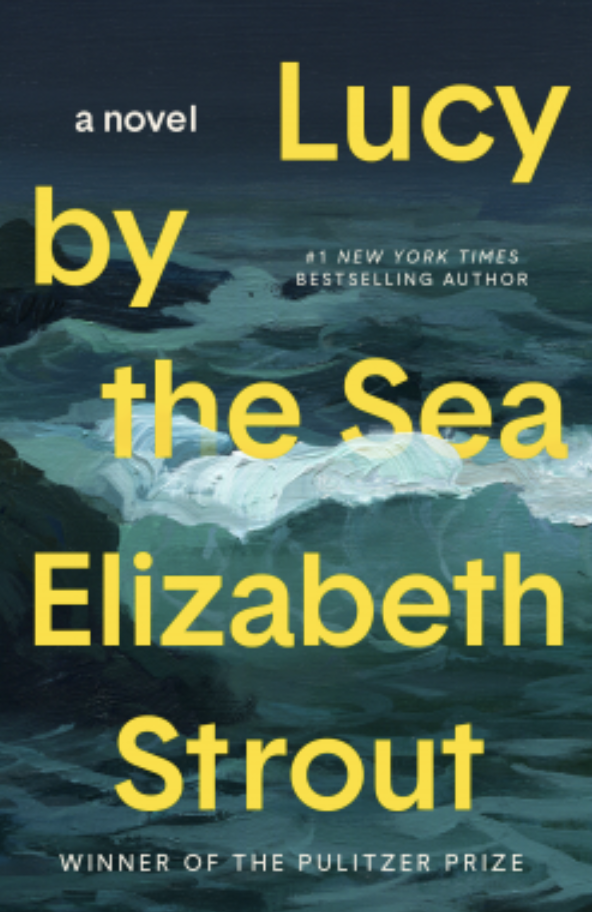
Lucy by the Sea by Elizabeth Strout (Literary Fiction)

Writing: 4.5/5 Plot: 4/5 Characters: 4.5/5
This third chapter in the Lucy Barton series (I am Lucy Barton and Oh William!) might alternately be titled Lucy Gets Through the Covid Pandemic as it extends from just before Covid slams into New York City and continues through the availability of vaccines. Lucy and her first husband, William (the parasitologist), head to Maine for what (very) naive Lucy is told will just be a few weeks to escape the ravages of Covid. William is — very simply — trying to save her life.

I’m a huge Strout fan and have read most or all of her books — I love her clean, clear writing and insight into personal experience. I did find this book a little more preachy than previous novels to the point where I liked the main character much less than I did previously. This is largely because the book took on political topics (Covid, George Floyd, the Capitol Riots) and manipulated the story to show how very correct her side of the political spectrum was in every case (the Capitol Rioters were all nazis and racists but the George Floyd riots were all peaceful; everyone in her book who did not adhere to strict covid protocols were rashly stupid and were all punished by death or hospitalization, etc.). While worrying about the state of democracy and bemoaning child labor in foreign countries, she has access to lots of money, and while befriending people with very different beliefs and professing love for her born again sister, she comes off as feeling superior to them. Of course, it is Lucy’s story and to be fair, the author does let some characters blast Lucy for just that! She even has Lucy (a writer) write stories about people very unlike herself so … overall I enjoyed the book, and it gave me a lot to think about (I think I’m still just sensitive to the many sanctimonious people I weathered Covid with, some of whom called me a “grandma killer” when I went out to run on deserted streets).

Thank you to Random House and NetGalley for providing an advance copy of this book in exchange for my honest review. The book will be published on September 20th, 2022.

Free Food for Millionaires by Min Jin Lee (Literary fiction / Audio book)

Writing: 5/5 Characters: 5/5 Plot: 4/5

Casey Han — the daughter of Korean immigrants in Queens — craves a wealthy lifestyle she cannot afford, having been exposed to such while on a scholarship to Princeton. She craves “beauty and the illusion of a better life.” Casey balances pride, deeply embedded family traditions, and her emerging sense of self as she struggles to grow up and be the person she is slowly determining that she wants to be. While we follow Casey from graduation through the next five (or so) years, we are also treated to the developing stories of women who are important to her: her mother, a mentor, an acquaintance who rescues her and turns into a close friend. Rather than following a narrative arc, this book seems to follow a Life Arc — twisting and turning with sometimes rapid and surprising (to us and to Casey) shifts. The first novel by the author of Pachinko, you’ll recognize the style and treatment, while this book focuses on a Korean-American family and Pachinko is focused on 20th century Korea.

Although only covering a few years, this book felt epic because of its size and incredible depth. The characters are far too detailed and deeply introspective to even hint at stereotypes. Psychological analysis, philosophical musings, and cultural context (somehow never the same for any two people) help move the inner story along while the external story is utterly unpredictable.

The prose is beautiful, detailed, and rich. I love the way the author repeatedly and seamlessly contrasts the inner deliberations of each character with how his or her behavior appears to others. We are led through the minutiae of multiple lives that rarely go in the expected direction, but make do with the many, realistic tangents that comprise a life (regardless of any planning!). I appreciated the many domains that were brought to life by Casey’s experiences: investment banking and trading, millinery and fashion, church and faith, weddings, antiquarian books, and probably several others that I can no longer remember.

There were so many good quotes, but I listened to most of it as an audio book while driving and couldn’t write down a single one. 😦