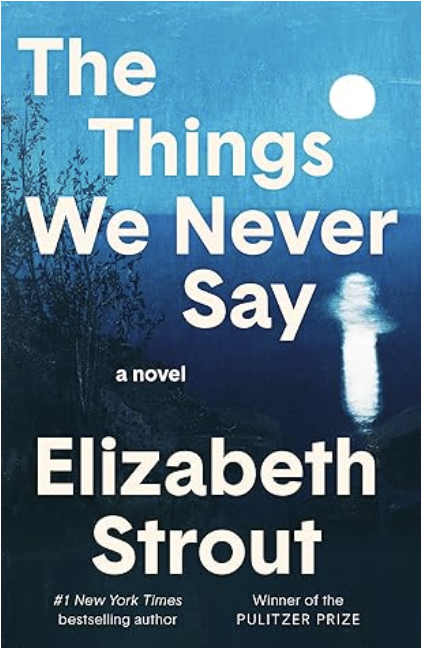
The Things We Never Say by Elizabeth Strout (Literary Fiction)

Writing: 5/5 Characters: 5/5 Plot: 4/5

I was instantly hooked by the epigraph: Loneliness does not come from having no people about one, but from being unable to communicate the things that seem important to oneself, or from holding certain views which others find inadmissible. — Carl Jung

This was the beautifully written, deeply reflective story of Artie Dam — a high school history teacher who spends time considering free will, loneliness, and whether or not anybody can really know anybody else. He watches his own mind a lot — I like that concept. He has been married 34 years, has a grown son who has become more distant, and a deep love for his students who he fears, based on the last election, he is sending out into an unsafe world.

I love the way the author (who is one of my favorites) paints a scene from multiple points of views. We spend a lot of time in Artie’s head, but we also get snapshots of what each of the people in his life think about him simultaneously and why. The elucidation of how we perceive the people around us, how they perceive us, and how we manage to make a connection to them despite this variance is brilliant. I also loved the fluid way Artie reflects on his life — memories precipitated by small events and interactions and the larger social shifting in reaction to the big events — Covid, the 2024 election, and the (ever changing) perceptions of right and wrong.

Political angst is a big piece of the context for Artie and several other key characters. Semi-oblique references to orange hair, cancelled government contracts, ICE “Nazis”, and general loathing for certain personages (you know who they are!) are tossed out without too much discussion. I found this interesting not because I agree or disagree with the view, but because of how having these feelings — justified or not — deeply impacted the characters. I appreciated that the author did include other characters — presented as reasonable and good people — who held either opposing views (they voted for Trump!) or who were simply content to wait and see what actually happened, rather than get too intensely worked up about it. What I loved about this book was that in spite of the angst — both internally and externally induced — the novel was primarily about personal insight and the way that we can have a positive impact on others and work to achieve the contentment and connection that we want. I found this book ultimately uplifting.

Quotes:
“She was unaware — even after their thirty-four years of married life — of the deep pockets of sensitivity that Artie had. And why did she not know? Because she herself did not have those particular sensitivities — and like almost everyone else on this Earth her imagination could not take her fully to another place, even with her husband.”

“So blind we humans are — so blind. To each other and to ourselves, moving through life as though through shadows, putting out a hand in the dark and thinking we have touched someone. And maybe we have, as Artie did with Rhonda Lazarre that day. But mostly we travel through life unsighted, grasping only the smallest details of one another’s selves, including our own. Thinking all the while that we can see.”

“And then she leaned her head against his shoulder, and this is what stabbed Artie now, their innocence, and how badly he wanted — as that elderly woman had — to lean his head against a loving person, to be innocent and incorruptible.”

“And now he knew why. Because to say anything real was to say things that nobody wanted to know. Or if they wanted to know, they would not care in the right way. Or even understand. It was a private thing, to be alive. He understood this now.”

“As he walked slowly up to the bedroom, he thought that now, after all these years, he was finally becoming a grownup. What did he mean by that? That he was finally beginning to understand the multitudinous aspect of people. He was amazed by it, really, now that he thought about it. In his study of history, he had learned about the leaders, and the various groups involved, but he had some how missed this fact about every single person: that they held within themselves a vast, unknowable universe. And he understood that it could make a person lonely; people had to take and give to one another whatever they could. If it was not enough … Well, then it meant one just had to be a grownup.”

Thank you to Random House and NetGalley for providing an advance copy of this book in exchange for my honest review. The book will be published on May 5th, 2026.
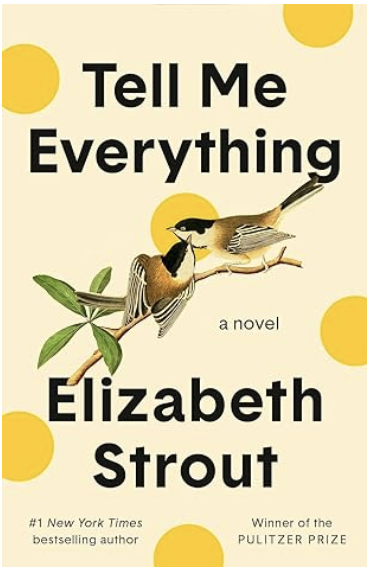
Tell Me Everything by Elizabeth Strout (Literary Fiction)

This is (yet another) beautiful and deeply thoughtful book by Elizabeth Strout, featuring two of our favorite characters from Crosby, Maine: Lucy Barton and Olive Kitteridge (who until this book have not actually met). With plenty of small town plot, including an actual dead body mystery and a “different” sort of affair, this takes us through samplings of post-Covid Crosby life in lively detail.

In truth it is all about connection, knowing yourself and others, and the joy of being allowed to be genuine. (As an aside, I feel like it is harder and harder to meet people who immediately feel genuine — possibly because our culture requires people to curate their presentation so very carefully). It’s about loneliness and the comfort we receive from even the tiniest “real” connections. It’s about the nature of a real friend who makes you feel not alone, regardless of how often you see them, talk to them, or what they do for you. While some of the story takes place in the present, there are many interludes in the form of Lucy’s “stories of unrecorded lives” which she and Olive exchange. Lucy (and Elizabeth Strout) is a writer and these stories are therefore no longer unrecorded. Also a great new phrase for me: “Sin eater.” Some people eat the sins of others… It’s an interesting concept and you can learn more by reading the book. A bit of a slow start but that’s more about the mood you’re in when you sit down to read. Come to it in a meditative and curious state.

Some quotes (plus the last line — as always — is great but I can’t include it here):

“Didn’t anyone ever have anything interesting to say? They talked of movies they were all watching, of series on Netflix, they spoke about their children, but always carefully and in terms meant to hide their private disappointments, and they talked about one another. Of course.”

“I mean, we don’t ever really know another person. And so we make them up according to when they came into our lives, and if you’re young, as many people are when they marry, you have no idea who that person really is. And so you live with them for years, you have a house together, kids together. But even if you marry someone later in life. no one knows who another person is. And that is terrifying.”

“…because nobody can go into the crevices of another’s mind, even the person can’t go into the crevices of their own mind, and we live — all of us — as though we can.”

“And yet, as is often the case, those of us who need love so badly at a particular moment can be off-putting to those who want to love us, and to those who do love us. Bob, as he looked at her — she seemed like a beached sea animal to him with her eyes that had almost disappeared — he did love her, he did.”

“Solzhenitsyn said the point of life is the maturity of the soul.”

Thank you to Random House and NetGalley for providing an advance copy of this book in exchange for my honest review. The book will be published on September 10th, 2024.

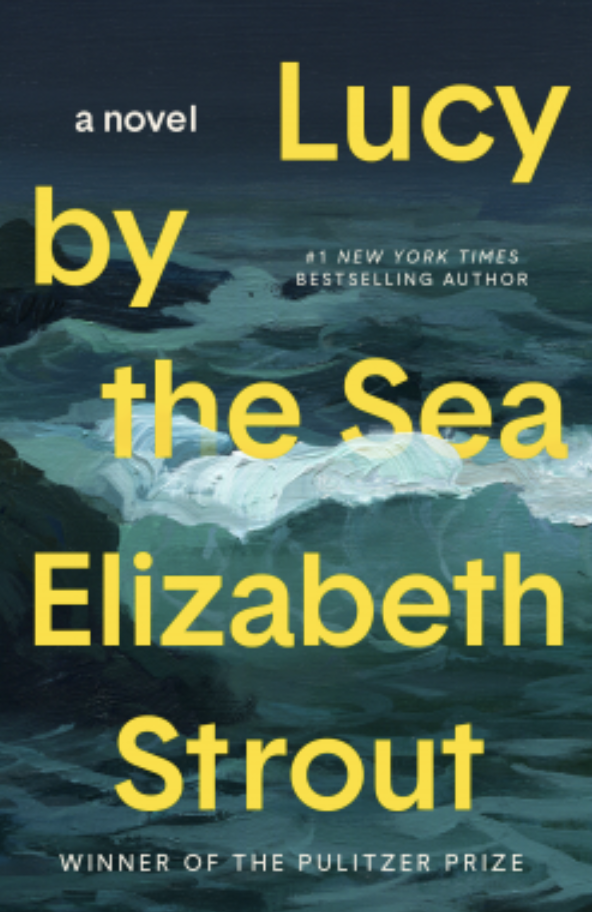
Lucy by the Sea by Elizabeth Strout (Literary Fiction)

Writing: 4.5/5 Plot: 4/5 Characters: 4.5/5
This third chapter in the Lucy Barton series (I am Lucy Barton and Oh William!) might alternately be titled Lucy Gets Through the Covid Pandemic as it extends from just before Covid slams into New York City and continues through the availability of vaccines. Lucy and her first husband, William (the parasitologist), head to Maine for what (very) naive Lucy is told will just be a few weeks to escape the ravages of Covid. William is — very simply — trying to save her life.

I’m a huge Strout fan and have read most or all of her books — I love her clean, clear writing and insight into personal experience. I did find this book a little more preachy than previous novels to the point where I liked the main character much less than I did previously. This is largely because the book took on political topics (Covid, George Floyd, the Capitol Riots) and manipulated the story to show how very correct her side of the political spectrum was in every case (the Capitol Rioters were all nazis and racists but the George Floyd riots were all peaceful; everyone in her book who did not adhere to strict covid protocols were rashly stupid and were all punished by death or hospitalization, etc.). While worrying about the state of democracy and bemoaning child labor in foreign countries, she has access to lots of money, and while befriending people with very different beliefs and professing love for her born again sister, she comes off as feeling superior to them. Of course, it is Lucy’s story and to be fair, the author does let some characters blast Lucy for just that! She even has Lucy (a writer) write stories about people very unlike herself so … overall I enjoyed the book, and it gave me a lot to think about (I think I’m still just sensitive to the many sanctimonious people I weathered Covid with, some of whom called me a “grandma killer” when I went out to run on deserted streets).

Thank you to Random House and NetGalley for providing an advance copy of this book in exchange for my honest review. The book will be published on September 20th, 2022.

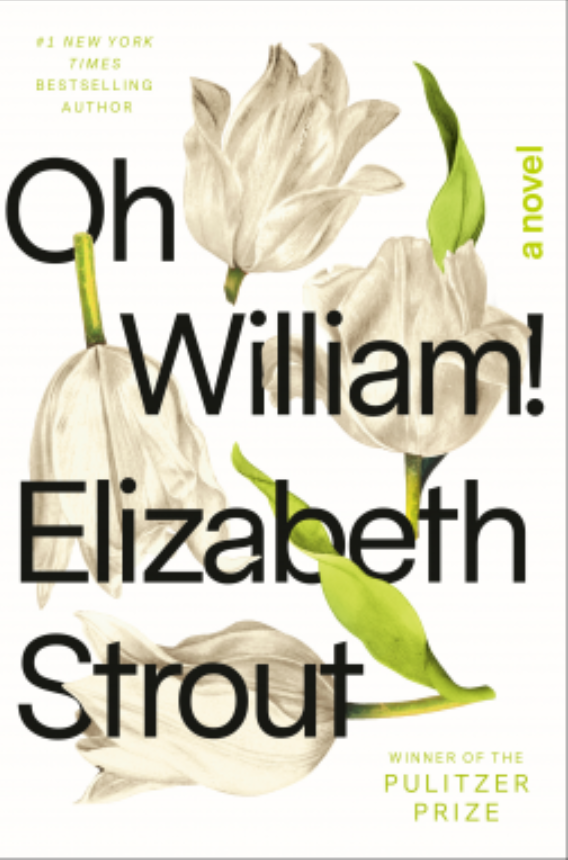
Oh William! by Elizabeth Strout (Literary Fiction)

Characters: 5/5 Plot; 3.5/5 Writing: 5/5

I loved this deeply meditative book about how much we can really know one another. This is written as a novelized memoir of the fictional character introduced in a previous work — I am Lucy Barton. It felt so incredibly real to me that it’s hard to remember that she is a work of fiction. Here, Lucy reflects on her first husband — William — with whom she is still friendly and the prior and current relationship between them. The “action” takes place a year after Lucy’s second husband has died and William’s third wife has left him.

I resonated with so many of the feelings and experiences described in this book. Strout has a beautiful and apt writing style that captures the essence of what is important in any human interaction — even within oneself. I was often brought to tears — not because anything particularly sad was happening — but because she captured it so perfectly.

A great line:
“Grief is such a – oh, it is such a solitary thing; this is the terror of it, I think. It is like sliding down the outside of a really long glass building while nobody sees you.”

I also loved the last line but I won’t list it here — you need to read the rest of them first!

Thank you to Random House and NetGalley for providing an advance copy of this book in exchange for my honest review. The book will be published on October 19th, 2021.

Olive, Again by Elizabeth Strout (Literary Fiction)

Writing:  4.5 /5 Plot: 4/5 Characters: 4.5 /5

Olive Kitteridge — gruff, direct, honest and with absolutely no patience for pretense or pretentiousness. Some people love Olive for just this reason — many others consider her a rude “old bag”.  I love the fact that Olive — in her late seventies now — continues to have epiphanies about herself and her life.

The book is a collection of snapshots of life in the coastal town of Crosby, Maine. Some are centered on Olive herself, but in others she plays only a peripheral, though impactful, role. Ranging in age from middle school to elderly and incorporating contextual situations such as drug use, sexual harassment, suicide, Somali immigration, and even the value provided by a dominatrix (!) — the stories are full of introspection and reflection. They are more about how people absorb experiences into their own perspective, rather than the experiences themselves.

Strout is the master of the imperfect relationship — no closure, no solutions — just the reality of evolving relationships with ups and downs and fresh interior “ahas” rather than the drama of abrupt discovery via loud confrontation.

For those who loved Strout’s 2008 work Olive Kitteridge, Olive,Again takes up where the latter leaves off, covering the next decade of Olive’s life (it’s not necessary to read the first book, this one stands up well on its own). It’s a fascinating look at life from the perspective of old age, and while there is loss and plenty of “old age indignities,” there is also a great sense of hope, understanding, and wisdom.
Great Quotes:
“It seemed to her she had never before completely understood how far apart human experience was.”

“And then he thought: how does one live an honest life?”

“It’s just the way it was, that’s all. People either didn’t know how they felt about something or they chose never to say how they really felt about something”

“…and during the night they would shift, but always they were holding each other, and Jack thought of their large old bodies, shipwrecked, thrown up upon the shore — and how they hold on for dear life!”

“What frightened him was how much of his life he had lived without knowing who he was or what he was doing. It caused him to feel an inner trembling, and he could not quite find the words — for himself — to even put it exactly as he sensed it. But he sensed that he had lived his life in a way that he had not known.”

“But it was almost over, after all, her life. It swelled behind her like a sardine fishing net, all sorts of useless seaweed and broken bits of shells and the tiny, shining fish — all those hundreds of students she had taught, the girls and boys in high school she had passed in the corridor when she was a high school girl herself, the billion streaks of emotion she’d had as she’d looked at sunrises sunsets, the different hands of waitresses who had place before her cups of coffee — All of it gone, or about to go.”

“Because as her heart became more constricted, Henry’s heart became needier, and when he walked up behind her in the house sometimes to slip his arms around her, it was all she could do to not visibly shudder.”

“Cindy Coombs, there’s not one goddamn person in this world who doesn’t have a bad memory or two to take with them through life.”

Thank you to Random House and NetGalley for providing an advance copy of this book in exchange for my honest review. The book will be published on October 15th, 2019.