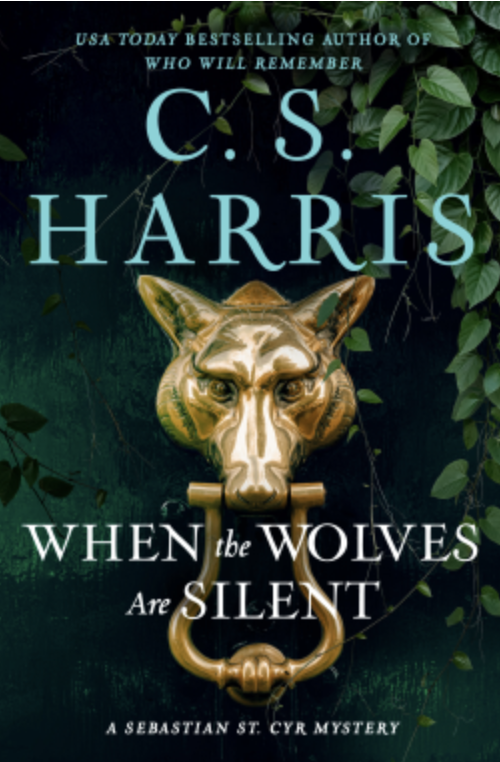
When the Wolves are Silent by C. S. Harris (Historical Mystery)

Number 21 in the Sebastian St. Cyr historical mystery series. Regency period — 1816 — London and environs. This was the “year without a summer” due to the eruption of Mount Tambora in 1815.

Sebastian — son and heir to an Earl — has a habit of involving himself in bringing justice to murder victims, regardless of their class. In this episode, first one and then another of a group of high born friends is murdered — one found in the river and the other burned to death. One of the group is Sebastian’s nephew Bayard. The entire group — Bayard definitely included — is what are known as “bad ton” where “ton” refers to the state of being fashionable and high society. The men in this group feel they are above any law or sense of human decency.

In solving the evolving mystery (more bodies turn up) there is reference to the American wars, the slave trade, ancient Celtic practices including human sacrifice, and potential Druid revivals. I always thought of Celts as ancient Britons but learned recently that in fact Celtic tribes were roaming around Central Europe as early as 1200 BCE. and as for Druids, I found this note in the book interesting: “Actually as far as we can tell, the Druids were more like what we might call the intellectual class of the ancient celts. The poets, historians, musicians, physicians, and astronomers of their day and advisors to Kings.”

The writing is decent, the characters (from the high to the medium and low) have evolved over time and have depth, and the mystery was quite convoluted, but completely consistent and engaging. The historical setting is excellent.

As an aside, the author’s note at the end of these books is always illuminating as she clearly delineates the fact from the fiction. I was particularly interested in a “real” character — German chemist Friedrich Accum who, among his other many accomplishments, was one of the first to draw attention to the danger of food additives and was involved in gaining acceptance for beet sugar, which was notable for not being derived from slave-driven sugar production from cane.

Thank you to Berkley House and NetGalley for providing an advance copy of this book in exchange for my honest review. The book will be published on April 14th, 2026.
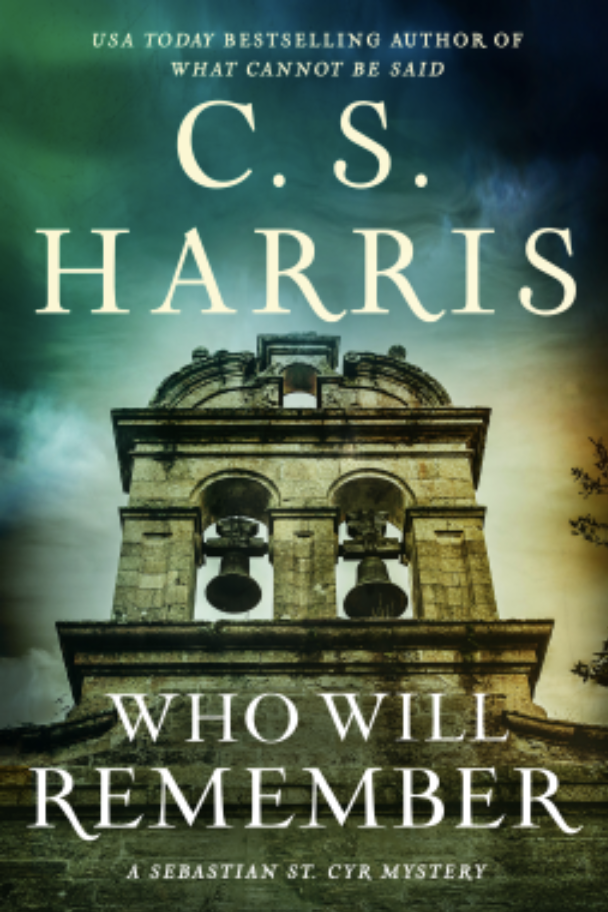
Who Will Remember by C. S. Harris (Historical Mystery)

Number 20 in the historical mystery series featuring Sebastian St. Cyr, Lord Devlin. Throughout the series, Harris has successfully embedded each volume in an historically accurate period — this one is no exception. It is set in London in August, 1816, the year that “had no summer.” Later historians promoted the cause as a large volcano explosion that blocked the sun causing weather abnormalities, floods, and massive crop failures leading inevitably to riots, strikes, apocalyptic fears, and the potential for revolution.

In this milieu, the body of a Lord is found in an abandoned chapel, hanging upside down with legs posed as depicted on a rare set of tarot cards (Le Pendu — the Fool). From here connections are made to French assassins, the Prince of Wales, friends made during the 1808-9 British retreat across Northern Spain (Battle of Corunna), and a particular (nasty) society called the Society for the Suppression of Vice.

I always like the characters in these books — representing multiple walks of life and varied ideas of morality. I particularly like the depiction of the members of the “ton” — a term for the fashionable members of upper class English society during the Regency period. As one might expect, those characters run the gamut from utterly selfish, corrupt, and “above the law” to considerate, moral, and obsessed with a fair justice. Always fun to guess which is which upon the first “meeting.”

Thank you to Berkley and NetGalley for providing an advance copy of this book in exchange for my honest review. The book will be published on April 25th, 2025.

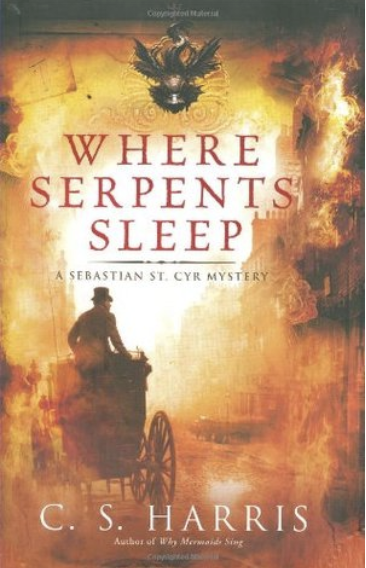
Where Serpents Sleep by C. S. Harris (Historical Mystery — Audio Book)

This is the fourth book in the Sebastian St. Cyr mystery series. I listen to them on audio book because the reader — Davina Porter — is the absolute best, with convincing “voices” for characters of all backgrounds, genders, professions, and place of origin accents. I highly recommend listening to, rather than reading, this series, despite the fact that I am primarily a book reader. The series starts in 1811; this fourth book starts in 1812. The Napoleonic Wars are in full swing and the upstart Americans are giving the British trouble (think “the War of 1812”). This book concerns itself with the killing of eight prostitutes who were sheltering in a Quaker house of refuge.

So why do I love this series so much? The characters — even those who appear in only one book — are fully fleshed out with time and place appropriate personalities. They run the gamut from nobility (both the utterly self obsessed and the more humane) to street urchins, with each novel bringing to light the experiences and behaviors of those in professions we don’t often hear about: for example, the chimney sweep boys or young prostitutes. The historical setting comprises all manner of detail from political power struggles, foreign policy and entanglements, the class system, and quite often the roles allowed or foisted upon women. Some wonderful strong female characters, along with those portraying more negative female stereotypes of the time. And always convoluted plot lines that introduce the reader to more of the time period — (often ridiculous) laws, the constabulary, power machinations, diplomacy, etc.

The main character is Sebastian St. Cyr — heir to an Earl and with a piercing intelligence. At 29, he has already seen quite a bit of military service and is a very impressive fighter as demonstrated through many action oriented scenes, none of which last longer than my low tolerance for extended action scenes allows. While one description called him an anti-hero (I’m guessing because he has no trouble dispatching people who are in the process of trying to kill him), I think he makes the perfect hero, with his strong regard for justice for all people (not just those with a title), and the ability to correct injustices with the combination of rank, privilege, physical prowess, courage, intelligence, and an unbreakable moral code.

While I started reading this series somewhere in the middle, and bounced about for a while, I’m now going back to the beginning and stepping through all the installments that I missed.